|
11 For the LORD spoke thus to me with a strong hand, and instructed me that I should not walk in the way of this people, saying: 12 “Do not say, ‘A conspiracy,’ Concerning all that this people call a conspiracy, Nor be afraid of their threats, nor be troubled. 13 The LORD of hosts, Him you shall hallow; Let Him be your fear, And let Him be your dread. 14 He will be as a sanctuary, But a stone of stumbling and a rock of offense To both the houses of Israel, As a trap and a snare to the inhabitants of Jerusalem. 15 And many among them shall stumble; They shall fall and be broken, Be snared and taken.” Isaiah 8:11–15 (NKJV)
|
11 This is what the Lord says: “By the strong hand they resist the way of the path of this people, saying, 12 ‘Lest they say, “It is hard.” ’ For anything that this people might say is hard; but do not be frightened with its fear, neither be troubled.” 13 Sanctify the Lord himself, and he will be your fear. 14 And if you trust him, he will become a sanctuary for you, and you will not encounter him as an obstacle of stone or like a fall from a rock. But the houses of Jacob are in a snare, and those who sit in Jerusalem are in a pit. 15 Because of this, many among them will be powerless, and they will fall and be shattered, and people will approach and be taken in security. Isaiah 8:11–15 (LES2)
|
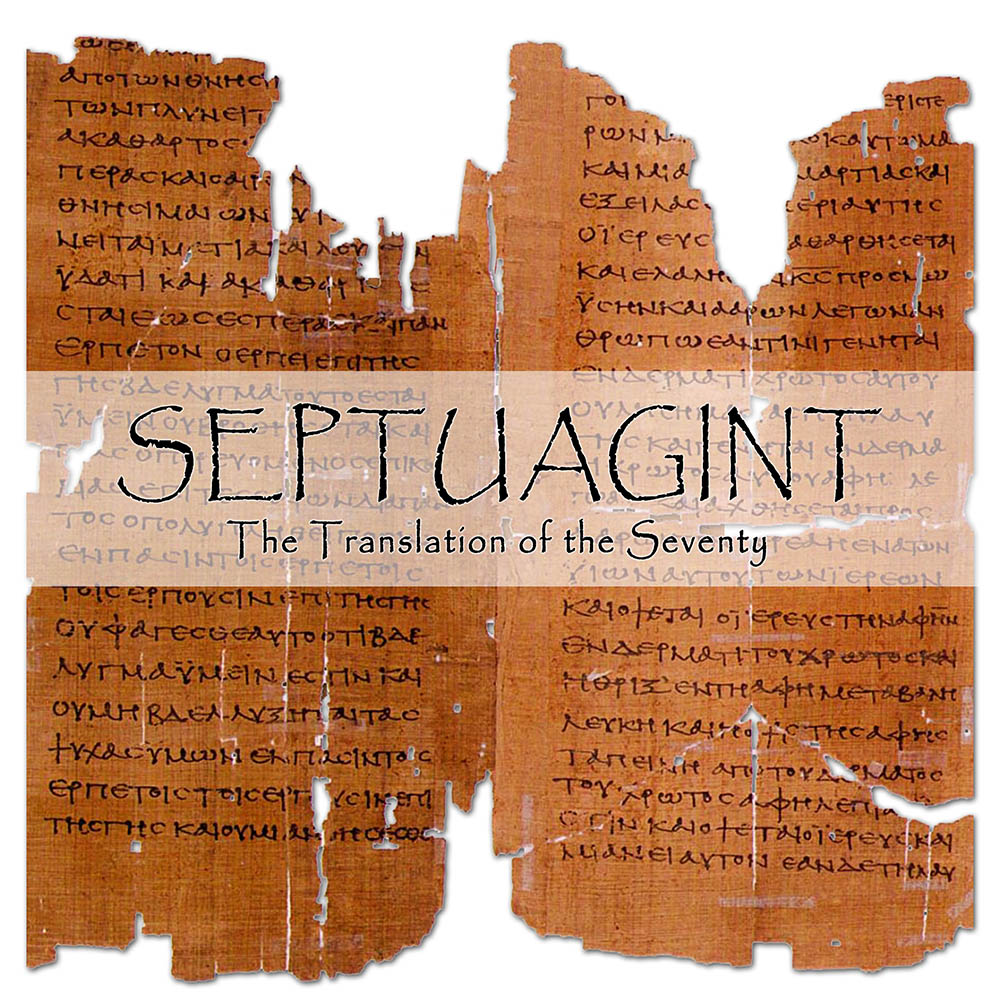
This passage requires us to make a choice between the MT and LXX starting at the first verse. Either the MT is correct and the Lord spoke to Isaiah with a strong hand warning him not to believe or follow a supposed conspiracy, or the LXX is right when it has God warning the prophet not to be frightened by what the people say is difficult.
Once we see that this passage clearly points to Jesus, which the Masoretes undoubtedly knew, the use of the word “conspiracy” makes sense. Either way, whether the unbelieving Jews saw Jesus’ resurrection as a supposed conspiracy (Matthew 28:13), or it was simply too difficult to believe, as many still claim, Jesus became a stumbling block to the unbelieving Jews (and Gentiles), as we shall see below.
In verse 13, the MT and LXX agree. In verse 14, the LXX qualifies the promise that God will be Jeremiah’s (our) his “holy place” by saying, “If you (we) trust him.” Faith is the key to receiving from God. (James 1:6-8)
The next part clearly applies to Christ. Continuing the thought in the LXX, if we trust God, we will not encounter him, Jesus, as an obstacle of stone (stumbling block) or like a fall from a rock (rock of offense). Next the prophet says, “but the houses of Jacob are in a snare, and those who sit in Jerusalem are in a pit.” In other words, they are trapped in unbelief.
The MT, on the other hand, words things differently, stating without qualification that God will become “a stone of stumbling and a rock of offense to both houses of Israel” and “a trap and snare to the inhabitants of Jerusalem.” Said another way, the MT offers no path of escape through faith.
If we apply this to the Jews response to Jesus, it is clear that some believed and escaped God’s judgment, but those who rejected Christ were crushed in 70 AD.
This verse is quoted or referenced in the New Testament.
34 Then Simeon blessed them, and said to Mary His mother, “Behold, this Child is destined for the fall and rising of many in Israel, and for a sign which will be spoken against 35 (yes, a sword will pierce through your own soul also), that the thoughts of many hearts may be revealed.” Luke 2:34–35 (NKJV)
31 but Israel, pursuing the law of righteousness, has not attained to the law of righteousness. 32 Why? Because they did not seek it by faith, but as it were, by the works of the law. For they stumbled at that stumbling stone. 33 As it is written: “Behold, I lay in Zion a stumbling stone and rock of offense, And whoever believes on Him will not be put to shame.” Romans 9:31–33 (NKJV)
7 Therefore, to you who believe, He is precious; but to those who are disobedient, “The stone which the builders rejected Has become the chief cornerstone,” 8 and “A stone of stumbling And a rock of offense.” They stumble, being disobedient to the word, to which they also were appointed. 1 Peter 2:7–8 (NKJV)
Those who rejected Christ were shattered and taken. This was fulfilled twice – in 70 AD and 135 AD in the fall of Jerusalem to the Romans and the defeat of Bar Kohkba by the Romans, respectively. In the first tragedy, Jerusalem and the temple were destroyed, along with many thousands of unbelieving Jews. In the second, many thousands were killed, and the Jews were expelled from the land, which was renamed Palestine.
How we respond to Jesus determines our destiny. Remember, according to Jesus, all scripture points to him. (John 5:39)
|
|
16 Bind up the testimony, Seal the law among my disciples. 17 And I will wait on the LORD, Who hides His face from the house of Jacob; And I will hope in Him. 18 Here am I and the children whom the LORD has given me! We are for signs and wonders in Israel From the LORD of hosts, Who dwells in Mount Zion. Isaiah 8:16–18 (NKJV)
|
16 Then those who seal the law not to learn will be evident. 17 And he will say, “I will wait for God, who turned back his face from the house of Jacob, and I will trust him. 18 Look, here am I, along with the children whom God has given me, and in the house of Israel they will become signs and wonders from the Lord Sabaoth, who dwells on Mount Zion.” Isaiah 8:16–18 (LES2)
|
Now that we have established that the verses above point to Christ, it is appropriate to view the following verses in the same light. We see subtle differences in wording that amount to quite a contrast in meaning. Verse 16 in the MT means something very different from what the LXX says.
Jesus accused the Jewish lawyers of keeping God’s people away from the truth.
52 “Woe to you lawyers! For you have taken away the key of knowledge. You did not enter in yourselves, and those who were entering in you hindered.” Luke 11:52 (NKJV)
This seems to be what Isaiah prophesied in verse 16, according to the LXX. The MT takes the verse in an entirely different direction, which does not reflect poorly on the rabbis.
In verse 17, the MT has the prophet saying, “I will wait on the Lord,” but the LXX makes the subject “he,” who then says, “I will wait on the Lord.” We must ask ourselves, who is the “he?” Verse 18 reveals that person must be Jesus, the one to whom God has given spiritual children through the process of the new birth. (Isaiah 53:8) The Christian believers would become signs and wonders from God. This happened when they performed miracles while preaching the gospel. (Romans 15:19, Hebrews 2:4)
The beginning of the church age at Pentecost transferred the meaning of Mt. Zion from the geographical location of Jerusalem on earth to the new Jerusalem in heaven (Hebrews 12:22), where Christ is seated at God’s right hand (Ephesians 1:20), waiting for his enemies to be made his footstool (Psalm 110:1, Acts 2:35).
|
|
19 And when they say to you, “Seek those who are mediums and wizards, who whisper and mutter,” should not a people seek their God? Should they seek the dead on behalf of the living? 20 To the law and to the testimony! If they do not speak according to this word, it is because there is no light in them. Isaiah 8:19–20 (NKJV)
|
19 And if they say to you, “Seek the ventriloquists and those who speak from the earth, the empty talkers who speak from the belly,” shall not a nation seek after its own god? Why do they ask the dead about the living? 20 For he gave a law to be a help, so that they might not speak like this, about which there are no gifts to give. Isaiah 8:19–20 (LES2)
|
Continuing the direction given in the above verses, I think the basic thought here is that when the Jews rejected Christ, they also rejected God. (1 John 2:22-23) Ever since, except for the remnant who have come to faith in Christ, the Jews have worshiped another “god” and consulted that which is dead instead of the living God.
The law, which was meant to be a help in leading them to Christ (Galatians 3:24), has nothing more to offer those who reject the Lord, except condemnation.
|
|
21 They will pass through it hard-pressed and hungry; and it shall happen, when they are hungry, that they will be enraged and curse their king and their God, and look upward. 22 Then they will look to the earth, and see trouble and darkness, gloom of anguish; and they will be driven into darkness. Isaiah 8:21–22 (NKJV)
|
21 And a severe famine will come upon you, and this will happen: As you hunger, you will be grieved, and you will speak badly regarding the ruler and your fathers; and they will look up into the heavens above. 22 And they will look to the earth below, and look, severe distress and darkness—oppression and straits and darkness—so that one cannot see; and the one who is in distress will not be at a loss for a time. Isaiah 8:21–22 (LES2)
|
Whether or not we use the MT or LXX, the general meaning is the same. Those Jews who reject Christ will descend into darkness and trouble. Only by repentance and acknowledging that Jesus is Lord may they, or anyone else, enter into God’s peace. |