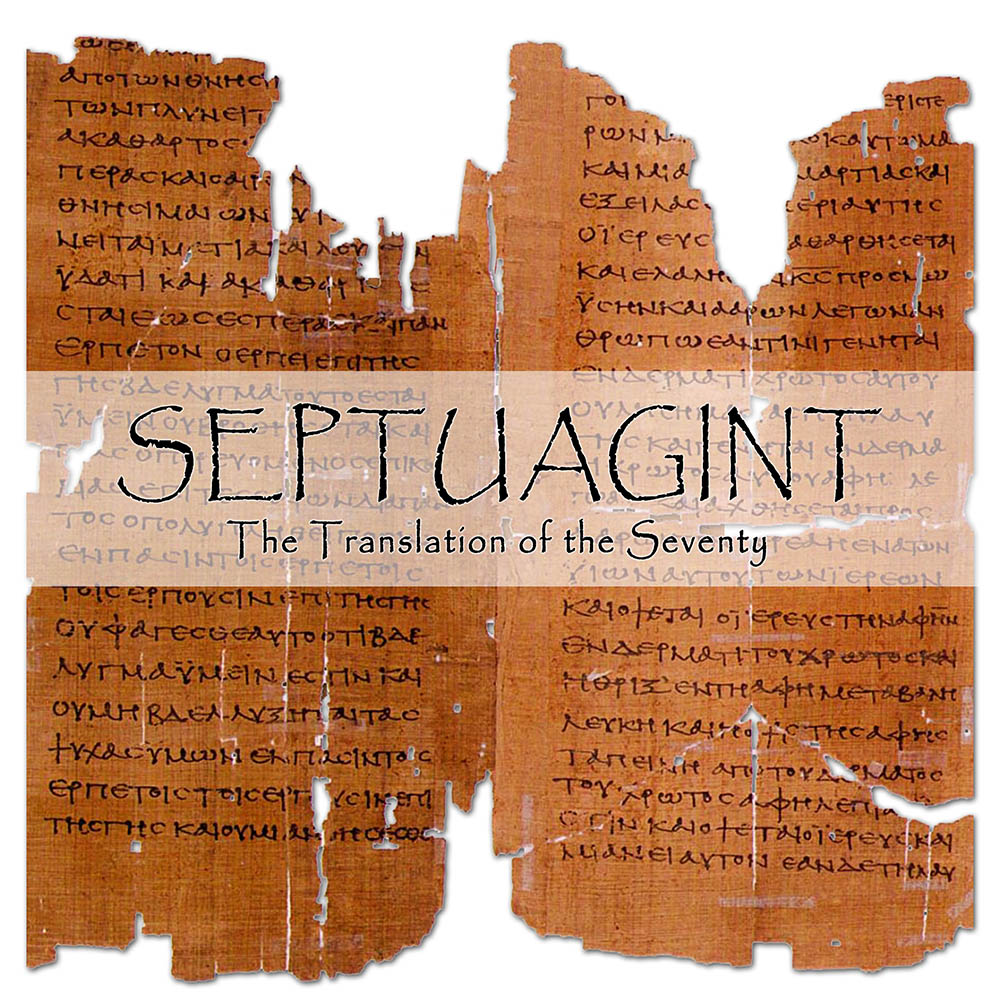
By comparing the Masoretic Text (MT) of our English Bibles to the English Translation of the Septuagint (LXX) I have gained some valuable insights, which I would like to share with you. My hope is that what I have learned can be of some assistance in your own journey toward a fuller experience of God’s truth.
- There are substantial differences. I was told that the differences between the two are minor, but that is not true. Most of the differences are not monumental, but some are. It is troubling to find that scriptures I held on to by faith turned out not to say the same thing in the LXX. It is no small thing to pretend that God said something, if he did not. Nor is it okay to change what he did say. Yet, evidence suggests that the authors of the MT had an anti-Christian agenda which prompted them to actually change God’s Word.
- Death by a thousand cuts. Theoretically it is possible to kill someone by making small cuts all over his or her body, rather than inflicting one critical wound. This is what I suspect the Masoretic Text has done to the Old Testament. There are so many differences, both big and small, between the MT and LXX that it casts doubt on what is the inspired version. The MT uses different verb tenses, words, and ideas from the LXX in many places. Anyone who would alter texts that clearly point to Christ would not have any compunction about altering other texts as well. The Rabbis believed they had / have authority over the Torah to alter, abridge, or even abolish parts of it. If you wish to do more research, I suggest reading Daniel Gruber’s seminal work, Rabbi Akiba’s Messiah: The Origins of Rabbinic Authority.
- The Masoretic Text is not superior. Scholars claim that the MT and LXX are derived from different textual traditions, which breeds more doubt concerning what is the inspired Word of God. I have heard some say that the MT is the best compilation of the Old Testament scriptures, the “gold standard,” but this is an opinion without any sort of proof except the word of the Rabbis, the official custodians of the Hebrew scriptures.. Why should one think that? Usually older means better because there would have been less opportunity for copiest errors and deliberate changes to have occurred. But there is no way for anyone to know which version is based on the oldest, since virtually all Paleo-Hebrew manuscripts are now gone. The Dead Sea Scrolls that are written in the older Phoenician script mostly agree with the LXX, which lends credence to my contention that the LXX is more reliable. Since the New Testament mainly quotes (around 80% I am told, but have not yet verified) the LXX, it stand to reason that it must be truly God’s Word. For sure anything that made it into the New Testament is. A side-by-side comparison of numerous chapters has convinced me that the LXX is superior, and the Eastern Orthodox Church was right to adhere to it all these centuries.
- Both the MT and the LXX are translations. Proponents of the MT argue that the LXX is a translation, while the MT is not. Actually, both are translated from the original Paleo-Hebrew, which was a Phoenician script that died out as an active language around 400 BC. The LXX was translated presumably from the Paleo-Hebrew into Greek around 285 BC and became the official Bible for the Jews who lived in the Greek speaking world, which was most everywhere in the Roman Empire. As a result, the LXX was what Jesus would have read, been familiar with, and quoted since it was being used in all the synagogues. The apostles and early church used the LXX for hundreds of years, and the Eastern Orthodox Church never stopped. In addition, it is the version quoted in the New Testament about 70-80% of the time, thus giving it the Holy Spirit’s stamp of approval. The MT also was translated from the Paleo-Hebrew into a more modern form of Hebrew that is based on Aramaic. So, it too is a translation, perhaps not as difficult as going to Greek, but it was not necessarily simple. Since it was not completed until around 1000 AD by the Masoretes, it is the newer version. That being the case, we are not sure if those translators were able to put their hands on the same Paleo-Hebrew manuscripts that had been available to the Seventy. Perhaps some of those had been lost or destroyed. Certainly much must have been lost when the temple was burned in 70 AD. By the time the MT was produced, Christianity had spread all over the world and was using quotes from the LXX to prove that Jesus is the Messiah. The Jews were decidedly hostile to Christianity and to Jesus; so, there is no reason to suppose that they harbored any good will toward either when making their later translation. It would seem reasonable that they would choose to translate key verses in a way that would cast doubt on the claims of the New Testament, which is exactly what seems to have happened.
- The most egregious changes are found in the prophetic writings. I do not believe the changes that are theological and Christological in nature are due to accident or differences in textual traditions. That is because those changes are almost always in one direction – pointing away from Christ or serving to elevate Israel. The passages most used by Christians to prove that Jesus is the Messiah are often obscured, changed, or even omitted. Other passages that should be applied to Christ are changed to apply to Israel. Judgments against Israel are sometimes softened, but those against her enemies are sometimes made more severe. I believe that prophetic scriptures were the main target because by nature prophecy points to Christ. Revelation 19:10 says that “the revelation of Jesus is the spirit of prophecy.” 2 Peter 1:19-21 says that prophecy is like a “day star” that points to Christ, which agrees with Jesus’ own claim that all scripture points to him. (John 5:39) Even some of the prophetic portions of historical sections have been altered. If one compares Genesis 49 in the MT to that of the LXX, the changes are so numerous that it sometimes does not seem like the same material. At this point, I have been through Isaiah 40-49. The changes are huge in my point of view. Many of the psalms are prophetic in nature, too; so, those have been changed to a great degree in some places. Some of the changes were so severe that the translators of our English Bibles switched to the LXX as a source. One example is Psalm 22:16-17. The MT reads something like, “like a lion, my hands and my feet.” The LXX, which the New Testament quotes, says, “they pierced my hands and my feet,” which is a clear allusion to the crucifixion of our Lord. My question, then, is why do translators generally stick to the MT? Perhaps it is because at times it is more readable and easier to understand. However, that does not mean it is therefore more accurate.
- The LXX seems more literal and authentic. My opinion is that the best way to illustrate the difference between the LXX and the MT is to compare it to the difference between the NASB, which is more literal and follows the Greek syntax, and the New Living Translation, which is more readable and easier to comprehend, but doesn’t always give you the exact wording as does the NASB. Any true student of the Bible wants to know exactly what it says. Sometimes the NLT hits a “home run.” Other times it misses the mark, but one would not know that unless he or she has access to a more literal translation. Not being able to read paleo-Hebrew, and since hardly any manuscripts in that ancient language still exist, no one can say for sure, but when reading the two, it seems to me that a more literal LXX translation has been edited in the MT to make it more readable and comprehensible, while perhaps making it less accurate in the process. I thoroughly enjoy reading the LXX. In some cases, it seems that I am getting to know Old Testament characters, such as David, more intimately. The wording often seems more believable to me than what is offered in the MT. Check it out for yourself and see what you think.