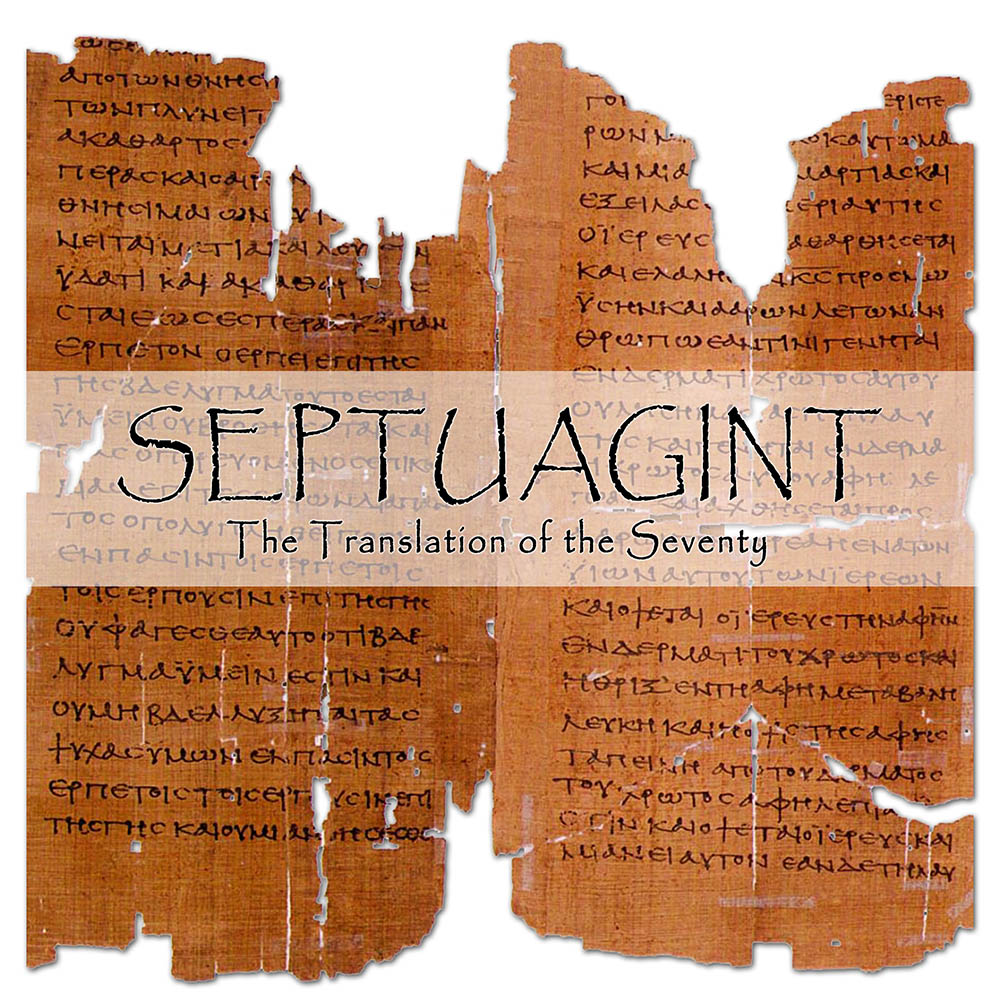
Here is a direct side-by-side comparison of the Masoretic Text with the LXX. I have concluded that the LXX is much to be preferred over the Masoretic Text, a position from which the Eastern Orthodox Church never deviated. Perhaps, if you take the time to read my comparisons and other articles, you will arrive at the same conclusion.
The Septuagint version I am using is the Lexham English Septuagint 2nd Edition, which is available in print or as part of Logos Bible Software. Occasionally I also use the Brenton translation of the LXX for insight into difficult passages.
If you want to know more, click on the following links.
- Why Christians Should Prefer the Septuagint over the Masoretic Text.
- Some Insights Gained through Comparing the Masoretic Text to the Septuagint
- More side by side comparisons of the Masoretic Text (MT) to the Septuagint (LXX).
| Masoretic Text | Septuagint | Significance |
|
1 The fool has said in his heart, “There is no God.” They are corrupt, They have done abominable works, There is none who does good. 2 The LORD looks down from heaven upon the children of men, To see if there are any who understand, who seek God. 3 They have all turned aside, They have together become corrupt; There is none who does good, No, not one. Psalm 14:1–3 (NKJV) |
1 The foolish said in his heart, “There is no God.” They destroyed and were abhorred in their practices. There is no one doing goodness; there is not even one. 2 The Lord looked out from the heavens upon the sons of humans, to see if there is one who understands or one who seeks out God. 3 All turned aside together. They became useless. There is not one doing goodness; there is not even one. Their throat is an opened grave. With their tongues they have dealt treacherously with one another. The poison of asps is under their lips, whose mouth is full of curses and bitterness. Their feet are quick to pour out blood. Destruction and misery are in their ways, and they know not the way of peace. There is no fear of God before their eyes. Psalm 13:1–3 (LES2) |
This psalm proves that the New Testament, as is the case 70-80% of the time, quotes from the LXX and not from the MT. In his letter to the Romans Paul quotes a portion of verse three that the MT omits. I underlined the part omitted from the MT. Below is Paul’s quote from Romans. 10 As it is written: “There is none righteous, no, not one; 11 There is none who understands; There is none who seeks after God. 12 They have all turned aside; They have together become unprofitable; There is none who does good, no, not one.” 13 “Their throat is an open tomb; With their tongues they have practiced deceit”; “The poison of asps is under their lips”; 14 “Whose mouth is full of cursing and bitterness.” 15 “Their feet are swift to shed blood; 16 Destruction and misery are in their ways; 17 And the way of peace they have not known.” 18 “There is no fear of God before their eyes.” Romans 3:10–18 (NKJV) This confirms that the LXX is the inspired Word of God. In addition, the MT says in verse three that those who forget God have become “corrupt,” but the LXX and NT agree that the word is “unprofitable” or “useless.” The same Greek word is used in both the LXX and NT, but is translated using different English words which mean the same thing. Why did the Masoretes omit this passage? Was it to delegitimize Paul or falsify the New Testament? We will probably never know for sure. |