 Introduction
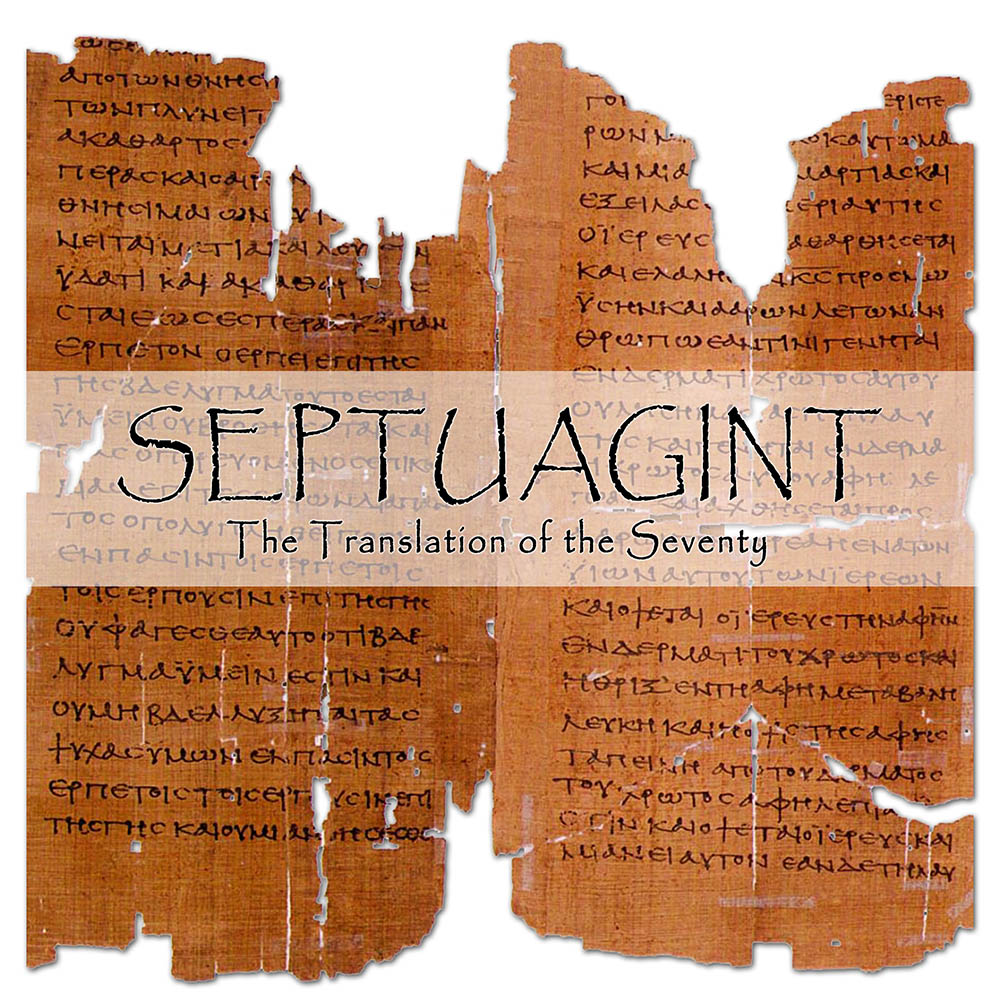
Many Christians are not familiar with the Septuagint, which is abbreviated as the LXX. It is an ancient (287 BC) Greek translation of the Old Testament from the now dead language some call Paleo-Hebrew. The Western church decided to abandon the LXX a few centuries after Christ as a result of Jerome’s choice to use a proto-Masoretic Hebrew version of the Old Testament for his Latin Vulgate Bible. Eventually what is called the Masoretic Text of the Hebrew Bible was adopted as the “gold standard” for the Hebrew scriptures in the West, even though many passages quoted from the LXX by the New Testament had been changed. This created some controversy at the time, but the MT won out. The Eastern Orthodox Church, however, has retained the LXX as its Old Testament until the present day.
Based upon what follows and my own comparisons of the MT to the LXX, I have come to believe that the MT was designed to hide the power of the Old Testament’s witness to Jesus the Messiah. Perhaps you will agree with me by the end of this article.
 Paleo-Hebrew
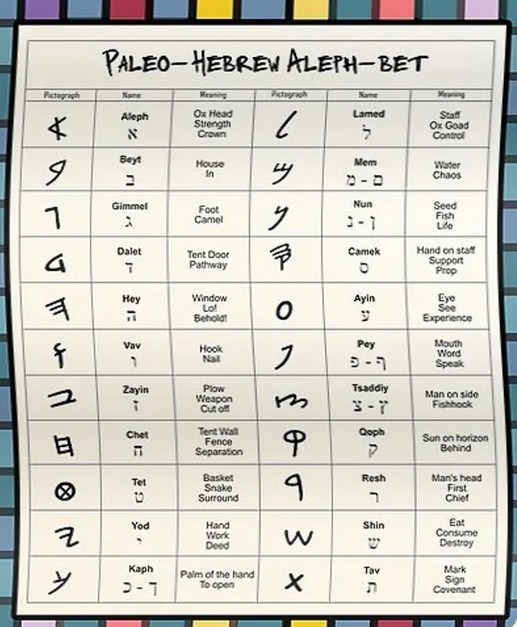
The original Hebrew scriptures were written in what is now called Paleo-Hebrew (c. 1000-586 BC). It was related to Sumerian and used a Phoenician pictograph script pictured on the right. The only fragments we have left are documents among the Dead Sea scrolls discovered at Qumran.
Modern Hebrew
Modern Hebrew was developed from Aramaic, the language of ancient Babylon, and uses a block style script. The script we see in modern Hebrew Bibles and on street signs in Israel is not the original script of the First Temple period. The transition to the “square” script occurred in stages:
-
- Aramaic Influence (The Exile): During the Babylonian exile (6th century BC), the Jewish people were heavily exposed to Aramaic, which functioned as the lingua franca of the Near East under the Neo-Babylonian and then the Achaemenid Persian Empires. The Aramaic script, also a descendant of the Phoenician system, was evolving into a stylized, more efficient form.
- The “Ashuri” Transition: Following the return from Babylon, there was a gradual shift. The Aramaic “square” style was adopted by Jewish scribes for writing Hebrew. This is why it is called Ashuri (Assyrian or Imperial Aramaic script). It wasn’t an overnight replacement; for several centuries, both scripts existed in parallel. The Dead Sea Scrolls, discovered at Qumran, provide clear evidence of this transition, with some texts written in the Paleo-Hebrew script and others in the evolving square script.
- Standardization: By the 1st century AD, Rabbinic Judaism began moving toward a standardized, formal script. The square script eventually became the standard for sacred texts, while the Paleo-Hebrew script was abandoned by Jews. (Gab AI)
The Septuagint
The Septuagint (LXX) was a Greek translation of the Hebrew scriptures put together by 72 (perhaps 70) Jewish scholars under the auspices of King Ptolemy II of Egypt, who wished to add a Greek version of the Hebrew scriptures to his library in Alexandria. Greek at the time was the dominant language in the world; so, the LXX soon became the most used compilation of the Old Testament in the Greek speaking world, which included Palestine. Paleo-Hebrew had become limited to scholars for the most part; so, for the scriptures to be properly understood by common people, they needed to be in Greek. The Pentateuch portion was completed by 282 BC. The rest of the Old Testament was completed around 246 BC. This original version of the Septuagint is called the Alexandrian version. Other versions came later and were called the Septuagint, but only a few were based on the original. Some later Greek translations were based on whatever version of Hebrew existed at the time.
Barry Setterfied, who did extensive research on the LXX, says that it was translated from Paleo-Hebrew directly into Greek. (The Alexandrian Septuagint History) This is extremely significant since it makes the LXX the oldest translation of the original Paleo-Hebrew scriptures which were inspired by the Holy Spirit.
The LXX gained widespread acceptance among the Jews and was the version used by Christians and quoted for the most part (70-80 %) in the New Testament. Manuscripts like Codex Vaticanus and Sinaiticus (4th century CE) are major witnesses to this.
The early Christians, many of whom were Jewish, quoted the Old Testament often in personal letters which still exist. Those quotes, as well as those made by the New Testament authors, usually match the Septuagint instead of the MT.
Rabbi Akiva’s Influence
By 100 AD the Christian church was growing rapidly all over the earth. The Romans had destroyed Jerusalem and the temple, thus fulfilling Jesus’ prophecy. By 135 AD, the failed Bar Kokhba rebellion had resulted in the expulsion of the Jews from their land and its being renamed Palestine. Prior to the Bar Kokhba revolt, during the siege of Jerusalem in 70 AD, the Emperor Vespasian authorized the establishment of a Jewish academy at Yavneh (Jamnia) which is located in the southern coastal plain of the Levant, roughly six kilometers from the Mediterranean Sea and about 20 kilometers south of Jaffa.
The rabbinic institutions and the rationale for them grew under the Roman aegis after the destruction of the Temple. They developed into the national government under the Romans. Yavneh, “Jamnia” in Greek, became the center of rabbinic authority. (Gruber, Daniel. Rabbi Akiva’s Messiah: The Origins of Rabbinic Authority (Kindle Locations 293-295). Elijah Publishing. Kindle Edition.)
Rabbi Akiva, who was born around 50 AD, was about 20 years old when Jerusalem and the temple were destroyed by the Romans. He was executed in 135 AD at the age of 85 by the Romans for his active role in supporting bar Kokhba during his rebellion, whom he publicly designated as the Jewish Messiah. Akiva hated Christ, Christians, and Christian writings. He rose to power at Yavneh and worked tirelessly to consolidate rabbinic power so that it was the dominant voice within Judaism, displacing all other influences, including the priesthood, the prophets, political rulers, the Torah, and even God.
The Jewish Encyclopedia defines “Rabbinical Authority” as “The power or right of deciding the Law, in dubious cases, or of interpreting, modifying, or amplifying, and occasionally of abrogating it, as vested in the Rabbis as its teachers and expounders.” (Gruber, Kindle Locations 2710-2712)
“The Rabbis are the source of their own authority to annul the Torah. .. The Rabbis could establish conditions and practices that contradicted and even nullified the Torah. According to the Rabbis, God Himself would obey whatever they decided. … The Rabbis claimed the sanction of the Torah for whatever they decreed, even if it was the uprooting of Torah. … This was more than the assertion of a different ‘religious’ system. The Torah governs every aspect of the life of Israel. By governing the Torah, the Rabbis would govern Israel. … The objective was to bring Israel under the rule of the Rabbis. If the Scriptures stood in the way, the Scriptures had to be uprooted. … There was a radical and irreconcilable conflict between the Torah and the Rabbis as to the basis and structure of authority, as well as its source and administration. That is why the Rabbis gave themselves the right to alter, revise, trespass and uproot the original commandments. … R. Akiva sought to fence the people off from the Torah and from all other influences that would have challenged rabbinic authority. In the system he erected, no one else had the right to interpret Torah. Not the am ha’aretz, nor the priests, nor the prophets, nor the Sadducees, the Qumran Covenanters, the Talmedei Yeshua, nor anyone else. Not even God.” [Daniel Gruber, Rabbi Akiva’s Messiah: The Origins of Rabbinic Authority, pp.82-85, Elijah Publishing, 1999 with references].
So while we do not have all the necessary before-and-after documents to accurately gauge the extent of Akiva’s influence on the text of Tanakh [Torah], it is fair to say that it was significant. To some extent, he set the canon and most likely “standardized” the Hebrew text itself. He authorized a new Greek translation and a new Aramaic Targum of his own text. In whatever language a Jew read or heard the Scriptures, he would be hearing from Akiva. (Gruber, Kindle locations 2378-2381)
Akiva authorized his disciple Aquila of Sinope to produce a Greek translation of the Old Testament to replace the Septuagint in order to remove some of the clear references to Christ and discredit the New Testament. This translation reflected his views.
The Encyclopedia Judaica adds that he also “inspired his disciple Aquila, a convert, to write a Greek translation of the Bible in the spirit of his teachings (Jerome to Isa. 7: 14). A careful examination of the translation… shows that it follows Akiva’s exegesis. The standard Aramaic translation of the Pentateuch, Targum Onkelos, invariably reflects Akiva’s halakhic rulings… (Gruber, Kindle locations 1150-1153)
“Of further significance in this direction was Akiva’s endeavor to establish the correct view of traditions and to reduce the number of divergent practices and views by giving in most cases only one opinion.” 36 An editor who is going to give only one opinion is going to give his own, or, what amounts to the same thing, the one with which he agrees. Here, as with the text of Tanakh [Torah], Akiva seems to have formulated a comprehensive strategy. With Tanakh, Akiva authorized a new Targum for those who spoke Aramaic, and a new Greek translation for those who did not. No matter what language a person used, Akiva established the authority. He did the same with the oral tradition. He put it in writing to increase his leverage against the traditional rabbis, but he knew that he had to formulate a plan for the transitional period. So he gave some of his disciples a new official mission. They would be the official reciters of the “correct” oral tradition. (Gruber, Kindle Locations 3426-3433)
Professor S.H. Horn (Archaeology, Andrews University, Michigan) writes:
“However, the facts – that a unified [Hebrew] text suddenly became the standard at the end of the first century and that not one copy of a divergent text survived (except the Dead Sea scrolls that had already been hidden when Jamnia convened), indicate clearly that the Council of Jamnia must have taken action in this matter. Moreover, the fact that Aquila, one of Akiva’s pupils, soon thereafter produced a new Greek translation that slavishly translated the [new] unified Hebrew text for the use of the Diaspora Jews gives credence to the idea that Akiva must have been a key influence in the standardization of the Hebrew text.”15
Only small remnants of the Paleo-Hebrew scriptures still exist, mainly fragments found at Qumran and various ancient inscriptions. This suggests that they could have been deliberately destroyed to prevent any direct comparison between them and the modern Hebrew translation called the MT. It fits Akiva’s pattern of eliminating all versions of the oral law of which he did not approve.
The new Greek translation was done by Akiva’s pupil Aquila and was completed in 128 AD. We know that this was a Greek version of what is now called the Masoretic text. This means that the Masoretic text must have been Akiva’s rabbinic version of the Hebrew Old Testament. All existing texts which were in accord with the LXX used by the Christians were then burnt. This is hinted at by Gruber’s comment that “The Rabbis decreed that even a Tanakh scroll should be burned if it was written by a [Christian]. ‘R. Nahman said: We have it on tradition that a scroll of the Law which has been written by a [Christian] should be burnt.’ R. Akiva says: One burns the whole thing, because it was not written in holiness.‘”13 It was under these conditions that the Masoretic text came into being and every divergent text they could find was destroyed [Professor S.H. Horne, “The Old Testament Text in Antiquity.”] Thus the process called the Council of Jamnia gave us the Hebrew Masoretic text in opposition to the Paleo-Hebrew which gave us the LXX. (Setterfield)
The Transition to Hebrew for the Old Testament
The Jews largely abandoned the LXX by the 3rd century as it became a badge of Christian identification.
- The Polemical Shift: When Christians pointed to the LXX—specifically prophecies like Isaiah 7:14 (parthenos/virgin)—to argue for the divinity of Jesus, Jewish authorities viewed the text as “Christianized” or corrupted.
- The Rise of Alternative Greek Versions: To counter the Christian use of the LXX, Jewish leadership encouraged or sanctioned new Greek translations that adhered strictly to the developing Hebrew tradition. The translation by Aquila of Sinope (c. 130 AD) is the most prominent example; it was designed to be a rigid, anti-Christian tool.
- Consolidation of the Masoretic Text: By the 2nd and 3rd centuries, the rabbinic movement—centered in places like Yavneh and later Tiberias—prioritized the Hebrew original and Aramaic Targums over the Greek translations. The LXX was largely relegated to the status of a relic of the “Hellenized” past, eventually becoming viewed as an inferior or inaccurate text in the eyes of the Rabbis. (Gab AI)
The Development of the Masoretic Text
- The Soferim (Scribes): Initially, the transmission of the text was oral and semi-controlled by the Soferim. They were fastidious, counting letters and words to ensure perfect transmission. However, the text remained largely consonantal.
- The Masoretes (6th–10th Century AD): The definitive work was done by groups of scribes known as the Masoretes (from Masorah, meaning “tradition”). Working primarily in Tiberias, they faced a critical problem: as Hebrew ceased to be a spoken language, the correct pronunciation of the ancient consonantal text risked being lost.
- The Innovation of Pointing: To preserve the exact pronunciation and prevent corruption, the Masoretes developed a system of dots and dashes placed above and below the consonants to indicate vowels (niqqud). They also added ta’amim (cantillation marks) to dictate the melodic chanting of the text during synagogue services.
By the 10th century, the Masoretic tradition stabilized. The most famous manuscript from this period is the Aleppo Codex (c. 920 AD) and the Leningrad Codex (1008 AD). These texts are considered to be the “gold standard” for the Hebrew Bible. (Gab AI)
The Church and the LXX
- The Greek East: In the Greek-speaking Church (the East), the LXX never stopped being the standard. It remains the official Old Testament of the Orthodox Church to this day. The Church consistently rejected the Jewish attempt to replace the LXX with newer Greek versions, viewing those versions as deliberate corruptions of the prophetic text.
- The Latin West: The shift in the West occurred much later and was driven by linguistic necessity rather than theological rejection. As Latin became the dominant language of Western Christianity, Jerome was commissioned (c. 382 AD) to produce the Vulgate.
- Jerome’s Decision: Jerome famously decided to translate the Old Testament directly from the Hebrew (the Hebraica Veritas) rather than from the existing Old Latin versions of the LXX. This was a radical move for the time and sparked significant controversy—the famous “revolt of the Oea congregation” over the change in the word for Jonah’s “gourd” illustrates that the common believers still considered the LXX to be the authoritative text.
- The Eventual Shift: Over the course of the Middle Ages, Jerome’s Vulgate gradually eclipsed the older Latin versions based on the LXX in the Western Church. By the time of the Reformation, the Vulgate was the standard, and the Reformers, in their zeal to return to the “original languages,” largely followed the Masoretic Text—further distancing Western Christianity from the Septuagintal tradition of the Apostles. (Gab AI)
[Evidence shows that the existence and persistent use of the ancient LXX can be traced from about 282 BC right through until 325 AD. Its common use is attested to by the quotations from it by the Jewish historian Eupolemos in the 2nd century BC and by the Dead Sea Scrolls from the 1st and 2nd centuries BC and 1st century AD. The Jewish writers Philo and Josephus also testify to its existence and use in the 1st century AD. From there, Christ, the Apostles, and the Church Fathers affirm its presence and validity right up until the period of the Council of Nicaea. It is around the time of this Council, and for some time after, that the next development takes place. The ancient LXX existed, then, as a generally available manuscript, but its existence became threatened by the orders of the Emperor Constantine in 331 AD. (Setterfield)
Origen was an influential scholar and heretic from the third century who denied the physical resurrection of Christ, the historicity of some parts of the Bible, and was a universalist. He was heavily influenced by Gnostic thought as well.
Origen sought to make the LXX mesh with the Masoretic text, thus compromising the LXX.
Origen was interested in coordinating the different translations of Scripture in existence. By this time the Jews had moved away from the ancient Alexandrian LXX as well as their own old form of Hebrew writing, known as Paleo-Hebrew. They had gravitated toward the Masoretic Scriptures, which had been formulated in an effort to discredit the use of Old Testament Scripture being used by the Christians to show those Scriptures prophesies (sic) were fulfilled by Jesus of Nazareth. Discussions between Jews and Christians had shown the ancient LXX and the newer Masoretic texts had some definite differences, especially in matters of Christology. Origen attempted to address the differences between them. By 250, he had completed his six-column comparison of Scripture versions, called the Hexapla.25
It is agreed that the six columns of Origen’s Hexapla in order were 1). The Masoretic Hebrew text, 2). A transliteration of the Masoretic Hebrew into Greek, 3). The Greek version of the Masoretic text produced by Rabbi Akiva’s pupil Aquila, 4). An overall precise Greek version of the Masoretic produced by Symmachus at the end of the 2nd century AD, 5). The ancient LXX Greek version, 6). Theodotion, who used the LXX but corrected it freely to conform it with the Masoretic text.26 Extant evidence shows that Origen made every effort to reconcile the different versions of Scripture present at his time. His goal was to produce an updated version of the ancient LXX, and in doing so, he changed parts to conform to the Masoretic. (Setterfield)
It is clear that the Hexapla stacked the deck against the LXX, putting 5 contrary versions up against it, all of which were linked to Jewish “anti-Christ” revisions.
In 319 AD, the Arian controversy broke out and spread throughout the Eastern Mediterranean. Its origin is uncertain, although it may have started via Origen. But however it started, this theology denied the deity of Jesus. In 321AD, Arius — after whom the heresy was named — was denounced by the Synod of Alexandria for his denial of Jesus’ deity. Arius went into Palestine under the protection of the historian Eusebius, who became the Bishop of Caesarea about 314 AD. He was also protected by another Eusebius, the Bishop of Nicomedia. It was here in Caesarea, which was now [then] held by Eusebius as Bishop, that Origen’s manuscript was still stored. (Setterfield)
It must also be noted that Eusebius of Caesarea’s’ tutor had been Pamphilus, and together they had written the “Defense of Origen.”27 Thus the works of Origen were viewed with favor by Eusebius and colored his theology. (Setterfield)
It is against this background of the Arian heresy, that another event occurred which is important in the context of the ancient LXX. In 331 AD, 12 years since the Arian heresy broke out, the Emperor Constantine asked his friend and historian, Bishop Eusebius of Caesarea, to make 50 copies of the Bible. Which version was he going to choose? Would it be the LXX which the church had used for over 300 years, or would he choose the newer Masoretic text, and if so, why? (Setterfield)
The fifty copies were made from Origen’s attempts to update the ancient LXX, bringing it in line with the Masoretic. The impetus for Eusebius to do this followed from his appreciation of Origen and the adherence of both of them to the heresy which did not accept Jesus as God. Interestingly, Rabbi Akiva, who had commissioned that same Masoretic text at the Council of Jamnia, had not accepted Jesus’ claims either. (He supported Bar Kokhba as Messiah instead.) (Setterfield)
Thus, the Masoretic from which our Old Testament translations come today, was the result of Akiva, Origen, and Eusebius, none of whom believed in the deity of Jesus Christ. (Setterfield)
Jerome (c. 347–420 AD) helped to shift the Western Church toward using the Hebrew text as the primary basis for the Old Testament rather than the Greek Septuagint. However, he did not translate from the Masoretic Text as we know it today, because the fully developed Masoretic tradition would not be completed for several centuries. (Setterfield)
Instead, Jerome worked from the Hebrew manuscripts available in Palestine around 390–405 AD. Those manuscripts were likely predecessors of what scholars call the proto-Masoretic text, the textual family from which the later Masoretic Text developed. When Jerome began producing what became the Latin Vulgate, he argued that Christians should return to the Hebrew text, which he called the Hebraica Veritas (“Hebrew Truth”). He learned Hebrew from Jewish teachers in Palestine and translated much of the Old Testament directly from Hebrew rather than from the Septuagint. This caused controversy. Augustine worried that replacing the familiar Septuagint could create confusion and potentially undermine passages Christians had traditionally used in theological arguments. (Setterfield)
For centuries after Jerome:
- The Western Church primarily used the Latin Vulgate.
- The Eastern churches continued using the Septuagint.
Jerome’s influence became much greater over a thousand years later. Reformers such as Martin Luther and John Calvin strongly preferred the Hebrew text for the Old Testament. Jerome’s arguments for the Hebraica Veritas were frequently cited in support of that position. As a result:
- Most Protestant Old Testaments came to be translated primarily from the Masoretic Text.
- The Roman Catholic Church retained the Vulgate as its official Bible for many centuries.
- The Eastern Orthodox churches continued to give the Septuagint a central role. (Chat GPT)
The following is a good summary of what led to the Masoretic Text. (Start at 3:35 and end at 7:25.)
The Dead Sea Scrolls
The Dead Sea Scrolls (DSS) provide us with more evidence. The DSS fall into two distinct groups: those written before 70 A.D. and those written after 100 A.D. The earlier DSS were reportedly written between 250 BC and 68 AD. It is important for us to understand that there was no chain of custody for these documents. Some scholars believe they were produced centuries later. If these dates are correct, at that time there were three distinct groups of Jewish leaders: the Pharisees, the Sadducees, and the Essenes. The Essenes lived in the caves near Qumran and had in their possession some of the ancient Scriptures. In addition to preserving these, they also copied some of the scrolls themselves between 150 BC and 68 AD.
Biblia Hebraica concludes from these and other facts: “Recent Aramaic findings among the Dead Sea Scrolls read most closely with the LXX, and not with the Masoretic text. … This suggests that the older LXX may be more accurate than the newer Masoretic text which was given to Jerome.” [When Jerome translated the Latin Vulgate, he was preparing to use the ancient LXX text. But his Jewish friends convinced him that the newer Masoretic Hebrew text was superior 21].
A more recent comment concerning the Dead Sea Scrolls is also relevant: In a review of some of this scholarship, Hershal Shanks notes that ”…many Hebrew texts [are available] that were the base text for Septuagintal translations…”. Further he notes that what “…texts like 4QSama show is that the Septuagintal translations are really quite reliable” and ”…gives new authority to the Greek translations against the Masoretic text”. Quoting Frank Moore Cross (a co-author of the book under review), Hershal continues ”We could scarcely hope to find closer agreement between the Old Greek [Septuagintal] tradition and 4QSama than actually is found in our fragments”.22 Modern scholarship on the DSS therefore supports the contention that the ancient LXX text is in accord with the original Hebrew Old Testament as it existed in the 1st and 2nd centuries BC and the early 1st century AD. (Setterfield)
A Few Examples of the Differences between the MT and LXX
Genealogies of Genesis 5 and 11
There is a systematic omission of 100 years from the age of the Patriarchs at the birth of the son in the chosen line in Genesis 5 and 11 in the Masoretic Text from Jamnia when compared with the ancient Septuagint, LXX. It needs to be noted that this omission was not there in the early work of Josephus prior to Jamnia. This is documented, as well, in the comments and responses to this article in the sections on the genealogies and the section on Josephus. Why was this cipher for 100 omitted from so many ages of the men at the birth of their sons? There was a strong belief at the time that it was dishonoring to the Lord to wait for a long time before the first child/son was born. What is interesting is that the men mentioned as being born in Genesis 5 and 11 are nowhere stated to be the firstborn sons. But evidently on the assumption that they were, the cipher for 100 was systematically chopped from the ages of the fathers at the sons’ births, as this was felt to be more honoring to the Lord. (Setterfield, Genealogy Differences)
Setterfield elsewhere shows that Akiva’s tampering with the genealogies of Genesis was done to accomplish two anti-Christ purposes. First, he wished to prove that Noah was the second Adam, not Christ. Secondly, he wished to claim that Melchisadek was Shem, not a type of Christ.
Jeremiah 23:6
In the short time that I have been comparing the LXX to the what my NKJV (MT) says, I have noted quite a few differences, some of them being quite significant. Some of the variances in the MT hide obvious allusions to Christ. One that is rather startling is the rendering of Jeremiah 23:6. The MT says:
6 In His days Judah will be saved, And Israel will dwell safely; Now this is His name by which He will be called: THE LORD OUR RIGHTEOUSNESS Jeremiah 23:6 (NKJV)
The Septuagint reads as follows:
6 In his days both Judah will be delivered, and Israel will encamp confidently, and this is his name, which the Lord will call him: “Jozadak.” Jeremiah 23:6 (LES2)
I believe this is a clear example of the MT removing an allusion to Christ. Jozadak was a priest whose son was the high priest, Joshua (Jesus). Here is what Zechariah 6:11 says in the LXX:
11 And you will take silver and gold, and you will make crowns and place them upon the head of the great priest Joshua, the son of Jehozadak. Zechariah 6:11 (LES2)
Since all scripture ultimately points to Christ, this passage in Zechariah, alluded to in Jeremiah 23:6, must refer to Christ’s being granted lordship in heaven after his ascension.
13 I continued to watch in a vision of the night, and look, upon the clouds of the heavens, a being like a son of man came, and the ancient of days was present, and his attendants were present with him. 14 Authority and royal honor was granted to him, and all the peoples of the earth according to races, and all honor will be directed to him, and his authority is an eternal authority that will not be removed, and his kingdom is one that will not perish. Daniel 7:13–14 (LES2)
Deuteronomy 32:43
Another striking example occurs in Hebrews 1:6. There we read, “And again, when God brings his first begotten into the world He says: ‘Let all the angels of God worship him’. ” This is referenced as a quote from Deuteronomy 32:43 in both the ancient Septuagint and the Dead Sea Scrolls as well as in the footnotes of a number of modern translations. However, when you try to look it up in our modern translations (all of which are from the Masoretic), it does not exist in Deuteronomy 32. Our modern translations only read “Rejoice, O Gentiles with His people; for He will avenge the blood of His servants … ” It is in the ancient versions we find the words: “Rejoice you heavens with him, and let all the angels of God worship him; rejoice you Gentiles with his people, and let all the sons of God strengthen themselves in him; for he will avenge the blood of his sons…” Thus the Masoretic text from Rabbi Akiva deletes a key passage pointing to the deity of Christ, a passage which the Apostles used in their presentation of the Gospel and which was part of their Old Testament. (Setterfield)
Psalm 40:6
Again in Hebrews 10:5, we find a difference. The writer quotes Psalm 40:6 from the ancient LXX. (Note that some Psalms in the LXX are numbered differently from the standard usage today. Thus Psalm 40 in our Bibles is actually Psalm 39 in the LXX). Hebrews quotes the Psalm, saying “Therefore, when He came into the world, He said: ‘Sacrifice and offering you did not desire, but a body you have prepared for me’…” Again, we cannot find these words in the modern translations.The Masoretic text is contorted by Rabbi Akiva to omit these words in Psalm 40. They have been replaced with “Sacrifice and offering you did not desire; my ears you have opened…” Thus, any implication regarding the Incarnation was deleted. These are but two of the many examples of quotes used by writers of the New Testament which do not match what we read today in our Old Testaments. (Setterfield)
Conclusion
When one compares key verses that have a connection to Christ, it is apparent that changes were made to blunt this testimony and cast doubt on the New Testament scriptures.
The fact that the Septuagint is quoted in the New Testament is the strongest argument that it is the version Christians should use.
If you take the time to read through the MT Old Testament and compare it to a parallel LXX translation, you will see for yourself. I am currently in the process of doing this and recording my findings, which you can access by clicking this link. I wrote an article describing some of what I have discovered in the process. I am enjoying viewing the Old Testament through the lens of the Septuagint. The various characters have come alive in a fresh new way. Often their words and dialogues seem more real and believable. I encourage everyone to read the LXX for yourself.