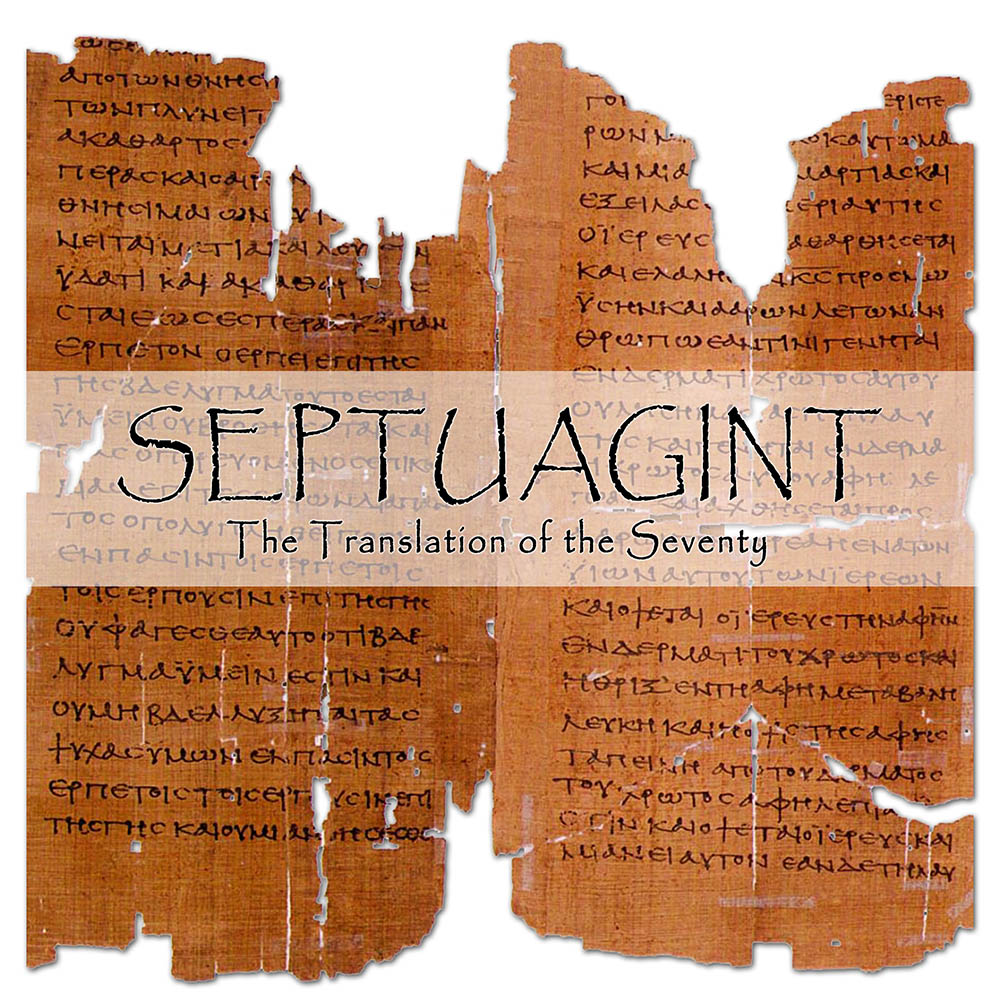
Rediscovering the Septuagint (LXX): Isaiah 53:1-5

I hope you will journey with me in rediscovering the beauty of God’s Word in the Septuagint (LXX). In 285 BC, the LXX was translated from paleo-Hebrew by 70 Jewish translators into Greek, the language of most of the civilized world at that time. Due to its pre-Christ and pre-fall of Jerusalem date, the LXX cannot be accused of being influenced by any underlying animosity toward Christ or Christianity or desire to elevate Judaism’s claim to God’s blessings or the promised land. Most Christians believe the Masoretic Text (MT), upon which our English Old Testament is based, is written in the original Hebrew, but it too is a translation from the ancient and by then dead paleo-Hebrew Phoenician pictograph script into the modern Hebrew block script derived from Aramaic. The Masoretes completed it between 600 t0 1000 AD, by which time the Jews had become hostile to the Christian message, which shows up in various omissions, changes, and obfuscations of verses and passages that clearly point to Christ in the LXX. 

Jesus taught us that all scripture points to him (John 5:39). As a rule, the Septuagint more clearly points to Jesus than does the MT.

In the West, Christians have not questioned the MT since Jerome chose it as the basis for his Latin Vulgate Old Testament. The Eastern Orthodox Church, to their credit, never deviated from the Septuagint, preserving it for later generations to rediscover. Because of the power of tradition, it is quite difficult for many of us in the West to think of the LXX as being more trustworthy than the MT, but I have found that a side-by-side comparison indicates otherwise.

In this series of articles, I have undertaken to illustrate the similarities and differences between the MT and LXX by examining various passages. Below is another example. The Septuagint version I am using is the Lexham English Septuagint 2nd Edition. It is available in print or digitally through Logos Bible Software. Occasionally I reference Brenton’s translation, which is a good one, but the English is somewhat dated.

Masoretic Text Septuagint Significance

1 Who has believed our report? And to whom has the arm of the LORD been revealed? 2 For He shall grow up before Him as a tender plant, And as a root out of dry ground. He has no form or comeliness; And when we see Him, There is no beauty that we should desire Him. Isaiah 53:1–2 (NKJV) 

1 O Lord, who has believed our report? And to whom has the arm of the Lord been revealed? 2 We proclaimed as a child before him, as a root in a thirsty land. He has no appearance or glory. And we saw him, and he had no appearance or beauty. Isaiah 53:1–2 (LES2) 

The MT and LXX perfectly agree on how they translate the first verse, but that synchronicity is short lived. 

The MT says, “He shall grow up before him as a tender plant, and as a root out of dry ground.” The LXX, however, says, “We proclaimed him as a child before him, as a root in a thirsty land.” I have already decided to go with the LXX as a rule, unless I have a good reason not to do so, because it was used by the early church and most often quoted in the NT.  So let’s see what we can make of it in this case.

The Greek word for “proclaimed” is anangello, which means to proclaim or announce. We see the word for angel woven into it. Angels were messengers. What comes to my mind is the announcement of the arrival of the Christ child by the angels the night Jesus was born. (Luke 2:8-12)

Both the MT and LXX speak of our Lord being a root out of dry ground or in a thirsty land. Paul later writes about Christ being the root.

16 For if the firstfruit is holy, the lump is also holy; and if the root is holy, so are the branches. 17 And if some of the branches were broken off, and you, being a wild olive tree, were grafted in among them, and with them became a partaker of the root and fatness of the olive tree, 18 do not boast against the branches. But if you do boast, remember that you do not support the root, but the root supports you. Romans 11:16–18 (NKJV) 

It is apparent that the root to which Isaiah and Paul both refer is Jesus. Sadly, many Dispensationalists and Christian Zionists teach that the root is Israel, the natural offspring of Abraham, but that is simply another example taking what belongs to Christ and giving it to someone else, in this case to the nation of Israel.

In the MT, the Lord is described as having “no form or comeliness.” The Hebrew word for “comeliness” can also mean splendor, which is more in keeping with the LXX’s “glory.” For the remainder of verse 2, the MT and LXX are in agreement.

3 He is despised and rejected by men, A Man of sorrows and acquainted with grief. And we hid, as it were, our faces from Him; He was despised, and we did not esteem Him. Isaiah 53:3 (NKJV) 

3 Instead, his appearance was dishonored and coming to an end among the sons of humans, a human who is in misfortune and who knows how to bear sickness, for his face has been turned back; he was dishonored and was not esteemed. Isaiah 53:3 (LES2) 

The MT, in my opinion, hits the nail on the head with its translation of the first part of verse 3. Jesus was dishonored and rejected because his appearance was not “comely.” His appearance, social status, political disconnectedness, and humility did not fit the profile of a highly esteemed person in the world.

The second part of the verse, which the MT translates as “a man of sorrows,” in the Greek literally means someone who has suffered blows and knows how to carry malakia, a word that means sickness, debility, weakness, or infirmity. The NT says that Jesus purchased our healing through the blows he received during his passion and death.

24 who Himself bore our sins in His own body on the tree, that we, having died to sins, might live for righteousness—by whose stripes you were healed. 1 Peter 2:24 (NKJV) 

The word for “stripes” in Greek is molops, which means bruise, wale, or wound that trickles with blood.

The MT next says that we hid our faces from him, but the LXX says that his face was turned back or away apparently from  those who observed or mistreated him, or, perhaps, from us in a spiritual sense. This would have been because of the dishonor and shame he endured during his passion and crucifixion. The suffering Jesus experienced was not simply physical. The Creator and Lord was humiliated and put to scorn as he suffered as God’s Lamb. Anyone who has experienced such treatment knows how painful it can be. Nevertheless, Jesus willingly endured it for our sake. His resoluteness and courage had been prophesied.

7 And the … Lord has become a helper to me; on account of this I was not ashamed, but I set my face like a solid rock, and I knew that I would surely not be ashamed. 8 Because the one who justifies me is approaching.  Isaiah 50:7–8a (LES2)

4 Surely He has borne our griefs And carried our sorrows; Yet we esteemed Him stricken, Smitten by God, and afflicted. 5 But He was wounded for our transgressions, He was bruised for our iniquities; The chastisement for our peace was upon Him, And by His stripes we are healed. Isaiah 53:4–5 (NKJV) 

4 This one carries our sins and suffers pain for us, and we regarded him as one who is in difficulty, misfortune, and affliction. 5 But he was wounded because of our sins, and he became weakened because of our lawless acts. The discipline of our peace was upon him; by his bruise we were healed. Isaiah 53:4–5 (LES2) 

I have taught and written on the healing ministry of Jesus based on this passage in the MT. The Hebrew says that Jesus carried our sicknesses (Hebrew – choli) and carried our pain or suffering (Hebrew – makob). The verbs are the same ones used later to describe our Lord bearing our sins in verse 12. The divine logic is that Jesus procured our healing as surely as he did our forgiveness. Now let’s see if the LXX supports this view.

Verse 4 in the LXX says that Jesus carries our sins and suffered pain for us. This is quite different. What does the NT say? Matthew quoted Isaiah 53:4 to provide the theology for Jesus’ healing ministry.

16 When evening had come, they brought to Him many who were demon-possessed. And He cast out the spirits with a word, and healed all who were sick, 17 that it might be fulfilled which was spoken by Isaiah the prophet, saying: “He Himself took our infirmities And bore our sicknesses.” Matthew 8:16–17 (NKJV) 

Matthew’s quote agrees with a literal rendering of the MT, rather than the LXX or the traditional English rendering of the MT in many Bible translations, which seems to steer us away from Jesus’ healing ministry. The early church understood Isaiah 53 as the basis for divine healing, and so should we.

This is one of the few times the MT agrees more with the NT than does the LXX; so, what do we do with the LXX’s rendering of this verse? 

I already pointed out that verse 3 in the LXX testifies to Jesus’ healing ministry; so, that is not in question. Verse 5 also supports this – “by his stripes or bruise we were healed,” as corroborated by 1 Peter 2:24. 

Even though the NT usually follows the LXX, which it does 70-80% of the time, this time it does not. I can only conclude that Matthew had another source, perhaps a proto-Masoretic text such as the Great Isaiah scroll found at Qumran, that he chose and which the Holy Spirit confirmed is the word of God. It certainly agrees with the rest of Isaiah 53 and other scriptures. My general rule is to go with the LXX, except when the MT better points to Jesus or is quoted in the NT. 

Moving on, in the second part of verse 4, the MT says, “we esteemed Him stricken, smitten by God, and afflicted.” The LXX reads, “we regarded him as one who is in difficulty, misfortune, and affliction,” making no mention of its being done by God. Nevertheless, I am sure Jesus’ persecutors thought that he was being justly punished by God for his blasphemy, something the Talmud continues to teach. The Greek words literally can also mean, “great trouble, blows, and oppression.”

Next, the MT says he “was wounded (or pierced through – NASB) for our transgressions. The LXX says he was wounded, (literally – traumatized) for our sins. The MT goes on to say that “he was bruised (or crushed) for our iniquities. The LXX says, “he was weakened because of our lawless acts.” Our sin traumatized and weakened our Lord on the cross!

Both the MT and LXX agree that Jesus was chastened or disciplined for our peace. His suffering and death followed by his resurrection earned our justification, which is the source of our peace. (Romans 5:1) This verse in Isaiah concludes with both the MT and LXX agreeing that his stripes or bruises earned our healing. This brings us back to the beginning of this passage and confirms that our physical, emotional, and spiritual healing was provided by what Jesus suffered while making atonement for us.

So far, it seems that this chapter can be best appreciated by combining the insights of the MT and LXX. To my knowledge, this one of the few times that this is the case in all the passages I have compared. Perhaps because this chapter is so pivotal in understanding Jesus’ Lamb of God ministry God did not allow anyone to tamper with or falsify it in any way.

Conclusion

If you want to know more about why Christians should prefer the Septuagint to the MT, click on this link. In another article, I share some of the things I have so far learned by making this comparison. As for me, I now prefer the LXX. It was Paul’s and the other apostles’ standard for Old Covenant truth, was used by synagogues in Jesus’s day,  and is most often quoted in the New Testament. That makes it good enough for me.

More articles comparing the Septuagint to the MT

Rediscovering the Septuagint (LXX): Isaiah 52:13-15

I hope you will journey with me in rediscovering the beauty of God’s Word in the Septuagint (LXX). In 285 BC, the LXX was translated from paleo-Hebrew by 70 Jewish translators into Greek, the language of most of the civilized world at that time. Due to its pre-Christ and pre-fall of Jerusalem date, the LXX cannot be accused of being influenced by any underlying animosity toward Christ or Christianity or desire to elevate Judaism’s claim to God’s blessings or the promised land. Most Christians believe the Masoretic Text (MT), upon which our English Old Testament is based, is written in the original Hebrew, but it too is a translation from the ancient and by then dead paleo-Hebrew Phoenician pictograph script into the modern Hebrew block script derived from Aramaic. The Masoretes completed it between 600 t0 1000 AD, by which time the Jews had become hostile to the Christian message, which shows up in various omissions, changes, and obfuscations of verses and passages that clearly point to Christ in the LXX. 

Jesus taught us that all scripture points to him (John 5:39). As a rule, the Septuagint more clearly points to Jesus than does the MT.

In the West, Christians have not questioned the MT since Jerome chose it as the basis for his Latin Vulgate Old Testament. The Eastern Orthodox Church, to their credit, never deviated from the Septuagint, preserving it for later generations to rediscover. Because of the power of tradition, it is quite difficult for many of us in the West to think of the LXX as being more trustworthy than the MT, but I have found that a side-by-side comparison indicates otherwise.

In this series of articles, I have undertaken to illustrate the similarities and differences between the MT and LXX by examining various passages. Below is another example. The Septuagint version I am using is the Lexham English Septuagint 2nd Edition. It is available in print or digitally through Logos Bible Software. Occasionally I reference Brenton’s translation, which is a good one, but the English is somewhat dated.

Masoretic Text Septuagint Significance

13 Behold, My Servant shall deal prudently; He shall be exalted and extolled and be very high. 14 Just as many were astonished at you, So His visage was marred more than any man, And His form more than the sons of men;  Isaiah 52:13–14 (NKJV) 

13 Look! My child will understand and be raised up and be magnified very much. 14 The way many will be impressed by you, so your appearance will be despised by people and your glory by the peopleIsaiah 52:13–14 (LES2) 

The MT calls this one a servant or slave, but the LXX says he is God’s child. We know now that this passage refers to Jesus, God’s only begotten Son, who indeed served God, but was by identity, God’s beloved Son. (Matthew 3:17, Mark 9:7, Luke 9:35, Matthew 17:5)

“Deal prudently” and “understand” mean essentially the same things in Hebrew and Greek, but were translated using different English words.

The MT’s “astonished” means “desolated or appalled.” This is very different from the LXX’s “impressed,” which means “amazed” or “confounded.” Perhaps amazed and confounded could be taken together, but the translator thought impressed worked best. 

The MT says “his visage was marred more than any man, and his form more than the sons of men,” but the LXX says “your appearance will be despised by people and your glory by the people.” Most people who apply this passage to Christ, as it should be, think that the MT refers to the severe beating and other damage done to Christ’s face and body during the scourging and crucifixion. There are numerous references in the gospels to the beating Jesus endured, but I do not know of any NT quotes of this passage from the MT. Perhaps there is one of which I am unaware.

The LXX, on the other hand, focuses on his being despised, something that continues to this day. His name is still used as a common vain expression by those who do not revere him as Lord. His glory as the risen Lord is not recognized or appreciated by the vast majority of humanity.

Another difference in this passage is that the MT talks about Christ in the third person; whereas, the LXX addresses him directly. This is significant. I imagine that as Jesus read these verses, he understood them as a message to him from his Father, not simply a third person description. These seemingly slight changes that the MT makes to the text all add up to a significant tampering with God’s Word, in my opinion. As I wrote before, it might be compared to death by a thousand cuts instead on by one thrust of the sword.

15 So shall He sprinkle many nations. Kings shall shut their mouths at Him; For what had not been told them they shall see, And what they had not heard they shall consider. Isaiah 52:15 (NKJV)  15 Thus many nations will be impressed at him, and kings will shut their mouth, because those to whom it has not been declared concerning him will see, and those who have not heard will understand. Isaiah 52:15 (LES2) 

The MT says, “so shall he sprinkle many nations,” which has always been applied to the blood Jesus shed on the cross, which is applied to us for the forgiveness of sins.

1 Peter, an apostle of Jesus Christ, To the pilgrims of the Dispersion in Pontus, Galatia, Cappadocia, Asia, and Bithynia, 2 elect according to the foreknowledge of God the Father, in sanctification of the Spirit, for obedience and sprinkling of the blood of Jesus Christ: Grace to you and peace be multiplied. 1 Peter 1:1–2 (NKJV) 

The LXX, however, translates this segment as “thus many nations will be “impressed” with him.” The Greek word for impressed means to “wonder” or “marvel.” Whatever causes this wonder and marveling, probably the resurrected glory of our Lord, will cause kings and those in authority to shut their mouths. 

Eventually, at the Second Coming, all people will come to understand who Christ is, the Lord of Glory. 

Perhaps Paul derived the following verse from this verse in Isaiah.

9 These shall be punished with everlasting destruction from the presence of the Lord and from the glory of His power, 10 when He comes, in that Day, to be glorified in His saints and to be admired among all those who believe, because our testimony among you was believed. 2 Thessalonians 1:9–10 (NKJV) 

The Greek word that is translated “admired” is thaumazo, the same word used in the LXX, which is translated as “wonder” or “marvel.”  Paul did not pull his theology out of thin air. He was very familiar with the gospel according to Isaiah. The Second Coming will be the event that will cause kings and all people of the earth to be quiet and bow their knee to our Lord.

11 For it is written: “As I live, says the LORD, Every knee shall bow to Me, And every tongue shall confess to God.” 12 So then each of us shall give account of himself to God. Romans 14:11–12 (NKJV) 


This is a most interesting passage to use to compare the MT to the LXX. Either way we go, both seem to point to Christ, but in a different way. The MT focuses on the Lamb of God ministry; whereas, the LXX focuses on the Lordship of Christ. Both are true, but Christ’s lordship is the claim that is most offensive to the world and which is essential to the gospel message. (Romans 10:9-10)

Conclusion

If you want to know more about why Christians should prefer the Septuagint to the MT, click on this link. In another article, I share some of the things I have so far learned by making this comparison. As for me, I now prefer the LXX. It was Paul’s and the other apostles’ standard for Old Covenant truth, was used by synagogues in Jesus’s day,  and is most often quoted in the New Testament. That makes it good enough for me.

More articles comparing the Septuagint to the MT

Rediscovering the Septuagint (LXX): Isaiah 52:1-10

I hope you will journey with me in rediscovering the beauty of God’s Word in the Septuagint (LXX). In 285 BC, the LXX was translated from paleo-Hebrew by 70 Jewish translators into Greek, the language of most of the civilized world at that time. Due to its pre-Christ and pre-fall of Jerusalem date, the LXX cannot be accused of being influenced by any underlying animosity toward Christ or Christianity or desire to elevate Judaism’s claim to God’s blessings or the promised land. Most Christians believe the Masoretic Text (MT), upon which our English Old Testament is based, is written in the original Hebrew, but it too is a translation from the ancient and by then dead paleo-Hebrew Phoenician pictograph script into the modern Hebrew block script derived from Aramaic. The Masoretes completed it between 600 t0 1000 AD, by which time the Jews had become hostile to the Christian message, which shows up in various omissions, changes, and obfuscations of verses and passages that clearly point to Christ in the LXX. 

Jesus taught us that all scripture points to him (John 5:39). As a rule, the Septuagint more clearly points to Jesus than does the MT.

In the West, Christians have not questioned the MT since Jerome chose it as the basis for his Latin Vulgate Old Testament. The Eastern Orthodox Church, to their credit, never deviated from the Septuagint, preserving it for later generations to rediscover. Because of the power of tradition, it is quite difficult for many of us in the West to think of the LXX as being more trustworthy than the MT, but I have found that a side-by-side comparison indicates otherwise.

In this series of articles, I have undertaken to illustrate the similarities and differences between the MT and LXX by examining various passages. Below is another example. The Septuagint version I am using is the Lexham English Septuagint 2nd Edition. It is available in print or digitally through Logos Bible Software. Occasionally I reference Brenton’s translation, which is a good one, but the English is somewhat dated.

Masoretic Text Septuagint Significance

1 Awake, awake! Put on your strength, O Zion; Put on your beautiful garments, O Jerusalem, the holy city! For the uncircumcised and the unclean Shall no longer come to you. 2 Shake yourself from the dust, arise; Sit down, O Jerusalem! Loose yourself from the bonds of your neck, O captive daughter of Zion! 3 For thus says the LORD: “You have sold yourselves for nothing, And you shall be redeemed without money.” Isaiah 52:1–3 (NKJV) 

1 Awake! Awake, O Zion! Put on your strength, O Zion, and you, Jerusalem, put on your glory, holy city. The uncircumcised and the unclean will not pass through you any longer. 2 Shake off the dust and arise! Sit, Jerusalem! Release the chain from your neck, captive daughter of Zion. 3 Because this is what the Lord says: “You were sold for nothing, and you will be redeemed without silver.” Isaiah 52:1–3 (LES2) 

The LXX commands Jerusalem to put on her glory, as opposed to the MT’s “garments.” If garments are taken to mean the righteousness of Christ, the meaning is essentially the same. Instead of saying the uncircumcised and unclean will no longer come to you, the LXX says they will pass through you no longer. Christ calls sinner to come to him and be saved and transformed. When they leave him they are not the same.

9 Do you not know that the unrighteous will not inherit the kingdom of God? Do not be deceived. Neither fornicators, nor idolaters, nor adulterers, nor homosexuals, nor sodomites, 10 nor thieves, nor covetous, nor drunkards, nor revilers, nor extortioners will inherit the kingdom of God. 11 And such were some of you. But you were washed, but you were sanctified, but you were justified in the name of the Lord Jesus and by the Spirit of our God. 1 Corinthians 6:9–11 (NKJV) 

Jesus would never tell the unsaved to stay away.

31 Jesus answered and said to them, “Those who are well have no need of a physician, but those who are sick. 32 I have not come to call the righteous, but sinners, to repentance.” Luke 5:31–32 (NKJV) 

However, it is true that the unsaved cannot find salvation in old covenant Judaism or the Law. It is only available in Christ. Therefore, sinners will not be drawn to old covenant Israel. Those who are drawn to her are bewitched by legalism. (Galatians 3:1)

The MT says that Jerusalem sold herself, but the LXX says she was sold, presumably by God, as a consequence for her sins. (Isaiah 50:1)

4 For thus says the Lord GOD: “My people went down at first Into Egypt to dwell there; Then the Assyrian oppressed them without cause. 5 Now therefore, what have I here,” says the LORD, “That My people are taken away for nothing? Those who rule over them Make them wail,” says the LORD, “And My name is blasphemed continually every day. Isaiah 52:4–5 (NKJV) 

4 This is what the lord Lord says: “Formerly my people went down into Egypt to dwell there, and they were led to the Assyrians by force, 5 and now why are you here?” This is what the Lord says: “Because my people were taken for nothing, be impressed and wail.” This is what the Lord says: “Because of you my name is always blasphemed among the nations. Isaiah 52:4–5 (LES2) 

There is a big difference between the Assyrians oppressing the Jews without cause and being led them to them by force. I am not quite sure what to make of this. The unsuccessful Assyrian attack upon Jerusalem during Isaiah’s lifetime was in 701 BC. The northern kingdom was defeated and led into captivity before Isaiah’s lifetime. Perhaps that is the reference.

The captivity in Egypt was part of God’s plan to eventually bring them out as a special nation called by God. The later captivities with regard to Assyria and Babylon were due to Israel’s sinful rebellion against God, because of which God’s name was being continually blasphemed among the nations. The MT omits the direct blame on the Jews for this blasphemy. Paul quoted verse 5 as it is written in the LXX.

23 You who make your boast in the law, do you dishonor God through breaking the law? 24 For “the name of God is blasphemed among the Gentiles because of you,” as it is written. Romans 2:23–24 (NKJV) 

The way the MT handles this verse is in keeping with other places where it seems to understate Israel’s sin.

6 Therefore My people shall know My name; Therefore they shall know in that day That I am He who speaks: ‘Behold, it is I.’ ” 7 How beautiful upon the mountains Are the feet of him who brings good news, Who proclaims peace, Who brings glad tidings of good things, Who proclaims salvation, Who says to Zion, “Your God reigns!” Isaiah 52:6–7 (NKJV) 

6 Because of this, my people will know my name in that day, that I myself am the one who speaks. I am present 7 as an hour upon the mountains, as the feet of one who brings the good news of peace, as the one who brings the good news of good things; for I will make your salvation heard, saying, ‘O Zion, your God will reign!’ ” Isaiah 52:6–7 (LES2) 

The only name under heaven whereby we may be saved is the name of Jesus. (Acts 4:12) That day refers to the coming of the Messiah, Jesus the Lord, who liberates sinners from the tyranny of the devil, sin, disease, and death. It could also refer to the day of his resurrection. I believe that verses 6 and 7 refer to Christ bringing the good news of salvation at God’s appointed hour or time, which was beautiful in so many ways. 

11 All things which he made were beautiful in his seasonEcclesiastes 3:11a (LES2) 

When Christ was born at God’s appointed time, the angel announced to the shepherds.

10 Then the angel said to them, “Do not be afraid, for behold, I bring you good tidings of great joy which will be to all people. 11 For there is born to you this day in the city of David a Savior, who is Christ the Lord. Luke 2:10–11 (NKJV) 

God’s salvation in Christ has been heard all over the world through Christian evangelists who announce the reign of Christ the Lord. Paul interprets this passage to apply to them.

14 How then shall they call on Him in whom they have not believed? And how shall they believe in Him of whom they have not heard? And how shall they hear without a preacher? 15 And how shall they preach unless they are sent? As it is written: “How beautiful are the feet of those who preach the gospel of peace, Who bring glad tidings of good things!” 16 But they have not all obeyed the gospel. For Isaiah says, “LORD, who has believed our report?” Romans 10:14–16 (NKJV) 

This shows that the Holy Spirit intends for us to apply this passage from Isaiah to Christ and his church. Paul segued into the opening verse of Isaiah 53 at the end of the above passage, which confirms we are not taking this passage out of context.

8 Your watchmen shall lift up their voices, With their voices they shall sing together; For they shall see eye to eye When the LORD brings back Zion. 9 Break forth into joy, sing together, You waste places of Jerusalem! For the LORD has comforted His people, He has redeemed Jerusalem. 10 The LORD has made bare His holy arm In the eyes of all the nations; And all the ends of the earth shall see The salvation of our God. Isaiah 52:8–10 (NKJV) 

8 For the voice of those who guard you will be lifted up, and with their voice they will be cheerful together, for eyes will look to eyes, when the Lord shows mercy to Zion. 9 Let the deserted places of Jerusalem break forth together with cheer, because the Lord has shown mercy to her and has rescued Jerusalem. 10 The Lord will reveal his holy arm before all the nations, and all the ends of the earth will see the salvation that is from our God. Isaiah 52:8–10 (LES2) 

The mercy God ultimately showed to Zion was by sending the Messiah and Savior, Jesus. He would have rescued Jerusalem, but the Jews, for the most part, rejected their Messiah, bringing terrible judgment upon them in 70 AD.

34 “O Jerusalem, Jerusalem, the one who kills the prophets and stones those who are sent to her! How often I wanted to gather your children together, as a hen gathers her brood under her wings, but you were not willing! 35 See! Your house is left to you desolate; and assuredly, I say to you, you shall not see Me until the time comes when you say, ‘Blessed is He who comes in the name of the LORD!’ ” Luke 13:34–35 (NKJV) 

As a result of the Jewish rejection of the Messiah, the door of salvation was opened even wider for the nations to avail of what Israel snubbed.

22 What if God, wanting to show His wrath and to make His power known, endured with much longsuffering the vessels of wrath prepared for destruction, 23 and that He might make known the riches of His glory on the vessels of mercy, which He had prepared beforehand for glory, 24 even us whom He called, not of the Jews only, but also of the Gentiles? 25 As He says also in Hosea: “I will call them My people, who were not My people, And her beloved, who was not beloved.” 26 “And it shall come to pass in the place where it was said to them, ‘You are not My people,’ There they shall be called sons of the living God.” 27 Isaiah also cries out concerning Israel: “Though the number of the children of Israel be as the sand of the sea, The remnant will be saved. 28 For He will finish the work and cut it short in righteousness, Because the LORD will make a short work upon the earth.” 29 And as Isaiah said before: “Unless the LORD of Sabaoth had left us a seed, We would have become like Sodom, And we would have been made like Gomorrah.” 30 What shall we say then? That Gentiles, who did not pursue righteousness, have attained to righteousness, even the righteousness of faith; 31 but Israel, pursuing the law of righteousness, has not attained to the law of righteousness. 32 Why? Because they did not seek it by faith, but as it were, by the works of the law. For they stumbled at that stumbling stone. 33 As it is written: “Behold, I lay in Zion a stumbling stone and rock of offense, And whoever believes on Him will not be put to shame.Romans 9:22–33 (NKJV) 

Now, some 2000 years later, the ends of the earth have seen the salvation of God in Christ. God will glorify himself in the Israel of God, the church, which is composed of both Jews and Gentiles who have confessed Christ is Lord. (Ephesians 3:21)

Conclusion

If you want to know more about why Christians should prefer the Septuagint to the MT, click on this link. In another article, I share some of the things I have so far learned by making this comparison. As for me, I now prefer the LXX. It was Paul’s and the other apostles’ standard for Old Covenant truth, was used by synagogues in Jesus’s day,  and is most often quoted in the New Testament. That makes it good enough for me.

More articles comparing the Septuagint to the MT

Rediscovering the Septuagint (LXX): Isaiah 51:4-11

I hope you will journey with me in rediscovering the beauty of God’s Word in the Septuagint (LXX). In 285 BC, the LXX was translated from paleo-Hebrew by 70 Jewish translators into Greek, the language of most of the civilized world at that time. Due to its pre-Christ and pre-fall of Jerusalem date, the LXX cannot be accused of being influenced by any underlying animosity toward Christ or Christianity or desire to elevate Judaism’s claim to God’s blessings or the promised land. Most Christians believe the Masoretic Text (MT), upon which our English Old Testament is based, is written in the original Hebrew, but it too is a translation from the ancient and by then dead paleo-Hebrew Phoenician pictograph script into the modern Hebrew block script derived from Aramaic. The Masoretes completed it between 600 t0 1000 AD, by which time the Jews had become hostile to the Christian message, which shows up in various omissions, changes, and obfuscations of verses and passages that clearly point to Christ in the LXX. 

Jesus taught us that all scripture points to him (John 5:39). As a rule, the Septuagint more clearly points to Jesus than does the MT.

In the West, Christians have not questioned the MT since Jerome chose it as the basis for his Latin Vulgate Old Testament. The Eastern Orthodox Church, to their credit, never deviated from the Septuagint, preserving it for later generations to rediscover. Because of the power of tradition, it is quite difficult for many of us in the West to think of the LXX as being more trustworthy than the MT, but I have found that a side-by-side comparison indicates otherwise.

In this series of articles, I have undertaken to illustrate the similarities and differences between the MT and LXX by examining various passages. Below is another example. The Septuagint version I am using is the Lexham English Septuagint 2nd Edition. It is available in print or digitally through Logos Bible Software. Occasionally I reference Brenton’s translation, which is a good one, but the English is somewhat dated.

Masoretic Text Septuagint Significance

4 “Listen to Me, My people; And give ear to Me, O My nation: For law will proceed from Me, And I will make My justice rest As a light of the peoples. 5 My righteousness is near, My salvation has gone forth, And My arms will judge the peoples; The coastlands will wait upon Me, And on My arm they will trust. Isaiah 51:4–5 (NKJV) 

4 Listen to me, listen to me, my people, and you kings, give ear to me, because the law will go forth from me, and my judgment as a light to the nations. 5 My righteousness approaches quickly, and even my salvation will go forth as a light, and nations will hope in my strength. Islands will wait for me and will hope in my strength. Isaiah 51:4–5 (LES2) 

Once we understand that the Old Testament scriptures point to Christ rather than to a resurrection of old covenant Israel, our grasp of what they mean will increase. 

God’s people have always been those who relate to him by faith, going all the way back to Abraham and continuing into the New Covenant. (Galatians 3:9) Therefore, when God speaks to his people, he is speaking to those who are chosen in Christ before the foundation of the world. (Ephesians 1:4) The elect in Christ is a nation of kings and priests (1 Peter 2:9). God announces to his people that his justice or judgment will be a light to the nations. We know that refers to Christ, about whom it was said he would be a light to the Gentiles. (Acts 13:47)

The MT gets it wrong by emphasizing judgment instead of salvation. God’s judgment fell on Christ so that those who believe in him will be justified. Instead of the MT’s “My arms will judge the peoples,” the LXX says, “nations will hope in my strength.” The gospel has reached the nations bringing hope to the lost.

6 Lift up your eyes to the heavens, And look on the earth beneath. For the heavens will vanish away like smoke, The earth will grow old like a garment, And those who dwell in it will die in like manner; But My salvation will be forever, And My righteousness will not be abolished. Isaiah 51:6 (NKJV) 

6 Lift your eyes up to the heavens and look at the earth below, for the heavens will become solid like smoke, and the earth will grow old like a garment, and those who inhabit it will die just like these things, but my salvation will be for eternity, and my righteousness will certainly not come to an end. Isaiah 51:6 (LES2) 

These two verses are essentially the same, except where the LXX says the heavens will become solid like smoke. To me that does not make sense; so, I am inclined to go with the MT here. The Brenton translation chose to use “the heavens were darkened with smoke.” Perhaps that is closer.

7 “Listen to Me, you who know righteousness, You people in whose heart is My law: Do not fear the reproach of men, Nor be afraid of their insults. 8 For the moth will eat them up like a garment, And the worm will eat them like wool; But My righteousness will be forever, And My salvation from generation to generation.” Isaiah 51:7–8 (NKJV) 

7 Listen to me, you who know judgment, people of whom my law is in your heart. Do not fear the reproach of humans, and do not be overcome by their contempt. 8 For like a garment it will be eaten up by time, and like wool it will be eaten up by a moth; but my righteousness will be for eternity, and my salvation for generations of generations. Isaiah 51:7–8 (LES2) 

Once again, it is important to discern to whom this passage is addressed. The key is the phrase, “people of whom my law is in your heart.” This can only mean New Covenant believers, about which Jeremiah wrote:

33 “For this is my covenant that I will establish with the house of Israel after those days,” declares the Lord. “In giving, I will give my laws into their mind, and I will write them upon their hearts. And I will become a God for them, and they will become a people for me. Jeremiah 38:33 (LES2) 

To us, God warns and encourages us not to fear reproach and contempt that will come our way from those whose hearts are closed to the gospel. Death will put an end to our persecutors, but God’s salvation never ends.

9 Awake, awake, put on strength, O arm of the LORD! Awake as in the ancient days, In the generations of old. Are You not the arm that cut Rahab apart, And wounded the serpent? 10 Are You not the One who dried up the sea, The waters of the great deep; That made the depths of the sea a road For the redeemed to cross over? 11 So the ransomed of the LORD shall return, And come to Zion with singing, With everlasting joy on their heads. They shall obtain joy and gladness; Sorrow and sighing shall flee away. Isaiah 51:9–11 (NKJV) 

9 Awake, awake, Jerusalem, and put on the strength of your arm! Awake as at the start of the day, as the eternal generation. Are you not 10 the one who laid the sea waste, the abundant water of the abyss? Are you not the one who put a way of passage at the bottom of the sea for those who are rescued 11 and for those who are ransomed? For they will be returned by the Lord, and they will come to Zion with cheer and eternal rejoicing, for praise will be upon their head, and cheer will seize them; grief and sorrow and sighing have fled. Isaiah 51:9–11 (LES2) 

Here Jerusalem is called to put on the strength of her arm, which is Christ, who is identified in Isaiah 53 as the “arm of the Lord.”

1 O Lord, who has believed our report? And to whom has the arm of the Lord been revealed? Isaiah 53:1 (LES2) 

The exhortation is to awaken through the new birth, by which believers become part of the “eternal generation,” the new edition of mankind that the Holy Spirit engenders via the new birth – the day that started when Christ rose from the dead, the day of the Lord.

The Israel of God, the church, the one new man in Christ, is this eternal generation, who will be filled with joy because of God’s mercy and love poured out on us.

3 And I heard a loud voice from heaven saying, “Behold, the tabernacle of God is with men, and He will dwell with them, and they shall be His people. God Himself will be with them and be their God. 4 And God will wipe away every tear from their eyes; there shall be no more death, nor sorrow, nor crying. There shall be no more pain, for the former things have passed away.” 5 Then He who sat on the throne said, “Behold, I make all things new.” And He said to me, “Write, for these words are true and faithful.” Revelation 21:3–5 (NKJV) 

Conclusion

If you want to know more about why Christians should prefer the Septuagint to the MT, click on this link. In another article, I share some of the things I have so far learned by making this comparison. As for me, I now prefer the LXX. It was Paul’s and the other apostles’ standard for Old Covenant truth, was used by synagogues in Jesus’s day,  and is most often quoted in the New Testament. That makes it good enough for me.

More articles comparing the Septuagint to the MT

Masoretic Text (MT) vs Septuagint (LXX): Numbers 13:16, 26-33

In the West, Christians have used the Masoretic Text (MT) since Jerome chose to use it as the basis for his Latin Vulgate Bible Old Testament. The Eastern Orthodox Church, to their credit, never deviated from the Septuagint (LXX). The LXX is a much older translation than the MT (285 BC compared to hundreds of years after Christ), was the predominant source used and quoted by the New Testament writers, and was translated from Hebrew before any animosity toward Christ could influence it. Notwithstanding, because of the power of tradition, it is quite difficult for many to think of it as a more trustworthy version. Sadly for us Christians and the world in general, the MT has obscured or omitted many texts that clearly refer to Christ.

Jesus taught us that all scripture points to him (John 5:39). Therefore, any translation that gets in the way of our seeing Christ is suspicious.

Doing a side by side comparison of the LXX and the MT makes this obfuscation obvious. I have observed that most of the significant changes that pertain to Christ take place in prophetic passages, rather than historical ones. Here is an example. The Septuagint version I am using is the Lexham English Septuagint 2nd Edition, which I prefer. It is available in print or digitally through Logos Bible Software.

Masoretic Text Septuagint Significance

16 These are the names of the men whom Moses sent to spy out the land. And Moses called Hoshea the son of Nun, Joshua. Numbers 13:16 (NKJV) 

17 These are the names of the men whom Moses sent to seek out the land. And Moses renamed Hoshea, son of Nun: Joshua. Numbers 13:17 (LES2) 

The reason I included this verse in the comparison is because the Greek word translated “Joshua” is very same word for Jesus in the New Testament. It could not be more obvious to the early church that this verse pointed to Christ.

The author of Hebrews referenced Joshua and compared him to our Lord.

8 For if Joshua had given them rest, then He would not afterward have spoken of another day. 9 There remains therefore a rest for the people of God. 10 For he who has entered His rest has himself also ceased from his works as God did from His. Hebrews 4:8–10 (NKJV) 

The Greek word for Joshua is again the very same word for Jesus. The identification could not have been more obvious. Joshua led Israel into the promised land, as a type of Christ. Jesus brought those who believe into the promised rest of the New Covenant.

26 Now they departed and came back to Moses and Aaron and all the congregation of the children of Israel in the Wilderness of Paran, at Kadesh; they brought back word to them and to all the congregation, and showed them the fruit of the land. 27 Then they told him, and said: “We went to the land where you sent us. It truly flows with milk and honey, and this is its fruit. 28 Nevertheless the people who dwell in the land are strong; the cities are fortified and very large; moreover we saw the descendants of Anak there. 29 The Amalekites dwell in the land of the South; the Hittites, the Jebusites, and the Amorites dwell in the mountains; and the Canaanites dwell by the sea and along the banks of the Jordan.” Numbers 13:26–29 (NKJV) 

26 And after scouting out the land, they returned from there after forty days. 27 And proceeding on they came to Moses and Aaron and to the whole assembly of the sons of Israel in the wilderness area of Paran Kadesh, and they related to them a verbal report and to all the assembly, and they showed the fruit of the land. 28 And they gave a thorough report to him and said, “We went into the land to which you sent us, a land flowing with milk and honey, and this is its fruit. 29 But the people dwelling on it are strong, and cities are fortified with walls and exceedingly large, and indeed we have seen the offspring of Anak there. 30 And Amalekites inhabit the land in the area to the south, and the Hittites and the Hivites and the Jebusites and the Amorites inhabit the hill country, and the Canaanites dwell by the sea.” Numbers 13:26–30 (LES2) 

 This passage is essentially the same except for a couple of things. First, the MT has one less verse to cover the same material. Secondly, the MT omits the Hivites but adds the phrase “and along the banks of the Jordan.”

30 Then Caleb quieted the people before Moses, and said, “Let us go up at once and take possession, for we are well able to overcome it.” Numbers 13:30 (NKJV) 

31 And Caleb silenced the people before Moses and said to him, “No! But going up we will go on up and gain possession of it, because we, powerful, will overpower them!” Numbers 13:31 (LES2) 

The language of the LXX is much more forceful. Caleb began his speech is a strong, “No!” Instead of saying, “Let’s go up,” as in the MT, he says, “Going up we will go up…” in the LXX.

31 But the men who had gone up with him said, “We are not able to go up against the people, for they are stronger than we.” 32 And they gave the children of Israel a bad report of the land which they had spied out, saying, “The land through which we have gone as spies is a land that devours its inhabitants, and all the people whom we saw in it are men of great stature. 33 There we saw the giants (the descendants of Anak came from the giants); and we were like grasshoppers in our own sight, and so we were in their sight.” Numbers 13:31–33 (NKJV) 

32 And the people, who went up together with him said, “We will not go up, because we are not able to go up against the people, because they are very much stronger than we are.” 33 And they brought about a terrifying trance on the land, which they inspected among the sons of Israel, saying, “The land that we passed through to spy out is a land that consumes the people who dwell on it; all the people whom we have seen there in it are men of great stature. 34 And there we have seen the giants, and we were, compared to them, like locusts; and surely we appeared likewise before them.” Numbers 13:32–34 (LES2) 

Once again, the language in the LXX is more forceful and direct. Instead of the MT’s “We are not able to go up,” the LXX says, “We will not go up” first before adding because we are not able. This is a big difference. The decision was already made. 

The word translated “terrifying trance” is the Greek ekstasis, from which we get ecstasy, which is an alternate state of mind. This word is used elsewhere in the LXX with a variety of meanings. Brenton’s English translation of the LXX roughly says that the bad report caused the people to be horrified regarding the land. Genesis 15:12 uses the same word.

12 About sunset, a trance [ekstasis] fell on Abram, and look, a great dark fear fell upon him. Genesis 15:12 (LES2) 

Acts uses the same word when describing Peter’s vision.

9 The next day, as they went on their journey and drew near the city, Peter went up on the housetop to pray, about the sixth hour. 10 Then he became very hungry and wanted to eat; but while they made ready, he fell into a trance [ekstasis] 11 and saw heaven opened and an object like a great sheet bound at the four corners, descending to him and let down to the earth. Acts 10:9–11 (NKJV) 

I think our passage from Numbers should be understood as a trance producing fear entered their hearts and minds, robbing them of the ability to think rationally and  critically. Fear has the ability to do that to us. They were literally overcome by fear.

We should beware of that happening to us. We should never allow fear to overpower faith in God and dictate our course of action. 

Conclusion

If you want to know more about why Christians should prefer the Septuagint to the MT, click on this link.The Eastern Orthodox Church had the wisdom to retain the LXX for its Old Testament scriptures. As for me, I now rely on the LXX. It was Paul’s standard for Old Covenant truth and is quoted in the New Testament. That makes it good enough for me.

More articles on the Septuagint

Comparing MT to the Septuagint (LXX): Numbers 12:1-8

In the West, Christians have used the Masoretic Text (MT) since Jerome chose to use it as the basis for his Latin Vulgate Bible Old Testament. The Eastern Orthodox Church, to their credit, never deviated from the Septuagint (LXX). The LXX is a much older translation than the MT (285 BC compared to hundreds of years after Christ), was the predominant source used and quoted by the New Testament writers, and was translated from Hebrew before any animosity toward Christ could influence it. Notwithstanding, because of the power of tradition, it is quite difficult for many to think of it as a more trustworthy version. Sadly for us Christians and the world in general, the MT has obscured or omitted many texts that clearly refer to Christ.

Jesus taught us that all scripture points to him (John 5:39). Therefore, any translation that gets in the way of our seeing Christ is suspicious.

Doing a side by side comparison of the LXX and the MT makes this obfuscation obvious. I have observed that most of the significant changes that pertain to Christ take place in prophetic passages, rather than historical ones. Here is an example. The Septuagint version I am using is the Lexham English Septuagint 2nd Edition, which I prefer. It is available in print or digitally through Logos Bible Software.

Masoretic Text Septuagint Significance

1 Then Miriam and Aaron spoke against Moses because of the Ethiopian woman whom he had married; for he had married an Ethiopian woman. 2 So they said, “Has the LORD indeed spoken only through Moses? Has He not spoken through us also?” And the LORD heard it. 3 (Now the man Moses was very humble, more than all men who were on the face of the earth.) Numbers 12:1–3 (NKJV) 

1 And Miriam and Aaron complained against Moses because of the Cushite woman whom Moses had married, that he had married a Cushite woman. 2 And they said, “Has the Lord spoken to Moses alone? Has he not also spoken to us?” And the Lord heard. 3 Now the man, Moses, was exceedingly meek, more than any humans existing on the earth. Numbers 12:1–3 (LES2) 

Literally, the Greek in the LXX says “spoke against.” The LXX translators interpreted that to mean complained in English. Cush and Ethiopia are the same country. The MT asked if the Lord had only spoken “through” Moses, but the LXX asks if he has only spoken to Moses. The Hebrew in the MT could also be translated as “with.” The MT says Moses was more humble than anyone else on the “face of the ground.” The LXX says “on the earth.” Close enough?

4 Suddenly the LORD said to Moses, Aaron, and Miriam, “Come out, you three, to the tabernacle of meeting!” So the three came out. 5 Then the LORD came down in the pillar of cloud and stood in the door of the tabernacle, and called Aaron and Miriam. And they both went forward. 6 Then He said, “Hear now My words: If there is a prophet among you, I, the LORD, make Myself known to him in a vision; I speak to him in a dream. 7 Not so with My servant Moses; He is faithful in all My house. 8 I speak with him face to face, Even plainly, and not in dark sayings; And he sees the form of the LORD. Why then were you not afraid To speak against My servant Moses?” Numbers 12:4–8 (NKJV) 

4 And the Lord said to Moses and Miriam and Aaron, “Go forth, you yourselves, the three of you, to the tent of testimony.” And so they went out, the three of them, to the tent of testimony. 5 And the Lord descended in a pillar of cloud and stood at the entrance of the tent of testimony, and Aaron and Miriam were called, and both of them went forth. 6 And he said to them, “Hear my words: If there may be a prophet from among you to the Lord, I will be made known to him in a vision, and while he is sleeping, I will speak to him. 7 Not so with my servant Moses; in my whole household he is trustworthy. 8 Mouth to mouth I will speak to him, in appearance and not through riddles. And he has beheld the glory of the Lord. And why are you not fearful of speaking against my servant, Moses?” Numbers 12:4–8 (LES2) 

The MT consistently calls the tent of testimony a tabernacle of meeting. In the passage following is where it gets interesting and demonstrates why I prefer the LXX. 

Once again we see the consistent use of up and down in the Bible. God dwells above the firmament in heaven. He comes down to the earth to meet with us. (Notwithstanding the few occasions he takes people up to meet with him in heaven!) The three-tiered heaven – earth – Hades / Sheol complex is mentioned from Genesis to Revelation, requiring us to adhere to biblical cosmology if we are to properly understand and believe the scriptures.  Apparently the cloud reached from heaven to earth and provided a passage way for God, which is reminiscent of the ladder about which Jacob dreamed. (Genesis 28:12 and John 1:31) This must have been a pre-incarnate theophany of our Lord Jesus. 

I think it is also noteworthy that the MT says that Moses beheld the “form” of the Lord, but the LXX says he saw his “glory.” This reminds us of John 1:14, when John says that Jesus became flesh and the apostles beheld his glory. They beheld his glory on the Mount of Transfiguration and after the resurrection. Apparently Moses was given a sneak preview as well.

Conclusion

If you want to know more about why Christians should prefer the Septuagint to the MT, click on this link.The Eastern Orthodox Church had the wisdom to retain the LXX for its Old Testament scriptures. As for me, I now rely on the LXX. It was Paul’s standard for Old Covenant truth and is quoted in the New Testament. That makes it good enough for me.

More articles on the Septuagint

Comparing MT to the Septuagint (LXX): Exodus 20:12-17

In the West, Christians have used the Masoretic Text (MT) since Jerome chose to use it as the basis for his Latin Vulgate Bible Old Testament. The Eastern Orthodox Church, to their credit, never deviated from the Septuagint (LXX). The LXX is a much older translation than the MT (285 BC compared to hundreds of years after Christ), was the predominant source used and quoted by the New Testament writers, and was translated from Hebrew before any animosity toward Christ could influence it. Notwithstanding, because of the power of tradition, it is quite difficult for many to think of it as a more trustworthy version. Sadly for us Christians and the world in general, the MT has obscured or omitted many texts that clearly refer to Christ.

Jesus taught us that all scripture points to him (John 5:39). Therefore, any translation that gets in the way of our seeing Christ is suspicious.

Doing a side by side comparison of the LXX and the MT makes this obfuscation obvious. I have observed that most of the significant changes that pertain to Christ take place in prophetic passages, rather than historical ones. Here is an example. The Septuagint version I am using is the Lexham English Septuagint 2nd Edition, which I prefer. It is available in print or digitally through Logos Bible Software.

Masoretic Text Septuagint Significance

12 “Honor your father and your mother, that your days may be long upon the land which the LORD your God is giving you. Exodus 20:12 (NKJV) 

12 “Honor your father and mother, so that it may be well for you and so that you may be long-lived upon the good land that the Lord your God is giving to you. Exodus 20:12 (LES2) 

The LXX adds “so that it may be well for you.” This is what Paul quotes in Ephesians 6:2. Deuteronomy 5:16 in the MT adds a similar phrase, but it does not match Paul’s quote. 

13 “You shall not murder. 14 “You shall not commit adultery. 15 “You shall not steal. 16 “You shall not bear false witness against your neighbor. Exodus 20:13–16 (NKJV) 

13 “You shall not commit adultery. 14 “You shall not steal. 15 “You shall not murder. 16 “You shall not testify falsely against your neighbor with a false testimony. Exodus 20:13–16 (LES2) 

The order of the commandments is changed in the LXX. In this case, the New Testament quotes of this passage does not perfectly matches either. Matthew 19:18 goes with the MT, but Mark 10:19 and Luke 18:20 do not follow the order of either the MT or LXX. It must not matter regarding the order.

17 “You shall not covet your neighbor’s house; you shall not covet your neighbor’s wife, nor his male servant, nor his female servant, nor his ox, nor his donkey, nor anything that is your neighbor’s.” Exodus 20:17 (NKJV) 

17 “You shall not desire the wife of your neighbor; you shall not desire the house of your neighbor, or his field or his male servant nor his female servant or his ox or his beast of burden, or any animal of his, or anything that belongs to your neighbor.” Exodus 20:17 (LES2) 

The LXX put the wife at the top of the list, which makes sense, and adds “field” and “any animal.” 

Conclusion

If you want to know more about why Christians should prefer the Septuagint to the MT, click on this link.The Eastern Orthodox Church had the wisdom to retain the LXX for its Old Testament scriptures. As for me, I now rely on the LXX. It was Paul’s standard for Old Covenant truth and is quoted in the New Testament. That makes it good enough for me.

More articles on the Septuagint

Rediscovering the Septuagint (LXX): Isaiah 50:4-11

In the West, Christians have used the Masoretic Text (MT) since Jerome chose to use it as the basis for his Latin Vulgate Bible Old Testament. The Eastern Orthodox Church, to their credit, never deviated from the Septuagint (LXX). The LXX is a much older translation than the MT (285 BC compared to hundreds of years after Christ), was the predominant source used and quoted by the New Testament writers, and was translated from Hebrew before any animosity toward Christ could influence it. Notwithstanding, because of the power of tradition, it is quite difficult for many to think of it as a more trustworthy version. Sadly for us Christians and the world in general, the MT has obscured or omitted many texts that clearly refer to Christ.

Jesus taught us that all scripture points to him (John 5:39). Therefore, any translation that gets in the way of our seeing Christ is suspicious.

Doing a side by side comparison of the LXX and the MT makes this obfuscation obvious. I have observed that most of the significant changes that pertain to Christ take place in prophetic passages, rather than historical ones. Here is an example. The Septuagint version I am using is the Lexham English Septuagint 2nd Edition, which I prefer. It is available in print or digitally through Logos Bible Software.

Masoretic Text Septuagint Significance

4 “The Lord GOD has given Me The tongue of the learned, That I should know how to speak A word in season to him who is weary. He awakens Me morning by morning, He awakens My ear To hear as the learned. 5 The Lord GOD has opened My ear; And I was not rebellious, Nor did I turn away. Isaiah 50:4–5 (NKJV) 

4 The Lord is giving me a tongue of discipline so that I might know when it is necessary to speak a word; he appointed me early, he added a listening ear to me, 5 and the discipline of the lord Lord opens my ears, and I do not resist or oppose. Isaiah 50:4–5 (LES2) 

This is a prophecy about Jesus; so, I would expect to find some changes to the Masoretic text that would make that less obvious. Let’s see if that is true. 

Immediately we see that the MT added text to verse 4 and changed its meaning from knowing “when it is necessary to speak a word” to “how to speak a word in season to him who is weary.”

6 I gave My back to those who struck Me, And My cheeks to those who plucked out the beard; I did not hide My face from shame and spitting. 7 “For the Lord GOD will help Me; Therefore I will not be disgraced; Therefore I have set My face like a flint, And I know that I will not be ashamed. Isaiah 50:6–7 (NKJV) 

6 I gave my back to the lashes and my cheeks to blows, and I did not turn my face away from the shame of spittings. 7 And the lord Lord has become a helper to me; on account of this I was not ashamed, but I set my face like a solid rock, and I knew that I would surely not be ashamed. Isaiah 50:6–7 (LES2) 

Literally, the LXX says, “I gave my back to the “mastix” or scourge. This exactly matches what Jesus endured. (Matthew 27:26) Instead of giving his cheeks to those who plucked out the beard, as the MT says, the LXX reads that he gave “my cheeks to blows.” It goes on to say that the specific shame he endured was that of spitting, which Jesus experienced, along with blows.” 

67 Then they spat in His face and beat Him; and others struck Him with the palms of their hands, 68 saying, “Prophesy to us, Christ! Who is the one who struck You?” Matthew 26:67–68 (NKJV) 

The LXX puts the activity of the Holy Spirit, the Helper, to protect our Lord from shame in the past tense – “I was not ashamed.” This is the prophetic past tense. At the time Isaiah prophesied these events were in the future, but God is outside of the constraints of time and saw it as already accomplished. Jesus set his face like solid rock, knowing that he would suffer no shame in the end.

8 He is near who justifies Me; Who will contend with Me? Let us stand together. Who is My adversary? Let him come near Me. 9 Surely the Lord GOD will help Me; Who is he who will condemn Me? Indeed they will all grow old like a garment; The moth will eat them up. Isaiah 50:8–9 (NKJV) 

8 Because the one who justifies me is approaching. Who is the one who judges me? Let him withstand me at once. Yes, who is the one who judges me? Let him approach me. 9 Look! The Lord will help me; who will mistreat me? Look! You all will grow old like a garment, and a moth will devour you. Isaiah 50:8–9 (LES2) 

Here our Lord declares that his vindication comes from God, but his accusers and judges will pass away.

Paul paraphrases and expands upon this passage in his letter to the Romans, applying it to those who believe and are now identified with Christ.

33 Who shall bring a charge against God’s elect? It is God who justifies. 34 Who is he who condemns? It is Christ who died, and furthermore is also risen, who is even at the right hand of God, who also makes intercession for us. Romans 8:33–34 (NKJV) 

10 “Who among you fears the LORD? Who obeys the voice of His Servant? Who walks in darkness And has no light? Let him trust in the name of the LORD And rely upon his God. 11 Look, all you who kindle a fire, Who encircle yourselves with sparks: Walk in the light of your fire and in the sparks you have kindled— This you shall have from My hand: You shall lie down in torment. Isaiah 50:10–11 (NKJV) 

10 Who among you is the one who fears the Lord? Let him listen to the voice of his child. You who walk in darkness and have no light, trust in the name of the Lord and lean upon God! 11 Look! You are all kindling a fire and feeding a flame; walk in the light of your fire and in the flame that you have kindled. These things have happened to you because of me; you will sleep in sorrow. Isaiah 50:10–11 (LES2) 

 As we have seen elsewhere, the MT uses the word for “slave” or “servant” in the place of the LXX using “child.” This verse applies to Jesus, God’s child or Son, whose voice the Jews, for the most part, did not heed. The warning of Deuteronomy 18:15, which is quoted in Acts 3:22, came to pass. Those who did not listen to the prophet, Jesus, were cut off. Those who did were saved.

I suppose the last verse may apply to the terrible destruction of 70 AD, when the blood of all the prophets was required from that generation of Jews who resided in Jerusalem. (Luke 11:50)

Conclusion

If you want to know more about why Christians should prefer the Septuagint to the MT, click on this link.The Eastern Orthodox Church had the wisdom to retain the LXX for its Old Testament scriptures. As for me, I now rely on the LXX. It was Paul’s standard for Old Covenant truth and is quoted in the New Testament. That makes it good enough for me.

More articles on the Septuagint

Comparing MT to the Septuagint (LXX): Exodus 19:1-6

In the West, Christians have used the Masoretic Text (MT) since Jerome chose to use it as the basis for his Latin Vulgate Bible Old Testament. The Eastern Orthodox Church, to their credit, never deviated from the Septuagint (LXX). The LXX is a much older translation than the MT (285 BC compared to hundreds of years after Christ), was the predominant source used and quoted by the New Testament writers, and was translated from Hebrew before any animosity toward Christ could influence it. Notwithstanding, because of the power of tradition, it is quite difficult for many to think of it as a more trustworthy version. Sadly for us Christians and the world in general, the MT has obscured or omitted many texts that clearly refer to Christ.

Jesus taught us that all scripture points to him (John 5:39). Therefore, any translation that gets in the way of our seeing Christ is suspicious.

Doing a side by side comparison of the LXX and the MT makes this obfuscation obvious. I have observed that most of the significant changes that pertain to Christ take place in prophetic passages, rather than historical ones. Here is an example. The Septuagint version I am using is the Lexham English Septuagint 2nd Edition, which I prefer. It is available in print or digitally through Logos Bible Software.

Masoretic Text Septuagint Significance

1 In the third month after the children of Israel had gone out of the land of Egypt, on the same day, they came to the Wilderness of Sinai. 2 For they had departed from Rephidim, had come to the Wilderness of Sinai, and camped in the wilderness. So Israel camped there before the mountain. Exodus 19:1–2 (NKJV) 

1 And in the third month after the exit of the sons of Israel from the land of Egypt, on this day they arrived in the wilderness of Sinai. 2 They departed from Rephidim, and they came into the wilderness of Sinai, and Israel encamped there, right before the mountain. Exodus 19:1–2 (LES2) 

The Greek word for “exit” is exodus. These two passages are the same.

3 And Moses went up to God, and the LORD called to him from the mountain, saying, “Thus you shall say to the house of Jacob, and tell the children of Israel: 4 ‘You have seen what I did to the Egyptians, and how I bore you on eagles’ wings and brought you to Myself. Exodus 19:3–4 (NKJV) 

3 Now Moses went up the mountain of God, and God summoned him from the heavens, saying, “This is what you shall say to the house of Jacob and report to the sons of Israel. 4 You yourselves have seen the things that I have done to the Egyptians, and I have brought you up as if on wings of eagles, and I have led you to myself. Exodus 19:3–4 (LES2) 

Moses went up the mountain, according to the LXX, from where he heard God summon him from heaven. This alteration of the LXX by the MT I find to be rather mystifying and infuriating. Since God dwells in heaven, it is much more believable that heaven was the location from which he called Moses. There is also quite a difference between going up the mountain and going up to God.

5 Now therefore, if you will indeed obey My voice and keep My covenant, then you shall be a special treasure to Me above all people; for all the earth is Mine. 6 And you shall be to Me a kingdom of priests and a holy nation.’ These are the words which you shall speak to the children of Israel.” Exodus 19:5–6 (NKJV) 

5 And now if you listen with hearing to my voice and keep my covenant, you will be my special people of all the nations, for all the earth is mine. 6 And you yourselves will be a royal priesthood to me and a holy nation. These are the words you shall say to the sons of Israel.” Exodus 19:5–6 (LES2) 

In keeping with the MT’s propensity to enlarge upon Israel’s uniquely special relationship with God, it used the word “treasure” instead of “people,” which the LXX uses. The MT says that Israel is special above “all people,” but the LXX says above “all the nations.” Perhaps that is no big deal to many, but to someone who wants to know exactly what the Holy Spirit said, it matters. 

The wording in verse 6 in the LXX is quoted in the New Testament.

9 But you are a chosen generation, a special people, a royal priesthood, and a holy nation, His own special people, that you may proclaim the praises of Him who called you out of darkness into His marvelous light; 1 Peter 2:9 (NKJV) 

Peter used “special people” instead of “special treasure.” The MT makes kingdom a noun modified by priests; whereas, the LXX makes priesthood the noun modified by royal, which is exactly how it is worded in the New Testament, confirming that Peter used the LXX for his Bible.

Conclusion

If you want to know more about why Christians should prefer the Septuagint to the MT, click on this link.The Eastern Orthodox Church had the wisdom to retain the LXX for its Old Testament scriptures. As for me, I now rely on the LXX. It was Paul’s standard for Old Covenant truth and is quoted in the New Testament. That makes it good enough for me.

More articles on the Septuagint

There Is No Proof that the Earth Is a Globe

There is no proof that the earth is a rotating globe revolving around the sun.

We only have observations and explanations built on presuppositions, if we exclude the counterfeit evidence from NASA that is offered as proof. (I have written another article documenting reasons no one ever should trust NASA.)

Before you write me off as a lunatic conspiracy theorist, please bear with me and continue reading. Astrophysics, by definition, is the observation of distant objects in the heavens, which we cannot visit or examine for ourselves, notwithstanding NASA’s claims to the contrary.

Therefore, every theory about how the cosmos works begins with accepting an unprovable presupposition.

For millennia, most people accepted the biblical explanation of things. Since the Scientific Revolution, most Westerners over time have come to believe the theories of modern astrophysics.

Regardless of whether you believe the Bible or modern astrophysics, all claims regarding the shape of the earth and the nature of the heavens are explanations of observed phenomena combined with unprovable presuppositions. 

People need to be aware that there is a range of models that could explain the observations, For instance, I can construct you a spherically symmetrical universe with Earth at its center, and you cannot disprove it based on observations. You can only exclude it on philosophical grounds. In my view there is absolutely nothing wrong in that. What I want to bring into the open is the fact that we are using philosophical criteria in choosing our models. A lot of cosmology tries to hide that.    —Cosmologist George Ellis, in Scientific American, “Thinking Globally, Acting Universally”, October 1995

That being the case, we are left with the uncomfortable conclusion that whatever model we decide to accept we believe without proof.

That makes astrophysics or cosmology a matter of faith, but faith in what? We must choose between faith in the theories that man has devised or faith in God’s Word. 

The Bible cannot honestly be twisted to conform to modern astrophysics. We are forced, therefore, into choosing whether we will call man a liar or God. 

Click here to go to series home page.
Click here to see Resource Page.
Share this post...