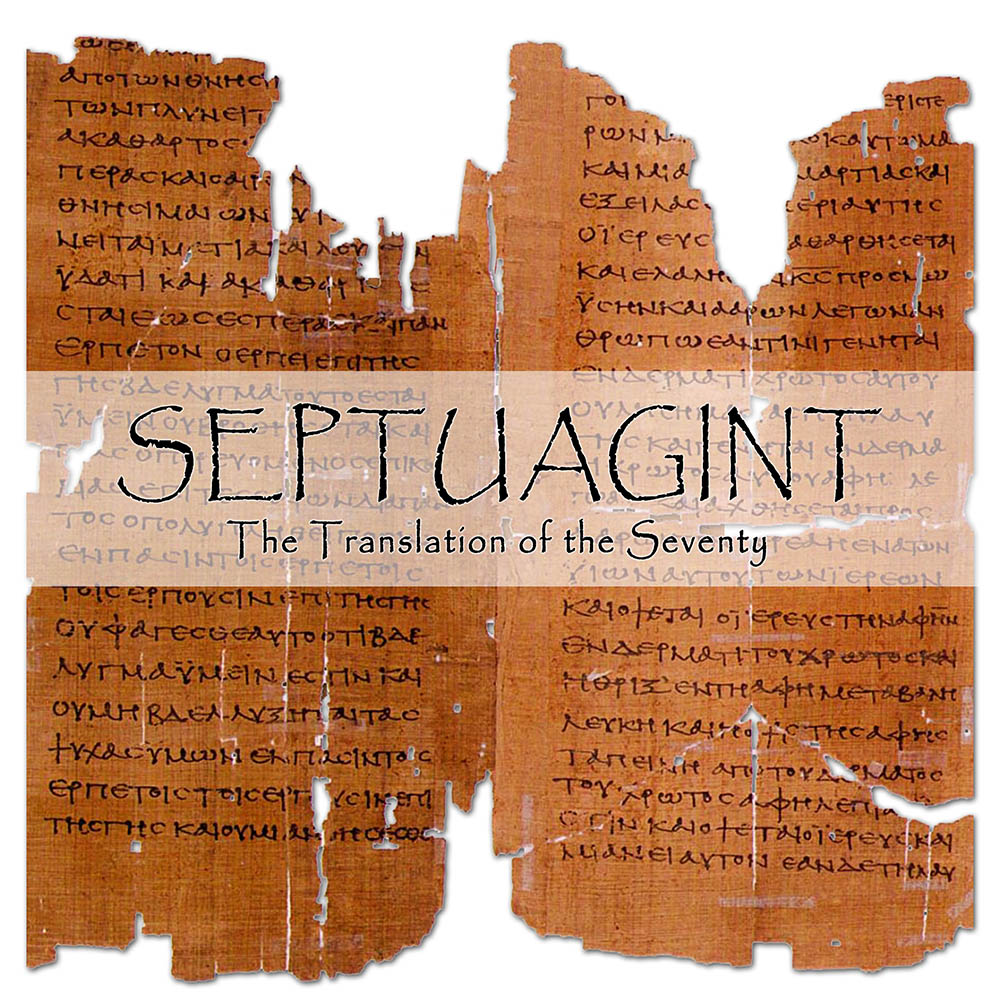
Here is a direct side-by-side comparison of the Masoretic Text with the LXX. I have concluded that the LXX is much to be preferred over the Masoretic Text, a position from which the Eastern Orthodox Church never deviated. Perhaps, if you take the time to read my comparisons and other articles, you will arrive at the same conclusion.
The Septuagint version I am using is the Lexham English Septuagint 2nd Edition, which is available in print or as part of Logos Bible Software. Occasionally I also use the Brenton translation of the LXX for insight into difficult passages.
If you want to know more, click on the following links.
- Why Christians Should Prefer the Septuagint over the Masoretic Text.
- Some Insights Gained through Comparing the Masoretic Text to the Septuagint
- More side by side comparisons of the Masoretic Text (MT) to the Septuagint (LXX).
| Masoretic Text | Septuagint | Significance |
|
6 “For thus says the LORD of hosts: ‘Once more (it is a little while) I will shake heaven and earth, the sea and dry land; 7 and I will shake all nations, and they shall come to the Desire of All Nations, and I will fill this temple with glory,’ says the LORD of hosts. Haggai 2:6–7 (NKJV) |
6 Because the Lord Almighty says, ‘Once again I shall shake heaven and earth and sea and dry land. 7 And I shall shake all nations, and selected people of all nations shall come and fill this house with glory,’ says the Lord Almighty. Haggai 2:6–7 (LES2) |
This passage clearly illustrates how the MT seeks to elevate national Israel and the Old Covenant at the expense of Christ and the New Covenant. Verse six in both translations agree, but in verse seven the MT changes the “elect from all nations” in the LXX to “the Desire of All Nations,” which is an uncertain term likely meaning either God himself, the temple, or Israel. It could also mean the Lord Jesus, who is desired by God, but by using an ambiguous phrase the meaning is left open to interpretation instead of being clear as it is in the LXX. The idea in the MT is that the nations will come to whatever or whoever the Desire of All Nations is, and God will then fill the temple with glory. The LXX indicates that after or because of the shaking of the nations, God will draw from them an elect group who will fill his house. Interestingly, the Hebrew word that the MT translates as temple here means house, too. The temple was intended to “house” God’s presence, but this was a temporary situation in the Old Covenant that served as a picture of what was coming. In the New Covenant, God would dwell in a temple or house made of people, who Peter calls “living stones.” 4 Coming to Him as to a living stone, rejected indeed by men, but chosen by God and precious, 5 you also, as living stones, are being built up a spiritual house, a holy priesthood, to offer up spiritual sacrifices acceptable to God through Jesus Christ. 1 Peter 2:4–5 (NKJV) His eternal purpose has always been to dwell with and in his people. (Revelation 21:22-27) We know that the Old Covenant scriptures point to Christ and the New Covenant. (John 5:39) Because of this, the New Testament teaches us how to interpret the Old, and not the other way around. The New Covenant “house” or temple is the church, the body of Christ, the new man in Christ, the Israel of God. Because the gospel has gone to the nations, God is drawing to himself his elect from every people group to be part of this “house.” This house is filled with the glory of God, the very presence of the Holy Spirit. |
|
8 ‘The silver is Mine, and the gold is Mine,’ says the LORD of hosts. 9 ‘The glory of this latter temple shall be greater than the former,’ says the LORD of hosts. ‘And in this place I will give peace,’ says the LORD of hosts.” Haggai 2:8–9 (NKJV) |
8 ‘The silver is mine, and the gold is mine,’ says the Lord Almighty. 9 ‘Because the latter glory of this house shall be great beyond the former,’ says the Lord Almighty. ‘And in this place I shall give peace,’ says the Lord Almighty, ‘even peace of spirit for a possession to all those who build, so as to raise up this temple.’ ” Haggai 2:8–9 (LES2) |
In the last days, it will no doubt be important for us to understand that there is no financial shortage in God’s kingdom, especially if the evil world system seeks to control the flow of money based on allegiance to evil. The glory of the New Testament church, the temple or house made of people, will exceed the glory of the one made with stones in the Old Testament. Peace will fill the New Covenant house because all those who are part of it have been justified or made right with God, with peace being the natural result. (Romans 5:1) God gives his Spirit as a possession to those who belong to him via the new birth. 16 Do you not know that you are the temple of God and that the Spirit of God dwells in you? 17 If anyone defiles the temple of God, God will destroy him. For the temple of God is holy, which temple you are. 1 Corinthians 3:16–17 (NKJV) God has promised to give peace to his New Covenant saints to be workers who build this new glorious temple through preaching the gospel and nurturing his born-again people. The Holy Spirit is given to us as an eternal “possession” or companion. He is called the “Helper,” one called alongside us who indwells us. (John 14:16) More importantly, perhaps, the indwelling Spirit of God guarantees that we are God’s eternal possession. 13 In Him you also trusted, after you heard the word of truth, the gospel of your salvation; in whom also, having believed, you were sealed with the Holy Spirit of promise, 14 who is the guarantee of our inheritance until the redemption of the purchased possession, to the praise of His glory. Ephesians 1:13–14 (NKJV) This mutual possession is pictured in marriage which gives each spouse ownership of the other. (1 Corinthians 7:3-4) This is also pictured in the Song of Solomon, a foreshadowing of the love between Christ and his bride, the church. 2 I am my beloved’s, and my beloved is mine, he who shepherds among the lilies. Song of Solomon 6:2 (LES2) |