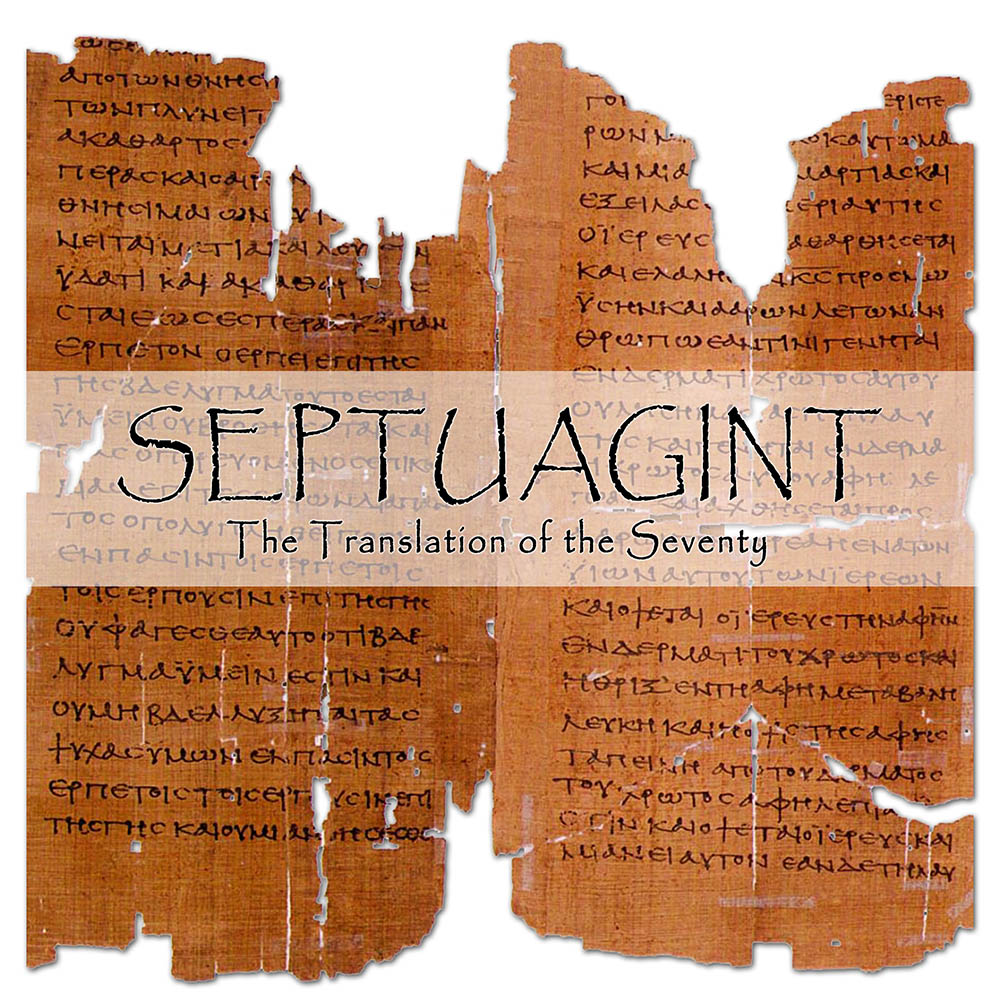
Here is a direct side-by-side comparison of the Masoretic Text with the LXX. I have concluded that the LXX is much to be preferred over the Masoretic Text, a position from which the Eastern Orthodox Church never deviated. Perhaps, if you take the time to read my comparisons and other articles, you will arrive at the same conclusion.
The Septuagint version I am using is the Lexham English Septuagint 2nd Edition, which is available in print or as part of Logos Bible Software. Occasionally I also use the Brenton translation of the LXX for insight into difficult passages.
If you want to know more, click on the following links.
- Why Christians Should Prefer the Septuagint over the Masoretic Text.
- Some Insights Gained through Comparing the Masoretic Text to the Septuagint
- More side by side comparisons of the Masoretic Text (MT) to the Septuagint (LXX).
| Masoretic Text | Septuagint | Significance |
|
1 Help, LORD, for the godly man ceases! For the faithful disappear from among the sons of men. Psalm 12:1 (NKJV) |
2 Save me, O Lord, because the holy one has come to an end, because the truths have diminished from the sons of humans. Psalm 11:2 (LES2) |
I believe in the LXX this is a prophecy about Jesus and the church; whereas, the MT is written from the perspective of natural Israel. This will inform how I approach it. I believe the “holy one” is Jesus, and this is a reference to his death on the cross. He is the Truth. When he perished, truth died, too. |
|
2 They speak idly everyone with his neighbor; With flattering lips and a double heart they speak. 3 May the LORD cut off all flattering lips, And the tongue that speaks proud things, 4 Who have said, “With our tongue we will prevail; Our lips are our own; Who is lord over us?” Psalm 12:2–4 (NKJV) |
3 Each person spoke vanities to his neighbor. deceitful lips spoke in heart and in heart. 4 May the Lord destroy all the deceitful lips and a boasting tongue, 5 those who said, “We are powerful with respect to our tongue; our lips are from us. Who is our lord?” Psalm 11:3–5 (LES2) |
The MT and LXX essentially agree in this passage. The most interesting thing to me is how important surrendering the tongue to God is. I believe this is why our salvation requires us to confess that Christ is the Lord. (Romans 10:9-10) It also sheds light on the importance of speaking in tongues, which is a surrender of our tongue to the Holy Spirit which allows us to pray and praise God perfectly. |
|
5 “For the oppression of the poor, for the sighing of the needy, Now I will arise,” says the LORD; “I will set him in the safety for which he yearns.” Psalm 12:5 (NKJV) |
6 “From the distress of the needy, and from the groaning of the poor ones, I will now stand up,” says the Lord. “I will set him in salvation; I will speak openly for him.” Psalm 11:6 (LES2) |
This verse declares the resurrection of Christ, which is our salvation. The Greek word for “stand up” in the LXX is the same one used for Christ’s being risen, which agrees with the MT. The LXX says that God will set the poor one in “salvation,” which is the Greek word soteria, from which Savior is derived. I believe God speaks openly for us, declaring that we belong to him, just as a bridegroom proudly declares that his wife is his by covenant (and vice versa). The gift of the Holy Spirit is God’s seal proving his ownership. (2 Corinthians 1:22) |
|
7 You shall keep them, O LORD, You shall preserve them from this generation forever. 8 The wicked prowl on every side, When vileness is exalted among the sons of men. Psalm 12:7–8 (NKJV) |
8 You, O Lord, will guard us, and you will preserve us from this generation and for eternity. 9 The ungodly ones walk around in a circle. According to your height you treated with much care the sons of humans. Psalm 11:8–9 (LES2) |
The MT promises God will preserve “them,” but the LXX says he will preserve “us.” Perhaps this is because the MT is written from natural Israel’s perspective and knows that salvation is for “them,” the born again ones, but the LXX is written from the church’s viewpoint, for which salvation is for “us.” Just a thought. In the New Covenant, our salvation and life is eternal. The LXX mentions the presence of evil ones who are going nowhere fast, but God treats us with much care. |