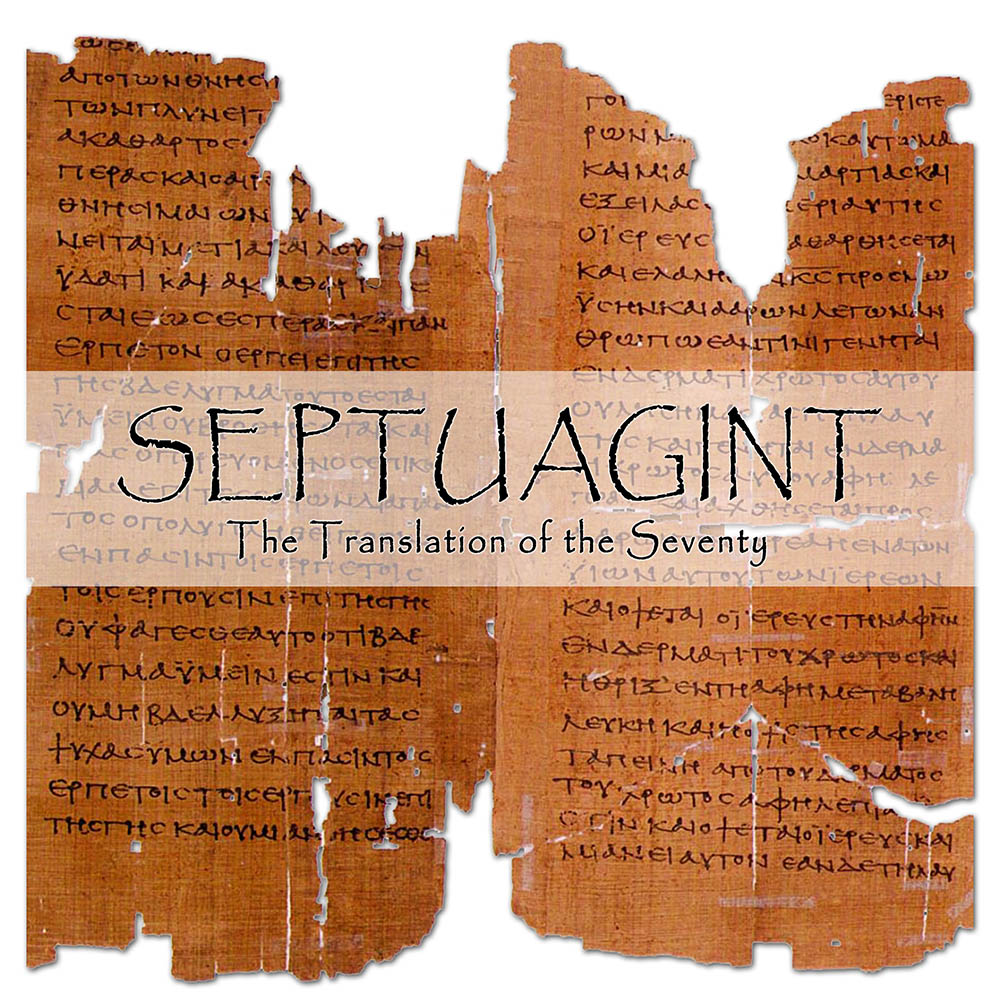
Here is a direct side-by-side comparison of the Masoretic Text with the LXX. I have concluded that the LXX is much to be preferred over the Masoretic Text, a position from which the Eastern Orthodox Church never deviated. Perhaps, if you take the time to read my comparisons and other articles, you will arrive at the same conclusion.
The Septuagint version I am using is the Lexham English Septuagint 2nd Edition, which is available in print or as part of Logos Bible Software. Occasionally I also use the Brenton translation of the LXX for insight into difficult passages.
If you want to know more, click on the following links.
- Why Christians Should Prefer the Septuagint over the Masoretic Text.
- Some Insights Gained through Comparing the Masoretic Text to the Septuagint
- More side by side comparisons of the Masoretic Text (MT) to the Septuagint (LXX).
| Masoretic Text | Septuagint | Significance |
|
8 I have set the LORD always before me; Because He is at my right hand I shall not be moved. Psalm 16:8 (NKJV) |
8 I saw the Lord in front, before me through everything, because he is from my right side, that I would not be shaken. Psalm 15:8 (LES2) |
This is another psalm quoted in the New Testament from the LXX. 25 For David says concerning Him: ‘I foresaw the LORD always before my face, For He is at my right hand, that I may not be shaken. Acts 2:25 (NKJV) Instead of the MT’s “I have set the Lord always before me,” the LXX and NT quote both use the Greek word “proorao,” which the LXX translates as “saw” and the NT as “foresaw,” which is the literal meaning. The MT has David choosing to “set” God before him, but the LXX and NT both agree that David saw the Lord. One is a choice, the other is a revelation. However, once we receive the revelation, we ought to make the choice to walk in that revelation. Both the LXX and NT also use the word “shaken,” which carries the same idea as moved. |
|
9 Therefore my heart is glad, and my glory rejoices; My flesh also will rest in hope. 10 For You will not leave my soul in Sheol, Nor will You allow Your Holy One to see corruption. Psalm 16:9–10 (NKJV) |
9 On account of this, my heart was cheerful, and my tongue rejoiced exceedingly. Moreover, my flesh will dwell in hope, 10 because you will not abandon my soul in Hades, nor will you give your holy one to see destruction. Psalm 15:9–10 (LES2) |
The big difference in this passage is that the MT says “my glory rejoices,” but the LXX and NT agree that the word is “tongue.” The Greek word “aggaliao” for “rejoiced exceedingly” and “was glad.” 26 Therefore my heart rejoiced, and my tongue was glad; Moreover my flesh also will rest in hope. 27 For You will not leave my soul in Hades, Nor will You allow Your Holy One to see corruption. Acts 2:26–27 (NKJV) Both the LXX and NT quote use the Greek word diaphthora, which is translated as “destruction” in the LXX and as “corruption” in the NT. |
|
11 You will show me the path of life; In Your presence is fullness of joy; At Your right hand are pleasures forevermore. Psalm 16:11 (NKJV) |
11 You made known to me ways of life. You will make me full of cheer with your face. There are delights at your right side completely. Psalm 15:11 (LES2) |
The quote from Acts is only a part of this verse. 28 You have made known to me the ways of life; You will make me full of joy in Your presence.’ Acts 2:28 (NKJV) Even though the English seems a little different when comparing the LXX and NT quote, the Greek in each is exactly the same. The translators simply chose different English words. Once again we have evidence that the Bible used by the apostles was the LXX. |