
Why NASA Should Never Be Trusted

NASA should never be trusted because that agency has repeatedly lied to us. Once someone is caught in a lie, that person or group should not be trusted in the future, unless there is repentance and transformation. NASA is unrepentant.

This article is a necessary part of my biblical cosmology series because the supposed evidence supplied by NASA in the form of photographs, video, and claims to have visited the moon, Mars, and the outer reaches of our “solar system” is what keeps the heliocentric-Big Bang house of cards from collapsing.

If it can be demonstrated that NASA’s supposed “proofs” that we live on a rotating globe that is hurtling around the sun are fake, NASAperhaps it will open people’s eyes to the reality of biblical cosmology. This topic is so immense that it is impossible to adequately cover it in one article. Therefore, I have embedded numerous videos for you to view when you have the time. I will do my best to summarize the main arguments. Let’s get started.

First of all, this article will introduce vasts amounts of disputed science, something I have avoided to a great extent in previous article in this series, in an effort to stay focused on Scripture. Anyone who investigates the claims of biblical cosmology will raise all number of questions regarding how such an explanation of the cosmos can account for any number of phenomena and claims, such as satellites orbiting the spherical earth. I will address many of these questions, but biblical cosmology does not have an answer for everything. Neither does modern astrophysics. Just because we cannot answer every question does not mean that the Bible account is false. It simply means that we do not know everything. The brainwashing has been so deep and complete that alternate explanations often seem ridiculous at first. Once we shed the mind numbing effects of the mental programming, biblical cosmology seems quite logical and compelling. I encourage my readers to consider what follows with an open mind and ask God for wisdom and understanding.

Prayer: Holy Spirit, we ask you to guide us into all truth regarding your creation and the earth upon which we live. Amen.

In the 1960’s, we were told that a “space race” had begun between us and Russia. Our Cold War opponent supposedly had a tremendous advantage over us, having already successfully put a “satellite” called Sputnik in “orbit.” Our very existence as a nation was said to be threatened, requiring us to enter and win this “race” at the cost of billions of dollars. I remember President Kennedy announcing we would go to the moon by the end of the decade. I personally witnessed, via TV, the first men our country supposedly launched into space. I later watched as we supposedly carried out six manned missions to the moon, all without a hitch, except for Apollo 13, about which a movie has been made. All of this supposedly was done with computers with only a fraction of the power of our present day cell phones and with 1960’s and 70’s technology in general. President Nixon even was able to talk to our men on the moon using a landline without any delay at all. Amazing technology. Too bad that we destroyed all of it.

Unbelievably, literally, NASA lost or destroyed all the video, audio, designs of the lunar lander, and telemetry information connected to the Apollo missions. Nothing to see here. Could it be because we would easily see that it was a complete hoax?

But let’s go back in time a bit. Admiral Richard E. Byrd made several expeditions to Antarctica before and after WWII (1928-30, 1933-34, 1939-40, 1946-47, and 1955-56). During and after Byrd completed his assignments there, several very interesting events took place.

  1. The United Nations was created in 1945.
  2. Walt Disney, who majored in fantasy, and Werner Von Braun, of later NASA fame, partnered to produce a documentary on outer nasaspace travel in 1955.
  3. NASA was formed in 1958. Werner Von Braun, a former Nazi, who had been brought to the US under the auspices of Operation Paperclip, became a main spokesman for our space program.
  4. The Antarctic Treaty was signed on December 1, 1959, which cordoned off the area beyond the South 60th parallel, making it closed to private exploration. It was agreed that this area of the world would not be owned by any nation. The signing nations were each assigned a segment to guard and protect against trespassers. Interestingly, despite all our international conflicts since then, no one has violated this treaty. Why has it been so honored? Another interesting fact is that each nation guards a section that corresponds to their proximity to the ice wall on the flat earth.
  5. Operation Fishbowl was part of a series of high altitude nuclear explosions conducted by the US and Russia. Operation Starfish supposedly exploded a 1.4 megaton bomb in 1962 at a reported altitude of 400 kilometers or 240 miles. One has to ask why? Was it because Admiral Byrd discovered that we are enclosed in a firmament, just as the Bible says? Were we trying to test its strength and limits? Was is simply a military test of how nuclear fallout spreads? Perhaps we will never know for sure.

questIf a solid firmament exists, as the Bible says, outer space is a man-made fantasy. Biblical cosmologists believe that the firmament is an impenetrable barrier that acts as heaven’s boundary. If that is true, a large portion of what NASA produces is designed to deceive, which is what the word in Hebrew means. Many biblical cosmologists believe that NASA primarily exists to maintain the illusion that we live on a spinning globe while at the same time, under the guise of space exploration, is working toward other ends. Reportedly, nasaVon Braun told his secretary that the last deception would be an alien invasion. Whatever may be the truth, mankind’s love affair with the idea of space travel demonstrates that we are sinfully dissatisfied with the habitation God provided for us and wish to live elsewhere. The grass is always greener on the other side of the firmament. NASA receives approximately $70 million dollars per day, which provides them with all they funds they need to produce all sorts of science fiction.

Assuming that the Bible is true, we assume that God foresaw the advent of rockets and designed the firmament withstand our attempts to break through it.

1 Why were the nations unruly, and the people meditated on vain things? 2 The kings of the earth are present, and the rulers are gathered together against the Lord and against his anointed one. 3 They say, “Let us break their bonds,” and “Let us throw their yoke off us.” 4 The one dwelling in the heavens will laugh at them, and the Lord will mock them. 5 At that time he will speak against them in his wrath, and in his anger he will bring trouble to them. Psalm 2:1–5 (LES2) 

If the firmament exists, NASA knows it. The Russians certainly have known about for a very long time. Declassified documents from Russia reference some of the experiments they did to assess properties of this biblical structure.

To avoid hitting the firmament, while maintaining the illusion of firing rockets into outer space, NASA insists that rockets must travel in an arc, essentially going sideways, to achieve escape velocity from earth’s supposed gravity. Since the earth is an enclosed plane, the arcs of these rockets proceeds downward, not around the globe. Many think they are heading toward a sea burial in the Bermuda Triangle, an area declared off-limits shortly after NASA began its launches. 

There have been some rocket launches that do not take the curved arc. There is video footage of these rockets encountering something like water when they reach a certain altitude.

https://rumble.com/v6atpug-firmament-rockets.html

(Start at 5:00 to 6:43)

The supposed moon landing conducted during the Apollo missions could not possibly have taken place. We did not have the technology to do it, even if outer space were real.

Bill Kaysing was an employee of Rocketdyne and served as a sort of information clearing house for the Apollo missions as they were gearing up. He observed that nothing was going according to schedule, but the mission was still on “go,” as if everything was fine. Gus Grissom, one of the astronauts slated to go on the first Apollo mission, publicly and without authorization announced that the program was a “lemon.” attaching a lemon to a piece of equipment in front of visiting reporters. He asked how we could possibly go to the moon when we could not communicate between buildings? He came under criticism and warned his wife that he feared the CIA would take him out. That is exactly what happened. Subsequently, CIA operatives were working on the space capsule in which they were going to do an oxygen test with the astronaut team inside. During the test, the oxygen-filled capsule was incinerated. The hatch door had been re-hinged to swing inside. The controls had been rewired so that they sparked when switched on during the time while the oxygen reached 100%, effectively converting the capsule into an oxygen bomb. The entire crew was burned up. Operatives entered his home and took all his papers before his wife even knew he died. That is what happens to people who “squeal.” If you want to know why subsequent astronauts, excluding Buzz Aldrin, never exposed the hoax, look no further.

Somewhere along the line, when it became apparent, (Maybe it was from the beginning.), that the mission would never happen, the decision was made to fake it. That is why everything kept moving forward despite obvious problems. We have second-hand testimony of what took place in the following video, which recounts two death-bed confessions that expose the filming of the first Apollo mission at Cannon Air Force base.

Bart Sibrel began investigating the moon landings. His friend, the above-mentioned Bill Kaysing, who eventually wrote, We Never Went to the Moon, suggested Bart make a documentary. After receiving numerous batches of videos from NASA to help him with the research, he discovered one marked “not for public distribution.” He thinks a whistle blower sent it. It shows the astronauts in a capsule somewhere above the earth in the process of creating a false globe earth image by manipulating what could be seen of the flat earth out of their capsule window. This convinced Sibrel that the missions were faked. His adventures afterward when he tried to get the video into the hands of CNN make it worth purchasing and reading his book, Moon Man. He produced the following video entitled, A Funny Thing Happened on the Way to the Moon.

Even though, to my knowledge, he never arrived at “flat earth,” he exposed the hypocrisy of NASA. Since then, many good documentaries exposing the impossibility of that mission have been produced. Below are some of my favorites.

  1. The moon is a luminary rather than a solid spherical planetoid. It is located in the firmament. We cannot land on it.
  2. The vacuum of space does not exist. Even if it did, space travel could not take place because there is no atmosphere against which rocket engines could thrust. Now, however, NASA claims the earth’s atmosphere reaches to the moon. Convenient.
  3. The “Van Allen Belts,” which are probably another name for the firmament barrier, would be impossible to safely traverse without lead shielding 2-4 feet thick. The astronauts capsule was quite thin and their suits 2 inches thick. The firmament, of course, is an impenetrable barrier.
  4. The supposed temperatures on the moon range from -270 degrees to +243 degrees Fahrenheit. The spacesuits could not possibly provide adequate protection. In addition, they could not have been properly pressurized because there are visible folds in their suits. Also, the footprints on the moon do not match the soles of the spacesuit that was supposedly worn.
  5. Buzz Aldrin was photographed supposedly minutes apart wearing different boots and gloves. (In addition, as pointed out on Wagging the Moon Doggie, there were so many photos taken, they would have been snapped at an incredible rate of more one in under a minute, despite the fact that much time was spent traveling and doing other things. In addition, the cameras were not “smart” and had to be manually adjusted for every shot, which would have been impossible for the astronauts to do, since they were wearing thick gloves and helmet visors. Nevertheless, the photos were perfectly framed and metered.
  6. Shadows going in 2 or 3 directions, sometimes at 90 degree angles, show that studio lighting was used.
  7. What was said to be the sun, under scrutiny, was shown to be a studio light. There are other reflections and flares that originate from studio lighting.
  8. There is a defined separation between the foreground and backdrop, revealing that the mission was filmed on earth in a studio. Some sets were used multiple times, allegedly at different locations.
  9. Computer enhancements were made to photos.
  10. The supposed images of earth from the moon were clearly photo-shopped.
  11. A rock on the lunar surface has the letter C engraved on it. The ground next to it has the same letter C. This is done on studio sets to indicate prop positions.
  12. Light can sometimes be seen glinting off wires supporting astronauts on alleged moon walks.
  13. Flags on the moon can be see flapping in the wind.
  14. Moon walk and dune buggy footage was reduced to half speed to make it look otherworldly. Sometimes there are no tire prints where the lunar rover supposedly drove. 
  15. No stars are visible from the moon. Astronauts give conflicting testimony, some saying there were no stars, but others saying they shone brilliantly.
  16. The lunar lander is a joke constructed of what looks like construction paper. aluminum foil, tape, and curtain rods. Supposedly the skin was only as thick as three sheets of aluminum foil, but it was supposed to be strong enough to hold air pressure against the vacuum of space and protect against micro-meteorites, accidents, etc. Even with its thin walls, the lunar lander was supposedly air conditioned to withstand the extreme temperatures of the moon.
  17. Photos of the area beneath the lander show that no dust was disturbed during the landing. There is no evidence that the engine ever was used – no scorch marks, no crater, no dust, disturbance of any kind.
  18. President Nixon allegedly made a phone call from the oval office to the moon that had no delay. Even if that technology had existed, there would have been a significant delay.
  19. The moon rocks were fake. The one given to the museum in Amsterdam turned out to be petrified wood.
  20. The original video, audio, telemetry data, and plans for the rover, lander, and engines were lost / destroyed.


You would think that by now everyone would be awake to the hoax, but, as Mark Twain famously said: “It is easier to fool people than to convince them that they have been fooled.”

The demeanors of the crew in their first post-Apollo mission interview makes no sense, unless the men, who were so enthusiastic prior to “launch,” by that point realized that their job had been not to go to the moon, but to lie about going to the moon. 

Bart Sibrel had private off-the-record conversations with Neil, who told him he would make it right before he died. He never did. And it is not as if NASA and other so-called astronauts have never told us that we have not been to the moon or outer space, for that matter. Buzz Aldrin said on TV more than once that we never went to the moon. Below, the entire video is interesting, but of special import are two segments: 18:00-18:24 and 25:20-26:24.

More recently, modern astronauts have admitted on camera that we have never been beyond lower earth orbit. 

This, of course, raises the issue of orbits around a spherical earth, which is another topic altogether, regarding which I will not cover in this series. There is a “flat earth” answer, however, in case you are wondering. A Russian and a Polish astronaut have publicly admitted we have not been to “space.”

Many people at this point might bring up satellites and the International Space Station. The video below covers the satellite topic in depth.

Supposed photos from “outer space” of the earth never show any satellites, even though supposedly there are thousands. Most communication over the earth is done by undersea cables. Regarding the ISS, it is noteworthy that it was never constructed while on earth to make sure everything worked, and there is no video evidence of its construction in orbit. However, a full scale “replica” is submerged in a giant swimming pool at the NASA headquarters in Houston. Perhaps that is why videos of astronauts doing “space walks” frequently have bubbles and reflections off the visors of astronauts sometimes show scuba divers. 

NASA claims that the ISS can be seen against the moon. A law of optics is that the size of objects decreases in direct proportion to the distance. The ISS is proportional to a commercial jet passenger plane. The observable size of the ISS at 250 miles against the face of the moon is approximately the same size as a commercial jet at about five mile altitude. Someone is lying. 

One engineer pointed out that the valves, etc. on the ISS should have failed repeatedly, but there has never been any real problems and no fatalities. What about micrometeorites? Our favorite modern astronaut, Don Pettit, revealed that he did not even have proper training to handle emergencies. (Start at 5:24. End at 7:10.)

The supposed photographs that NASA offers as proof that the earth is a spinning globe suspended in outer space are either CGI or photo-shopped. This has been proved over and over. If NASA had real photographs, why would they use fakes?

(Begin the above video at 14:24. End at 37:36.)

There are numerous rather hilarious glitches in NASA’s supposed live streaming from outer space. 

I expected the recent Artemis moon mission to use a far more advanced version of AI and CGI deception, but surprisingly, they did not. All sorts of obvious evidence of falsification were present.  Several videos have been produced to illustrate this fakery. Below are two.

Below is a humorous video exposing the Blue Origin fakery when Katy Perry supposedly went to space.

I see no reason whatsoever to trust NASA or any other space agency. My sad conclusion is that many Christians more highly esteem the word of proven liars at NASA over God’s Word in the Bible and prefer Satan’s cosmology to God’s. May this soon end. The church needs to end its adulterous affair with Helios.

Below are some more links you should find interesting.

Website: aulis.com – provides extensive documented evidence of NASA fakery

Comparing MT to the Septuagint (LXX): Psalm 10

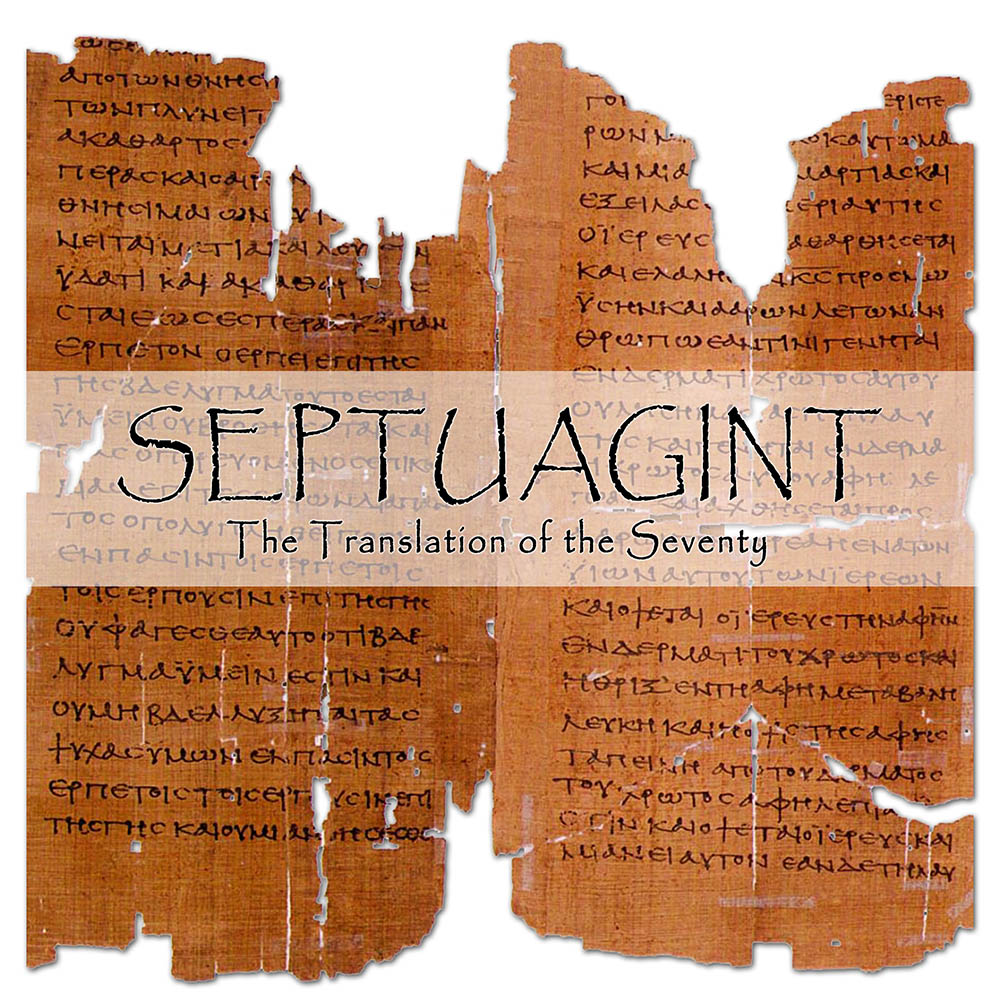
The Septuagint (LXX) was the accepted version of the Old Testament at the time of Christ and during the early church period. It was much later that the Masoretic Text (MT) became the basis for our English translations, which continues to this day in the Western church. The Eastern Orthodox Church stayed with the LXX. Conventional wisdom is that there were various textual versions of the paleo-Hebrew that were passed down, the LXX using one of them, perhaps the earliest. The MT is supposed to be based on alternate sources and to be superior. This claim is made without offering any sort of proof, however, and creates doubt regarding the preservation of the original inspired text.

It seems to me that God has already given us the answer. 70 – 80 % of the quotes from the Old Testament that are found in the New Testament come directly from the Septuagint, which is a divine affirmation of that version.

A very significant factor in making a decision regarding which version is better is that the MT sometimes omits or obscures references to Christ that are quoted from the LXX in the New Testament.

This makes one question the integrity and motives of the translators of the MT.

After perusing the MT alongside the LXX, I have discovered numerous textual differences, not just a few, but not all of them, or even the majority of them, have theological or Christological significance. My own “gut” feeling is that the LXX better. It seems more “literal” and believable. The conversations seem natural, and, perhaps most importantly, almost always the LXX provides the clearest references to Christ. 

You can read about some of my insights after comparing numerous sections of scripture by clicking hereIn this series on the LXX, I have done my best to compare and contrast significant passages. Here is an another example. The Septuagint version I am using is the Lexham English Septuagint 2nd Edition, which I like the best. It is available in print or through Logos Bible Software. Another favorite English version is that translated by Brenton, which uses an older style of English.

Masoretic Text Septuagint Significance

1 Why do You stand afar off, O LORD? Why do You hide in times of trouble? 2 The wicked in his pride persecutes the poor; Let them be caught in the plots which they have devised. 3 For the wicked boasts of his heart’s desire; He blesses the greedy and renounces the LORD. 4 The wicked in his proud countenance does not seek God; God is in none of his thoughts. Psalm 10:1–4 (NKJV) 

22 Why, O Lord, have you withdrawn far from here? You disregard in seasons in affliction 23 When the ungodly one is arrogant, the poor one is burned. They are caught in the counsels with which they devise, 24 because the sinner praises himself in the desires of his soul, and the one doing wrong blesses himself. 25 The sinful one angered the Lord. According to the magnitude of his wrath he will not seek God. God is not before him. Psalm 9:22–25 (LES2) 

I chose to compare the text of Psalm 10/9 not because of an omission or obfuscation of a Christological text but because this comparison is a good example of how much difference there is between the MT and LXX even when theological issues are not at stake.

The first thing we notice is that the LXX simply continues Psalm 9, but the MT starts another psalm, thus making the rest of the psalms out of order until Psalm 148, when they realign. 

In verse 1/22, the MT says God hides himself in times of trouble. The LXX says he disregards when we are in seasons of affliction. In the next verse, the MT seems to take the literal words of David found in the LXX and reword them for us to make it read better. The rest of this passage does not seem to follow the same paleo-Hebrew document. As I have already argued, I believe the LXX is more reliable.

5 His ways are always prospering; Your judgments are far above, out of his sight; As for all his enemies, he sneers at them. 6 He has said in his heart, “I shall not be moved; I shall never be in adversity.” 7 His mouth is full of cursing and deceit and oppression; Under his tongue is trouble and iniquity. Psalm 10:5–7 (NKJV) 

26 His ways are profane in every season. Your judgments are removed from his face. He will gain dominion over all his enemies. 27 For he said in his heart, “I will not be afflicted, from generation to generation I will be without evil.” 28 Him whose curse and bitterness and guile fill his mouth, under his tongue are trouble and distress. Psalm 9:26–28 (LES2) 

Death by a thousand cuts. These little changes add up to something quite big.

8 He sits in the lurking places of the villages; In the secret places he murders the innocent; His eyes are secretly fixed on the helpless. 9 He lies in wait secretly, as a lion in his den; He lies in wait to catch the poor; He catches the poor when he draws him into his net. 10 So he crouches, he lies low, That the helpless may fall by his strength. Psalm 10:8–10 (NKJV) 

29 He takes a position in ambush with the wealthy, in hidden places to kill the innocent one. His eyes gaze steadily toward the poor one. 30 He lies in wait with concealment as a lion in its den. He lies in wait to snatch away the poor, to snatch away the poor when he drags him in his net. In his trap 31 he will make him lowly. He will stoop down and fall when he gains dominion over the poor. Psalm 9:29–31 (LES2) 

The MT sounds better, perhaps, but I lean toward the LXX for accuracy. Why should I not? Once we catch someone in a lie, we should not trust him or her going forward, unless there is clear evidence of repentance and transformation. The lie in which the MT has been caught refers to all the verses pointing to Christ that were changed.

11 He has said in his heart, “God has forgotten; He hides His face; He will never see.” 12 Arise, O LORD! O God, lift up Your hand! Do not forget the humble. 13 Why do the wicked renounce God? He has said in his heart, “You will not require an account.” Psalm 10:11–13 (NKJV) 

32 For he said in his heart, “God has forgotten; he turned away his face so that he does not see in the end.” 33 Rise up, O Lord God. Lift up your hand. Do not forget the poor. 34 On what behalf did the ungodly provoke God? For he said in his heart, “He will not seek.” Psalm 9:32–34 (LES2) 

Other than changing a few words, these passages agree in essence. If agreement was accomplished here, why not elsewhere in the psalm? Why does the MT make so many changes to prophetic portions of the Old Testament and to the psalms? 

14 But You have seen, for You observe trouble and grief, To repay it by Your hand. The helpless commits himself to You; You are the helper of the fatherless. 15 Break the arm of the wicked and the evil man; Seek out his wickedness until You find none. Psalm 10:14–15 (NKJV) 

35 You see, for you will perceive distress and anger, to give them over into your hands. Therefore the poor one has been abandoned to you; for the orphan you were a helper. 36 Crush the arm of the sinner and evil one. His sin will be sought for, and he will not be found because of it. Psalm 9:35–36 (LES2) 

As usual, the MT changes some verb tenses and words. The last part of verse 14/35 is problematic in the LXX. I think the MT captures the meaning in this case. Perhaps the LXX should have said, “The poor has abandoned himself to you.” Other than that, the passages align.

16 The LORD is King forever and ever; The nations have perished out of His land. 17 LORD, You have heard the desire of the humble; You will prepare their heart; You will cause Your ear to hear, 18 To do justice to the fatherless and the oppressed, That the man of the earth may oppress no more. Psalm 10:16–18 (NKJV) 

37 The Lord will rule for eternity and for eternity of eternity. The nations will perish from his earth. 38 The Lord heard the desire of the poor ones. Your ear paid heed to the preparation of their heart, 39 to judge for the orphan and for the low, so a person does not proceed further to boast upon the earth. Psalm 9:37–39 (LES2) 

The LXX says the nations shall perish from the land / earth. The MT says the have perished. Verse 17-18/38-39 are quite different. As I said before, such variances makes one question what sources did the MT use that were so different from the LXX, or did they simply change the wording? The paleo-Hebrew Phoenician script had been a dead language for centuries before the MT was translated into the modern Hebrew block script derived from Aramaic. I see no reason to suppose the Masoretes had more accurate sources than the Seventy. I rather think they simply took greater liberties with the text, but that is just my opinion. You have to decide for yourself or let someone else decide for you, as most people do.

Conclusion

If you want to know more about why Christians should prefer the Septuagint to the MT, click on this link. 

More articles on the Septuagint

Comparing MT to the Septuagint (LXX): Psalm 8

The Septuagint (LXX) was the accepted version of the Old Testament at the time of Christ and during the early church period. It was much later that the Masoretic Text (MT) became the basis for our English translations, which continues to this day in the Western church. The Eastern Orthodox Church stayed with the LXX. Conventional wisdom is that there were various textual versions of the paleo-Hebrew that were passed down, the LXX using one of them, perhaps the earliest. The MT is supposed to be based on alternate sources and to be superior. This claim is made without offering any sort of proof, however, and creates doubt regarding the preservation of the original inspired text.

It seems to me that God has already given us the answer. 70 – 80 % of the quotes from the Old Testament that are found in the New Testament come directly from the Septuagint, which is a divine affirmation of that version.

A very significant factor in making a decision regarding which version is better is that the MT sometimes omits or obscures references to Christ that are quoted from the LXX in the New Testament.

This makes one question the integrity and motives of the translators of the MT.

After perusing the MT alongside the LXX, I have discovered numerous textual differences, not just a few, but not all of them, or even the majority of them, have theological or Christological significance. My own “gut” feeling is that the LXX better. It seems more “literal” and believable. The conversations seem natural, and, perhaps most importantly, almost always the LXX provides the clearest references to Christ. 

You can read about some of my insights after comparing numerous sections of scripture by clicking hereIn this series on the LXX, I have done my best to compare and contrast significant passages. Here is an another example. The Septuagint version I am using is the Lexham English Septuagint 2nd Edition, which I like the best. It is available in print or through Logos Bible Software. Another favorite English version is that translated by Brenton, which uses an older style of English.

Masoretic Text Septuagint Significance

1 O LORD, our Lord, How excellent is Your name in all the earth, Who have set Your glory above the heavens! Psalm 8:1 (NKJV) 

2 O Lord, our Lord, how wonderful is your name in all the earth, because your magnificence was lifted up far above the heavens. Psalm 8:2 (LES2) 

No appreciable difference.

2 Out of the mouth of babes and nursing infants You have ordained strength, Because of Your enemies, That You may silence the enemy and the avenger. Psalm 8:2 (NKJV) 

3 From the mouth of infants and nursing babies you created praise, on account of your enemies, to destroy the enemy and the avenger. Psalm 8:3 (LES2) 

The LXX is quoted in Matthew 21:16.

16 and said to Him, “Do You hear what these are saying?” And Jesus said to them, “Yes. Have you never read, ‘Out of the mouth of babes and nursing infants You have perfected praise’?” Matthew 21:16 (NKJV) 

This is further evidence that the MT is not the inspired word of God, at least in cases where it changes the LXX to hide clear references to Christ or quotes in the New Testament. The same Greek verb is used in both the LXX and New Testament – katartizo, which can be translated in various ways, as can be seen. In this instance it is translated “created” in the LXX and “perfected” in the New Testament.

The MT says God did this to silence the enemy, but the LXX goes further to say it is to destroy him.

Jesus quoted this psalm when he was receiving praise at the Messiah. His mission, in summary, according to John, was to destroy the works of the devil (1 John 3:8), which agrees with the LXX.

3 When I consider Your heavens, the work of Your fingers, The moon and the stars, which You have ordained, 4 What is man that You are mindful of him, And the son of man that You visit him? 5 For You have made him a little lower than the angels, And You have crowned him with glory and honor. Psalm 8:3–5 (NKJV) 

4 Because I will see the heavens, the works of your fingers, the moon and the stars, which you laid down. 5 What is a man that you remember him? Or a son of a man that you observe him? 6 You made him somewhat less than angels; you crowned him with glory and honor. Psalm 8:4–6 (LES2) 

Verses 3/4-4/5 have slight differences, but verse 5/6 has a major discrepancy. The MT says we were made a little lower than “elohim,” which should be translated “God,” as does the NASB. The NKJV chose to go with the LXX here by translating elohim as “angels.” 

The New Testament quotes this verse in Hebrews 2:7, where it uses the Greek word for “angels,” thus corroborating the accuracy of the LXX and justifying the NKJV translators’ choice.

This is the second place in this short psalm where the MT translators chose to tamper with an LXX text that is quoted in the New Testament. This cannot possibly be a coincidence. When we catch someone in a lie, why trust them thereafter? Personally I have very little confidence in the MT’s accuracy, except where it agrees with the LXX.

6 You have made him to have dominion over the works of Your hands; You have put all things under his feet, 7 All sheep and oxen— Even the beasts of the field, 8 The birds of the air, And the fish of the sea That pass through the paths of the seas. 9 O LORD, our Lord, How excellent is Your name in all the earth! Psalm 8:6–9 (NKJV) 

7 And you appointed him over the works of your hands. You arranged all things under his feet, 8 all sheep and oxen, and even still the livestock of the plains, 9 the birds of the heavens and the fish of the sea, the creatures that go through the paths of the seas. 10 O Lord, our Lord, how wonderful is your name in all the earth. Psalm 8:7–10 (LES2) 

There are no significant differences here.
    The only significant differences between the MT and LXX are where the New Testament quotes the LXX. This is not an accident.

Conclusion

If you want to know more about why Christians should prefer the Septuagint to the MT, click on this link. 

More articles on the Septuagint

Comparing MT to the Septuagint (LXX): Psalm 22

The Septuagint (LXX) was the accepted version of the Old Testament at the time of Christ and during the early church period. It was much later that the Masoretic Text (MT) became the basis for our English translations, which continues to this day in the Western church. The Eastern Orthodox Church stayed with the LXX. Conventional wisdom is that there were various textual versions of the paleo-Hebrew that were passed down, the LXX using one of them, perhaps the earliest. The MT is supposed to be based on alternate sources and to be superior. This claim is made without offering any sort of proof, however, and creates doubt regarding the preservation of the original inspired text.

It seems to me that God has already given us the answer. 70 – 80 % of the quotes from the Old Testament that are found in the New Testament come directly from the Septuagint, which is a divine affirmation of that version.

A very significant factor in making a decision regarding which version is better is that the MT sometimes omits or obscures references to Christ that are quoted from the LXX in the New Testament.

This makes one question the integrity and motives of the translators of the MT.

After perusing the MT alongside the LXX, I have discovered numerous textual differences, not just a few, but not all of them, or even the majority of them, have theological or Christological significance. My own “gut” feeling is that the LXX better. It seems more “literal” and believable. The conversations seem natural, and, perhaps most importantly, almost always the LXX provides the clearest references to Christ. 

You can read about some of my insights after comparing numerous sections of scripture by clicking hereIn this series on the LXX, I have done my best to compare and contrast significant passages. Here is an another example. The Septuagint version I am using is the Lexham English Septuagint 2nd Edition, which I like the best. It is available in print or through Logos Bible Software. Another favorite English version is that translated by Brenton, which uses an older style of English.

Masoretic Text Septuagint Significance

1 My God, My God, why have You forsaken Me? Why are You so far from helping Me, And from the words of My groaning? Psalm 22:1 (NKJV) 

2 O God, my God, attend to me. For what purpose did you abandon me? Far away from my salvation are the words of my transgressions. Psalm 21:2 (LES2) 

Parts of this psalm are quoted in the New Testament with reference to Christ’s crucifixion, revealing that the Holy Spirit wants us to see it as a Davidic prophecy. The LXX’s wording helps us to properly understand it.

46 And about the ninth hour Jesus cried out with a loud voice, saying, “Eli, Eli, lama sabachthani?” that is, “My God, My God, why have You forsaken Me?Matthew 27:46 (NKJV) 

Jesus’ words on the cross echo what David saw hundreds of year earlier. They were in Aramaic, which the gospel writers translated into Greek, the world’s most used language at the time.

This verse in the MT is one big question, but the LXX begins with a request, “O God, my God, attend to me.” The Greek word for “attend” means to be near. The speaker, whom we understand to be Jesus, begs for God’s presence to be near, something he had enjoyed for all eternity. When Jesus offered himself as God’s Lamb for the sins of the world, those sins became identified with him for our sake. (2 Corinthians 5:21) God cannot dwell with sin, which accounts for Jesus’ experience of abandonment on the cross. The one who never sinned was treated as if he were a sinner.  I am sure that Jesus understood the dynamic, but it must have been excruciating, literally.

The LXX and MT translated the last word of the verse quite differently. The Hebrew word translated as “groanings” can also mean roaring. The Greek word used in the LXX means trespasses or sins. I am not sure how to understand that phrase n the LXX. Perhaps someone can help me with that.

2 O My God, I cry in the daytime, but You do not hear; And in the night season, and am not silent. 3 But You are holy, Enthroned in the praises of Israel. 4 Our fathers trusted in You; They trusted, and You delivered them. 5 They cried to You, and were delivered; They trusted in You, and were not ashamed. Psalm 22:2–5 (NKJV) 

3 O my God, I will cry aloud for days to you, and you will not hear; and during the night, there is nothing for my folly. 4 But you, the praise of Israel, dwell in the holy place. 5 Upon you our fathers hoped; they hoped, and you rescued them. 6 To you they cried aloud, and they were saved. Upon you they hoped, and they were not disgraced. Psalm 21:3–6 (LES2) 

The first verse has some differences which I will not address. The second verse contrasts God’s being enthroned on the praises of Israel to his dwelling in the Holy Place. The MT’s wording is poetic but the LXX is reality. God is enthroned in heaven and is the object of our praise. The remainder of the passage is essentially the same.

6 But I am a worm, and no man; A reproach of men, and despised by the people. 7 All those who see Me ridicule Me; They shoot out the lip, they shake the head, saying, 8 “He trusted in the LORD, let Him rescue Him; Let Him deliver Him, since He delights in Him!” Psalm 22:6–8 (NKJV) 

7 But I am a worm and not a person, a reproach of humanity and an object of contempt of the people. 8 All the ones who look at me turn up their nose at me. They speak with their lips; they shake their head, 9 “He hoped upon the Lord; let him rescue him; let him save him, because he wants him.” Psalm 21:7–9 (LES2) 

There are no real differences here. My only comment is that Jesus endured the rejection our sins deserve so that those who believe on him will never have to experience God’s not wanting us. Hallelujah!

9 But You are He who took Me out of the womb; You made Me trust while on My mother’s breasts. 10 I was cast upon You from birth. From My mother’s womb You have been My God. 11 Be not far from Me, For trouble is near; For there is none to help. Psalm 22:9–11 (NKJV) 

10 For you are the one who drew me out from the womb. You are my hope from the breasts of my mother. 11 Upon you I was cast from the womb. From my mother’s belly, you are my God. Do not turn away from me, for affliction is near, 12 because there is no one who helps. Psalm 21:10–12 (LES2) 

There are no real differences here. I am in awe of Jesus who faced down Satan and the entire world system all by himself on our behalf!

12 Many bulls have surrounded Me; Strong bulls of Bashan have encircled Me. 13 They gape at Me with their mouths, Like a raging and roaring lion. 14 I am poured out like water, And all My bones are out of joint; My heart is like wax; It has melted within Me. 15 My strength is dried up like a potsherd, And My tongue clings to My jaws; You have brought Me to the dust of death. Psalm 22:12–15 (NKJV) 

13 Young bulls encircled me. Many fat bulls surrounded me. 14 They opened their mouth against me, as a lion that snatches away and roars. 15 I was poured out like water, and all my bones were scattered. My heart became like beeswax melting in the middle of my belly. 16 My strength was dried up like an earthen vessel, and my tongue has been glued to my throat. You led me into the dust of death. Psalm 21:13–16 (LES2) 

The MT says “all my bones are out of joint,” but the LXX says, “all my bones were scattered.” The Greek word is diaspora, the same word used to describe the scattering of the Jews throughout the world. Since this psalm is a prophecy concerning Jesus and the crucifixion, it seems to me that the LXX must be a reference to Christ’s bride, the church, later being scattered throughout the world as a result of the proclamation of the gospel message. When God created Eve, the first bride, Adam remarked: “this is bone of my bones.” (Genesis 2:23) The bride of Christ is “bone of his bones.” It also may have a connection to Ezekiel’s prophecy of the dry bones coming to life through the new birth, the outpouring of the Spirit on Pentecost, and the resurrection. (Ezekiel 37:3-14)

16 For dogs have surrounded Me; The congregation of the wicked has enclosed Me. They pierced My hands and My feet; 17 I can count all My bones. They look and stare at Me. 18 They divide My garments among them, And for My clothing they cast lots. Psalm 22:16–18 (NKJV) 

17 For many dogs encircled me. A gathering of those doing evil surrounded me. They pierced my hands and feet. 18 They can count all my bones; they perceived and gazed upon me. 19 They distributed my garments among themselves, and they cast a lot for my clothing. Psalm 21:17–19 (LES2)

As I wrote elsewhere, the MT reading of verse 16 is quite weird, which is why the translators of the English Bible did not use it. Instead, in this instance, they chose to go with the LXX. The MT reads something like, “…lions, my hands and my feet.” Having recognized the duplicity of the Masoretes in this and other instances, why the translators of our English Bible and many scholars still believe the MT is more reliable in general is beyond me. Once we catch a person in a lie, we should beware of trusting them in the future.

The other difference is that the MT says, “I can count all my bones;” whereas, the LXX says, “they can count all my bones.” Such changes of subject and verb tenses are frequent and not without consequence.

Matthew, Mark, Luke, and John all quote verse 18 in their gospels, proving this psalm is a prophecy about Christ’s crucifixion, something the Masoretes surely knew and wished to obscure in verse 16.

19 But You, O LORD, do not be far from Me; O My Strength, hasten to help Me! 20 Deliver Me from the sword, My precious life from the power of the dog. 21 Save Me from the lion’s mouth And from the horns of the wild oxen! You have answered Me. Psalm 22:19–21 (NKJV) 

20 But you, O Lord, do not delay my rescue; give heed to my help. 21 Rescue my soul from the sword, and my unique one from the hand of a dog. 22 Save me from the mouth of the lion, and my lowliness from the horn of the unicorn. Psalm 21:20–22 (LES2) 

The only difference that I will point out, which is probably not one, is that the word translated “unicorn” is probably the equivalent of the Hebrew word translated as wild oxen. It would have referred to a now extinct wild bovine with two horns called the aurochs. Others think it might have referred to a rhinoceros, which indeed had one horn. Perhaps the LXX translators thought the rhino corresponded to the aurochs in power and dangerousness. The word certainly did not refer to the mythical unicorn so popular today.

22 I will declare Your name to My brethren; In the midst of the assembly I will praise You. 23 You who fear the LORD, praise Him! All you descendants of Jacob, glorify Him, And fear Him, all you offspring of Israel! 24 For He has not despised nor abhorred the affliction of the afflicted; Nor has He hidden His face from Him; But when He cried to Him, He heard. Psalm 22:22–24 (NKJV) 

23 I will set out in detail your name to my brothers. In the middle of the assembly I will sing of you. 24 Those who fear the Lord, praise him all together. Seed of Jacob, glorify him. Let the seed of Israel fear him all together. 25 For he did not scorn nor was he irritated with the entreaty of the poor, nor did he turn his face away from me. And when I cried out to him, he gave ear to me. Psalm 21:23–25 (LES2) 

If this refers to Jesus, it is quite interesting, since the only name he gave us for God’s name is Father. Apparently that is all the detail we need, making all the focus on properly pronouncing God’s name in the Hebrew a moot point. (Click here to read more about this.

The LXX uses the word “poor” instead of “afflicted” in verse 24/25. This is interesting since Jesus said the poor in spirit will inherit the kingdom of heaven. (Matthew 5:3) Rich people might get irritated with the poor, but not God.

As in other places, the MT changes first person to third person for some reason, changing it to a description instead of a testimony.

25 My praise shall be of You in the great assembly; I will pay My vows before those who fear Him. 26 The poor shall eat and be satisfied; Those who seek Him will praise the LORD. Let your heart live forever! 27 All the ends of the world Shall remember and turn to the LORD, And all the families of the nations Shall worship before You. 28 For the kingdom is the LORD’s, And He rules over the nations. Psalm 22:25–28 (NKJV) 

26 From you is my praise in the great assembly. I will render my prayers before those who fear him. 27 The poor will eat and be satisfied. The ones who seek him will praise the Lord. Their hearts will live for eternity of eternity. 28 All the ends of the earth will remember and return to the Lord, and all the families of the nations will worship before him. 29 For the kingdom is the Lord’s, and he is Lord over the nations. Psalm 21:26–29 (LES2) 

This passage contains some significant differences. First, the MT changed the praise coming from God to Jesus to praise going to God from the assembly. 

Secondly, the poor will be satisfied. Those who taste of the Lord’s goodness will never look elsewhere. (Psalm 34:8) Those who seek the Lord will live forever, according to the LXX, which agrees with Jesus’ giving those who believe in him eternal life. (John 10:28) The MT waters that down as a prayer instead of its being a declaration of God’s truth or a promise. 

Verse 27/28 in the MT says the nations will worship before you, meaning God, but the LXX says they will worship before him, meaning Jesus, who is lord over the nations. (Matthew 28:18) The MT could be understood in the same way, but to me the LXX is clearer.

4 Who shall not fear You, O Lord, and glorify Your name? For You alone are holy. For all nations shall come and worship before You, For Your judgments have been manifested.” Revelation 15:4 (NKJV) 

29 All the prosperous of the earth Shall eat and worship; All those who go down to the dust Shall bow before Him, Even he who cannot keep himself alive. 30 A posterity shall serve Him. It will be recounted of the Lord to the next generation, 31 They will come and declare His righteousness to a people who will be born, That He has done this. Psalm 22:29–31 (NKJV) 

30 All the fat of the earth ate and worshiped before him. All the ones who come down into the earth bowed down. And my soul lives for him. 31 My seed will serve him. The generation that is coming will be reported to the Lord. 32 They will report his righteousness to the people who are being born, whom the Lord made. Psalm 21:30–32 (LES2) 

The MT puts verse 29/30 in the future; whereas, the LXX makes it a past tense. I believe this verse says that the dead shall acknowledge Jesus’ lordship. This agrees with Paul’s statement that Jesus descended into Hades and led captivity captive. (Ephesians 4:7-10) Every knee will bow before him, both the living and the dead. (Philippians 2:10, Romans 14:11)

The MT includes those “who cannot keep himself alive,” but the LXX has “my soul lives for him.” This is most likely a reference to the resurrected Jesus, who Paul says ever lives for God. (Romans 6:10)

Then the speaker, who is Jesus, states that “my seed will serve him (God)”. This I believe refers to those born again by the Spirit, Jesus’ seed, who serve God in the New Covenant. Isaiah 53:10 says that the crucified one will see his seed.

12 But as many as received Him, to them He gave the right to become children of God, to those who believe in His name: 13 who were born, not of blood, nor of the will of the flesh, nor of the will of man, but of God. John 1:12–13 (NKJV) 

This seed of the Lord will proclaim the good news of the New Covenant gospel throughout the world in the time to come to a people not yet born when David wrote this psalm!

Conclusion

If you want to know more about why Christians should prefer the Septuagint to the MT, click on this link. 

More articles on the Septuagint

Comparing MT to the Septuagint (LXX): Interesting Examples

Some alterations of the Septuagint that are found in the MT are so egregious that the translators of our English Bible chose to abandon it in favor of the LXX. I list some examples below for your consideration.

My question is this: once see that the MT is lying, why should we trust it ever again? 

The Septuagint version I am using is the Lexham English Septuagint 2nd Edition, which I like the best. It is available in print or as part of Logos Bible Software.

NT Quote
LXX
MT
Comment

35 Then they crucified Him, and divided His garments, casting lots, that it might be fulfilled which was spoken by the prophet: “They divided My garments among them, And for My clothing they cast lots.” Matthew 27:35 (NKJV) 

17 For many dogs encircled me. A gathering of those doing evil surrounded me. They pierced my hands and feet. 18 They can count all my bones; they perceived and gazed upon me. 19 They distributed my garments among themselves, and they cast a lot for my clothing. Psalm 21:17–19 (LES2) 

16 For dogs have surrounded Me; The congregation of the wicked has enclosed Me. They pierced My hands and My feet; 17 I can count all My bones. They look and stare at Me. 18 They divide My garments among them, And for My clothing they cast lots. Psalm 22:16–18 (NKJV) 

It is apparent that these two passages are mostly the same. This is because the translators took it upon themselves to depart from the MT regarding one phrase. The MT says: “…like a lion, my hands and my feet…” This was such an egregious departure from a clear reference to Christ’s crucifixion that the translators could not abide it. Sadly, however, they tolerate many other omissions and obfuscation, as you will see if you look at other articles comparing specific texts.
 

1 Saul reigned one year; and when he had reigned two years over Israel, 2 Saul chose for himself three thousand men of Israel. Two thousand were with Saul in Michmash and in the mountains of Bethel, and a thousand were with Jonathan in Gibeah of Benjamin. The rest of the people he sent away, every man to his tent. 1 Samuel 13:1–2 (NKJV) 

1 Saul was thirty years old when he began to reign, and he reigned forty two years over Israel. 2 Now Saul chose for himself 3,000 men of Israel, of which 2,000 were with Saul in Michmash and in the hill country of Bethel, while 1,000 were with Jonathan at Gibeah of Benjamin. But he sent away the rest of the people, each to his tent. 1 Samuel 13:1–2 (NASB95) 

In this case, by sticking with the MT, translators of our English Bible chose to insert an age into the text that was missing. The LXX does not even go there. It leaves out the 30 years and the 42 years. Adding to God’s Word is not a good idea, even when it is an educated guess. 

23 “Behold, the virgin shall be with child, and bear a Son, and they shall call His name Immanuel,” which is translated, “God with us.” Matthew 1:23 (NKJV) 

14 Because of this, the Lord himself will give you a sign: Look, the virgin will conceive in the womb and will bear a son, and you will call his name Immanuel. Isaiah 7:14 (LES2) 

14 Therefore the Lord Himself will give you a sign: Behold, the virgin shall conceive and bear a Son, and shall call His name Immanuel. Isaiah 7:14 (NKJV) 

The LXX uses the Greek word parthenos for “virgin.” The Hebrew word in the MT is almah, which normally means young woman. The translators of the NKJV chose to go with the LXX since it  matches the New Testament quote, which definitely is the Word of God.

17 So that the rest of mankind may seek the LORD, Even all the Gentiles who are called by My name, Says the LORD who does all these things.’ Acts 15:17 (NKJV) 

12 so that the remnant of the people, and all the nations upon whom my name was invoked upon them, will search for me,” says the Lord who is making these things. Amos 9:12 (LES2) 

12 That they may possess the remnant of Edom, And all the Gentiles who are called by My name,” Says the LORD who does this thing. Amos 9:12 (NKJV) 

This was a case when the translators of Amos 9:12 went with the MT, but the apostle quoted the LXX. There is a huge difference between the nations seeking for God and Israel possessing them. The LXX points to Christ, but the MT elevates Israel.


Conclusion

If you want to know more about why Christians should prefer the Septuagint to the MT, click on this link.The Eastern Orthodox Church had the wisdom to retain the LXX for its Old Testament scriptures. As for me, I now rely on the LXX. It was Paul’s standard for Old Covenant truth and is quoted in the New Testament. That makes it good enough for me.

More articles on the Septuagint

What I Have Learned by Comparing the Masoretic Text to the Septuagint

Since I began reading through the Old Testament comparing the Masoretic Text (MT) of our EnglishSeptuagint Bibles to the English Translation of the Septuagint (LXX) I have learned some important things for myself. I was told that the differences between the two are minor, but that is not true. Most of the differences are not theological in nature, but when one sees differences throughout, it makes one question which one is the true Word of God. I have come to some conclusions, which I will share below. I encourage you to make your own comparison. Don’t just take my word for it.

  1. Death by a thousand cuts. Theoretically it is possible to kill someone by making small cuts all over his or her body, rather than inflicting one critical wound. This is what I suspect the Masoretic Text has done to the Old Testament. There are so many differences, both big and small, between the MT and LXX that it casts doubt on what was the inspired version. Scholars claim that they are derived from different textual traditions. I have heard some say that the MT is the best of them, but without offering any sort of proof. Why should one think that? Usually older means better because there would have been less opportunity for copiest errors and deliberate changes to have occurred. But there is no way for anyone to know which version is based on the oldest, since virtually all paleo-Hebrew manuscripts are now gone. The Dead Sea Scrolls that are written in the older paleo script mostly agree with the LXX, which lends credence to my contention that the LXX is more reliable. However, logically having differing versions means one cannot have complete assurance which is the actual the Word of God. This is what I mean by death by a thousand cuts. Such ambiguity is not a good thing. Since Jesus and the early church used the LXX, that is good enough for me to go with it when forced to choose. Fortunately, none of the thousand cuts is enough to make someone change his or her theology.
  2. Both the MT and the LXX are translations. Proponents of the MT argue that the LXX is a translation, while the MT is not. Actually, both are translated from the original paleo-Hebrew, which was a Phoenician script that died out as an active language around 400 BC. The LXX was translated presumably from the paleo-Hebrew into Greek around 285 BC and became the official Bible for the Jews who lived in the Greek speaking world, which was most everywhere in the Roman Empire. As a result, the LXX was what Jesus would have read, been familiar with, and quoted since it was being used in the synagogues. The apostles and early church used the LXX for hundreds of years, and the Eastern Orthodox Church never stopped. In addition, it is the version quoted in the New Testament about 70-80% of the time, thus giving it the Holy Spirit’s stamp of approval. The MT also was translated from the paleo-Hebrew into a more modern form of Hebrew that is based on Aramaic. So, it too is a translation, but since it was not completed until around 1000 AD by the Masoretes, it is the newer one. That being the case, we are not sure if those translators were able to put their hands on the same paleo-Hebrew manuscripts that had been available to the Seventy. Perhaps some of those had been lost or destroyed. Certainly much must have been lost when the temple was burned in 70 AD. By the time the MT was produced, Christianity had spread all over the world and was using quotes from the LXX to prove that Jesus is the Messiah. The Jews were decidedly hostile to Christianity and to Jesus; so, there is no reason to suppose that they harbored any good will toward either when making their more recent translation. It would seem reasonable that they would choose to translate key verses in a way that would cast doubt on the claims of the New Testament, which is exactly what seems to have happened. 
  3. The most egregious changes are found in the prophetic writings. I do not believe the changes that are theological and Christological in nature are due to accident or differences in textual traditions. That is because those changes are almost always in one direction – pointing away from Christ or serving to elevate Israel. The passages most used by Christians to prove that Jesus is the Messiah are often obscured, changed, or even omitted. Other passages that should be applied to Christ are changed to apply to Israel. Judgments against Israel are sometimes softened, but those against her enemies are sometimes made more severe. I believe that prophetic scriptures were the main target because by nature prophecy points to Christ. Revelation 19:10 says that “the revelation of Jesus is the spirit of prophecy.” 2 Peter 1:19-21 says that prophecy is like a “day star” that points to Christ, which agrees with Jesus’ own claim that all scripture points to him. (John 5:39) Even some of the prophetic portions of historical sections have been altered. If one compares Genesis 49 in the MT to that of the LXX, the changes are so numerous that it sometimes does not seem like the same material. At this point, I have been through Isaiah 40-49. The changes are huge in my point of view. Many of the psalms are prophetic in nature, too; so, those have been changed to a great degree in some places. Some of the changes were so severe that the translators of our English Bibles switched to the LXX as a source. One example is Psalm 22:16-17. The MT reads something like, “like a lion, my hands and my feet.” The LXX, which the New Testament quotes, says, “they pierced my hands and my feet,” which is a clear allusion to the crucifixion of our Lord. My question, then, is why do translators generally stick to the MT? Perhaps it is because at times it is more readable and easier to understand. However, that does not mean it is therefore more accurate.
  4. The LXX seems more literal and authentic. My opinion is that the best way to illustrate the difference between the LXX and the MT is to compare it to the difference between the NASB, which is more literal and follows the Greek syntax, and the New Living Translation, which is more readable and easier to comprehend, but doesn’t always give you the exact wording as does the NASB. Any true student of the Bible wants to know exactly what it says. Sometimes the NLT hits a “home run.” Other times it misses the mark, but one would not know that unless he or she has access to a more literal translation. Not being able to read paleo-Hebrew, and since hardly any manuscripts in that ancient language still exist, no one can say for sure, but when reading the two, it seems to me that a more literal LXX translation has been edited in the MT to make it more readable and comprehensible, while perhaps making it less accurate in the process. I thoroughly enjoy reading the LXX. In some cases, it seems that I am getting to know Old Testament characters, such as David, more intimately. The wording often seems more believable to me than what is offered in the MT. Check it out for yourself and see what you think.

So there you have my interim report. I will write again later after I have compared a greater number of books from the OT.

Christian Zionism Opposes Jesus’ Own Words

I have previously written how Dispensationalism, which is the root that produced Christian Zionism, opposes the New Covenant. In this article I will show that Christian Zionism also contradicts Jesus’ own words. My goal in this series of articles is to illustrate that Dispensationalism and Christian Zionism both oppose the clear teachings of Jesus and the New Testament. This I believe will help the reader move from a misguided Israel-centered eschatology to a proper New Covenant Jesus-focused view of salvation and the end times. Through ignorance of God’s Word we should not allow Israel to usurp what belongs to Christ alone.

Example #1

33 “Listen to another parable. There was a landowner who PLANTED A VINEYARD AND PUT A WALL AROUND IT AND DUG A WINE PRESS IN IT, AND BUILT A TOWER, and rented it out to vine-growers and went on a journey. 34 “When the harvest time approached, he sent his slaves to the vine-growers to receive his produce. 35 “The vine-growers took his slaves and beat one, and killed another, and stoned a third. 36 “Again he sent another group of slaves larger than the first; and they did the same thing to them. 37 “But afterward he sent his son to them, saying, ‘They will respect my son.’ 38 “But when the vine-growers saw the son, they said among themselves, ‘This is the heir; come, let us kill him and seize his inheritance.’ 39 “They took him, and threw him out of the vineyard and killed him. 40 “Therefore when the owner of the vineyard comes, what will he do to those vine-growers?” 41 They said to Him, “He will bring those wretches to a wretched end, and will rent out the vineyard to other vine-growers who will pay him the proceeds at the proper seasons.” 42 Jesus said to them, “Did you never read in the Scriptures, ‘THE STONE WHICH THE BUILDERS REJECTED, THIS BECAME THE CHIEF CORNER stone; THIS CAME ABOUT FROM THE LORD, AND IT IS MARVELOUS IN OUR EYES’? 43 “Therefore I say to you, the kingdom of God will be taken away from you and given to a people, producing the fruit of it. 44 “And he who falls on this stone will be broken to pieces; but on whomever it falls, it will scatter him like dust.” 45 When the chief priests and the Pharisees heard His parables, they understood that He was speaking about them. 46 When they sought to seize Him, they feared the people, because they considered Him to be a prophet. Matthew 21:33–46 (NASB95) 

This parable clearly illustrates Israel’s ongoing hostile attitude toward Jesus the Lord. They killed him and are still doing their best to usurp Jesus’ kingdom for themselves. This is despite the fact that God summarily destroyed the city, temple, and nation in 70 AD at the hands of the Romans, just as Jesus prophesied. Except for those descendants of Abraham who are part of God’s elect and confess Christ is Lord, the Jews still oppose Jesus, which makes them, by definition, anti-Christ. The kingdom has been given to another people, who before were not a people. (Romans 9:25-26) This new people is called the church, which is composed of both Jew and Gentile. The church is also called the body of Christ, “one new man in Christ,” (Ephesians 2:15) and the Israel of God (Galatians 6:16). One becomes part of this nation (1 Peter 2:9) through the new birth. Biological inheritance has no meaning whatsoever in God’s New Covenant kingdom.

10 He was in the world, and the world was made through Him, and the world did not know Him. 11 He came to His own, and His own did not receive Him. 12 But as many as received Him, to them He gave the right to become children of God, to those who believe in His name: 13 who were born, not of blood, nor of the will of the flesh, nor of the will of man, but of God. John 1:10–13 (NKJV) 

Example #2

33 Therefore Pilate entered again into the Praetorium, and summoned Jesus and said to Him, “Are You the King of the Jews?” 34 Jesus answered, “Are you saying this on your own initiative, or did others tell you about Me?” 35 Pilate answered, “I am not a Jew, am I? Your own nation and the chief priests delivered You to me; what have You done?” 36 Jesus answered, “My kingdom is not of this world. If My kingdom were of this world, then My servants would be fighting so that I would not be handed over to the Jews; but as it is, My kingdom is not of this realm [literally: from here].” 37 Therefore Pilate said to Him, “So You are a king?” Jesus answered, “You say correctly that I am a king. For this I have been born, and for this I have come into the world, to testify to the truth. Everyone who is of the truth hears My voice.” John 18:33–37 (NASB95) 

Jesus own testimony is that his kingdom is not of this world or “from here.” He rules over the kingdom of heaven, a very real place where he now sits at his Father’s right hand waiting for his enemies to made his footstool. (Luke 20:42-43, Ephesians 1:20, Hebrews 8:1) At this point in history, the earth is a battleground that is destined to be destroyed and replaced along with the current heaven. (2 Peter 3:10-13) God sits in heaven and laughs at his enemies who conspire to throw off his rule. (Psalm 2:1-4) This ongoing conspiracy among the nations includes the Jewish people who have not submitted themselves to Christ’s rule. All of the efforts to secure the land of Palestine by modern day Jews is an illegitimate attempt to do so with authorization from God. It is impossible for natural born Jewish people to inherit God’s spiritual kingdom, which can only be inherited spiritually from Christ through the new birth. Trying to build a physical kingdom on earth through natural means is misguided and doomed to failure.

50 Now this I say, brethren, that flesh and blood cannot inherit the kingdom of God; nor does corruption inherit incorruption. 1 Corinthians 15:50 (NKJV) 

Example #3

37 “I know that you are Abraham’s descendants, but you seek to kill Me, because My word has no place in you. 38 I speak what I have seen with My Father, and you do what you have seen with your father.” 39 They answered and said to Him, “Abraham is our father.” Jesus said to them, “If you were Abraham’s children, you would do the works of Abraham. 40 But now you seek to kill Me, a Man who has told you the truth which I heard from God. Abraham did not do this. 41 You do the deeds of your father.” Then they said to Him, “We were not born of fornication; we have one Father—God.” 42 Jesus said to them, “If God were your Father, you would love Me, for I proceeded forth and came from God; nor have I come of Myself, but He sent Me. 43 Why do you not understand My speech? Because you are not able to listen to My word. 44 You are of your father the devil, and the desires of your father you want to do. He was a murderer from the beginning, and does not stand in the truth, because there is no truth in him. When he speaks a lie, he speaks from his own resources, for he is a liar and the father of it. 45 But because I tell the truth, you do not believe Me. 46 Which of you convicts Me of sin? And if I tell the truth, why do you not believe Me? 47 He who is of God hears God’s words; therefore you do not hear, because you are not of God.” John 8:37–47 (NKJV) 

This passage undoes every argument that physical descendants of Abraham are still God’s chosen people. Jesus made it clear that those biologically descended from Abraham are not automatically God’s children. This agrees with Jesus’ authoritative statement, “You must be born again.” (John 3:7) The new birth is the only way into God’s New Covenant kingdom. Biological descent means absolutely nothing.

6 But it is not that the word of God has taken no effect. For they are not all Israel who are of Israel, 7 nor are they all children because they are the seed of Abraham; but, “In Isaac your seed shall be called.” 8 That is, those who are the children of the flesh, these are not the children of God; but the children of the promise are counted as the seed. Romans 9:6–8 (NKJV) 

Jesus went further to assert that the father of the Jews who refuse his rule is the devil. As a result of the New Covenant, there are two groups of people in the world – those who are God’s born-again children and those who are not and are, by default, children of the devil. A remnant of biological descendants of Abraham have and will come to Christ, but the rest are lost. Those who refuse to acknowledge Christ as Lord are “not of God” according to Jesus. This agrees with John’s other statements.

22 Who is a liar but he who denies that Jesus is the Christ? He is antichrist who denies the Father and the Son. 23 Whoever denies the Son does not have the Father either; he who acknowledges the Son has the Father also. 1 John 2:22–23 (NKJV) 

23 He who hates Me hates My Father also. John 15:23 (NKJV) 

Isn’t it about time for Christians to agree with what God’s Word says rather than continue to believe the teachings of a convicted fraudster named Cyrus Scofield? Those who refuse to confess that Christ is Lord cannot possibly be God’s “chosen people.” There is only one chosen people, those who are elect in Christ.

3 Blessed be the God and Father of our Lord Jesus Christ, who has blessed us with every spiritual blessing in the heavenly places in Christ, 4 just as He chose us in Him before the foundation of the world, that we should be holy and without blame before Him in love, 5 having predestined us to adoption as sons by Jesus Christ to Himself, according to the good pleasure of His will, 6 to the praise of the glory of His grace, by which He made us accepted in the Beloved. Ephesians 1:3–6 (NKJV) 

In fact, according to Jesus, those who refuse to believe in him are not God’s at all. This includes both Jews and Gentiles who reject Christ. Jews are not a special class of people to whom Jesus’ words do not apply. The ground is level at the foot of the cross, and in Christ all are equal.

26 For you are all sons of God through faith in Christ Jesus. 27 For as many of you as were baptized into Christ have put on Christ. 28 There is neither Jew nor Greek, there is neither slave nor free, there is neither male nor female; for you are all one in Christ Jesus. 29 And if you are Christ’s, then you are Abraham’s seed, and heirs according to the promise. Galatians 3:26–29 (NKJV) 

Until We Believe, We Cannot See

We have a saying that seeing is believing. The spiritual truth, however, is that until we believe, we cannot see. Worldly wisdom requires proof before believing that something is true, and generally that is a good practice, except when it comes to the Word of God.

Before Jesus went to the cross, he warned his disciples about what was coming. 

31 Then He took the twelve aside and said to them, “Behold, we are going up to Jerusalem, and all things that are written by the prophets concerning the Son of Man will be accomplished. 32 For He will be delivered to the Gentiles and will be mocked and insulted and spit upon. 33 They will scourge Him and kill Him. And the third day He will rise again.” Luke 18:31–33 (NKJV) 

How plainly he spoke; yet, this disciples understood none of it. They could not fathom that such a thing could happen. Their understanding of who the Messiah would be did not mesh with Jesus’ words; so, they could not understand or believe them. The Bible says that those things were hidden from them. (John 18:34)

When our preconceptions fail to mesh with God’s Word, we tend to reject his Word instead of alter our thinking. How sad.

Unless we let go of our preconceptions and unbelief, we will remain spiritually blind even though God himself talks to us.

Later as Jesus and his disciples were approaching Jericho, “a certain blind man” heard that Jesus was passing by. He believed that Jesus could open his blind eyes; so, he began to cry out, “Jesus, Son of David, have mercy on me.” This blind man saw what many could not: Jesus is the Messiah, the Son of David! When Jesus had him brought into his presence, he asked him, “What do you want me to do for you?”  The blind man said, “Lord, that I might receive my sight.”

42 Then Jesus said to him, “Receive your sight; your faith has made you well.” Luke 18:42 (NKJV) 

The blind man received his physical sight because he believed. He believed that Jesus is who the Bible says he is, the Messiah and Lord. His faith preceded his seeing. That is how it often works.

Faith precedes seeing. If we believe what God says, he will open our spiritual eyes to understand even more. If we refuse to believe, God’s truth will likely remain hidden from us.

Thomas the apostle refused to believe that Jesus had risen from the dead, even after the hearing the testimony of the other apostles. 

...“Unless I see in His hands the print of the nails, and put my finger into the print of the nails, and put my hand into His side, I will not believe.” John 20:25 (NKJV) 

Such cautiousness would be applauded by the world, where deception is rampant, and no one wants to play the fool by falling for a ruse. Jesus was extremely gracious to Thomas, as he is to us. Rather than withholding himself until Thomas believed, he appeared to that man and invited him to do just what he had requested.

26 And after eight days His disciples were again inside, and Thomas with them. Jesus came, the doors being shut, and stood in the midst, and said, “Peace to you!” 27 Then He said to Thomas, “Reach your finger here, and look at My hands; and reach your hand here, and put it into My side. Do not be unbelieving, but believing.” 28 And Thomas answered and said to Him, “My Lord and my God!” John 20:26–28 (NKJV) 

I can only imagine what this scene was like. What was the look on Thomas’ face? What was he feeling inside? Was he overcome with a sense of grief for his unbelief? Was he overwhelmed by Jesus’ presence? All we know for sure is that he immediately confessed that Jesus is Lord and worshiped him as God.

Jesus then gave him this mild rebuke.

29 Jesus said to him, “Thomas, because you have seen Me, you have believed. Blessed are those who have not seen and yet have believed.” John 20:29 (NKJV) 

Jesus appeared to hundreds of people after his resurrection, giving them first-hand proof of his resurrection and lordship. (1 Corinthians 15:6) Most of us disciples since that time, however, fall into the camp of those who having not seen, yet believe. 

God has other ways of confirming to us the truth of the gospel. We have the external witness of God’s Word and the internal testimony of the Holy Spirit in our hearts.

13 However, when He, the Spirit of truth, has come, He will guide you into all truth; for He will not speak on His own authority, but whatever He hears He will speak; and He will tell you things to come. 14 He will glorify Me, for He will take of what is Mine and declare it to you. 15 All things that the Father has are Mine. Therefore I said that He will take of Mine and declare it to you. John 16:13–15 (NKJV) 

This is how I became a believer. I head the testimony of other Christians, including the woman who is now my wife, but I desired some sort of confirmation that the gospel is true. I asked Jesus, if he were real, to come into my life and reveal himself to me. Amazingly enough, he did just that. It wasn’t long after, when I was all alone pondering these things, that I recalled praying that prayer. The instant I did, it was as if Jesus’ presence filled the room. I knew in my heart all at once that he is who the Bible says he is. I believed he is Savior and Lord! That night my life’s trajectory completely changed. From that moment forward, following and serving him became extremely important. I have done so quite imperfectly, but still today, some 55 years later, I find great joy in knowing him and studying his Word.

We do not usually start out simply believing what the Bible says. We begin our journey with the Word of God carrying all sorts of preconceptions and presuppositions that did not originate with God. If these do not agree with the Word of God, we often quite naturally and sinfully choose to question the Bible instead of our preconceived ideas and beliefs.

We are prone to construct logical arguments in our minds that fight against simply believing God’s Word as a child.

When that is the case, it hinders our ability to comprehend truth and believe it from the heart. Paul wrote:

4 For the weapons of our warfare are not carnal but mighty in God for pulling down strongholds, 5 casting down arguments and every high thing that exalts itself against the knowledge of God, bringing every thought into captivity to the obedience of Christ, 2 Corinthians 10:4–5 (NKJV) 

Satan has produced a vast number of such “arguments” that fight against faith. Sadly, many born-again, Bible-believing disciples have swallowed some of these lies “hook, line and sinker.” As a result, we may inadvertently choose to believe a lie instead of placing our complete confidence in the absolute truthfulness and integrity of God’s Word. Paradoxically, however, we may remain blind to our condition and deny it vehemently when confronted. Until God mercifully opens our hearts and brings us to repentance, spiritual blindness will continue to exist even in the church.

34 But they understood none of these things; this saying was hidden from them, and they did not know the things which were spoken. Luke 18:34 (NKJV) 

The more we study the Bible, the greater is its claim upon us. It is not enough simply to intellectually comprehend God’s Word. It is vital that we believe it from the heart and surrender to its authority.

Paul praised the church in Thessaloniki, Greece for receiving God’s Word in this way.

13 For this reason we also thank God without ceasing, because when you received the word of God which you heard from us, you welcomed it not as the word of men, but as it is in truth, the word of God, which also effectively works in you who believe. 1 Thessalonians 2:13 (NKJV) 

If we remain aloof from the Bible’s authority over our lives, it will hinder our believing it and seeing its truth by revelation. God reveals himself to the pure in heart. (Matthew 5:8)

Jesus did not come to scratch our itching intellects, but to satisfy the hungry heart.

Until we come to the place where we accept and believe what God’s Word says – period, we will be somewhat on the outside looking in. God reveals himself to those whose hearts are open to believe. 

Spiritual blindness, the inability to see or understand spiritual things, can be impervious to Christ’s healing touch because it is rooted in unbelief, the one thing that can block us from being able to receive God’s blessings. (Matthew 13:58) We all have areas regarding which we are still blind to some degree as a result of unbelief and hardness of heart.

We do well to heed Jesus’ words to Martha before he raised her brother Lazarus from the dead.

40 Jesus said to her, “Did I not say to you that if you would believe you would see the glory of God?” John 11:40 (NKJV) 
Prayer

Lord, help me to believe simply as a child. Reveal to me where I may hold beliefs that oppose your Word and help me to repent. Amen.


Click here to see more articles about identifying and countering deception.

Comparing MT to the Septuagint (LXX): Genesis 49:8-10

In the West, Christians have used the Masoretic Text (MT) since Jerome chose to use it as the basis for his Latin Vulgate Bible Old Testament. The Eastern Orthodox Church, to their credit, never deviated from the Septuagint (LXX). The LXX is a much older translation than the MT (285 BC compared to hundreds of years after Christ), was the predominant source used and quoted by the New Testament writers, and was translated from Hebrew before any animosity toward Christ could influence it. Notwithstanding, because of the power of tradition, it is quite difficult for many to think of it as a more trustworthy version. Sadly for us Christians and the world in general, the MT has obscured or omitted many texts that clearly refer to Christ.

Jesus taught us that all scripture points to him (John 5:39). Therefore, any translation that gets in the way of our seeing Christ is suspicious.

Doing a side by side comparison of the LXX and the MT makes this obfuscation obvious. I have observed that most of the significant changes that pertain to Christ take place in prophetic passages, rather than historical ones. Here is an example. The Septuagint version I am using is the Lexham English Septuagint 2nd Edition, which I prefer. It is available in print or digitally through Logos Bible Software.

Masoretic Text Septuagint Significance

8 “Judah, your brothers shall praise you; Your hand shall be on the neck of your enemies; Your father’s sons shall bow down to you. 9 “Judah is a lion’s whelp; From the prey, my son, you have gone up. He couches, he lies down as a lion, And as a lion, who dares rouse him up? 10 “The scepter shall not depart from Judah, Nor the ruler’s staff from between his feet, Until Shiloh comes, And to him shall be the obedience of the peoples. Genesis 49:8–10 (NASB95) 

8 Judah, may your brothers praise you; may your hands be upon the back of your enemies. The sons of your father will revere you. 9 A cub of a lion, Judah; from a shoot, my son, you went up. After lying back, you slept like a lion and like a cub. Who will stir him up? 10 A ruler will not cease from Judah, and one who leads from his thighs, until the things laid away for him come, and he is the expectation of nations. Genesis 49:8–10 (LES2) 

The MT and LXX agree that Judah is associated with a lion. This is significant regarding Christ, who is descended from the line of David, who was descended from Judah. (Luke 2:4, 3:23-38)

Jesus is called the Lion of the tribe of Judah in Revelation 5:5. 

The promise that a ruler will not cease from Judah’s line cannot refer to the kings of Judah because that line of rulers came to an end, unless one considers the eternal rule of Jesus the Messiah. David was a type of Christ. Being prophetic, that king of Judah foresaw the coming of the Lord. (Psalm 110:1)

The angel Gabriel announced to Mary that the child in her womb, that was conceived by the Holy Spirit, would “be great, and he will be called the Son of the Highest; and the Lord God will give him the throne of his father David. And he will reign over the house of Jacob forever and of his kingdom there will be no end.” (Luke 1:31-33)

What the MT translates as “until Shiloh,” whose meaning is uncertain, the LXX translates “until the things laid away for him come,” which makes much more sense, especially regarding Christ.

The last part of verse 10 in the MT reads, “to him shall be the obedience of the peoples.” The MT uses an unusual Hebrew word “am” which means paternal people or family. The LXX, on the other hand, says that this one, Christ, will be the “expectation of the nations.” The LXX uses the Greek word “ethnos,” which corresponds to other verses that predict that the Messiah or Christ will become a blessing to all nations. 

10 Then the angel said to them, “Do not be afraid, for behold, I bring you good tidings of great joy which will be to all people. Luke 2:10 (NKJV) 

Eventually every knee will bow to him, which corroborates the claim of the MT. (Philippians 2:10-11)

    Both the MT and LXX point to Christ is the above passage, but the LXX makes it plainer, especially in the very last phrase.

Conclusion

If you want to know more about why Christians should prefer the Septuagint to the MT, click on this link.The Eastern Orthodox Church had the wisdom to retain the LXX for its Old Testament scriptures. As for me, I now rely on the LXX. It was Paul’s standard for Old Covenant truth and is quoted in the New Testament. That makes it good enough for me.

More articles on the Septuagint

Comparing MT to the Septuagint (LXX): Isaiah 46

The Septuagint (LXX) was the accepted version of the Old Testament at the time of Christ and during the early church period. It was much later that the Masoretic Text (MT) became the basis for our English translations, which continues to this day in the Western church. The Eastern Orthodox Church stayed with the LXX. Conventional wisdom is that there were various textual versions of the paleo-Hebrew that were passed down, the LXX using one of them. The MT is supposed to be based on an alternate source and to be superior. However, 70 – 80 % of the quotes from the Old Testament that are found in the New Testament come directly from the Septuagint, which appears to be God’s affirmation of that version. Another noteworthy point is that the MT sometimes omits or obscures references to Christ that are quoted from the LXX in the New Testament. This makes we question the MT. After perusing the MT alongside the LXX, I have discovered numerous textual differences, but not all of them, or even the majority of them, have theological or Christological significance. Unfortunately, having such variations tends to engender doubt as to what is the true Word of God. This, I believe, is a satanic strategy.

Generally, I prefer the LXX after comparing both. It seems more “literal.” Almost always the LXX provides the clearest references to Christ. In those few cases when the MT does, I go with it.

I choose whichever version most closely agrees with the New Testament and gives the clearest reference to Christ and the New Covenant.

Jesus said that all of Scripture points to him (John 5:39); therefore, this should be our litmus test.

In this series, I have done my best to compare and contrast what I consider to be significant passages. Here is an another example. The Septuagint version I am using is the Lexham English Septuagint 2nd Edition, which I like the best. It is available in print or through Logos Bible Software.

Masoretic Text Septuagint Significance

1 Bel has bowed down, Nebo stoops over; Their images are consigned to the beasts and the cattle. The things that you carry are burdensome, A load for the weary beast. 2 They stooped over, they have bowed down together; They could not rescue the burden, But have themselves gone into captivity. Isaiah 46:1–2 (NASB95) 

1 Bel has fallen! Nabo is shattered! Their graven images have become wild animals and livestock! Lift them up, bound like a burden for the weary, 2 for the faint and the hungry not having might together, who will not be able to be delivered from war, but they themselves will be led captive. Isaiah 46:1–2 (LES2) 

This chapter in the MT once again hides Jesus from the eyes of Old Testament readers. The first two verses do not have any theologically significant differences. The main point is that all who worship false gods go into captivity, something that happened to the Jews on more than one occasion, the last being when they renounced their Messiah.

3 “Listen to Me, O house of Jacob, And all the remnant of the house of Israel, You who have been borne by Me from birth And have been carried from the womb; 4 Even to your old age I will be the same, And even to your graying years I will bear you! I have done it, and I will carry you; And I will bear you and I will deliver you. Isaiah 46:3–4 (NASB95) 

3 Listen to me, O house of Jacob, and all the remnant of Israel who have been raised from the belly and brought up from their youth 4 (until old age I am he, and until you have grown old I am he). I bear you up; I made you, and I will lift you up; I will take you up and will save you. Isaiah 46:3–4 (LES2) 

In verse four the MT says, “Even to old age I will be the same, and even to your graying years I wear bear you.” In contrast, the LXX says “until old age I AM, and until you have grown old I AM.” This of course refers to God’s identity as the great I AM, which is eternal. Then the LXX emphasizes that God created the Israelites rather than having done the work of carrying them.

5 “To whom would you liken Me And make Me equal and compare Me, That we would be alike? Isaiah 46:5 (NASB95) 

5 To whom have you compared me? Look! Act cunningly, you who are misled. Isaiah 46:5 (LES2) 

Why does the MT leave out the second part of this verse, which brings to light the cunning of Israel’s rejection of God which led to their being deceived? Once again, the Greek word planao is translated as “misled.”

As I have pointed out before, the word “planet” is derived from it. The NT uses planao to describe angels and stars that left their assigned places is disobedience to God. (Jude 6, 12-13) It is significant that the heliocentric theory, which contradicts Genesis Chapter One, calls the biblical “wandering stars” planets. I think we have a clear clue that heliocentrism is a satanic deception, which is true of anything that contradicts scripture.

However, that is not the point of this passage. Here we have a reference to Israel’s idolatry, which continues to this day. Whatever Judaism now purports to worship, it is not the God of the Bible. Anyone who rejects the Son does not have the Father either. (Luke 10:16, 1 John 2:23)

6 “Those who lavish gold from the purse And weigh silver on the scale Hire a goldsmith, and he makes it into a god; They bow down, indeed they worship it. 7 “They lift it upon the shoulder and carry it; They set it in its place and it stands there. It does not move from its place. Though one may cry to it, it cannot answer; It cannot deliver him from his distress. Isaiah 46:6–7 (NASB95) 

6 Those who contribute gold from a pouch and silver in a scale will weigh it in a balance, and they hired a goldsmith and made idols, and with heads hung in shame they worship them! 7 They raise it upon their shoulder and walk; and if they set it down, it remains in its place. It cannot move, and it cannot hear whoever cries aloud to it; it cannot save him from disasters. Isaiah 46:6–7 (LES2) 

No significant differences here.

8 “Remember this, and be assured; Recall it to mind, you transgressors. 9 “Remember the former things long past, For I am God, and there is no other; I am God, and there is no one like Me, 10 Declaring the end from the beginning, And from ancient times things which have not been done, Saying, ‘My purpose will be established, And I will accomplish all My good pleasure’; Isaiah 46:8–10 (NASB95) 

8 Remember these things and sigh. Repent, you who have been misled, return in the heart. 9 Remember the former things from eternity, that I am God, and there is no one further besides me, 10 who declares beforehand the final things before they happen, and at once they are accomplished. And I said, “All my counsel will stand, and I will do all that I have resolved.” Isaiah 46:8–10 (LES2) 

There is a huge difference between being assured or courageous in the Hebrew MT and sighing deeply or groaning as the Greek word stenazo in the LXX is properly translated. This passage calls to repentance those who have been previously misled.

11 Calling a bird of prey from the east, The man of My purpose from a far country. Truly I have spoken; truly I will bring it to pass. I have planned it, surely I will do it. Isaiah 46:11 (NASB95) 

11 Summoning a bird from the east and from a land afar concerning what I have resolved, I spoke and I brought forth; I created and I made him, I brought him forth and prospered him on his way. Isaiah 46:11 (LES2) 

The MT identifies the “bird” as a man from the east or far country, which is probably the case. Perhaps this was Cyrus. Whoever it was, God prospered him on his way.

12 “Listen to Me, you stubborn-minded, Who are far from righteousness. 13 “I bring near My righteousness, it is not far off; And My salvation will not delay. And I will grant salvation in Zion, And My glory for Israel. Isaiah 46:12–13 (NASB95) 

12 Listen to me, you who have destroyed the heart, who are far from righteousness. 13 I have brought my righteousness near and will not delay the salvation that is from me. I have given salvation to Israel in Zion for an act of glory. Isaiah 46:12–13 (LES2) 

I believe Isaiah had Israel in mind when he wrote verse 12. God is calling that nation to repent of their idolatry and believe in God’s appointed Messiah, of whom Cyrus was a type or forerunner.

5 But because of your stubbornness and unrepentant heart you are storing up wrath for yourself in the day of wrath and revelation of the righteous judgment of God, Romans 2:5 (NASB95) 

God’s salvation is near to those who believe, but far off from those who reject the gospel. 

8 But what does it say? “The word is near you, in your mouth and in your heart” (that is, the word of faith which we preach): 9 that if you confess with your mouth the Lord Jesus and believe in your heart that God has raised Him from the dead, you will be saved. 10 For with the heart one believes unto righteousness, and with the mouth confession is made unto salvation. 11 For the Scripture says, “Whoever believes on Him will not be put to shame.” 12 For there is no distinction between Jew and Greek, for the same Lord over all is rich to all who call upon Him. 13 For “whoever calls on the name of the LORD shall be saved.” Romans 10:8–13 (NKJV)

As Jesus said in John 5:39, all scripture points to him in whom is salvation for all who come to him in faith.

Conclusion

If you want to know more about why Christians should prefer the Septuagint to the MT, click on this link. 

More articles on the Septuagint
Share this post...