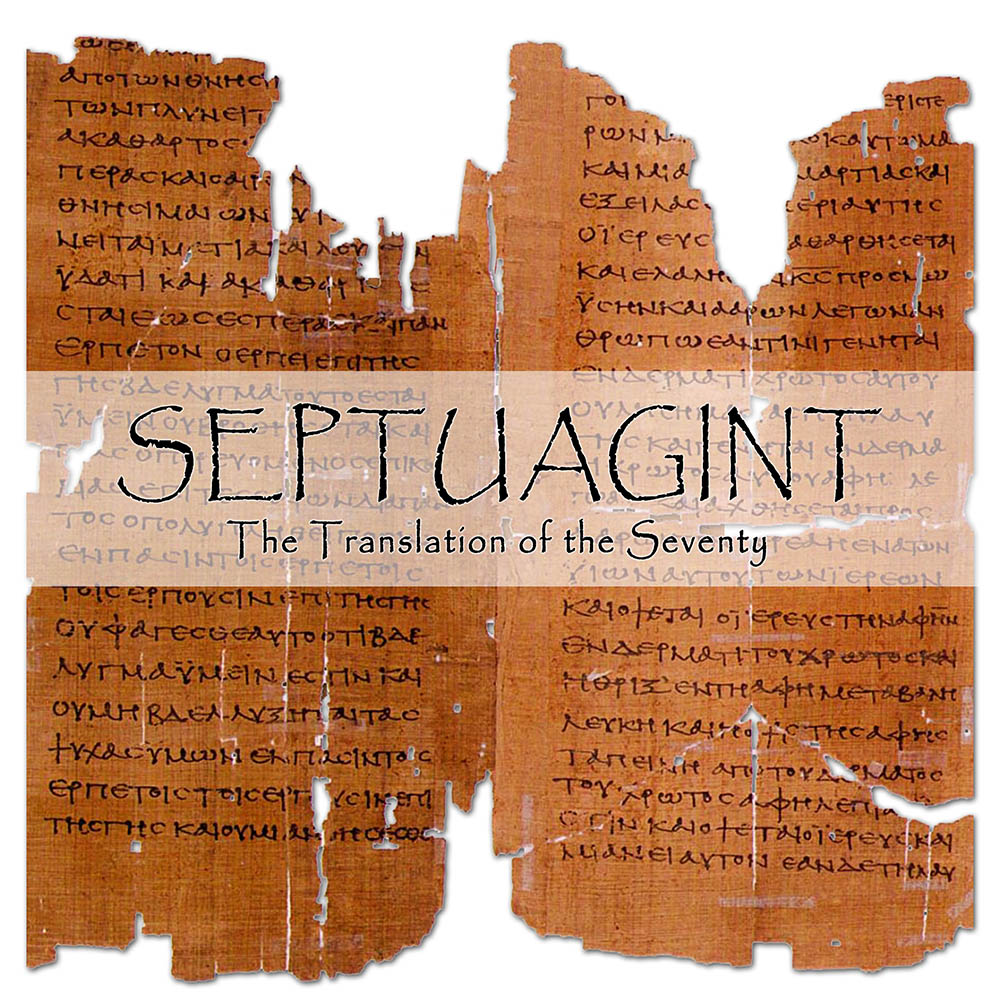
Here is a direct side-by-side comparison of the Masoretic Text with the LXX. I have concluded that the LXX is much to be preferred over the Masoretic Text, a position from which the Eastern Orthodox Church never deviated. Perhaps, if you take the time to read my comparisons and other articles, you will arrive at the same conclusion.
The Septuagint version I am using is the Lexham English Septuagint 2nd Edition, which is available in print or as part of Logos Bible Software. Occasionally I also use the Brenton translation of the LXX for insight into difficult passages.
If you want to know more, click on the following links.
- Why Christians Should Prefer the Septuagint over the Masoretic Text.
- Some Insights Gained through Comparing the Masoretic Text to the Septuagint
- More side by side comparisons of the Masoretic Text (MT) to the Septuagint (LXX).
| Masoretic Text | Septuagint | Significance |
|
1 “Ho! Everyone who thirsts, Come to the waters; And you who have no money, Come, buy and eat. Yes, come, buy wine and milk Without money and without price. 2 Why do you spend money for what is not bread, And your wages for what does not satisfy? Listen carefully to Me, and eat what is good, And let your soul delight itself in abundance. Isaiah 55:1–2 (NKJV) |
1 You who thirst, go to the water, and whoever has no silver, go buy and eat wine and fat without silver or price. 2 For what purpose do you value silver, and your labor does not satisfy? And you will eat good things, and your soul will exult in good things. Isaiah 55:1–2 (LES2) |
Building upon my idea that the MT presents Isaiah in a way that generally elevates Israel and hides Jesus, the opening words of this chapter of Isaiah in the MT invite the thirsty and hungry to come, presumably to Israel. The LXX, however, exhorts us to go to the water, which is not found in Old Covenant or the nation of Israel, per se, or Judaism, but in Christ alone. He alone can satisfy the deepest longings and needs of our souls. Jesus suffered outside the city of Jerusalem as something unclean. We must go outside the camp, outside the walls of Judaism, to find the Lord. 10 We have an altar from which those who serve the tabernacle have no right to eat. 11 For the bodies of those animals, whose blood is brought into the sanctuary by the high priest for sin, are burned outside the camp. 12 Therefore Jesus also, that He might sanctify the people with His own blood, suffered outside the gate. 13 Therefore let us go forth to Him, outside the camp, bearing His reproach. Hebrews 13:10–13 (NKJV) |
|
3 Incline your ear, and come to Me. Hear, and your soul shall live; And I will make an everlasting covenant with you— The sure mercies of David. 4 Indeed I have given him as a witness to the people, A leader and commander for the people. Isaiah 55:3–4 (NKJV) |
3 Pay attention with your ear and attend to my ways. Hear me, and your soul will live among good things, and I will establish an eternal covenant with you; the holy things of David are sure. 4 Look! I gave him as a testimony among the nations, a ruler and one who commands the nations. Isaiah 55:3–4 (LES2) |
The MT invites the hearer to come to God. The LXX says to attend to his ways. Both are good. Both promise that God will establish an eternal (New) covenant with such a person. The MT calls this covenant “the sure mercies of David.” The LXX says “the holy things of David (Christ) are sure.” Both are true. It is important for us to understand that all scripture points to Christ. (John 5:39) David, in this case, is pointer to his descendant, the Messiah, our Lord Jesus. Jesus has been given as a testimony or witness among the nations, a ruler (Lord) over the nations. (Revelation 2:27) |
|
5 Surely you shall call a nation you do not know, And nations who do not know you shall run to you, Because of the LORD your God, And the Holy One of Israel; For He has glorified you.” Isaiah 55:5 (NKJV) |
5 The nations, which do not know you, will call upon you, and the peoples, who do not know you, will flee to you for refuge because of the Lord your God, the holy one of Israel, because he has magnified you. Isaiah 55:5 (LES2) |
Here is another example, in my opinion, where the MT obfuscates a clear reference to Christ. It changed “the nations which do not know you will call upon you,” to “you shall call a nation you do not know.” The remainder of the verse shows agreement between the MT and LXX. The verse clearly refers to Christ. The Gentile nations and elect Jews have run to him for refuge upon hearing the gospel because Jesus has been elevated to the position of Lord of lords. |
|
6 Seek the LORD while He may be found, Call upon Him while He is near. 7 Let the wicked forsake his way, And the unrighteous man his thoughts; Let him return to the LORD, And He will have mercy on him; And to our God, For He will abundantly pardon. Isaiah 55:6–7 (NKJV) |
6 Seek out the Lord, and when you find him, call upon him. And if ever he approaches you, 7 let the ungodly abandon his ways and the man of lawlessness his counsels, and let him return to the Lord, and he will be shown mercy, because he will forgive your sins abundantly. Isaiah 55:6–7 (LES2) |
The LXX is quite different in that it promises that those who seek God will find him…. “and when you find him.” Instead of “while he is near,” the LXX says, “And if he ever approaches you.” The truth is that God finds us, not we him. It is God who comes knocking on the door of our hearts. Our job is to open it to him by inviting him in, repenting for our sins, and receiving the forgiveness he offers. |
|
8 “For My thoughts are not your thoughts, Nor are your ways My ways,” says the LORD. 9 “For as the heavens are higher than the earth, So are My ways higher than your ways, And My thoughts than your thoughts. Isaiah 55:8–9 (NKJV) |
8 “For my counsels are not like your counsels or my ways like your ways,” says the Lord, 9 “but as the heaven is far off from the earth, so my way is far off from your ways and your thoughts from my mind. Isaiah 55:8–9 (LES2) |
The MT and LXX essentially agree in this passage. |
|
10 “For as the rain comes down, and the snow from heaven, And do not return there, But water the earth, And make it bring forth and bud, That it may give seed to the sower And bread to the eater, 11 So shall My word be that goes forth from My mouth; It shall not return to Me void, But it shall accomplish what I please, And it shall prosper in the thing for which I sent it. Isaiah 55:10–11 (NKJV) |
10 For as the rain or snow comes down from the heavens and does not return until it has drenched the earth and brings forth and sprouts and gives seed to the sower and bread for food, 11 so will be my word, which goes out from my mouth: It will not return until that which I want is completed, and I will cause your ways and my orders to prosper.” Isaiah 55:10–11 (LES2) |
The MT is not scientifically accurate. The water cycle includes evaporation, rain, re-evaporation, and so on. The LXX gets this right by saying the rain stays until it accomplishes it purpose to water the ground and bring forth food. The Holy Spirit applies this to the Word of God, which can be broadly understood or narrowed to apply to the gospel message. God promises to those who publish his word that they will prosper personally, just as will God’s will. |
|
12 “For you shall go out with joy, And be led out with peace; The mountains and the hills Shall break forth into singing before you, And all the trees of the field shall clap their hands. 13 Instead of the thorn shall come up the cypress tree, And instead of the brier shall come up the myrtle tree; And it shall be to the LORD for a name, For an everlasting sign that shall not be cut off.” Isaiah 55:12–13 (NKJV) |
12 For you will go out with cheer, and you will be taught with delight, for the mountains and the hills will leap and welcome you with delight, and all the trees of the field will clap their branches. 13 And the cypress will grow up instead of the shrub, and the myrtle will grow up instead of the nettle, and the Lord will become a name and an eternal sign, and he will not come to an end. Isaiah 55:12–13 (LES2) |
Both the MT and LXX provide insight into God’s blessings on the evangelist and teacher of his Word. They will go out with joy, be led in peace, and taught with delight. Nature itself rejoices because of the gospel, which eventually, at Christ’s return, will result in its deliverance from the bondage initiated by Adam’s sin. (Romans 8:21) The MT resorts to using a passive voice in verse 13. The LXX changes the subject and voice of the verb when it says, “the Lord will become a name and an eternal sign.” The only name under heaven given among men whereby we can be saved is the name of Jesus. His resurrection is an eternal sign. The life he provides will never end. |