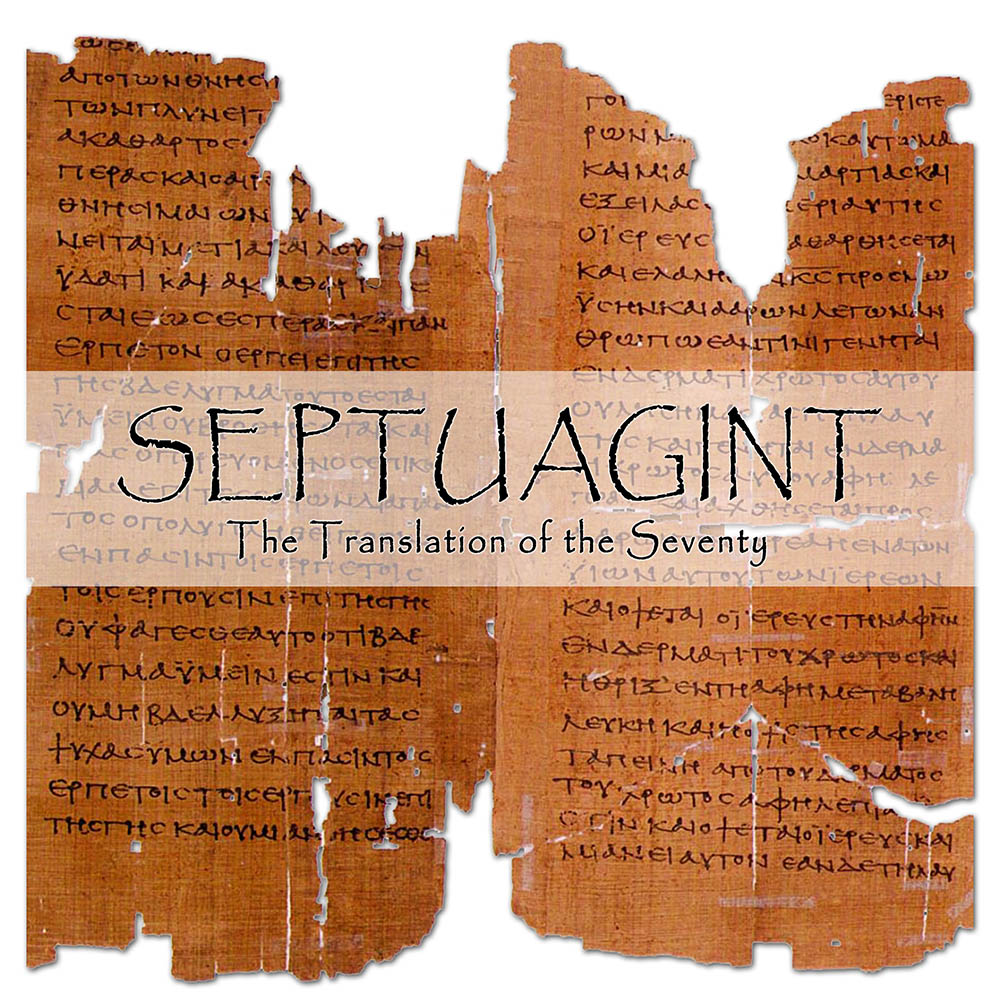
Here is a direct side-by-side comparison of the Masoretic Text with the LXX. I have concluded that the LXX is much to be preferred over the Masoretic Text, a position from which the Eastern Orthodox Church never deviated. Perhaps, if you take the time to read my comparisons and other articles, you will arrive at the same conclusion.
The Septuagint version I am using is the Lexham English Septuagint 2nd Edition, which is available in print or as part of Logos Bible Software. Occasionally I also use the Brenton translation of the LXX for insight into difficult passages.
If you want to know more, click on the following links.
- Why Christians Should Prefer the Septuagint over the Masoretic Text.
- Some Insights Gained through Comparing the Masoretic Text to the Septuagint
- More side by side comparisons of the Masoretic Text (MT) to the Septuagint (LXX).
| Masoretic Text | Septuagint | Significance |
|
1 Why do You stand afar off, O LORD? Why do You hide in times of trouble? 2 The wicked in his pride persecutes the poor; Let them be caught in the plots which they have devised. 3 For the wicked boasts of his heart’s desire; He blesses the greedy and renounces the LORD. 4 The wicked in his proud countenance does not seek God; God is in none of his thoughts. Psalm 10:1–4 (NKJV) |
22 Why, O Lord, have you withdrawn far from here? You disregard in seasons in affliction 23 When the ungodly one is arrogant, the poor one is burned (or set on fire). They are caught in the counsels with which they devise, 24 because the sinner praises himself in the desires of his soul, and the one doing wrong blesses himself. 25 The sinful one angered the Lord. According to the magnitude of his wrath he will not seek God. God is not before him. Psalm 9:22–25 (LES2) |
The first thing we notice is that the LXX simply continues Psalm 9, but the MT starts another psalm, thus making the rest of the psalms out of order until Psalm 148, when they realign. In verse 1/22, the MT says God hides himself in times of trouble. The LXX says he disregards when we are in seasons of affliction. The idea is much the same, but uses entirely different words. In the next verse, the MT seems to take the literal words of David found in the LXX, “the poor one is burned,” and reword them to make it read better, using “persecuted.” In verse 3/24 the “wicked / sinner” blesses the greedy in the MT but blesses himself in the LXX. The MT adds that the wicked renounces the Lord, which is not in the LXX. Verse 4/25 has little in common until the last phrase. One must ask, was the Paleo-Hebrew that difficult to translate? |
|
5 His ways are always prospering; Your judgments are far above, out of his sight; As for all his enemies, he sneers at them. 6 He has said in his heart, “I shall not be moved; I shall never be in adversity.” 7 His mouth is full of cursing and deceit and oppression; Under his tongue is trouble and iniquity. Psalm 10:5–7 (NKJV) |
26 His ways are profane in every season. Your judgments are removed from his face. He will gain dominion over all his enemies. 27 For he said in his heart, “I will not be afflicted, from generation to generation I will be without evil.” 28 Him whose curse and bitterness and guile fill his mouth, under his tongue are trouble and distress. Psalm 9:26–28 (LES2) |
In verse 5/26, the MT says, “his ways are always prospering,” but the LXX says, “His ways are profane in every season.” There is a difference between “far above” in the MT and “removed from his face” in the LXX. There is a difference between sneering at his enemies in the MT and gaining dominion over them in the LXX. Verse 6-7/27-28 agree for the most part. |
|
8 He sits in the lurking places of the villages; In the secret places he murders the innocent; His eyes are secretly fixed on the helpless. 9 He lies in wait secretly, as a lion in his den; He lies in wait to catch the poor; He catches the poor when he draws him into his net. 10 So he crouches, he lies low, That the helpless may fall by his strength. Psalm 10:8–10 (NKJV) |
29 He takes a position in ambush with the wealthy, in hidden places to kill the innocent one. His eyes gaze steadily toward the poor one. 30 He lies in wait with concealment as a lion in its den. He lies in wait to snatch away the poor, to snatch away the poor when he drags him in his net. In his trap 31 he will make him lowly. He will stoop down and fall when he gains dominion over the poor. Psalm 9:29–31 (LES2) |
The MT says the wicked lurk in the villages, but the LXX says he positions himself with the wealthy. After that there is agreement until verse 10/31. There the MT the wicked “lies low” to make the helpless fall, but the LXX says the wicked will humble and gain dominion over the poor but will ultimately fall himself. |
|
11 He has said in his heart, “God has forgotten; He hides His face; He will never see.” 12 Arise, O LORD! O God, lift up Your hand! Do not forget the humble. 13 Why do the wicked renounce God? He has said in his heart, “You will not require an account.” Psalm 10:11–13 (NKJV) |
32 For he said in his heart, “God has forgotten; he turned away his face so that he does not see in the end.” 33 Rise up, O Lord God. Lift up your hand. Do not forget the poor. 34 On what behalf did the ungodly provoke God? For he said in his heart, “He will not seek.” Psalm 9:32–34 (LES2) |
This passage essentially agrees. |
|
14 But You have seen, for You observe trouble and grief, To repay it by Your hand. The helpless commits himself to You; You are the helper of the fatherless. 15 Break the arm of the wicked and the evil man; Seek out his wickedness until You find none. Psalm 10:14–15 (NKJV) |
35 You see, for you will perceive distress and anger, to give them over into your hands. Therefore the poor one has been abandoned to you; for the orphan you were a helper. 36 Crush the arm of the sinner and evil one. His sin will be sought for, and he will not be found because of it. Psalm 9:35–36 (LES2) |
As usual, the MT changes some verb tenses and words. The last part of verse 14/35 is problematic in the LXX. I think the MT captures the meaning in this case. Perhaps the LXX should have said, “The poor has abandoned himself to you.” The MT asks God to “seek out wickedness until you find none,” but the LXX says that God will seek out the sin of the wicked, which will result in his no longer being found, due to God’s removing him from the earth, presumably. |
|
16 The LORD is King forever and ever; The nations have perished out of His land. 17 LORD, You have heard the desire of the humble; You will prepare their heart; You will cause Your ear to hear, 18 To do justice to the fatherless and the oppressed, That the man of the earth may oppress no more. Psalm 10:16–18 (NKJV) |
37 The Lord will rule for eternity and for eternity of eternity. The nations will perish from his earth. 38 The Lord heard the desire of the poor ones. Your ear paid heed to the preparation of their heart, 39 to judge for the orphan and for the low, so a person does not proceed further to boast upon the earth. Psalm 9:37–39 (LES2) |
In verse 16/37 the MT says the nations have perished, but the LXX says they will perish.The MT translates eretz into the English word “land,” which is one option. It can also mean “earth.” If it is understood as “land,” it likely means Israel, which probably means the pagan nations were destroyed from the promised land. The English translation in the LXX uses the word “earth” for the Greek “ge,” which can also mean earth or land. To say the nations will perish probably necessitates the use of the word earth and speak of some future date when all the nations will be destroyed, including Israel, at the Second Coming, when the entire earth will be dissolved. (2 Peter 3:11) The MT translation of the Paleo-Hebrew, which was completed in 1000 AD, may have wanted to emphasize Israel and the land, since they were no longer a nation at that time and had no land of their own. |
Summary: There are not any Christological issues in this psalm; nevertheless, one can see significant differences in the text. Which was closer to the ancient now dead Paleo-Hebrew? It is commonly accepted in the West that the Jews were trustworthy custodians of the Hebrew scriptures and that the Masoretic Text is superior to the LXX. However, the early church relied upon the LXX and championed it when the MT first came out, claiming that its alterations of key Christological passages quoted in the New Testament were in error. Eventually the Western church capitulated to the Jews and accepted the more modern version of the Old Testament. The Eastern Orthodox Church, to its credit, never wavered and still rely upon the LXX to this day. As I have previously written, I believe we in the West should return to the LXX.