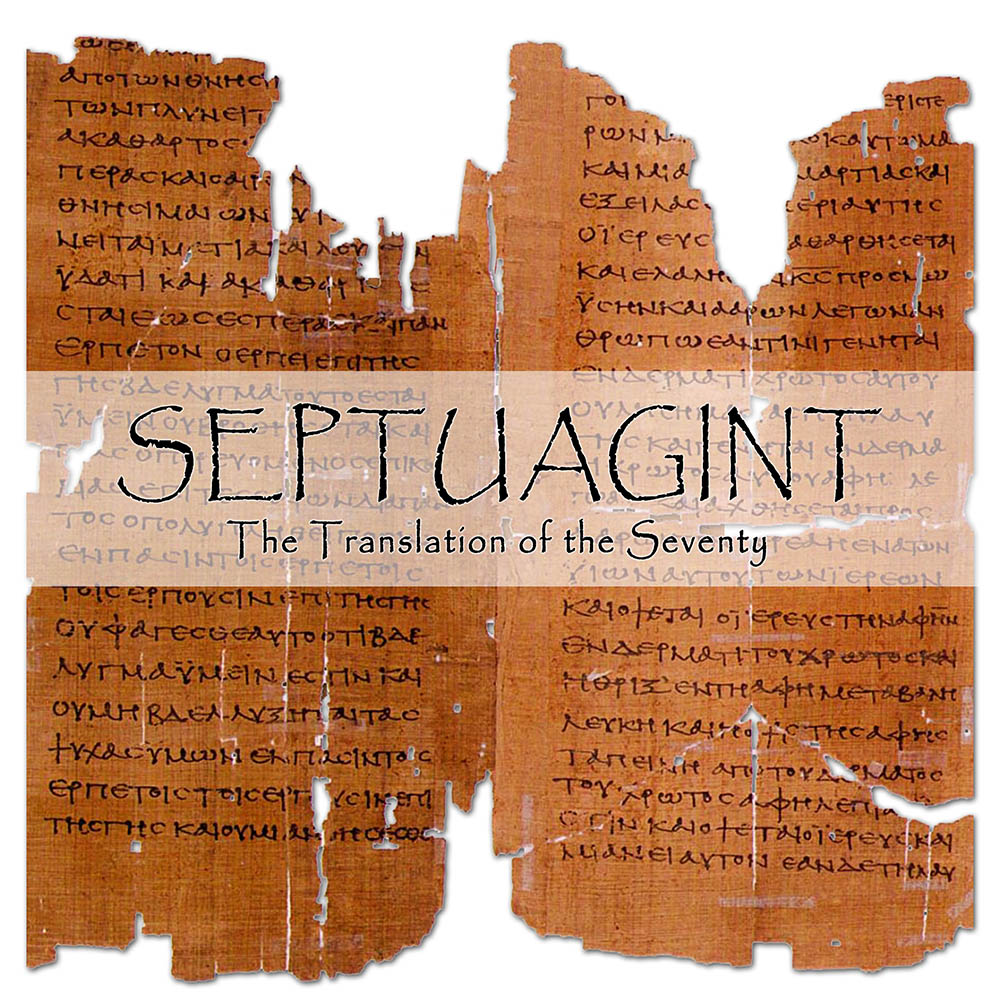
Here is a direct side-by-side comparison of the Masoretic Text with the LXX. I have concluded that the LXX is much to be preferred over the Masoretic Text, a position from which the Eastern Orthodox Church never deviated. Perhaps, if you take the time to read my comparisons and other articles, you will arrive at the same conclusion.
The Septuagint version I am using is the Lexham English Septuagint 2nd Edition, which is available in print or as part of Logos Bible Software. Occasionally I also use the Brenton translation of the LXX for insight into difficult passages.
If you want to know more, click on the following links.
- Why Christians Should Prefer the Septuagint over the Masoretic Text.
- Some Insights Gained through Comparing the Masoretic Text to the Septuagint
- More side by side comparisons of the Masoretic Text (MT) to the Septuagint (LXX).
| Masoretic Text | Septuagint | Significance |
|
1 O LORD, our Lord, How excellent is Your name in all the earth, Who have set Your glory above the heavens! Psalm 8:1 (NKJV) |
2 O Lord, our Lord, how wonderful is your name in all the earth, because your magnificence was lifted up far above the heavens. Psalm 8:2 (LES2) |
No appreciable difference. |
|
2 Out of the mouth of babes and nursing infants You have ordained strength, Because of Your enemies, That You may silence the enemy and the avenger. Psalm 8:2 (NKJV) |
3 From the mouth of infants and nursing babies you created praise, on account of your enemies, to destroy the enemy and the avenger. Psalm 8:3 (LES2) |
The LXX is quoted in Matthew 21:16. 16 and said to Him, “Do You hear what these are saying?” And Jesus said to them, “Yes. Have you never read, ‘Out of the mouth of babes and nursing infants You have perfected praise’?” Matthew 21:16 (NKJV) This is further evidence that the MT is not the inspired word of God, at least in cases where it changes the LXX to hide clear references to Christ or quotes in the New Testament. The same Greek verb is used in both the LXX and New Testament – katartizo, which can be translated in various ways, as can be seen. In this instance it is translated “created” in the LXX and “perfected” in the New Testament. The MT says God did this to silence the enemy, but the LXX goes further to say it is to destroy him. Jesus quoted this psalm when he was receiving praise at the Messiah. His mission, in summary, according to John, was to destroy the works of the devil (1 John 3:8), which agrees with the LXX. |
|
3 When I consider Your heavens, the work of Your fingers, The moon and the stars, which You have ordained, 4 What is man that You are mindful of him, And the son of man that You visit him? 5 For You have made him a little lower than the angels, And You have crowned him with glory and honor. Psalm 8:3–5 (NKJV) |
4 Because I will see the heavens, the works of your fingers, the moon and the stars, which you laid down. 5 What is a man that you remember him? Or a son of a man that you observe him? 6 You made him somewhat less than angels; you crowned him with glory and honor. Psalm 8:4–6 (LES2) |
Verses 3/4-4/5 have slight differences, but verse 5/6 has a major discrepancy. The MT says we were made a little lower than “elohim,” which should be translated “God,” as does the NASB. The NKJV chose to go with the LXX here by translating elohim as “angels.” The New Testament quotes this verse in Hebrews 2:7, where it uses the Greek word for “angels,” thus corroborating the accuracy of the LXX and justifying the NKJV translators’ choice. This is the second place in this short psalm where the MT translators chose to tamper with an LXX text that is quoted in the New Testament. This cannot possibly be a coincidence. When we catch someone in a lie, why trust them thereafter? Personally I have very little confidence in the MT’s accuracy, except where it agrees with the LXX. |
|
6 You have made him to have dominion over the works of Your hands; You have put all things under his feet, 7 All sheep and oxen— Even the beasts of the field, 8 The birds of the air, And the fish of the sea That pass through the paths of the seas. 9 O LORD, our Lord, How excellent is Your name in all the earth! Psalm 8:6–9 (NKJV) |
7 And you appointed him over the works of your hands. You arranged all things under his feet, 8 all sheep and oxen, and even still the livestock of the plains, 9 the birds of the heavens and the fish of the sea, the creatures that go through the paths of the seas. 10 O Lord, our Lord, how wonderful is your name in all the earth. Psalm 8:7–10 (LES2) |
There are no significant differences here. |
| The only significant differences between the MT and LXX are where the New Testament quotes the LXX. This is not an accident. |