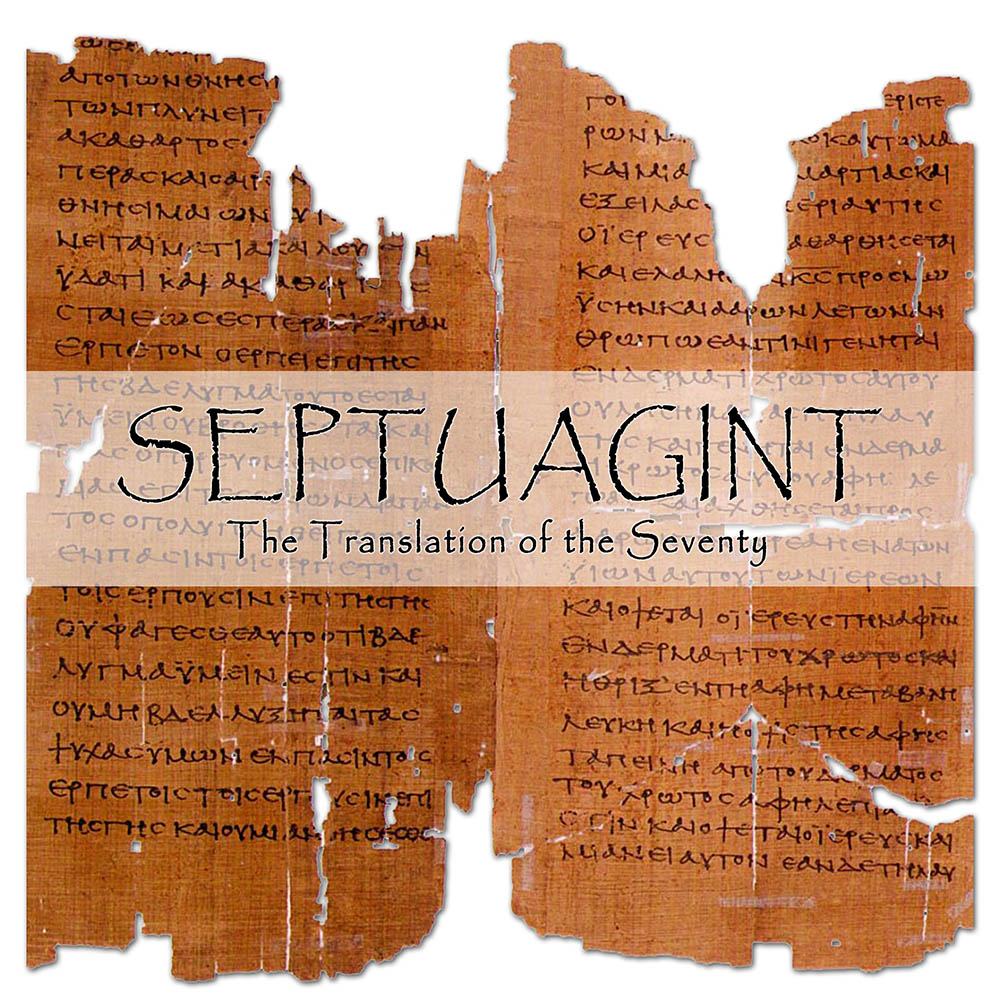
Here is a direct side-by-side comparison of the Masoretic Text with the LXX. I have concluded that the LXX is much to be preferred over the Masoretic Text, a position from which the Eastern Orthodox Church never deviated. Perhaps, if you take the time to read my comparisons and other articles, you will arrive at the same conclusion.
The Septuagint version I am using is the Lexham English Septuagint 2nd Edition, which is available in print or as part of Logos Bible Software. Occasionally I also use the Brenton translation of the LXX for insight into difficult passages.
If you want to know more, click on the following links.
- Why Christians Should Prefer the Septuagint over the Masoretic Text.
- Some Insights Gained through Comparing the Masoretic Text to the Septuagint
- More side by side comparisons of the Masoretic Text (MT) to the Septuagint (LXX).
| Masoretic Text | Septuagint | Significance |
|
20 Now in that day the remnant of Israel, and those of the house of Jacob who have escaped, will never again rely on the one who struck them, but will truly rely on the LORD, the Holy One of Israel. 21 A remnant will return, the remnant of Jacob, to the mighty God. 22 For though your people, O Israel, may be like the sand of the sea, Only a remnant within them will return; A destruction is determined, overflowing with righteousness. 23 For a complete destruction, one that is decreed, the Lord GOD of hosts will execute in the midst of the whole land. Isaiah 10:20–23 (NASB95) |
20 And this will happen on that day: those of Israel who remain will no longer be imposed on, and those of Jacob who are saved will no longer trust those who wronged them but will trust the holy God of Israel in the truth. 21 And those of Jacob who remain will trust a powerful God. 22 And if the people of Israel become like the sand of the sea, the remnant of them will be saved, completing an account and curtailing it in righteousness, 23 for the Lord will make a curtailed account with the whole inhabited land. Isaiah 10:20–23 (LES2) |
In verse 20, there is some agreement, but the MT describes the remnant as those who have “escaped,” but the LXX says they are those who were left behind. The MT omits the LXX’s, “will no longer be imposed on.” The MT says the remnant will no longer trust the one who “struck” them, but the LXX says “those who wronged them.” The end of the verse is in agreement. Verse 22 is one of those subtle changes that attempts to hide Christ. The MT says only a remnant will return, focusing our minds on the return from Babylon, but the LXX says a remnant will be saved, leading us to think of the salvation that comes from Christ alone. Paul picked up on this when he quoted the LXX. 27 Isaiah also cries out concerning Israel: “Though the number of the children of Israel be as the sand of the sea, The remnant will be saved. 28 For He will finish the work and cut it short in righteousness, Because the LORD will make a short work upon the earth.” Romans 9:27–28 (NKJV) |
Summary: This passage in the LXX points to Christ as Paul confirmed in Romans. The MT attempts to hide this connection by substituting “return” for “saved.”