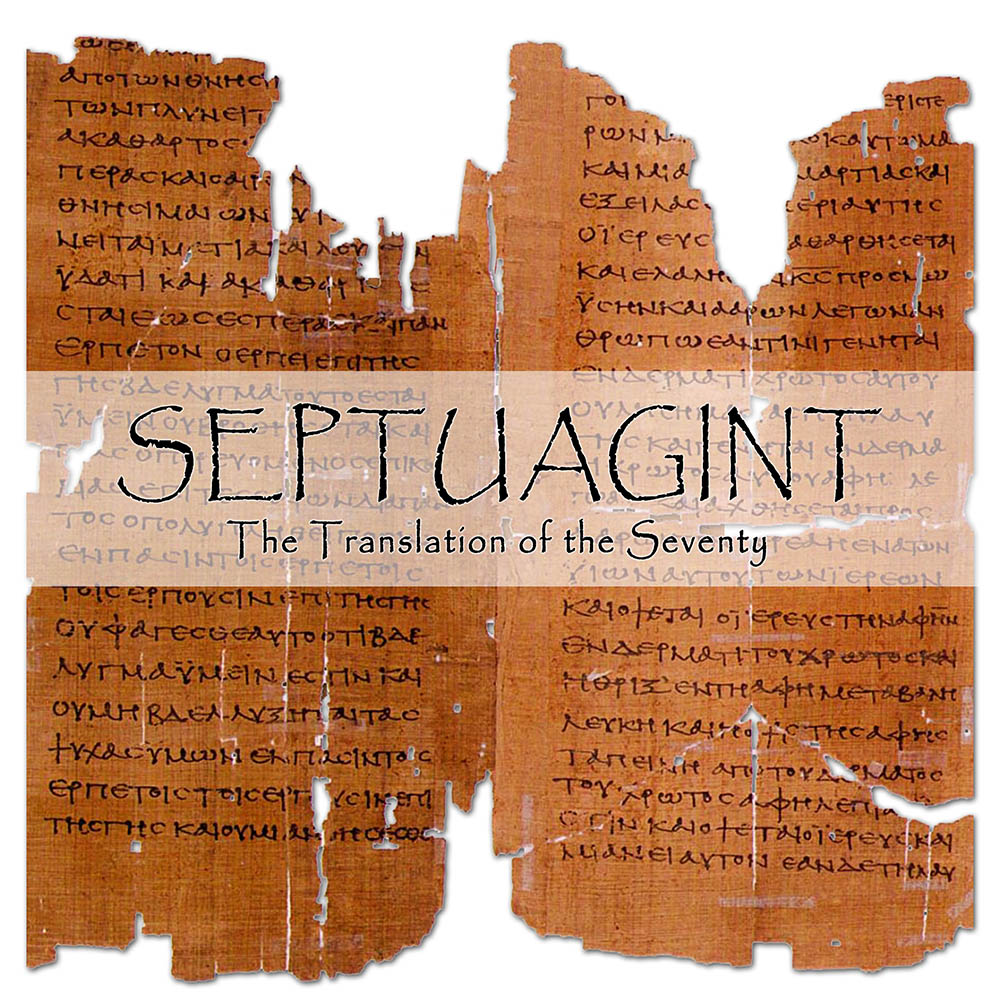
Here is a direct side-by-side comparison of the Masoretic Text with the LXX. I have concluded that the LXX is much to be preferred over the Masoretic Text, a position from which the Eastern Orthodox Church never deviated. Perhaps, if you take the time to read my comparisons and other articles, you will arrive at the same conclusion.
The Septuagint version I am using is the Lexham English Septuagint 2nd Edition, which is available in print or as part of Logos Bible Software. Occasionally I also use the Brenton translation of the LXX for insight into difficult passages.
If you want to know more, click on the following links.
- Why Christians Should Prefer the Septuagint over the Masoretic Text.
- Some Insights Gained through Comparing the Masoretic Text to the Septuagint
- More side by side comparisons of the Masoretic Text (MT) to the Septuagint (LXX).
| Masoretic Text | Septuagint | Significance |
|
1 I will praise You with my whole heart; Before the gods I will sing praises to You. 2 I will worship toward Your holy temple, And praise Your name For Your lovingkindness and Your truth; For You have magnified Your word above all Your name. Psalm 138:1–2 (NKJV) |
1 I will give thanks to you, O Lord, with my whole heart, because you heard the words of my mouth; and before angels I will sing psalms to you. 2 I will worship at your holy temple, and I will give thanks to your name, for your mercy and your truthfulness, because you magnified your holy one above every name. Psalm 137:1–2 (LES2) |
A case can be made that the MT introduces Kabbalistic names of God into the text; whereas, the LXX sticks to Lord and God. This is significant in that it agrees with what Jesus taught us. He told us to address our God as Abba – Father or Daddy. Never once in the New Testament are we taught to use any of the MT names of God. Secondly, David sings before angels rather than “gods” or “elohim.” Thirdly, and directly to the point of this article, verse two in the LXX is a Christological verse quoted by Paul in Philippians 2:9. 9 Therefore God also has highly exalted Him and given Him the name which is above every name, 10 that at the name of Jesus every knee should bow, of those in heaven, and of those on earth, and of those under the earth, 11 and that every tongue should confess that Jesus Christ is Lord, to the glory of God the Father. Philippians 2:9–11 (NKJV) By changing the MT text of Psalm 138:2, the rabbis removed this obvious reference to the risen and glorified Christ. Instead they gave us a confusing verse that makes no sense whatsoever and has been used by “name it and claim it” preachers to promote that false doctrine. God would never magnify his word above his name. Jesus is the Word made flesh. The Word and the Name are the same. |