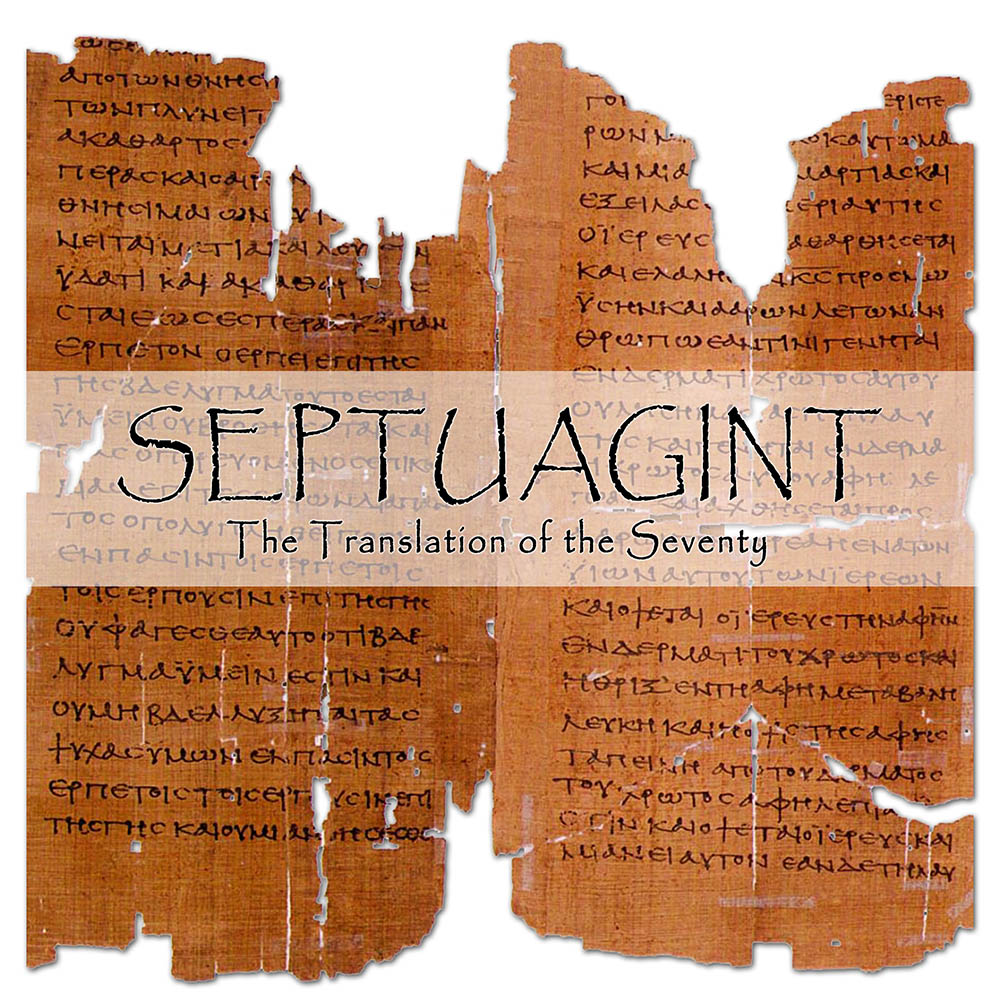
Comparing MT to the Septuagint (LXX): Psalm 141

When we are programmed as children what to believe, later, as adults, we will have a difficult time accepting anything different. In the case of our Old Testament scriptures, we in the West have been fed the Masoretic Text (MT) since Jerome chose it to use it as the basis for his Latin Vulgate Bible Old Testament. When confronted with the historical facts that the Septuagint (LXX) is a much older translation than the MT (285 BC compared to hundreds of years after Christ), was used and quoted by the New Testament writers, and was translated directly from the paleo-Hebrew before any animosity toward Christ could influence it, it is quite difficult for many to accept it as a more trustworthy version. Sadly for us, the MT has robbed us of several Christological texts and changed the general wording regularly, thus changing the meaning over and over again, either in highly significant ways or small ways. Either is bad. Doing a side by side comparison of the LXX and the MT makes this obvious. I am doing a series of articles to illustrate this as a I work my way through the Old Testament.

Here is an another example. The Septuagint version I am using is the Lexham English Septuagint 2nd Edition, which I like the best. It is available in print or through Logos Bible Software.

Masoretic Text Septuagint Significance

1 LORD, I cry out to You; Make haste to me! Give ear to my voice when I cry out to You. 2 Let my prayer be set before You as incense, The lifting up of my hands as the evening sacrifice. Psalm 141:1–2 (NKJV) 

1 O Lord, to you I cried out. Give ear to me. Pay attention to the voice of my entreaty when I cry out to you. 2 Let my prayer be directed as a burnt sacrifice before you, a rising of my hands as an evening sacrifice. Psalm 140:1–2 (LES2) 

This psalm is a great example of of the differences between the MT and LXX. “Make haste” is very different from “listen” or “give ear.” The LXX for “burnt sacrifice” is the Greek word thumiama, which is normally translated as incense. So, no difference there. 

3 Set a guard, O LORD, over my mouth; Keep watch over the door of my lips. 4 Do not incline my heart to any evil thing, To practice wicked works With men who work iniquity; And do not let me eat of their delicacies. Psalm 141:3–4 (NKJV) 

3 O Lord, set a guard for my mouth and a door of fortification around my lips. 4 Do not turn my heart to words of wickedness, to allege pretexts in sins, with people working lawlessness, and never ever will I be joined with their chosen ones. Psalm 140:3–4 (LES2) 

Here the contrast is obvious. The MT says “any evil thing,” but the LXX says “words of wickedness.” David just asked God to guard his mouth; so, it stands to reason the problem was with his words. The MT says, “to practice wicked works,” but the LXX says “to allege pretexts in sins.” Apparently wicked people were plotting evil and making excuses for their actions, and David wanted no part in it. The MT has David asking God to protect him from their choice food, but the LXX is a prayer from David asking God not to let him be joined to those who are the chosen or “elect” of evil. The NT differentiates between God’s elect and the reprobate.

5 Let the righteous strike me; It shall be a kindness. And let him rebuke me; It shall be as excellent oil; Let my head not refuse it. For still my prayer is against the deeds of the wicked. Psalm 141:5 (NKJV) 

5 The righteous one will train me with mercy, and he will reprove me. But do not anoint my head with the olive oil of the sinner, for again and again my prayer is against their pleasures. Psalm 140:5 (LES2) 

The righteous one, our Lord Jesus via his Holy Spirit, disciplines God’s children, but does it mercifully. The LXX captures this NT principle, but the MT does not, in my opinion. The MT says that the reproof of the righteous one will be as excellent oil, but the LXX is a prayer from David not to be anointed with the oil of sinners, which agrees with what came before in the LXX – his prayer not to be joined to evil plotters. The MT has David praying against the deeds of the wicked, but the LXX is a prayer asking for protection from the temptation coming from their illicit pleasures.

6 Their judges are overthrown by the sides of the cliff, And they hear my words, for they are sweet. Psalm 141:6 (NKJV) 

6 Their strong ones were devoured next to a rock. They will hear my words because they were able [Greek: dunamai – powerful].Psalm 140:6 (LES2) 

The LXX uses “strong ones” instead of “judges.” The LXX replaces “they are sweet” with “they were able.” The Greek word is dunamai, which probably should be translated “powerful,” which to me makes more sense. David would not have been speaking sweet words to evil doers being overthrown, but powerful ones.

7 Our bones are scattered at the mouth of the grave, As when one plows and breaks up the earth. 8 But my eyes are upon You, O GOD the Lord; In You I take refuge; Do not leave my soul destitute. Psalm 141:7–8 (NKJV) 

7 As a thick piece of earth is broken up upon the earth, our bones were scattered along Hades. 8 For to you, O Lord, Lord, are my eyes. In you I placed my hope. Do not remove my soul. Psalm 140:7–8 (LES2) 

There is a small difference here, one that shows up in other places. The MT uses the word “refuge,” but the LXX uses “hope.” The other difference is using the word “destitute” in place of “remove.” 

9 Keep me from the snares they have laid for me, And from the traps of the workers of iniquity. 10 Let the wicked fall into their own nets, While I escape safely. Psalm 141:9–10 (NKJV) 

9 Guard me from the trap that they contrived for me and from the stumbling block of those who work lawlessness. 10 Sinners will fall in his own net. I am alone wherever I go. Psalm 140:9–10 (LES2) 

The LXX declares that sinners will fall into their own traps, but the MT makes it a prayer. The LXX declares that David walked alone when he resisted sin. That is different from saying he escaped. The loneliness of being set apart to God and refusing to participate in evil is a real thing.
    I leave it to you to decide which is the true version of the psalm. I know what I think.

Conclusion

If you want to know more about why Christians should prefer the Septuagint to the MT, click on this link.The Eastern Orthodox Church had the wisdom to retain the LXX for its Old Testament scriptures. As for me, I now rely on the LXX. It was Paul’s standard for Old Covenant truth and is quoted in the New Testament. That makes it good enough for me.

More articles on the Septuagint

Comparing MT to the Septuagint (LXX): Psalm 91:1-7

When we are programmed as children what to believe, later, as adults, we will have a difficult time accepting anything different. In the case of our Old Testament scriptures, we in the West have been fed the Masoretic Text (MT) since Jerome chose it to use it as the basis for his Latin Vulgate Bible Old Testament. When confronted with the historical facts that the Septuagint (LXX) is a much older translation than the MT (285 BC compared to hundreds of years after Christ), was used and quoted by the New Testament writers, and was translated directly from the paleo-Hebrew before any animosity toward Christ could influence it, it is quite difficult for many to accept it as a more trustworthy version. Sadly for us, the MT has robbed us of several Christological texts and changed the general wording regularly, thus changing the meaning over and over again, either in highly significant ways or small ways. Either is bad. Doing a side by side comparison of the LXX and the MT makes this obvious. I am doing a series of articles to illustrate this as a I work my way through the Old Testament.

Here is an another example. The Septuagint version I am using is the Lexham English Septuagint 2nd Edition, which I like the best. It is available in print or through Logos Bible Software.

Septuagint MT Significance

1 The one dwelling in the support of the Most High, in the protection of the God of the heavens, that one will find lodging. 2 That one will say to God, “You are my helper and my refuge, my God, I will hope upon him,” Psalm 90:1–2 (LES2) 

1 He who dwells in the secret place of the Most High Shall abide under the shadow of the Almighty. 2 I will say of the LORD, “He is my refuge and my fortress; My God, in Him I will trust.” Psalm 91:1–2 (NKJV) 

The main difference in this passage is that the LXX emphasizes that God is our helper. The MT highlights that he is our fortress or protection. Certainly, the Lord is both, but the idea of God’s being our helper is an emphasis of the NT. The Holy Spirit is specifically identified that way. (John 14:26)

3 because he will rescue from the trap of hunters and from a terrifying word. 4 With his shoulders he will overshadow you, and under his wings you will have hope; with a shield his truth will surround you. Psalm 90:3–4 (LES2) 

3 Surely He shall deliver you from the snare of the fowler And from the perilous pestilence. 4 He shall cover you with His feathers, And under His wings you shall take refuge; His truth shall be your shield and buckler. Psalm 91:3–4 (NKJV) 

The LXX in verse 3 says that God will deliver us from a “terrifying word,” but the MT replaces that with “perilous pestilence.” The Hebrew can mean engulfing ruin. The LXX says God’s “shoulders” or “back” will overshadow us, but the MT extends the wings metaphor to translate it as “feathers.” The result of this protection will be our having “hope” according to the LXX, but the MT says God will be our refuge instead. The LXX says God’s truth will surround us. The MT gives the idea that the protection is only in front, as from a shield.

5 That one will not be afraid from fear by night, from the arrow flying by day, 6 from the deed carried out in darkness, from mishap and demon at midday. 7 A thousand will fall from your side, and ten thousand from your right side. But they will not come near to you. Psalm 90:5–7 (LES2) 

5 You shall not be afraid of the terror by night, Nor of the arrow that flies by day, 6 Nor of the pestilence that walks in darkness, Nor of the destruction that lays waste at noonday. 7 A thousand may fall at your side, And ten thousand at your right hand; But it shall not come near you. Psalm 91:5–7 (NKJV) 

The LXX says that we will be protected from the “deed” done in darkness; whereas, the MT uses the world “pestilence.” Next the LXX says that protection will include what might happen to us by “mishap” or by demonic attack. The MT rather innocuously gives us “the destruction that lays waste at noonday.”

The MT is more “poetic,” but the LXX sounds more authentic and specific. 


Conclusion

If you want to know more about why Christians should prefer the Septuagint to the MT, click on this link.The Eastern Orthodox Church had the wisdom to retain the LXX for its Old Testament scriptures. As for me, I now rely on the LXX. It was Paul’s standard for Old Covenant truth and is quoted in the New Testament. That makes it good enough for me.

More articles on the Septuagint

Comparing MT to the Septuagint (LXX): Psalm 90:1-10

When we are programmed as children what to believe, later, as adults, we will have a difficult time accepting anything different. In the case of our Old Testament scriptures, we in the West have been fed the Masoretic Text (MT) since Jerome chose it to use it as the basis for his Latin Vulgate Bible Old Testament. When confronted with the historical facts that the Septuagint (LXX) is a much older translation than the MT (285 BC compared to hundreds of years after Christ), was used and quoted by the New Testament writers, and was translated directly from the paleo-Hebrew before any animosity toward Christ could influence it, it is quite difficult for many to accept it as a more trustworthy version. Sadly for us, the MT has robbed us of several Christological texts and changed the general wording regularly, thus changing the meaning over and over again, either in highly significant ways or small ways. Either is bad. Doing a side by side comparison of the LXX and the MT makes this obvious. I am doing a series of articles to illustrate this as a I work my way through the Old Testament.

Here is an another example. The Septuagint version I am using is the Lexham English Septuagint 2nd Edition, which I like the best. It is available in print or through Logos Bible Software.

Septuagint MT Significance

1 Lord, you were a place of refuge for us from generation to generation. 2 Before mountains were made and the earth and the inhabited world formed, and from eternity until eternity you are. Psalm 89:1–2 (LES2) 

1 LORD, You have been our dwelling place in all generations. 2 Before the mountains were brought forth, Or ever You had formed the earth and the world, Even from everlasting to everlasting, You are God. Psalm 90:1–2 (NKJV) 

The LXX uses “place of refuge” rather than the MT’s less descriptive “dwelling place.” The LXX adds “inhabited” to world and emphasizes God’s existence – “you are.” This seems to be the intended meaning of the tetragrammaton.

3 Do not turn back humanity to lowliness. But you said, “Return, O sons of humans.” 4 For a thousand years in your eyes are as the day of yesterday that passed by and as a watch at night. 5 Their contempt will be years. In the morning may they pass by like grass. 6 In the morning may it blossom and pass away. In the evening may it fall away, be hardened and dried up. 7 For we came to an end at your anger, and at your wrath we were troubled. 8 You placed our lawlessnesses before you. Our eternity is in the illumination of your face. 9 For all our days came to an end, and at your anger we came to an end. Our years were meditated on like a spider’s web. Psalm 89:3–9 (LES2) 

3 You turn man to destruction, And say, “Return, O children of men.” 4 For a thousand years in Your sight Are like yesterday when it is past, And like a watch in the night. 5 You carry them away like a flood; They are like a sleep. In the morning they are like grass which grows up: 6 In the morning it flourishes and grows up; In the evening it is cut down and withers. 7 For we have been consumed by Your anger, And by Your wrath we are terrified. 8 You have set our iniquities before You, Our secret sins in the light of Your countenance. 9 For all our days have passed away in Your wrath; We finish our years like a sigh. Psalm 90:3–9 (NKJV) 

The LXX asks God not to return us to lowliness, humiliation, or spiritual abasement – Greek: tapeinosis. The MT uses the Hebrew word, dakka, which means contrite or crushed. The NASB translates that as “dust,” and the NKJV as “destruction.” The LXX prays that God NOT do this; whereas, the MT says that God does this.

The LXX uses the phrase, “Their contempt will be years,” which is hard to understand. The MT continues the thought of the previous verse by using, “You carry them away like a flood. They are like sleep.” The MT sounds better, but the LXX is perhaps more authentic. It seems to me that the MT sometimes (often?) renders difficult passages in a way that makes them sound “better,” but in fact is unfaithful to the original text. I cannot prove this, but it appears that may be the case to me.

The LXX says about the grass “May it,” but the MT uses the indicative, “It is…” 

Verse 8 has a tremendous variance. “Our eternity is in the illumination of your face” is nothing like “our secret sins in the light of your countenance.”  The LXX gives insight into the psalmist’s view of eternity, the MT of judgment. Likewise, “Our years were meditated on like a spider’s web” is light years away from “We finish our years like a sigh.” Both emphasize life’s fragility and brevity, but “sigh” and “spider’s web” are so different. We have been programmed to think the MT is superior, but I do not accept that, since the LXX is the one the Holy Spirit chose to quote in the NT.

10 The days of our years, in years are seventy years. But if in power they might be eighty years. Then even the majority of them are work and toil, because humility has come upon us, and we will be disciplined. Psalm 89:10 (LES2) 

10 The days of our lives are seventy years; And if by reason of strength they are eighty years, Yet their boast is only labor and sorrow; For it is soon cut off, and we fly away. Psalm 90:10 (NKJV) 

This verse is completely different. The LXX emphasizes the curse God placed upon humanity after the Fall – toil, and gives its purpose, to develop humility and discipline in our lives. The MT replaces that insight with our being “cut off” and “flying away.” One is not faithful to the original paleo-Hebrew. 

My personal experience in reading the LXX for the first time is that I feel as if I am getting to know King David and how he thought better, which is very refreshing.


Conclusion

If you want to know more about why Christians should prefer the Septuagint to the MT, click on this link.The Eastern Orthodox Church had the wisdom to retain the LXX for its Old Testament scriptures. As for me, I now rely on the LXX. It was Paul’s standard for Old Covenant truth and is quoted in the New Testament. That makes it good enough for me.

More articles on the Septuagint

Comparing MT to the Septuagint (LXX): Psalm 71:20-21

When we are programmed as children what to believe, later, as adults, we will have a difficult time accepting anything different. In the case of our Old Testament scriptures, we in the West have been fed the Masoretic Text (MT) since Jerome chose it to use it as the basis for his Latin Vulgate Bible Old Testament. When confronted with the historical facts that the Septuagint (LXX) is a much older translation than the MT (285 BC compared to hundreds of years after Christ), was used and quoted by the New Testament writers, and was translated directly from the paleo-Hebrew before any animosity toward Christ could influence it, it is quite difficult for many to accept it as a more trustworthy version. Sadly for us, the MT has robbed us of several Christological texts and changed the general wording regularly, thus changing the meaning over and over again, either in highly significant ways or small ways. Either is bad. Doing a side by side comparison of the LXX and the MT makes this obvious. I am doing a series of articles to illustrate this as a I work my way through the Old Testament.

Here is an another example. The Septuagint version I am using is the Lexham English Septuagint 2nd Edition, which I like the best. It is available in print or through Logos Bible Software.

Septuagint MT Significance

20 For you showed to me great and evil afflictions, but you returned, you made me alive, and from the depths of the earth again you raised me up. 21 You multiplied your righteousness, and you returned. You comforted me, and from the depths again you raised me up. Psalm 70:20–21 (LES2) 

20 You, who have shown me great and severe troubles, Shall revive me again, And bring me up again from the depths of the earth. 21 You shall increase my greatness, And comfort me on every side. Psalm 71:20–21 (NKJV) 

The comparison of these two passages serves to accentuate the differences and the similarities between the MT and LXX. The LXX uses the aorist past tense to signify a one-time event when God “made me alive.” and “raised me up.” The MT uses “shall revive me again,” but it can also mean “restore to life again.” Why it chose the future tense is unknown. Either the LXX or the MT is incorrect in that regard. However, in another sense, they are both correct. God calls those things in the historical future as already having been accomplished. (Romans 4:17 NKJV). However, one is not faithful to the original paleo-Hebrew.

The LXX says, “You multiplied my righeousness,” but the MT says, “You shall increase my greatness.” There is quite a difference between the two in meaning and grammar, but both are true about our Lord Jesus. God multiplied his righteousness by justifying many. (Romans 4:16) God increased his greatness by declaring him Lord of Lords by his resurrection. (Romans 1:4) Once again, however, one is not faithful to the paleo-Hebrew. 

The LXX repeats the affirmation that God “raised me up.” We know that, when God repeats something, it firmly establishes what is said. (2 Corinthians 13:1)

One can say that there are no big theological issues at stake between the MT and LXX when it comes to this passage, but when I read the LXX, the verses seemed to jump off the page as a reference to Christ, which, I believe, is what the Holy Spirit intended. As I mentioned elsewhere, since the LXX is the version used by the early church and quoted in the NT, I am going with it.


Conclusion

If you want to know more about why Christians should prefer the Septuagint to the MT, click on this link.The Eastern Orthodox Church had the wisdom to retain the LXX for its Old Testament scriptures. As for me, I now rely on the LXX. It was Paul’s standard for Old Covenant truth and is quoted in the New Testament. That makes it good enough for me.

More articles on the Septuagint

Comparing MT to the Septuagint (LXX): Psalm 68:18

When we are programmed as children what to believe, later, as adults, we will have a difficult time accepting anything different. In the case of our Old Testament scriptures, we in the West have been fed the Masoretic Text (MT) since Jerome chose it to use it as the basis for his Latin Vulgate Bible Old Testament. When confronted with the historical facts that the Septuagint (LXX) is a much older translation than the MT (285 BC compared to hundreds of years after Christ), was used and quoted by the New Testament writers, and was translated directly from the paleo-Hebrew before any animosity toward Christ could influence it, it is quite difficult for many to accept it as a more trustworthy version. Sadly for us, the MT has robbed us of several Christological texts and changed the general wording regularly, thus changing the meaning over and over again, either in highly significant ways or small ways. Either is bad. Doing a side by side comparison of the LXX and the MT makes this obvious. I am doing a series of articles to illustrate this as a I work my way through the Old Testament.

Here is an another example. The Septuagint version I am using is the Lexham English Septuagint 2nd Edition, which I like the best. It is available in print or through Logos Bible Software.

Septuagint MT Significance

19 Having gone up to the high place [Greek – hysos], you took as prisoners a body of captives. You received [Greek – lambano] gifts in a person, yes indeed, those resisting, to cause them to dwell there. Psalm 67:19 (LES2) 

18 You have ascended on high [Hebrew – marom], You have led captivity captive; You have received [Hebrew – laqach] gifts among men, Even from the rebellious, That the LORD God might dwell there. Psalm 68:18 (NKJV) 

Paul quoted this verse in Ephesians 4:8.

8 Therefore He says: “When He ascended on high [Greek – hypsos], He led captivity captive, And gave [Greek – didomi] gifts to men.” Ephesians 4:8 (NKJV) 

The way Paul quoted the OT verse shows that the Septuagint was his source. Both the Greek hypsos and the Hebrew marom mean height. However, the Greek verb lambano can mean either give or receive; whereas, the Hebrew verb laqach can only mean receive or capture. When Paul replaced lambano with didomai, which means to give, in his quote, it shows he understood lambano to mean give, an option not available to him if he had been using the MT as his source.


Conclusion

If you want to know more about why Christians should prefer the Septuagint to the MT, click on this link.The Eastern Orthodox Church had the wisdom to retain the LXX for its Old Testament scriptures. As for me, I now rely on the LXX. It was Paul’s standard for Old Covenant truth and is quoted in the New Testament. That makes it good enough for me.

More articles on the Septuagint

Comparing MT to the Septuagint (LXX): Deuteronomy 32:8

When we are programmed as children what to believe, later, as adults, we will have a difficult time accepting anything different. In the case of our Old Testament scriptures, we in the West have been fed the Masoretic Text (MT) since Jerome chose it to use it as the basis for his Latin Vulgate Bible Old Testament. When confronted with the historical facts that the Septuagint (LXX) is a much older translation than the MT (285 BC compared to hundreds of years after Christ), was used and quoted by the New Testament writers, and was translated directly from the paleo-Hebrew before any animosity toward Christ could influence it, it is quite difficult for many to accept it as a more trustworthy version. Sadly for us, the MT has robbed us of several Christological texts and changed the general wording regularly, thus changing the meaning over and over again, either in highly significant ways or small ways. Either is bad. Doing a side by side comparison of the LXX and the MT makes this obvious. I am doing a series of articles to illustrate this as a I work my way through the Old Testament.

Here is an another example. The Septuagint version I am using is the Lexham English Septuagint 2nd Edition, which I like the best. It is available in print or through Logos Bible Software.

Septuagint Masoretic Text Significance

8 When the Most High distributed nations as he scattered the sons of Adam, he set up boundaries for the nations according to the number of the angels of God. 9 And his people Jacob became the portion of the Lord, Israel an allotment of his inheritance. Deuteronomy 32:8–9 (LES2) 

8 When the Most High divided their inheritance to the nations, When He separated the sons of Adam, He set the boundaries of the peoples According to the number of the children of Israel. 9 For the LORD’s portion is His people; Jacob is the place of His inheritance. Deuteronomy 32:8–9 (NKJV) 

The MT replaces “angels” with “children of Israel,” making Israel the focus and determiner of all the boundaries of the nations of the earth. This fits well with the Zionist belief that the modern nation state of Israel is the focus of God’s plan and is destined to rule the world, something not found in the New Testament. Christ will be glorified through the church throughout all eternity, not the nation state of Israel. (Ephesians 3:21)


Conclusion

If you want to know more about why Christians should prefer the Septuagint to the MT, click on this link.The Eastern Orthodox Church had the wisdom to retain the LXX for its Old Testament scriptures. As for me, I now rely on the LXX. It was Paul’s standard for Old Covenant truth and is quoted in the New Testament. That makes it good enough for me.

More articles on the Septuagint

Comparing MT to the Septuagint (LXX): New Testament Quotes

The authors of the New Testament used the Septuagint as their version of the Old Testament because paleo-Hebrew was a dead language, and the modern Hebrew script had not yet been perfected or was in wide use. The LXX was relied upon for centuries and used throughout the Greek speaking world. Here are a few quotes from the LXX found in the New Testament, which show that it was what the Jews of Jesus’ day and the early church used. By comparing the LXX to the MT, it will be obvious that deliberate alterations were made, leaving us with a choice. Shall we rely upon what Jesus, Paul, and the early church regarded as the Word of God, or shall we accept in its place the MT, which was published after Christianity had begun to flourish, much to the consternation of the Jewish rabbis who rejected Christ?

When we are programmed as children what to believe, later, as adults, we will have a difficult time accepting anything different. In the case of our Old Testament scriptures, we in the West have been fed the Masoretic Text (MT) since Jerome chose it to use it as the basis for his Latin Vulgate Bible Old Testament. When confronted with the historical facts that the Septuagint (LXX) is a much older translation than the MT (285 BC compared to hundreds of years after Christ), was used and quoted by the New Testament writers, and was translated directly from the paleo-Hebrew before any animosity toward Christ could influence it, it is quite difficult for many to accept it as a more trustworthy version. Sadly for us, the MT has robbed us of several Christological texts and changed the general wording regularly, thus changing the meaning over and over again, either in highy significant ways or small ways. Either is bad. Doing a side by side comparison of the LXX and the MT makes this obvious. I am doing a series of articles to illustrate this as a I work my way through the Old Testament.

The Septuagint version I am using is the Lexham English Septuagint 2nd Edition, which I like the best. It is available in print or as part of Logos Bible Software.

NT Quote
LXX
MT
Comment

23 “Behold, the virgin shall be with child, and bear a Son, and they shall call His name Immanuel,” which is translated, “God with us.” Matthew 1:23 (NKJV)

14 Because of this, the Lord himself will give you a sign: Look, the virgin [Greek – parthenos] will conceive in the womb and will bear a son, and you will call his name Immanuel. Isaiah 7:14 (LES2) 

14 Therefore the Lord Himself will give you a sign: Behold, the virgin [Hebrew – almah] shall conceive and bear a Son, and shall call His name Immanuel. Isaiah 7:14 (NKJV)

In the LXX, the Greek word parthenos is used for virgin. It has only that meaning. In the MT, the Hebrew word almah is used, the normal meaning of which is young girl, but it can mean virgin. The translators perhaps employed a bit of eisegesis here by choosing the word “virgin” to agree with the quote in Matthew 1:23. There is no reason to choose which word to use when quoting the LXX, which agrees 100% with the NT quote.

36 the son of Cainan, the son of Arphaxad, the son of Shem, the son of Noah, the son of Lamech, Luke 3:36 (NKJV) 

10 And these are the generations of Shem: Shem was one hundred years old when he fathered Arpachshad during the second year after the flood. 11 And Shem lived for five hundred years after he fathered Arpachshad, and he fathered sons and daughters, and he died. 12 And Arpachshad lived one hundred and thirty-five years and fathered Kenan. 13 And Arpachshad lived after he fathered Kenan for four hundred and thirty years, and he fathered sons and daughters, and he died. And Kenan lived one hundred and thirty years, and he fathered Shelah, and Kenan lived after he fathered Shelah for three hundred and thirty years, and he fathered sons and daughters, and he died. 14 And Shelah lived one hundred and thirty years and fathered Eber. Genesis 11:10–14 (LES2)

10 This is the genealogy of Shem: Shem was one hundred years old, and begot Arphaxad two years after the flood. 11 After he begot Arphaxad, Shem lived five hundred years, and begot sons and daughters. 12 Arphaxad lived thirty-five years, and begot Salah. 13 After he begot Salah, Arphaxad lived four hundred and three years, and begot sons and daughters. 14 Salah lived thirty years, and begot Eber. Genesis 11:10–14 (NKJV)

As I mentioned in a previous article, the MT omits 1300 hundred years from the genealogies in Genesis 5 and 11, it also omits Kenan’s name, which is written as Cainan in the NT.

18 “The Spirit of the LORD is upon Me, Because He has anointed Me To preach the gospel to the poor; He has sent Me to heal the brokenhearted, To proclaim liberty to the captives And recovery of sight to the blind, To set at liberty those who are oppressed; Luke 4:18 (NKJV) 

1 The Spirit of the Lord is upon me, on account of which he has anointed me; he has sent me to bring good news to the poor, to heal those who are crushed in heart, to announce release to the captives and recovery of sight to the blind, Isaiah 61:1 (LES2) 

1 “The Spirit of the Lord GOD is upon Me, Because the LORD has anointed Me To preach good tidings to the poor; He has sent Me to heal the brokenhearted, To proclaim liberty to the captives, And the opening of the prison to those who are bound; Isaiah 61:1 (NKJV)

Jesus was well-known for opening blind eyes (e.g. John 9), which Isaiah 61:1 says is one of the major signs of the Messiah. The MT leaves out this reference to Christ’s ministry, which is specifically quoted from the LXX in the NT. Once again, one thinks that this was a deliberate attempt to undermine the validity of the NT and the church’s claim that Jesus is the Messiah.

Jesus specifically referenced this sign to John the Baptist’s disciples.

4 Jesus answered and said to them, “Go and tell John the things which you hear and see: 5 The blind see and the lame walk; the lepers are cleansed and the deaf hear; the dead are raised up and the poor have the gospel preached to them. 6 And blessed is he who is not offended because of Me.” Matthew 11:4–6 (NKJV) 

14 Then Joseph sent and called his father Jacob and all his relatives to him, seventy-five people. Acts 7:14 (NKJV)

25 These are the sons of Bilhah, whom Laban gave to Rachel his daughter, who bore these for Jacob, all seven souls. 26 All souls who entered with Jacob into Egypt, who came out from his thighs, except for the wives of the sons of Jacob, all sixty-six souls. 27 The sons of Joseph who were born to him in the land of Egypt: nine souls. All the souls of the house of Jacob who entered into Egypt: seventy-five. Genesis 46:25–27 (LES2) 

1 These are the names of the sons of Israel who entered Egypt together with Jacob, their father; each one entered with their whole household: 2 Reuben, Simeon, Levi, Judah, 3 Issachar, Zebulun, and Benjamin, 4 Dan, Naphtali, Gad, and Asher. 5 Joseph was already in Egypt. And all the souls from Jacob were seventy-five. Exodus 1:1–5 (LES2) 

25 These were the sons of Bilhah, whom Laban gave to Rachel his daughter, and she bore these to Jacob: seven persons in all. 26 All the persons who went with Jacob to Egypt, who came from his body, besides Jacob’s sons’ wives, were sixty-six persons in all. 27 And the sons of Joseph who were born to him in Egypt were two persons. All the persons of the house of Jacob who went to Egypt were seventy. Genesis 46:25–27 (NKJV) 

1 Now these are the names of the children of Israel who came to Egypt; each man and his household came with Jacob: 2 Reuben, Simeon, Levi, and Judah; 3 Issachar, Zebulun, and Benjamin; 4 Dan, Naphtali, Gad, and Asher. 5 All those who were descendants of Jacob were seventy persons (for Joseph was in Egypt already). Exodus 1:1–5 (NKJV) 

This quote by Stephen in his speech before the Jews who afterward stoned him to death is directly from the LXX. It can only be surmised why the MT translators changed the number, but one cannot rule out their trying to contradict Stephen. The Holy Spirit’s summary judgment of the Jewish leaders, given by Stephen and recorded in Acts, is that they always resist the Holy Spirit. (Acts 7:51) Paul later corroborated these words by saying that they are contrary to all men and do not please God. (1 Thessalonians 2:15) The Talmud says that Jesus [Yeshu] is boiling in excrement for all eternity for contradicting the wisdom of the Jewish sages (Gittin 56b–57a). It seems reasonable that such a powerful group as the Jewish rabbis, which was and is so decidedly “antichrist,” would do everything in their power to discredit the gospel, which they consider to be pure heresy. If the changes in the MT were pure accident, one would think some of them would be positive regarding Christianity, but all I have observed go against Christ and the gospel.

9 Therefore God also has highly exalted Him and given Him the name which is above every name, Philippians 2:9 (NKJV) 

2 I will worship at your holy temple, and I will give thanks to your name, for your mercy and your truthfulness, because you magnified your holy one above every name. Psalm 137:2 (LES2) 

2 I will worship toward Your holy temple, And praise Your name For Your lovingkindness and Your truth; For You have magnified Your word above all Your name. Psalm 138:2 (NKJV) 

Paul by revelation from the Holy Spirit was able to see references to Christ throughout the Old Testament. He understood that the verse from the psalms on the left is a reference to Christ, which he quoted in Philippians 2:9. The MT gives us an incomprehensible substitute, which claims that God has magnified his word above his name. We know from John 1:14 that Jesus is the Word of God in human form. Jesus is not above himself or  his heavenly Father. The MT is a fabrication.

6 But when He again brings the firstborn into the world, He says: “Let all the angels of God worship Him.Hebrews 1:6 (NKJV) 

43 Delight, O heavens, with him and worship him, you sons of God. Delight, O nations, with his people and prevail with him, all you angels of God. For he will avenge the blood of his sons, and he will avenge and he will repay the enemies with vengeance, and he will repay those who hate, and the Lord will cleanse out the land of his people.’ ” Deuteronomy 32:43 (LES2)  43 “Rejoice, O Gentiles, with His people; For He will avenge the blood of His servants, And render vengeance to His adversaries; He will provide atonement for His land and His people.” Deuteronomy 32:43 (NKJV) 

The Holy Spirit inspired the author of Hebrews to abbreviate this quote from the LXX. In this case, the phrase “sons (Greek – huios) of God” through context is understood to be angels by the author of Hebrews. This seems to be confirmed later in the LXX verse when Moses wrote, “all you angels (Greek – angelos) of God.” The MT eliminates this reference to Christ’s being worshiped by angels altogether.

But see how much the MT erases from what is contained in the LXX. One important phrase is “he will avenge the blood of his sons” which the MT replaced with “servants.” One of the defining elements of the New Covenant is that all born-again believers are sons of God and children of Abraham. (Galatians 3:26-29) Jesus also told us that as sons we will abide in God’s house forever, unlike the temporary place occupied by servants. (John 8:35) Because the Jews did not accept Jesus as their Messiah, the kingdom of God was stripped from them and given to the church, the other “nation” to which Jesus referred. (Matthew 21:43 and 1 Peter 2:9) Jesus clearly taught that the Jews who did not accept him were not even considered children of Abraham. (John 8:44) The New Covenant requires a new birth, as Jesus told Nicodemus. (John 3:7) It is the only basis for inclusion in the greater covenant Jesus inaugurated through his blood. The promise in Deuteronomy 32:43 is that God will avenge the blood of his sons who are martyred for their faith, something the Jews actively did at the time of the writing of the New Testament.

Instead of promising to provide atonement for his people, the promise is that the land will be cleansed, which happened in 70 AD. Those Jews who refused to acknowledge Jesus is Lord and Messiah were destroyed and the land was cleansed from a Jewish presence, except for those who had put their faith in Jesus and become part of the Israel of God. (Galatians 6:16)

7 You have made him a little lower than the angels; You have crowned him with glory and honor, And set him over the works of Your hands. Hebrews 2:7 (NKJV) 

5 What is a man that you remember him? Or a son of a man that you observe him? 6 You made him somewhat less than angels (Greek – angelos); you crowned him with glory and honor. Psalm 8:5–6 (LES2) 

4 What is man that You are mindful of him, And the son of man that You visit him? 5 For You have made him a little lower than the angels (Hebrew – elohim), And You have crowned him with glory and honor. Psalm 8:4–5 (NKJV) 

The quote comes directly from the LXX, which uses the Greek word for angels. The translators of the NKJV practiced some eisegesis by translating “elohim” into angels, when it is a common name for God in the MT. The NASB displays more integrity by properly rendering it as “God.” 

5 Therefore, when He came into the world, He said: “Sacrifice and offering You did not desire, But a body You have prepared (Greek – katartidzo) for Me. Hebrews 10:5 (NKJV) 

7 You did not want sacrifice and offering, but you restored (Greek – katartidzo) a body to me. You did not ask for whole burnt offering and an offering concerning sin. Psalm 39:7 (LES2) 

6 Sacrifice and offering You did not desire; My ears You have opened. Burnt offering and sin offering You did not require. Psalm 40:6 (NKJV) 

Don’t let the numbering of the Psalm confuse you. The LXX uses a different numbering system in some cases. The quote in Hebrews 10:5 is a direct quote of the LXX. The Greek word katartidzo is the same in both the LXX and the NT, but is translated differently into English as “prepared” and “restored.” Since this verse was used by Christians to prove that Jesus is the Christ, it seems that the translators of the MT conveniently removed it to cast suspicion on the reliability of the NT’s use of the LXX. If the Holy Spirit inspired the writers of the NT to quote the LXX, it confirms that the LXX is God’s Word.


Conclusion

If you want to know more about why Christians should prefer the Septuagint to the MT, click on this link.The Eastern Orthodox Church had the wisdom to retain the LXX for its Old Testament scriptures. As for me, I now rely on the LXX. It was Paul’s standard for Old Covenant truth and is quoted in the New Testament. That makes it good enough for me.

More articles on the Septuagint

Comparing MT to the Septuagint (LXX): Genesis 17

When we are programmed as children what to believe, later, as adults, we will have a difficult time accepting anything different. In the case of our Old Testament scriptures, we in the West have been fed the Masoretic Text (MT) since Jerome chose it to use it as the basis for his Latin Vulgate Bible Old Testament. When confronted with the historical facts that the Septuagint (LXX) is a much older translation than the MT (285 BC compared to hundreds of years after Christ), was used and quoted by the New Testament writers, and was translated directly from the paleo-Hebrew before any animosity toward Christ could influence it, it is quite difficult for many to accept it as a more trustworthy version. Sadly for us, the MT has robbed us of several Christological texts and changed the general wording regularly, thus changing the meaning over and over again, either in highy significant ways or small ways. Either is bad. Doing a side by side comparison of the LXX and the MT makes this obvious. I am doing a series of articles to illustrate this as a I work my way through the Old Testament.

Here is an another example. The Septuagint version I am using is the Lexham English Septuagint 2nd Edition, which I like the best. It is available in print or as part of Logos Bible Software.

Septuagint MT Significance

1 Abram became ninety-nine years old, and the Lord appeared to Abram and said to him, “I am your God. Be pleasing in my presence and be blameless, 2 and I will establish my covenant between me and you, and I will increase you very much.” 3 And Abram fell on his face, and God spoke to him, saying, 4 “And as for me, look, my covenant is with you, and you will be a father of many nations. 5 And your name will no longer be called Abram, but your name will be Abraham, because I have made you a father of many nations. 6 And I will increase you very much, and I will make you into nations, and kings will come from you. 7 And I will set up my covenant between me and you and your offspring after you, for their generations, as an ongoing covenant, to be your God and your offspring’s God after you. 8 And I will give to you and to your offspring after you the land that you inhabit, all the land of Canaan, as an ongoing possession, and I will be their God.” Genesis 17:1–8 (LES2)

1 When Abram was ninety-nine years old, the LORD appeared to Abram and said to him, “I am Almighty God; walk before Me and be blameless. 2 And I will make My covenant between Me and you, and will multiply you exceedingly.” 3 Then Abram fell on his face, and God talked with him, saying: 4 “As for Me, behold, My covenant is with you, and you shall be a father of many nations. 5 No longer shall your name be called Abram, but your name shall be Abraham; for I have made you a father of many nations. 6 I will make you exceedingly fruitful; and I will make nations of you, and kings shall come from you. 7 And I will establish My covenant between Me and you and your descendants after you in their generations, for an everlasting covenant, to be God to you and your descendants after you. 8 Also I give to you and your descendants after you the land in which you are a stranger, all the land of Canaan, as an everlasting possession; and I will be their God.” Genesis 17:1–8 (NKJV)

In verse one, the MT uses YHVH, the tetragrammaton, for “Lord;” whereas, the LXX sticks with the Greek kurios or Lord. Then the MT uses El Shaddai, translated as Almighty God, but the LXX simply uses theos, God. In the Kabbalah, El Shaddai has various meanings, primarily being that this “being” said, “Enough,” limiting God with respect to mankind, which is not able to understand Ein Sof, the transcendent God. It is a name associated with breasts, which brings up a suspicious connection with Baphomet, a transgender “god” which is highly regarded by Satanists. I find it highly instructive that Jesus, the one closest to God the Father, gave us no other name than Abba Father. It seems like he should know. What do you think? Do you think he wants us debating the proper pronunciation of YHVH, like so many do, as if that is even important. The devil is trying to draw people into Kabbalistic magical thinking in which saying names correctly unleashes occult power.

Modern Hebrew was created well after the Torah was given to Moses, who wrote it in paleo-Hebrew, a pictograph script similar to Phoenician. While in Babylon, the Rabbis began to assimilate aspects of Babylonian mysticism and paganism, as evidenced in the Babylonian Talmud and the Kabbalah. By the time of Christ, Jesus’ judgment of Talmudic rabbinic Judaism was that its leaders were children of the devil (John 8:44) who were leading the people astray from God (Luke 11:52, Matthew 23:15). Modern rabbinic Judaism uses three primary books, which are, in order of importance to them, the Talmud, the Kabbalah, and the Torah. It is a far cry from what Moses and the early Israelites believed and practiced.

Since the oldest translation of the ancient Hebrew scriptures is the LXX, and it contains no references to the tetragrammaton and other Hebrew names of God, we should be very wary of Kabbalistic influences in the MT. To support this assertion, Jesus gave us no other name for God than the Greek words theos (God) and kurios (Lord) and Abba (Father). Of course, being trinitarian, Jesus and the Holy Spirit are included, too. It is my contention that anything beyond this is not from God. The modern fad of trying to ascertain the proper translation of YHVH is a Kabbalistic lure. There is nothing magical about that name.

In the rest of this passage, the LXX and MT essentially agree. Again, it is important to understand that the word translated as “offspring” and “descendants” is the Greek word sperma, which is singular, as is the Hebrew zera in the MT. In Galatians 3:16, Paul taught that the “seed” is Christ. A New Testament understanding of this truth is that the generation of descendants to whom this promise was made are those born again through faith who are in Christ through the New Covenant.

9 And God said to Abraham, “You will maintain my covenant, you and your offspring after you, for their generations. 10 And this is the covenant that you will maintain between me and you and your offspring after you for their generations: Every male of yours will be circumcised, 11 and you will be circumcised in the flesh of your foreskin, and it will be a sign of the covenant between me and you. Genesis 17:9–11 (LES2) 

9 And God said to Abraham: “As for you, you shall keep My covenant, you and your descendants after you throughout their generations. 10 This is My covenant which you shall keep, between Me and you and your descendants after you: Every male child among you shall be circumcised; 11 and you shall be circumcised in the flesh of your foreskins, and it shall be a sign of the covenant between Me and you. Genesis 17:9–11 (NKJV) 

The LXX and MT essentially agree, except that the MT uses yet another name for God, elohim, which is a plural. When I thought the MT was our best Old Testament source translated directly from the original paleo-Hebrew, not something concocted centuries later, I thought this was a veiled allusion to the Trinity. Now I am suspicious. The Kabbalah teaches that elohim, which is associated with God’s judgment, limits or conceals God’s (Ein Sof’s) infinite light. 

The LXX sticks with theos – God. How refreshing, especially in light of the New Testament.

12 And a young boy of eight days will be circumcised by you, every male for your generations, the home-born servant of your house and the one purchased from any son of a foreigner who is not of your offspring. 13 The home-born servant of your house and the one purchased will be circumcised with a circumcision, and my covenant will be upon your flesh as an ongoing covenant. 14 And an uncircumcised male who does not have the flesh of his foreskin circumcised on the eighth day, that soul will be utterly destroyed from his family because he has rejected my covenant.” Genesis 17:12–14 (LES2)

12 He who is eight days old among you shall be circumcised, every male child in your generations, he who is born in your house or bought with money from any foreigner who is not your descendant. 13 He who is born in your house and he who is bought with your money must be circumcised, and My covenant shall be in your flesh for an everlasting covenant. 14 And the uncircumcised male child, who is not circumcised in the flesh of his foreskin, that person shall be cut off from his people; he has broken My covenant.” Genesis 17:12–14 (NKJV) 

I see very little difference here.

15 God said to Abraham, “As for Sarai, your wife, her name will be called not Sarai, but her name will be Sarah. 16 I will bless her, and I will give you a child from her, and I will bless him, and he will give rise to nations, and there will be kings of nations from him.” 17 And Abraham fell on his face and laughed and said in his mind, saying, “Will a son really be born to someone a hundred years old, and how will Sarah, who is ninety years old, give birth?” 18 And Abraham said to God, “Let this Ishmael live before you.” 19 God said to Abraham, “Yes, look, Sarah, your wife, will bring forth a son for you, and you shall call his name Isaac, and I will set up my covenant with him as an ongoing covenant, and for his offspring after him. Genesis 17:15–19 (LES2) 

15 Then God said to Abraham, “As for Sarai your wife, you shall not call her name Sarai, but Sarah shall be her name. 16 And I will bless her and also give you a son by her; then I will bless her, and she shall be a mother of nations; kings of peoples shall be from her.” 17 Then Abraham fell on his face and laughed, and said in his heart, “Shall a child be born to a man who is one hundred years old? And shall Sarah, who is ninety years old, bear a child?” 18 And Abraham said to God, “Oh, that Ishmael might live before You!” 19 Then God said: “No, Sarah your wife shall bear you a son, and you shall call his name Isaac; I will establish My covenant with him for an everlasting covenant, and with his descendants after him. Genesis 17:15–19 (NKJV) 

The most significant difference is that the LXX, in verse 16, says “I will bless him;” whereas, the MT says, “I will bless her.”  See bold text. 

Once again, keep in my that “offspring” and “descendants” are plurals, but the original word is singular – seed, referring to Christ. (Galatians 3:16)

20 Regarding Ishmael, look, I have listened to you, and I have blessed him, and I will make him increase, and I will multiply him very much. He will bring forth twelve nations, and I will make him into a great nation. 21 But I will establish my covenant with Isaac, whom Sarah will bring forth for you at this time, in another full year.” 22 He finished speaking to him, and God went up from Abraham. Genesis 17:20–22 (LES2)

20 And as for Ishmael, I have heard you. Behold, I have blessed him, and will make him fruitful, and will multiply him exceedingly. He shall beget twelve princes, and I will make him a great nation. 21 But My covenant I will establish with Isaac, whom Sarah shall bear to you at this set time next year.” 22 Then He finished talking with him, and God went up from Abraham. Genesis 17:20–22 (NKJV) 

The LXX says that Ishmael will beget twelve nations. The MT says 12 princes. 

I think it is quite interesting, in light of biblical cosmology, that God went “up” from Abraham after speaking to him. 

The MT uses elohim for God, but the LXX sticks with theos.

23 And Abraham took Ishmael, his son, and all his servants and all the ones purchased with silver and every male of the men who were in the house of Abraham, and he circumcised their foreskins at the appointed time of that day, just as God told him. 24 Abraham was ninety-nine years old when he circumcised the flesh of his foreskin; 25 Ishmael, his son, was thirteen years old when he was circumcised in the flesh of his foreskin. 26 At the appointed time of that day Abraham was circumcised, and Ishmael his son; 27 and as for all the men of his house and the servants and those bought with silver from foreign nations, he circumcised them. Genesis 17:23–27 (LES2) 

23 So Abraham took Ishmael his son, all who were born in his house and all who were bought with his money, every male among the men of Abraham’s house, and circumcised the flesh of their foreskins that very same day, as God had said to him. 24 Abraham was ninety-nine years old when he was circumcised in the flesh of his foreskin. 25 And Ishmael his son was thirteen years old when he was circumcised in the flesh of his foreskin. 26 That very same day Abraham was circumcised, and his son Ishmael; 27 and all the men of his house, born in the house or bought with money from a foreigner, were circumcised with him. Genesis 17:23–27 (NKJV) 

The only thing to point out here is the MT use of elohim for God again.
     

Conclusion

If you want to know more about why Christians should prefer the Septuagint to the MT, click on this link.The Eastern Orthodox Church had the wisdom to retain the LXX for its Old Testament scriptures. As for me, I now rely on the LXX. It was Paul’s standard for Old Covenant truth and is quoted in the New Testament. That makes it good enough for me.

More articles on the Septuagint

Comparing MT to the Septuagint (LXX): Psalm 40:6-8

When we are programmed as children what to believe, later, as adults, we will have a difficult time accepting anything different. In the case of our Old Testament scriptures, we in the West have been fed the Masoretic Text (MT) since Jerome chose it to use it as the basis for his Latin Vulgate Bible Old Testament. When confronted with the historical facts that the Septuagint (LXX) is a much older translation than the MT (285 BC compared to hundreds of years after Christ), was used and quoted by the New Testament writers, and was translated directly from the paleo-Hebrew before any animosity toward Christ could influence it, it is quite difficult for many to accept it as a more trustworthy version. Sadly for us, the MT has robbed us of several Christological texts and changed the general wording regularly, thus changing the meaning over and over again, either in highly significant ways or small ways. Either is bad. Doing a side by side comparison of the LXX and the MT makes this obvious. I am doing a series of articles to illustrate this as a I work my way through the Old Testament.

Here is an another example. The Septuagint version I am using is the Lexham English Septuagint 2nd Edition, which I like the best. It is available in print or through Logos Bible Software.

Septuagint MT Significance

7 You did not want sacrifice and offering, but you restored a body to me. You did not ask for whole burnt offering and an offering concerning sin. 8 Then I said, “Look, I have arrived. In the scroll of the document it has been written concerning me. 9 I wish to do your will, O my God, and your law is in the middle of my heart.” Psalm 39:7–9 (LES2) 

6 Sacrifice and offering You did not desire; My ears You have opened. Burnt offering and sin offering You did not require. 7 Then I said, “Behold, I come; In the scroll of the book it is written of me. 8 I delight to do Your will, O my God, And Your law is within my heart.” Psalm 40:6–8 (NKJV) 

This is a notable example of the MT removing a clear reference to Christ that is quoted from the LXX in the New Testament.

As with many of the Psalms, the numbering of the LXX differs from the MT.

The LXX says in verse 7 that God restored (Greek: katartidzo, which can mean established or furnished) a body to me. This is a reference to the Incarnation of Christ, and quite possibly to his resurrection, if restore is used. The author of Hebrews quotes this text in his argument for Christ’s supremacy.

5 Therefore, when He came into the world, He said: “Sacrifice and offering You did not desire, But a body You have prepared for Me. 6 In burnt offerings and sacrifices for sin You had no pleasure. 7 Then I said, ‘Behold, I have come— In the volume of the book it is written of Me— To do Your will, O God.’ ” 8 Previously saying, “Sacrifice and offering, burnt offerings, and offerings for sin You did not desire, nor had pleasure in them” (which are offered according to the law), 9 then He said, “Behold, I have come to do Your will, O God.” He takes away the first that He may establish the second. 10 By that will we have been sanctified through the offering of the body of Jesus Christ once for all. Hebrews 10:5–10 (NKJV) 

The Masoretes knew of this argument with which Christians were using OT scriptures to prove that Christ is the Messiah. By changing the text to “My ears have you opened,” they sought to discredit the reference in the NT and remove the foundation of the argument. Remember, this translation was produced centuries after Christ’s resurrection. Jesus had already condemned the rabbis for altering God’s Word. We should not put it past them to do such a thing.


Conclusion

If you want to know more about why Christians should prefer the Septuagint to the MT, click on this link.The Eastern Orthodox Church had the wisdom to retain the LXX for its Old Testament scriptures. As for me, I now rely on the LXX. It was Paul’s standard for Old Covenant truth and is quoted in the New Testament. That makes it good enough for me.

More articles on the Septuagint

The Genealogies of Genesis 5 and 11

The startling difference between the MT and LXX is clearly revealed in the genealogies of Genesis 5 and 11. 

When we are programmed as children what to believe, later, as adults, we will have a difficult time accepting anything different. In the case of our Old Testament scriptures, we in the West have been fed the Masoretic Text (MT) since Jerome chose it to use it as the basis for his Latin Vulgate Bible Old Testament. When confronted with the historical facts that the Septuagint (LXX) is a much older translation than the MT (285 BC compared to hundreds of years after Christ), was used and quoted by the New Testament writers, and was translated directly from the paleo-Hebrew before any animosity toward Christ could influence it, it is quite difficult for many to accept it as a more trustworthy version. Sadly for us, the MT has robbed us of several Christological texts and changed the general wording regularly, thus changing the meaning over and over again, either in highy significant ways or small ways. Either is bad. Doing a side by side comparison of the LXX and the MT makes this obvious. I am doing a series of articles to illustrate this as a I work my way through the Old Testament.

Here is an another example. The Septuagint version I am using is the Lexham English Septuagint 2nd Edition, which I like the best. It is available in print or through Logos Bible Software.

Septuagint MT Significance

1 This is the book of the generation of humans on the day when God made Adam, he made him according to the image of God. 2 He made them male and female. He blessed them, and he named their name Adam on the day when he made them. 3 Adam lived two hundred and thirty years and fathered a child according to his appearance and according to his image, and he named his name Seth. 4 The days of Adam after he fathered Seth were seven hundred years, and he fathered sons and daughters. 5 And all the days of Adam that he lived were nine hundred and thirty years, and he died. Genesis 5:1–5 (LES2) 

If we continue to compare these genealogies, we will discover that the MT removed a total of 1300 years from the LXX.

1 This is the book of the genealogy of Adam. In the day that God created man, He made him in the likeness of God. 2 He created them male and female, and blessed them and called them Mankind in the day they were created. 3 And Adam lived one hundred and thirty years, and begot a son in his own likeness, after his image, and named him Seth. 4 After he begot Seth, the days of Adam were eight hundred years; and he had sons and daughters. 5 So all the days that Adam lived were nine hundred and thirty years; and he died. Genesis 5:1–5 (NKJV) —

The LXX says that this is book of the genesis (Greek) of men – Greek: anthropos. That is different wording entirely. Hopefully you care about that sort of thing. The LXX uses an active verb – “he made them;” whereas, the MT uses a passive one – “they were created.” 

Here the MT shaves 100 years off of when he fathered Seth. Barry Setterfield gave reasons for this in one of his articles on the Septuagint. Below is a summary.

Therefore, the summary of the answer to your question is this: the basic reason why the Council of Jamnia changed the chrono-genealogies in Genesis 5 and 11 was to bolster Akiba’s traditions about Noah being the Second Adam and Shem being Melchizedek. In order to do this exactly, Akiba had to omit 600 years from Genesis 5 and 700 years from Genesis 11. He had the precedent of the Samaritan Pentateuch to back him up since the Samaritans had changed their text of Genesis 5 in a similar way in order to accommodate a strange tradition that they held, so he felt he could act in a similar way.

It should be obvious that the motivation would be to destroy Paul’s claim that Jesus is the Second Adam (1 Corinthians 15:47) and the argument in Hebrews that Melchisadek was a type of Christ. (Hebrews 7:20-22)


Conclusion

If you want to know more about why Christians should prefer the Septuagint to the MT, click on this link.The Eastern Orthodox Church had the wisdom to retain the LXX for its Old Testament scriptures. As for me, I now rely on the LXX. It was Paul’s standard for Old Covenant truth and is quoted in the New Testament. That makes it good enough for me.

More articles on the Septuagint
Share this post...