Overcoming the Pain of Self-Inflicted Loneliness

For most people, loneliness is a painful and undesirable condition. We may experience it through no fault of our own, or it may be that we bring it upon ourselves. We may be our own worst enemy, repelling potential friends because we blindly hate in others what we despise in ourselves.

You may think you can condemn such people, but you are just as bad, and you have no excuse! When you say they are wicked and should be punished, you are condemning yourself, for you who judge others do these very same things. Romans 2:1 (NLT) 

We may experience self-inflicted loneliness by being critical and judgmental toward ourselves and others.

As anyone who has lived very long knows, most of us do not respond well to criticism. When criticize others, it reveals that we see ourselves as their judge. It is difficult to be the friend of a judge.

Jesus was called the “friend of sinners.”

Tax collectors and other notorious sinners often came to listen to Jesus teach.  2  This made the Pharisees and teachers of religious law complain that he was associating with such sinful people—even eating with them! Luke 15:1-2 (NLT)

It was a derogatory title pinned on him by the Jewish religious leaders, who held many of those whom Jesus befriended in contempt. Those leaders believed that they were morally superior because of their knowledge of the Law and their imagined adherence to it. The truth is that we all fall short of God’s glory and fail to measure up to his standard of righteousness. (Romans 3:23)

No one is ever in a place to despise other human beings.

Jesus, on the other hand, who was truly superior in every way, gladly chose to be with those whom the religious leaders shunned. Those labeled as “sinners” picked up on Jesus’ love and were attracted to him, at least the ones whose hearts were open to his message of hope and forgiveness. The interesting thing is that Jesus calls us to leave our sin and follow him, but he does it in such a way that draws humble people toward him rather than pushing them away, as the religious hypocrites did.

Then Jesus said, “Come to me, all of you who are weary and carry heavy burdens, and I will give you rest. 29  Take my yoke upon you. Let me teach you, because I am humble and gentle at heart, and you will find rest for your souls. 30  For my yoke is easy to bear, and the burden I give you is light.” Matthew 11:28-30 (NLT) 

Criticism breeds criticism. Rejection usually experiences rejection in return, but love draws people.

Only God has the right to condemn people for their sins. Thankfully, he provided a remedy for our guilt in his Son, who died on our behalf in order to provide forgiveness and reconciliation. Those who reject the good news that Jesus took our sins upon himself, can only expect judgment from God when they die and stand before him. However, those who believe the gospel receive and enjoy God’s love. God’s heart is open toward anyone who is willing to admit his or her desperate need for forgiveness and help.

Pride is harsh and unforgiving, but humility is gentle and inviting. Pride inspires us to criticize and judge others; while, humility prompts us to show mercy.

Demonstrating humility is a huge key to overcoming self-inflicted loneliness by drawing and keeping friends.

Mature followers of Christ learn how to make proper assessments of people without descending into thinking we are somehow superior. Jesus completely knows people and their motives, but that did not keep him aloof or prevent him from being kind and merciful toward us. Nothing is hidden from him, but his heart remains open to those who are open to him, regardless of their shortcomings and failures. That is one reason we have hope.

We may find that those we formerly criticized and rejected have much to offer in the way of friendship, if we treat them as we wish to be treated. We can ask the Holy Spirit to take the “log” out of our own eyes, so that we will be able to properly see others through God’s eyes. If we make the effort to be friends with those whom we may be tempted to judge, just maybe someone will decide to be a friend of that other sinner each of us knows so very well.

Cognitive Dissonance – Gateway to Repentance

Cognitive dissonance describes the unease we feel when we are confronted with new information that opposes what we have always thought to be true. It forces us to decide either to embrace the new truth or reject it in favor of what we previously thought. Repentance is the English word that translates the Greek metanoeo, which means to change the mind. It is easy to see that cognitive dissonance often precedes repentance.

Jesus called Satan the “father of lies” in whom there is no truth at all. (John 8:44) Since the Garden of Eden, his master plan for humanity is to deceive us into joining him in his rebellion against God and thereby destroy us. He cannot directly curse us, but he can trick us into sinning and bringing upon ourselves God’s righteous judgment. 

The Bible says that Satan deceives the entire world or inhabited earth (Revelation 12:9); so, we should not imagine we are immune to his lies. The Bible goes on to say that the entire world or cosmos lies in Satan’s power. (1 John 5:19) His lies extend to every area of human thought and activity, not just the religious realm. Morality, science, education, medicine, government, the media, and all human relations also are impacted by the breadth and depth of Satan’s deception. 

The purpose of the devil’s lies is to keep us from seeing and embracing God and his truth, which has the power to save and liberate us. (John 8:31-32) 

In the church and the world, false teachers feed us lies to set us up to see or understand things incorrectly so that when we encounter truth it seems wrong to us. This was certainly true regarding Jesus’ first coming. False teachers taught the Jewish people to expect a Messiah who would restore Israel to its former prominence and glory, overthrow Roman oppression, and be God’s instrument to rule and bless the world. When the real Messiah showed up, those false expectations kept most people from recognizing him. The cognitive dissonance created by Jesus’ not being what they expected from the Messiah required that:

  1. They repent from their false belief and embrace God’s truth, or,
  2. They reject the true Messiah in favor of a false version of reality.

The Bible gives us clear examples of each. Nicodemus was a Pharisee who was steeped in the pride of being part of the ruling religious elite and who had been indoctrinated to see things from a narrow legal perspective regarding all things spiritual. Nevertheless, when he was confronted by the obvious truth that God was behind the miracles Jesus performed (John 3:2), he was open to changing his mind. He decided to talk one-on-one with the Lord, which apparently led to his conversion (John 19:39). In his case, cognitive dissonance prompted him to further investigate the claims that stood in opposition to his former thinking. This is how cognitive dissonance can become a gateway to repentance.

On the other side, we have many examples of those who experienced cognitive dissonance in Jesus’ presence but chose to reject his claims and hang on to their old way of thinking rather than repent. One of the clearest examples is when Jesus healed the blind man in John Chapter 9. When confronted by the obvious miracle, the Pharisees refused to acknowledge God’s hand in it. The man who had been healed called them out.

We know that God does not hear sinners; but if anyone is God-fearing and does His will, He hears him. 32 “Since the beginning of time it has never been heard that anyone opened the eyes of a person born blind. 33 “If this man were not from God, He could do nothing.” 34 They answered him, “You were born entirely in sins, and are you teaching us?” So they put him out. John 9:31–34 (NASB95)

The previously blind man could clearly see that Jesus was from God, but those who were educated in the Bible refused to acknowledge the obvious. How ironic. And because they refused to embrace truth when confronted with it, their judgment was sealed.

And Jesus said, “For judgment I came into this world, so that those who do not see may see, and that those who see may become blind.” 40 Those of the Pharisees who were with Him heard these things and said to Him, “We are not blind too, are we?” 41 Jesus said to them, “If you were blind, you would have no sin; but since you say, ‘We see,’ your sin remains. John 9:39–41 (NASB95)

Cognitive dissonance either opens our hearts to repent and accept the truth or it welds shut the gates of our self-imposed prison of lies. What we do when we are confronted with the truth of God’s Word greatly affects our destinies.

This principle holds for all areas of truth. We are tested in our allegiance to God’s Word above all things. When God’s truth confronts long held false beliefs, we are faced with a choice – repent or worship the false idol represented by the lie. May God grant us repentance and a willingness to let go of everything that contradicts God’s Word.

Are We Being Loyal to the Truth of God’s Word?

Every day, when we look upon creation, God intends for us to be profoundly impacted by the truth it reveals about him. What God made reflects who he is. This is called general revelation. 

The heavens declare the glory of God; And the firmament shows His handiwork. Psalm 19:1 (NKJV)

What do we know about the heavens by observing them? Has God given us a way to penetrate its mysteries? Are we left to our own devices, or has God revealed in his Word what we need to know?

Since the Scientific Revolution, modern man for the most part has rejected the Bible as the ultimate source of truth regarding the creation.

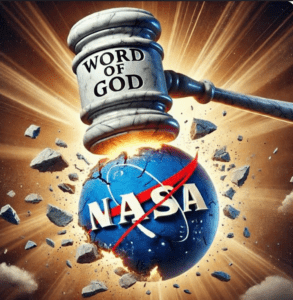
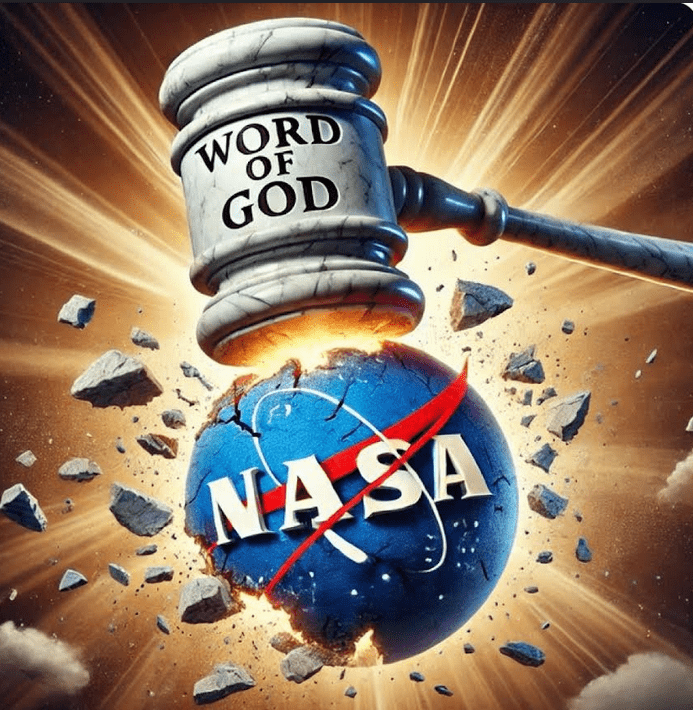
Most of modern astrophysics contradicts what scripture says about the earth and heavens. If we naively accept what Bible-rejecting scientists tell us about creation, we are not being loyal to God’s truth as revealed in the Bible.

The Scripture commands us to affirm that God’s Word is true, even if it means we must call every man a liar. (Romans 3:4)

Our meditations on the general revelation of creation will point us to the Creator only if these thoughts agree with Scripture. How can a lie possibly testify to the glory of God? In a similar fashion, our journey to know God better as a disciple of Christ will only be successful if our path adheres to the truth revealed in the Bible. 

Sanctify them in the truth; Your word is truth. John 17:17 (NASB95)

Most people, even Christians, it seems, have yet to come to terms with how much the world system in which we live lies to us.

We imagine that our government, education system, and scientists routinely tell us the truth, which contradicts what our Lord told us about the world system in the Bible.

We know that we are of God, and that the whole world lies in the power of the evil one. 20 And we know that the Son of God has come, and has given us understanding so that we may know Him who is true; and we are in Him who is true, in His Son Jesus Christ. This is the true God and eternal life. 1 John 5:19–20 (NASB95)

Since Satan is the master deceiver in whom there is no truth at all (John 8:44), it should not surprise us that the world system he rules consistently lies to us.

The truth testifies to God; therefore, Satan hides truth in every possible way about everything important.

God has been opening many people’s eyes over the last few decades to the scope and depth of our own government’s commitment to deception. We are at the point now predicted by a former head of the CIA.

casey quoteI am of the opinion that our government now mockingly shows its hand by making its lies look as ridiculous as possible to test just how gullible and compliant the public has become. We are tested to see if we will embrace that which we know is false, such as the lie that there are more than two genders. Sadly, a huge proportion of the people around the world bought this lie, despite its obvious falsehood.

When we accept the declarations of so-called experts over our own common sense and observations, we become willing slaves to deception.

Once we grasp that those in power routinely lie to us about almost everything, especially the really important things, we must decide who and what we will believe. Is there a source of information that is always true upon which we can completely rely? The Bible is exactly that; yet, so many today distrust the Bible and throw it overboard in deference to what scientists tell us.

I am convinced that God is allowing us to be tested regarding our loyalty to the truth of his Word.

Will we join the Reformers by insisting that God’s Word is the ultimate source of truth (Sola Scriptura), or will we cave to the Scientific Revolution and agree that science trumps the Bible (Sciencia Prima)?

Please keep in mind the warning delivered by our Lord.

For whoever is ashamed of Me and My words, the Son of Man will be ashamed of him when He comes in His glory, and the glory of the Father and of the holy angels. Luke 9:26 (NASB95)

This is our time to shine by declaring allegiance to Christ and to his Word, which invariably pits us against the lying world system. Do we have ears to hear and a heart to understand, or have we been seduced by the devil to agree with him and call God a liar? God forbid!

We Will Never Measure Up in God’s Eyes

key

Most of us want some way to measure how we are doing or to learn where we are on the journey called life. That is why most companies set goals and then measure their progress against their ambitions. In relationships, we want to have clear signals regarding how we are perceived or regarded by individuals or groups to whom we relate or belong. The same is true when it comes to God and our relationship and standing with him. Can we measure our spirituality or where we stand with God?

The Law of Moses gave clear standards by which individuals and the nation could judge. It the people kept God’s laws, they were blessed. If they disobeyed them, they came under judgment. How unnerving it must have been when Moses told the nation that they would utterly abandon God in the days ahead. (Deuteronomy 31:29)

From the beginning, God made it clear that it is not in us to be able to keep his righteous requirements. We will never be able to measure up! That is why the old covenant, the Law of Moses, had to be replaced by a new one, which is not based on our performance at all.

Yet we know that a person is made right with God by faith in Jesus Christ, not by obeying the law. And we have believed in Christ Jesus, so that we might be made right with God because of our faith in Christ, not because we have obeyed the law. For no one will ever be made right with God by obeying the law.” Galatians 2:16 (NLT)

Nevertheless, there is something in all of us that desperately wants to be good enough on our own, even after being justified in God’s sight by faith in Christ’s completed work. We fight against any notion that this is an impossible dream.

As long as we hold on to the illusion of being able to be good enough to please God, we will never discover the really good news that we don’t have to be.

Because Jesus was good enough, we do not have to measure up in any way except to believe in and be loyal to him.

Because Jesus met every measurable standard of righteousness, we are not subject to being measured.

When we put our faith in Christ, we were given Christ’s perfect right standing with God, which is called justification. We don’t always appear outwardly righteous or act as we should, but who is measuring? Not God. Nor should we.

Who will bring a charge against God’s elect? God is the one who justifies; 34 who is the one who condemns? Christ Jesus is He who died, yes, rather who was raised, who is at the right hand of God, who also intercedes for us. Romans 8:33–34 (NASB95)

Once we stop worrying about measuring up in God’s and other people’s eyes, we are able to live as a joyful servant of the Lord and others.

What a relief when we fully accept what Christ has done for us!

Then Jesus said, “Come to me, all of you who are weary and carry heavy burdens, and I will give you rest. 29 Take my yoke upon you. Let me teach you, because I am humble and gentle at heart, and you will find rest for your souls. 30 For my yoke is easy to bear, and the burden I give you is light.” Matthew 11:28–30 (NLT)

How to Escape from the Prison of Bitterness

Bitterness imprisons its victims and subjects them to demonic harassment, a kind of self-inflicted torture.

Jesus was very clear on this matter.

Then the king called in the man he had forgiven and said, ‘You evil servant! I forgave you that tremendous debt because you pleaded with me. 33 Shouldn’t you have mercy on your fellow servant, just as I had mercy on you?’ 34 Then the angry king sent the man to prison to be tortured until he had paid his entire debt. 35 “That’s what my heavenly Father will do to you if you refuse to forgive your brothers and sisters from your heart.” Matthew 18:32–35 (NLT)

Entertaining bitterness is one of the worst sins that a believer in Christ can commit.

It undercuts the mercy shown to us when we were forgiven by God. Forgiveness is the act of releasing an offender from a debt. In the parable quoted above, Jesus used a financial debt to illustrate the principle. Most of us however, do not owe God a debt of money. Ours is much more serious. The sin debt can never be paid by us. The parable of the unrighteous servant made this clear. The servant owed his master a vast sum. He asked for more time to pay it off, but the master knew that it was a hopeless endeavor and forgave him the entire amount.

In Him we have redemption through His blood, the forgiveness of our trespasses, according to the riches of His grace Ephesians 1:7 (NASB) 

The servant remained deceived and did not appreciate the mercy extended to him. He thought he only needed more time. As a result, he imagined that he could eventually pay what he thought he still owed. He did not accept or appreciate his being released from debt by his master or he would have acted differently. Instead he roughly treated someone who owed him a minor debt and threw him in prison when he could not pay. When the master heard, his anger flared, and you know the rest of the story.

To forgive is to completely release someone from the debt they owe us.

It does not require us to trust an offender or be reconciled. Forgiveness can be unilateral, but reconciliation requires both parties to participate.

Forgiveness is not the equivalent of saying that what was done to us was no big deal.

It is quite the opposite. We cannot adequately forgive someone until we squarely face the evil he or she perpetrated against us. We should never minimize the offense when offering forgiveness. Instead, we should acknowledge what was done and release the perpetrator from any hatred or resentment we may have harbored against them. In addition, we let go of any demands we have made on them as “pay back”.

When we forgive a person, they are released from owing us anything, but that does not release them from their sin debt against God.

There is only one way to be released from God’s justice – by trusting in Jesus’ shed blood. Jesus offered himself as the Lamb of God to pay the penalty for our sins. We find our personal forgiveness that way, and anyone who sins against God can find the same release from divine justice.

We can release guilty people from the debt they may owe us, but only God can remove guilt and condemnation. 

Whoever does not take advantage of God’s magnanimous offer through he gospel will face the awful wrath of God at the last judgment. Vengeance belongs to God, not us. When we release people from our own demand for justice, it puts them in God’s hands, the one to whom vengeance belongs.

Dear friends, never take revenge. Leave that to the righteous anger of God. For the Scriptures say, “I will take revenge; I will pay them back,” says the LORD. 20 Instead, “If your enemies are hungry, feed them. If they are thirsty, give them something to drink. In doing this, you will heap burning coals of shame on their heads.” 21 Don’t let evil conquer you, but conquer evil by doing good. Romans 12:19–21 (NLT)

When we refuse to forgive others, it is tantamount to saying we do not need forgiveness.

People who would perish in hell except for God’s undeserved mercy should not self-righteously refuse to extend mercy to others. In effect, that would be saying that we have a higher standard of justice than God!

Some say that when we forgive it is not as much for the other person as it is for ourselves. In fact, both are true. We release others from our judgment which frees them up to face God directly instead of being distracted by our offense against them. Additionally, we release ourselves from the prison of bitterness, a very painful and lonely place.

It is a scriptural principle that whatever we focus upon tends to control and mold us. The more we focus on what we should not be doing, the greater it dominates our thoughts. Contrariwise, when we focus on the Lord, we are changed into his image.

Now the Lord is the Spirit; and where the Spirit of the Lord is, there is liberty. 18 But we all, with unveiled face, beholding as in a mirror the glory of the Lord, are being transformed into the same image from glory to glory, just as by the Spirit of the Lord. 2 Corinthians 3:17–18 (NKJV)

When we focus on sin, it molds us into its image, according to Paul.

The sting of death is sin, and the strength of sin is the law. 1 Corinthians 15:56 (NKJV)

What shall we say then? Is the law sin? Certainly not! On the contrary, I would not have known sin except through the law. For I would not have known covetousness unless the law had said, “You shall not covet.” 8 But sin, taking opportunity by the commandment, produced in me all manner of evil desire. For apart from the law sin was dead. 9 I was alive once without the law, but when the commandment came, sin revived and I died. 10 And the commandment, which was to bring life, I found to bring death. 11 For sin, taking occasion by the commandment, deceived me, and by it killed me. Romans 7:7–11 (NKJV)

Instead, when we focus on the Lord and worship him, we are transformed into his image by the Holy Spirit.

When we hold bitterness against someone, it causes us to dwell on the offense. As we meditate upon our resentment and the evil done to us, we are changed into its image. Ironically, bitterness transforms us the one whom we hate.

When God sees that we have not yet learned the meaning and value of mercy, he may lock us up in our self-made prison and assign demonic torturers to oppress us until we come to our senses. God does this because he loves us.

The Lord knows that we can never adequately experience the joys of forgiveness until we learn to forgive.

If you forgive those who sin against you, your heavenly Father will forgive you. 15 But if you refuse to forgive others, your Father will not forgive your sins. Matthew 6:14–15 (NLT)

If we imprison ourselves in bitterness, we may not experience the felt presence of God. Joy tends to dry up. It becomes difficult to hear the Spirit speak to us. Little spiritual progress can be made until we let go of bitterness.

Repentance and forgiveness are keys to open the prison door.

If we change our mind (repent) about holding on to offenses and choose to release anyone who has offended us, the prison door swings upon and we are free to go.

Bitterness can be obvious or very subtle. Sometimes we can be bitter without realizing it. We can be offended with God, ourselves, and others. Those who are offended with God are in deep peril. Jesus warned against this great danger.

Once when Jesus shared a teaching that was hard to understand, many of his followers turned back and ceased to follow him. Observing this, Jesus asked his disciples:

Does this offend you? 62 What then if you should see the Son of Man ascend where He was before? John 6:61b–62 (NKJV)

Sometimes God offends our intellects to test our hearts. He does not explain everything he does. Instead, he asks us to trust him, even during difficult times.

Holding an offense against God is the height of arrogance.

To do so it is to say we are more righteous than he! I have known some people who turned their backs on God because he allowed something to happen that they thought was unloving or unrighteous. God is indeed sovereign, but we must not forget that sin is responsible for the great evils in our world, not God.

People ruin their lives by their own foolishness and then are angry at the LORD. Proverbs 19:3 (NLT)

If we are holding an offense against God, it is best to repent at once.

We have no right to accuse God of anything ever. Humbling ourselves before God opens the door to many blessings.

And blessed is he who is not offended because of Me.” Matthew 11:6 (NKJV)

Sometimes we might take offense with ourselves, which may make it difficult for us to receive God’s mercy and forgiveness. If we are tempted to do this, it means we have never truly understood the depths of our personal depravity. We still imagine that we are not so bad after all. But the Bible teaches us that no one is righteous before God. No one deserves mercy, not even I.

When we understand our spiritually bankrupt state, it frees us to receive mercy from God.

Those of us who still live in the deception of feeling self-righteous have a more difficult time receiving from God. We need to get over it. We are not good people. We need far more mercy than we realize!

Bitterness against other people is usually what we must overcome, however. It is usually pretty easy to spot a bitter person because they continually bring up the offense that is always fresh in their minds.

If we keep bringing up what someone did to us, we can conclude that we have not yet forgiven that person as yet.

Jesus said that we must forgive from the heart, which is impossible without help from the Holy Spirit. Sometimes we simply need to admit to God that we need his help to forgive. I remember counseling a person who could not bring herself to forgive someone. I asked her if she were willing for God to make her willing. She was; so, I led her in a prayer to that effect. Afterward she was able to forgive.

Forgiveness is an act of the will. We choose to forgive and trust the Holy Spirit to make it heartfelt… eventually.

When we pray to forgive, it is not enough to ask the Lord to help us to do so. We must declare it aloud and be specific. Lord, I forgive (fill in the blank) for (fill in the blank).

Sometimes we know immediately whom we need to forgive. Sometimes we need to ask the Holy Spirit to show us. We should not become introspective about it. Rather, we should trust the Spirit to show us anyone we need to forgive. He will do it because God takes a vital interest in delivering us from this terrible sin.

We should love to show mercy because the merciful will receive mercy.

God blesses those who are merciful, for they will be shown mercy. Matthew 5:7 (NLT)

For judgment is without mercy to the one who has shown no mercy. Mercy triumphs over judgment. James 2:13 (NKJV)

Only those who humbly acknowledge their own great need for mercy will experience the fullness of God’s love and forgiveness.

The more we understand our need for mercy, the more we will love God and be able to forgive others.

“I tell you, her sins—and they are many—have been forgiven, so she has shown me much love. But a person who is forgiven little shows only little love.” Luke 7:47 (NLT)
Prayer

Lord, forgive me for arrogantly imagining that I am not in desperate need of your mercy. I humbly receive your mercy and choose to forgive. (Be as specific as necessary.) Now, Holy Spirit, I ask you to release me from all bitterness. I walk out of my self-imposed prison into the glorious freedom of forgiveness. Amen.

You must make allowance for each other's faults and forgive the person who offends you. Remember, the Lord forgave you, so you must forgive others. Colossians 3:13 (NLT)

How Strong Is My Anchor?

When a ship is being pounded in a storm, sometimes the best step is to anchor it until the fury subsides. This can also be our best action when life besets us with storms.

When we are in school, we look forward to the day when we will no longer be subject to pop quizzes, tests, and final exams. Even after graduation, we remain in what might be thought of as the school of life, which is full of challenges and tests. Tests and difficulties are woven into the fabric of life. If we are children of God, he uses them to reveal what is in our hearts and to help us grow in our faith and devotion to him. We can learn and mature as a product of testing, or we can flounder, profiting little. 

Jesus gave us some comforting words to help us.

I have said these things to you, that in me you may have peace. In the world you will have tribulation. But take heart; I have overcome the world.” John 16:33 (ESV) 

No matter what happens to us, we have a promise from Jesus that we can always experience his peace. Some of us have already experienced the fulfillment of this promise first hand. Others of us will eventually, if we keep our faith and focus on the Lord. But what about those times when the storm that comes at us is so severe that we feel as if we are barely able to hang on to God and his promises? What can we do if we feel as if things are hopeless, confusing, and spinning out of control?

When life seems like a violent storm pushing us against deadly reefs, we need an anchor to help us ride out the storm. Consider these words.

So God has given both his promise and his oath. These two things are unchangeable because it is impossible for God to lie. Therefore, we who have fled to him for refuge can have great confidence as we hold to the hope that lies before us. 19  This hope is a strong and trustworthy anchor for our souls. It leads us through the curtain into God’s inner sanctuary. Hebrews 6:18-19 (NLT) 

Jesus already successfully navigated the worst storm imaginable at Calvary. He endured the confusion of contradiction, the abandonment and betrayal of friends, false accusations by enemies, injustice, horrible suffering, and a humiliating death. Through the apparent hopelessness of it all, he did not waver in his faith in his loving Father and the promises in the Word of God. He made the decision to enter that vortex of suffering, knowing full well what was ahead, because he fully trusted his Abba Father to be his Keeper.

When Jesus rose from the dead, his’ victory over fear and hopelessness was complete. All who trust in him share in that victory.

When it is our time to enter into testing and trial, it is important for us to make some conscious choices. It is important for us to make a stand against any emotions of fear, doubt, and confusion that may arise in our minds and hearts. The devil, who is the father of lies, attempts to get us to believe his lies instead of God’s truth in order to gain an advantage over us. Satan tells us that God is not there, that he does not even care, or perhaps that he is unable to help us. He tells us that God and his promises cannot be fully trusted. He reminds us of our faults and failings, instilling in our minds the idea that we don’t deserve God’s help anyway. Others may be blessed, but not us. Therefore, faith is useless. We must either give up altogether or take matters into our own hands.

When Satan’s lies line up with our own false interpretation of reality, it creates a powerful pull to abandon our trust in God.

The Bible calls these lies “strongholds,” which are logical arguments we make that nullify the truth and impact of God’s Word. These devilish speculations must be destroyed using spiritual weapons. (2 Corinthians 10:3-5)

Four of the weapons God has given us are:

  1. The truth of God’s Word,
  2. Our faith in God and his promises,
  3. The presence and power of the Holy Spirit, and
  4. Praise.

Unfortunately many of us have at one time or another succumbed to this temptation and have lost hope, surrendered to fear, and perhaps became quite angry at God and life. Perhaps you are in that place right now. There is hope in the Lord.

We dare not fail this test because it will engender negative consequences for us and those we love. Those we love are watching how we navigate life in relationship to our faith in the Lord. Our obedience will positively impact our friends and families, not to mention our own lives. 

The Bible encourages us by telling us what will be the outcome for those who refuse to abandon their hope in God and his promises.

Therefore do not throw away your confidence, which has a great reward. 36  For you have need of endurance, so that when you have done the will of God you may receive what is promised. Hebrews 10:35-36 (ESV)

Our ability to survive and thrive in the midst of the strains and confusion of life depends on our holding to the following three convictions or anchors.

  1. God is loving and good. Satan seeks to cut the line to this anchor of faith, and, if he does, we have little to hold us. However, if we maintain our confidence that God is loving and good, despite our circumstances or past experiences, we will be able to overcome adversity. God is glorified when we make this choice.
  2. God is powerful. This anchor of conviction upholds that God is sovereign over all things. He is not in a struggle against evil in which the outcome is in doubt. He is not evenly matched against some evil foe. He is the Supreme Being in whom we can fully trust him at all times. Jesus’ resurrection sealed the doom of Satan and the certainty of our eternal inheritance once and for all.
  3. God is working all things for my good and his glory. This anchor is the logical outcome of believing the first two points above and is where the victory in our minds and hearts is won. Romans 8:28 states that everything is being worked out for our good by a loving and powerful God. He will be glorified in and through us if we maintain our confidence through the test.

These three anchors of faith give us a reason to make the choice to praise God for his goodness, his power, and for working all things out for his glory and our best interests. We can choose to praise God despite our natural inclination to wallow in fear, doubt, and self-pity. We are able to choose to praise him even when our emotions are flat or even depressed. We can praise him for who he is, what he has promised, and what we believe he will do on our behalf!

When we offer to God the sacrifice of praise in the midst of confusing and difficult situations, it is a God-glorifying act of faith and  a powerful spiritual weapon.

Let the praises of God be in their mouths, and a sharp sword in their hands— 7  to execute vengeance on the nations and punishment on the peoples, 8  to bind their kings with shackles and their leaders with iron chains, 9  to execute the judgment written against them. This is the glorious privilege of his faithful ones. Praise the LORD! Psalm 149:6-9 (NLT)  

Through holding on to the anchor of faith and choosing to offer God praise we can transition from hopelessness and fear to a place of peace and victorious faith.

We can experience what it means to be an overcomer, all because we make the choice to trust God and his promises in spite of all that is opposed to us. We will have an anchor for the soul that cannot be moved!

Freedom from Shame

The fear of being put to shame can enslave and prevent us from courageously facing the challenges of life. God understands this and has provided a way for us to walk free of this insidious tyranny.

Those who look to him for help will be radiant with joy; no shadow of shame will darken their faces. Psalms 34:5 (NLT)

Shame can be either a painful negative emotion resulting from having done something specific that was wrong of foolish, or it can be a general pervasive negative emotional state resulting from a chronic sense of self-reproach or failure. The latter may originate in childhood and is more difficult to alleviate. Some of our shame is well-deserved. If we sin against God and others, shame can be the just consequence. It certainly was for Adam and Eve.

The woman was convinced. She saw that the tree was beautiful and its fruit looked delicious, and she wanted the wisdom it would give her. So she took some of the fruit and ate it. Then she gave some to her husband, who was with her, and he ate it, too. 7  At that moment their eyes were opened, and they suddenly felt shame at their nakedness. So they sewed fig leaves together to cover themselves. Genesis 3:6-7 (NLT) 

Sin reveals the unseemly side of us that most of us wish to conceal.

When the shame of our sin is exposed, we usually try to hide.

This can make relating to others a big challenge, since we may go to great lengths to hide anything in us is connected to shame.  We may anticipate that, if we are truly known, we will be rejected, which is sometimes the case, as it turns out. As a result, sometimes we grow to like or love someone based on the façade presented to us, rather than the real person. This is unnerving to the person who is hiding because of the fear of one day being exposed. This kind of hiding can involve big issues or small. Eventually whatever is connected to our shame will surface, however, and that is when relationships are tested. This process can lead to a necessary disillusionment that forces us to face the truth, which is often a necessary step in building a strong relationship or marriage.

Deep friendships and great marriages can happen when people take down the façade and continue to love one another despite knowing about the other person’s weaknesses and sin.

Conversely, friendships and marriages can rip apart if the deception and resulting disillusionment are too great. This can also happen to relationships in a church.

Most of the time we do not truly know a person until after we have a disagreement with them or go through a crisis together.

How we weather those storms can more perfectly reveal the nature and depth of our relationship. One of my mentors once told me that he never trusted a person until after he had a fight with him. Whenever a new person or family joins a church, it takes a while to get to know them. At first, we do not know if they will prove to be good friends and valuable assets to us or not. Time will tell. 

Disappointment and disillusionment are risks we take when we dare to love people.

There are countless numbers of believers who are drifting with no church home because at some point they were hurt and disillusioned by members of some local church.

Part of the problem is that they were not prepared to encounter disillusionment. If we are going to survive and thrive in a very sinful world, we must come to terms with the fact that people are not always who we pretend to be.

One person who is incapable of being disillusioned is God.

God knows us completely and anticipates every thought, world, and action we will ever take. Nothing we ever do surprises him.

O LORD, you have examined my heart and know everything about me. 2  You know when I sit down or stand up. You know my thoughts even when I’m far away. 3  You see me when I travel and when I rest at home. You know everything I do. 4  You know what I am going to say even before I say it, LORD. 5  You go before me and follow me. You place your hand of blessing on my head. 6  Such knowledge is too wonderful for me, too great for me to understand! Psalm 139:1-6 (NLT) 

God’s omniscience makes it even more remarkable and encouraging that he chooses people to belong to him even before they are born.

All praise to God, the Father of our Lord Jesus Christ, who has blessed us with every spiritual blessing in the heavenly realms because we are united with Christ. 4  Even before he made the world, God loved us and chose us in Christ to be holy and without fault in his eyes. 5  God decided in advance to adopt us into his own family by bringing us to himself through Jesus Christ. This is what he wanted to do, and it gave him great pleasure. Ephesians 1:3-5 (NLT) 

Adoption is never by accident. It is an intentional act of love. Every child, whether biological or adopted, is a treasure. Parents may have some idea of who their biological children are, but the full revelation comes over time. Adoptive parents have less of an idea of who their children may be, since they usually have no clue what family traits may have been passed down. But God knows everything about all of us up front. He will never step back in disgust or disappointment after we make a huge misstep or sin, thinking that he made a mistake in choosing you or me.

God knew ahead of time all we would ever think, say, or do, and still chose to love us. This is a big antidote to shame.

Abandonment and rejection are roots of shame. These two things signify that we are of little value, at least that is what the devil wants us to think. If we experience abandonment or rejection, we may know the reason or may be left to imagine it. Little children and some adults are quick to assume blame, even when it is not our fault, thinking that there must be something wrong with us that is responsible for others rejecting us. Left unchecked, this can lead to the development of a pervasive since of shame mentioned earlier in this article..

Sometimes shame can be associated with sinful things we have done or were done to us. People who sexually abuse others, for example, should feel shame for their actions; that is, until and if they experience the forgiveness and cleansing provided by our Lord Jesus. Children who are preyed upon by these abusers also may experience a sense of shame, even what happened was not their fault. In fact, many predators lay the blame on their young victims, establishing a “lie-based stronghold” of guilt and shame in that young one’s mind. This sort of lie must be replaced with the truth in order for shame to be eradicated.

Whether our shame was earned through our own sinfulness or improperly thrust upon us, Jesus has done everything necessary to set us free.

When Jesus hung naked upon the cross, enduring scorn, rejection, abandonment, injustice, and disgrace, he took that shame on our behalf, along with the shame attached to our sin. Just as He carried our sin and guilt to the cross, He also bore our shame there.

...fixing our eyes on Jesus, the author and perfecter of faith, who for the joy set before Him endured the cross, despising the shame, and has sat down at the right hand of the throne of God. Hebrews 12:2 (NASB) 

Because He carried our shame, we do not have to bear it.

Here are some promises.

"Fear not; you will no longer live in shame. The shame of your youth and the sorrows of widowhood will be remembered no more, 5 for your Creator will be your husband. The LORD Almighty is his name! He is your Redeemer, the Holy One of Israel, the God of all the earth. 6 For the LORD has called you back from your grief—as though you were a young wife abandoned by her husband," says your God. 7 "For a brief moment I abandoned you, but with great compassion I will take you back. 8 In a moment of anger I turned my face away for a little while. But with everlasting love I will have compassion on you," says the LORD, your Redeemer. Isaiah 54:4-8 (NLT)

But the LORD will save the people of Israel with eternal salvation. They will never again be humiliated and disgraced throughout everlasting ages. Isaiah 45:17 (NLT) 

Therefore it is also contained in the Scripture, "Behold, I lay in Zion A chief cornerstone, elect, precious, And he who believes on Him will by no means be put to shame." 1 Peter 2:6 (NKJV) 

Did Jesus liberate anyone from shame during his three-year itinerant ministry? The answer is “Yes!” He set free the demoniac, who endured the shame and disgrace attached to his condition. He was forced to live alone in the tombs away from society. Jesus healed lepers who had to isolate themselves and cry out “unclean” whenever they moved about. Jesus allowed the adulteress in John Chapter 8 to walk away forgiven and with dignity after rescuing her from those who would have stoned her to death for her publicly exposed sin. He forgave and restored Peter, who shamed himself and his Lord by denying him publicly three times. Jesus was big on delivering people from shame then and continues to be to this day.

Jesus Christ is the same yesterday, today, and forever. Hebrews 13:8 (NLT) 

Therefore, we who follow Christ are able to know that our shame has been carried away by Our Lord Jesus Christ and we no longer must bear it.

We can throw off any oppressive weight of shame by faith in Christ’s finished work on the cross and can so honor the One who was shamed for our sake. We can make it our aim to honor and glorify God by putting our full trust in him and his promises and by boldly declaring the Gospel and name of Christ without fear of any shame the world may attempt to thrust upon us for doing that. If we are proud of our Lord, he will return the favor at the Last Judgment.

Everyone who acknowledges me publicly here on earth, I will also acknowledge before my Father in heaven. 33  But everyone who denies me here on earth, I will also deny before my Father in heaven. Matthew 10:32-33 (NLT) 

Let’s trust the Lord to help us to be bold witnesses for Christ. Whenever we may fall short, let’s quickly repent and receive forgiveness and cleansing from our sin and shame and have another go at it.

See other articles in this series.

Being Habitually Thankful – A Big Key to a Happier Life

The Bible reveals that one of the most important keys to experiencing a joyful life is the practice of being habitually thankful. We can develop a thankful heart when we are grateful for the many blessings God has given to us. We can begin by making it a practice to contemplate the goodness and generosity of God. If this sort of thankfulness does not come naturally, we can learn to remind ourselves each day to be grateful for known blessings. One easy way to do this is by using the Bible as a starting point. For example, Psalm 103 was written by King David, who was a man of praise. In it he reminds himself of God’s goodness to him, which elicits praise from his lips.

Bless the LORD, O my soul, And all that is within me, bless His holy name. 2 Bless the LORD, O my soul, And forget none of His benefits; Psalm 103:1–2 (NASB95)

If we read the entire psalm, we will see all things for which he thanked God. His list is a good one for us, too. If we prefer the New Testament, Paul gives us several passages that we can use as starters for being grateful, such as Ephesians Chapter One. I suggest that we read these verses slowly, giving thanks for each blessing listed. You will be amazed who this leads to genuine worship from the heart.

Sadly, many of us take God and blessings for granted, complaining about everything that doesn’t seem to go our way. Complaining is a sin that God punished severely during Israel’s wilderness journey. Those chapters were written to teach us a valuable lesson. If you want to check it out, read through Numbers and see how many times God came down hard on complainers.

When we gripe about our circumstances, we accuse God of failing to deal equitably and lovingly with us. It is an overt act of rebellion.

The Bible clearly teaches that our Lord is working everything out for our good and his glory.

And we know that for those who love God all things work together for good, for those who are called according to his purpose. Romans 8:28 (ESV) 

When we complain, we call God a liar.

Thankfulness is built upon the conviction that God loves us and consistently acts on our behalf in a way that is good, powerful, and wise.

It becomes habitual when we surrender to God all our demands and desires, believing that he is generous and will give us everything we need. It is complete when we would rather glorify God than do anything else, which means we let go of our demand to understand why he allows pain and difficulties to come into our lives.

Thankful people are happy people who bring honor and glory to their Creator and encouragement to others.

The practice of being thankful is simple to grasp but costly to put into practice. Our “flesh,” the residual part of us connected to Adam’s sin and not yet under Christ’s rule, is never grateful because it has no faith. We must resist this inner pull to complain and rely on our spirit within, which is connected with God’s Holy Spirit, to give thanks to God. At first, this may seem difficult, but as it becomes more of a habit, it will come more (super)naturally.

Are we willing to lay down our pride and become thankful in all things? If so, why not start now?

Rejoice always, 17  pray without ceasing, 18  give thanks in all circumstances; for this is the will of God in Christ Jesus for you.  1 Thessalonians 5:16-18 (ESV) 
Prayer

Father in heaven, thank you for creating me. Thank you for the gift of life. Thank you for all the good things you have given to me over the years and your promise to provide and care for me forever. Thank you for sending your Son, Jesus, to die on the cross and rise again, so that I could be forgiven and restored to a right relationship with you. I also give thanks for the difficult things going on in my life right now. (List them out loud.) I believe you are working all things out for my good and your glory. Glorify yourself through my life, Lord, and through the situations and circumstances surrounding me. Let me bring glory to you by modeling trust and thankfulness to others. I believe you love me and always have my best interests in mind. Amen.

God’s Got This!”

In the weeks and months leading up to the 2020 presidential election, when it became increasingly apparent that the “fix” was in, I received a strong impression from God one morning: “God’s got this.” It brought rest to my heart, as you might imagine. However, I immediately I layered on top of that simple statement my expectations of what that meant, which is what we usually do when God speaks to us. We all tend to hear what we want to hear and project our hopes on to his words. Notwithstanding, I continue to hang on to those words, confident that God indeed “has this,” even though a lot time has passed.

I realize that God’s version of having things in hand is quite different from mine.

Since his power and authority is absolute, he is willing to let things play out far longer than I would. But then, he is God. This is a tremendous life lesson that all of us need to learn seemingly over and over again.

Since that morning, the Lord has spoken several other things to me that add layers to his first promise. Let me share those other messages with you, in the hope that it might encourage your heart, as it did mine.

The second thing I heard him tell me was this: “Let go and watch what I do.” This reminded me of a relevant Bible verse.

"Cease striving and know that I am God; I will be exalted among the nations, I will be exalted in the earth." Psalm 46:10 (NASB) 

This, of course, is an extension of the first word, “I’ve got this,” with the added promise that God is going to glorify himself in the midst of what is taking place on the earth. It reminds us that he has much more at stake than the survival of our Republic. His plan for the entire world and the glorification of his Son is playing out. His glory shall indeed fill the earth. We can be sure of that.

The third thing I heard the Lord speak to my heart came one morning as I was praying for our nation with a sense of angst. “Lighten up. I have already done this.” It was a gentle reminder that not only has he indeed “got this,” but that it is a finished deal from his point of view.

One of the most powerful spiritual weapons at our disposal is praise.

Let the godly ones exult in glory; Let them sing for joy on their beds. 6  Let the high praises of God be in their mouth, And a two-edged sword in their hand, 7  To execute vengeance on the nations And punishment on the peoples, 8  To bind their kings with chains And their nobles with fetters of iron, 9  To execute on them the judgment written; This is an honor for all His godly ones. Praise the LORD! Psalm 149:5-9 (NASB) 

I realize that many believers are very uncomfortable with the idea that we are to execute judgment in God’s behalf. Certainly, we must forgive our enemies, but we also have a call to stand with God in righteous judgment. That is one of the functions of the church – to execute judgment tempered with mercy. The way we do this in the here and now is by offering our praise and worship to the God of judgment. The two-edged sword is the Word of God. (Hebrews 4:12) As we worship the Sovereign Lord and declare his lordship over all things, we in essence bind evil plans and people over to the will of God. As Jesus taught us to pray: “Thy kingdom come. Thy will be done on earth as it is in heaven,”

We are not to pray desperate prayers. Instead of pleading with God to do something, we are to stand in faith and declare that the victory is already won.

For everyone who has been born of God overcomes the world. And this is the victory that has overcome the world—our faith. 1 John 5:4 (ESV) 

And he said, “Listen, all Judah and inhabitants of Jerusalem and King Jehoshaphat: Thus says the LORD to you, ‘Do not be afraid and do not be dismayed at this great horde, for the battle is not yours but God’s. 2 Chronicles 20:15 (ESV) 

The fourth thing I heard him speak is elementary, but it bears repeating: “You have nothing to fear.” Fear is a natural response to the unknown, but it must be resisted. We are in the midst of a worldwide psy-op fear campaign designed to push people into abandoning sound judgment and doing irrational things. rollercoasterFear impairs our decision making ability. The children of Israel made some pretty terrible choices in the desert because they were afraid of their enemies instead of trusting God. We are no different from them, except that we who believe in Jesus have the Spirit of faith (2 Corinthians 4:13) living inside us. (A huge difference!) We have no excuse for fearing, except that we still live in these fleshly bodies and are subject to temptation. (You may with to read another of my articles, entitled You Are Not Alone, to get help in this area.)

God wants us to make the choice to fear not, because He has things in hand!

The fifth thing God spoke to me was the following: “You have no idea how powerful I am.” There are three basic reasons why we should trust God. He is good. He keeps his Word, and he is powerful. In other words, he always does what he says. What he promises is always good, and nothing is able to thwart his plans. Plenty of well-meaning people make promises they cannot possibly keep, but never God. He always does what he says. Nothing is too difficult for him. Truly, we have no idea how powerful is the One who created the the heavens and earth out of nothing.

As we praise and worship the Sovereign One, who loves us beyond comprehension and always does what he says because no one and nothing can possibly stop him, let’s encourage our hearts that God’s got this!

All the people of the earth are nothing compared to him. He does as he pleases among the angels of heaven and among the people of the earth. No one can stop him or say to him, ‘What do you mean by doing these things?’ Daniel 4:35 (NLT) 
Read other articles in this series.

Have We Betrayed Our Reformation Heritage?

Protestant Christians received an valuable heritage from the courageous men and women of the Reformation, which can be summarized by the Latin Sola Scriptura. These words simply mean “by scripture alone.” That world altering revolution against the tyranny of Roman Catholicism began when daring men, often at the expense of their lives, translated the scriptures into the language of the common man. Before that, the Roman church veiled the Bible in the Latin tongue, insisting that the average person had no business reading or interpreting its meaning. Ignorance of the Bible allowed the Roman Church to enslave the masses with the chains of church tradition and papal authority, which often contradicted the Bible’s teachings and obscured the gospel. By putting the Bible into the hands of the common man and insisting that it alone was the supreme authority in our lives, the Reformation effectively wrested power away from the Roman Church, at least for those who believed the gospel.

The Roman Catholic Counter Reformation began in 1540, some 23 years after Luther posted his 95 theses, and was led by Ignatius Loyola, the founder of the Jesuit order. One of Loyola’s strategies was to win people back to Catholicism by focusing on education. If Roman tradition and papal authority could not overcome people’s new reliance upon the authority of the Bible, perhaps education could.

If we recognize that our spiritual battle is not primarily against people, I believe we can see Satan’s hand in this.

The devil has always insisted that education is more important than naive reliance upon what God says.

In fact, in Loyola’s lifetime, what is called the High Renaissance was flowering. It was a return to classic (pagan) roots of civilization, emphasizing literature, learning, and art derived from the Romans and Greeks.

At the same time that God was turning people to the scriptures, the devil was reviving paganism with a brand new twist – the Scientific Revolution.

Interestingly, this revolution is commonly believed to have begun in 1543 with the publication of Copernicus’ book, De revolutionibus orbium coelestium (On the Revolutions of the Heavenly Spheres). Copernicus derived some of his thinking from the pagan sun worshiper, Tresmegistus. Here is a quote:

copernicus quote

The introduction of the heliocentric theory of the “solar system” was every bit as transformational as the Protestant Revolution, perhaps even more so as far as the world is concerned, not in the least because it set in motion the abandonment of Sola Scriptura by the church. 

The Scientific Revolution led to breakthroughs in many areas and established science as an autonomous discipline set free from the “shackles” or limitations previously imposed on it by the Bible.

Since the temptation in the garden of Eden, Satan has pushed mankind to abandon God’s Word in a quest of for independent knowledge. He set up Eve to see God’s restriction from eating from the one tree in the garden as a much larger prohibition against enjoying fruit from any tree.

That evil spirit always wants us to view God as the Great Restrictor, keeping humanity back from reaching its potential.

This is exactly how those who embraced the Scientific Revolution came to see the Bible. Since that time, it has been largely viewed as an anachronism, perhaps a sort of fairy tale, sadly wanting in scientific accuracy. 

The early reformers, such as Luther and Calvin, rejected Copernicus’ heliocentric theory because they still adhered to Sola Scriptura. Luther used one verse of the Bible to reject Copernicus – Joshua 10:13.

So the sun stood still, and the moon stopped, Until the nation avenged themselves of their enemies. Is it not written in the book of Jashar? And the sun stopped in the middle of the sky and did not hasten to go down for about a whole day. Joshua 10:13 (NASB95)

luther flat earthWhen I bring up this argument against the heliocentric theory, my Christian friends usually counter with “God can do anything.” That, in my opinion, is a flimsy excuse for contradicting the plain meaning of the Bible.

Calvin wrote that Copernicus’ teaching originated from the demonic realm.

copernicus quote


But those adherents to the authority of Scripture over all other authorities died out, and the education system spearheaded by the Jesuits taught the heliocentric model to succeeding generations, insisting that Copernicus’ theory is a scientific fact, and so it is thought today by those who reject the supreme authority of the Bible.

Satan gained a significant victory over our heritage from the Reformation, Sola Scriptura, by convincing most Christians that we dare not resist the Goliath of modern science. Instead of Sola Scriptura, we now have Sciencia Prima – Science First. Having been intimidated by scientific theories proclaimed as facts, many Christians now find it obligatory to view such science defying passages as Genesis Chapter One through the lens of heliocentrism.

When we take the plain meaning of the Bible and deform it to agree with science falsely so called, it is a betrayal of the heritage we received from the Reformation and proclaims that we think God is a liar.

I believe this makes us like Saul after his battle against the Amalekites. Samuel told him to kill every living thing, but he spared king Agag and best of the livestock. When Samuel challenged him regarding his disobedience, he remonstrated, that he did obey the Lord. Samuel retorted, “What then is this bleating of the sheep in my ears?” (1 Samuel 15:14) God likewise asks us who claim to believe every word of the Bible, “What then is this pagan heliocentrism?” We cannot have it both ways.

And just as Saul’s disobedience, according to Samuel, was as the sin of witchcraft (1 Samuel 15:23); so, our departure from the authority of God’s Word has allowed a bewitching spell to be cast over the entire earth, blinding us to God’s truth regarding the world in which we live and the existence of the creator.

We cannot say that we believe the authority of the scripture is supreme when we make the Bible bow the knee to scientific theories.

I have talked to enough Christians who believe in heliocentrism to know that they believe that they still adhere to Sola Scriptura. They see no contradiction in believing Copernicus’ view of the heavens and earth and holding to the authority and truthfulness of Genesis Chapter One. However, they do not believe Genesis is literally accurate. They think that it contains truth but is not the truth and must be interpreted so that it somehow agrees with Copernicus. But this is not how the authors of the Old Testament saw things, and one of the fundamental rules of interpretation is that the scriptures must at least mean what the authors intended them to mean. They believed that Genesis is the literal truth.

Modern Christians who adhere to Sciencia Prima do not realize that Satan effectively undermined the validity of the entire Bible by convincing even Christians that Genesis Chapter One is not scientifically accurate.

Do we really think that unbelievers will be convinced that Christ rose from the dead when they find out we do not even believe that the Bible is literally true about something so fundamental as creation? Yet, we go about preaching the resurrection of Christ, the creation of humans (as opposed to Evolution), and the Noahic flood as being totally believable, while at the same time rejecting Genesis Chapter One. I find this odd.

It seems we have been so divorced from our Reformation heritage that many Christians today are embarrassed when someone stands up to say he or she believes those verses about creation and the earth and heavens are literally true!

Perhaps the biggest test we Christians in the West face today is whether we will be loyal to God’s word. Jesus reminded us that he expects for us to be unashamed of him and his words. (Luke 9:26) John the Revelator was exiled to the island of Patmos for his allegiance both to Jesus and God’s Word. (Revelation 1:9) It is time for us to embrace the Word and scorn the shame that will be heaped upon us by a disbelieving world and church.

Modern astrophysics stands against the Bible like a Goliath, daring anyone to have the courage to defy him publicly. Up to this point, most Christians have cowered in fear, but God is raising up a band of Davids who will take the challenge, disregard our fears of disapproval and persecution, and boldly reaffirm Sola Scriptura.

Share this post...