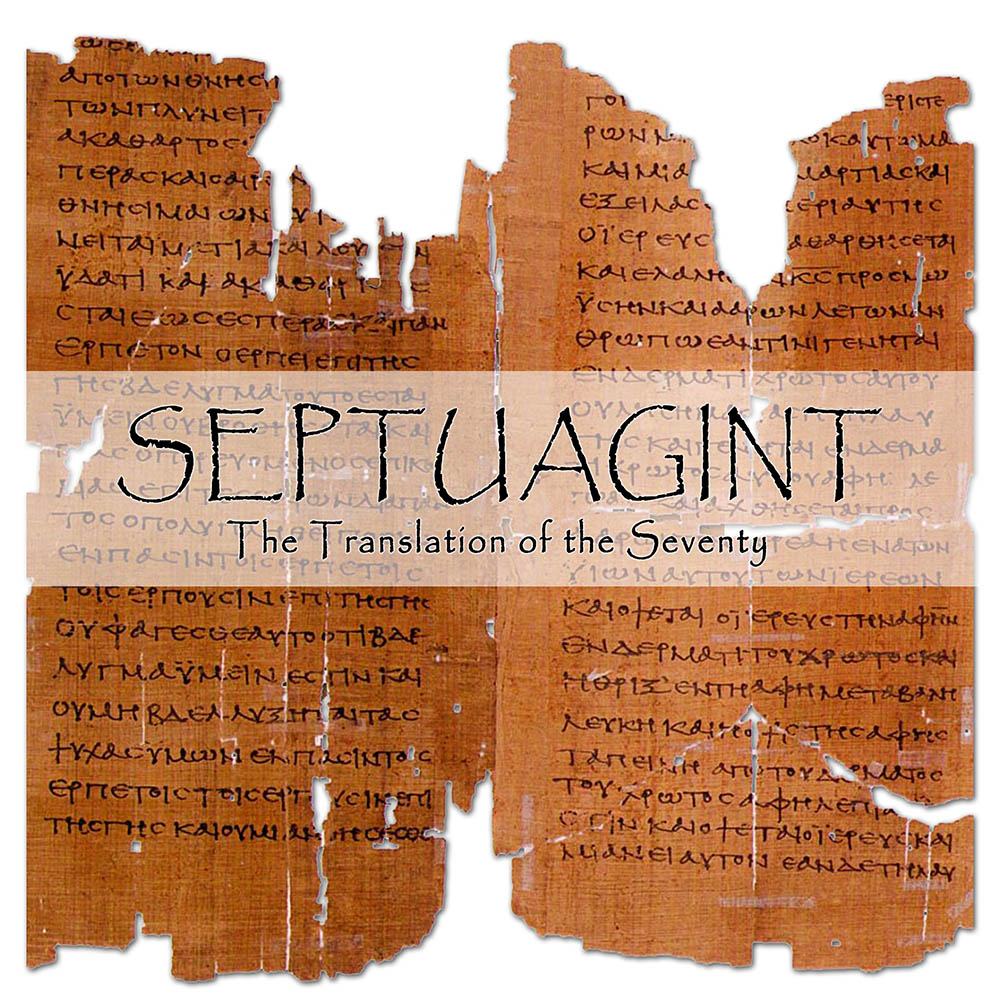
Here is a direct side-by-side comparison of the Masoretic Text with the LXX. I have concluded that the LXX is much to be preferred over the Masoretic Text, a position from which the Eastern Orthodox Church never deviated. Perhaps, if you take the time to read my comparisons and other articles, you will arrive at the same conclusion.
The Septuagint version I am using is the Lexham English Septuagint 2nd Edition, which is available in print or as part of Logos Bible Software. Occasionally I also use the Brenton translation of the LXX for insight into difficult passages.
If you want to know more, click on the following links.
- Why Christians Should Prefer the Septuagint over the Masoretic Text.
- Some Insights Gained through Comparing the Masoretic Text to the Septuagint
- More side by side comparisons of the Masoretic Text (MT) to the Septuagint (LXX).
| Masoretic Text | Septuagint | Significance |
|
1 To You, O LORD, I lift up my soul. 2 O my God, in You I trust, Do not let me be ashamed; Do not let my enemies exult over me. 3 Indeed, none of those who wait for You will be ashamed; Those who deal treacherously without cause will be ashamed. Psalm 25:1–3 (NASB95) |
1 To you, O Lord, I lift up my soul. 2 O my God, upon you I have trusted; do not let me be put to shame, nor let my enemies laugh at me. 3 Indeed, all those who wait upon you will not be put to shame. Let those who act lawlessly to no end be ashamed. Psalm 24:1–3 (LES2) |
The only difference I will point out is the in verse 3 where the MT uses “treacherously,” but the LXX says, “lawlessly.” |
|
4 Make me know Your ways, O LORD; Teach me Your paths. 5 Lead me in Your truth and teach me, For You are the God of my salvation; For You I wait all the day. 6 Remember, O LORD, Your compassion and Your lovingkindnesses, For they have been from of old. 7 Do not remember the sins of my youth or my transgressions; According to Your lovingkindness remember me, For Your goodness’ sake, O LORD. Psalm 25:4–7 (NASB95) |
4 Lord, make known to me your ways, and teach me your paths. 5 Lead me in your truth. Teach me, because you are God, my savior, and I await you the entire day. 6 Remember your compassions, and your mercies, because they are from eternity. 7 Do not remember the sin and ignorance of my youth. According to your mercy remember me, on account of your kindness, O Lord. Psalm 24:4–7 (LES2) |
The only disparity here is that the MT omits asking God to forgive the “ignorance of my youth.” It is interesting that David thought ignorance needs forgiveness., which corresponds to the modern day warning that ignorance of the law is not a defense. |
|
8 Good and upright is the LORD; Therefore He instructs sinners in the way. 9 He leads the humble in justice, And He teaches the humble His way. 10 All the paths of the LORD are lovingkindness and truth To those who keep His covenant and His testimonies. 11 For Your name’s sake, O LORD, Pardon my iniquity, for it is great. Psalm 25:8–11 (NASB95) |
8 Good and righteous is the Lord. On account of this he instructs in the way those who are sinning. 9 He will lead humble ones in justice. He will teach the humble one his ways. 10 All the ways of the Lord are mercy and truth for the ones who are seeking out his covenant and his testimonies. 11 On account of your name, O Lord, also pardon my sin, for it is much. Psalm 24:8–11 (LES2) |
The difference here is that the MT says “those who keep his covenant,” and the LXX says, “the ones who are seeking out his covenant.” The latter leaves room for New Testament grace. God is the only one who can actually keep covenant. Christ did so for our sake. We are beneficiaries of his obedience to God. (2 Corinthians 5:21) |
|
12 Who is the man who fears the LORD? He will instruct him in the way he should choose. 13 His soul will abide in prosperity, And his descendants will inherit the land. 14 The secret of the LORD is for those who fear Him, And He will make them know His covenant. 15 My eyes are continually toward the LORD, For He will pluck my feet out of the net. Psalm 25:12–15 (NASB95) |
12 Who is the person who fears the Lord? He will instruct him in the way that he selected. 13 His soul will live with good things, and his seed will inherit the earth. 14 The Lord is the strength of those who fear him; the name of the Lord, of those who fear him. His covenant is for showing to them. 15 My eyes through all circumstances are on the Lord, because he will draw out my feet from the trap. Psalm 24:12–15 (LES2) |
In verse 13, both the MT and LXX use the singular for “descendants” and “seed,” respectively. The “seed” is Christ. (Galatians 3:16) The entire earth is his. Those who are his through the new birth inherit with him. This is the New Covenant enlargement of the promise God made to Abraham regarding Canaan, which Paul understood to include the entire world. (Romans 4:13) There is a difference in how the MT and LXX translate verse 14. What the MT calls the “secret of the Lord,” the LXX calls “the strength” and “the name” of the Lord. |
|
16 Turn to me and be gracious to me, For I am lonely and afflicted. 17 The troubles of my heart are enlarged; Bring me out of my distresses. 18 Look upon my affliction and my trouble, And forgive all my sins. 19 Look upon my enemies, for they are many, And they hate me with violent hatred. 20 Guard my soul and deliver me; Do not let me be ashamed, for I take refuge in You. 21 Let integrity and uprightness preserve me, For I wait for You. 22 Redeem Israel, O God, Out of all his troubles. Psalm 25:16–22 (NASB95) |
16 Look upon me and have mercy on me, because I am alone and poor. 17 The afflictions of my heart were multiplied; deliver me from my tribulations. 18 See my lowliness and my trouble. Forgive all my sins. 19 See my enemies, because they were increased, and they hated me with an unjust hatred. 20 Guard my soul and rescue me. Do not let me be put to shame, because I placed my hope in you. 21 Innocent ones and upright ones joined fast together to me, because I awaited you, O Lord. 22 O God, redeem Israel from all his afflictions. Psalm 24:16–22 (LES2) |
The MT has David saying he is “afflicted” in verse 16, but the LXX records his saying that he is needy or poor. In verse 18, the MT has David saying, “Look upon my affliction,” but the LXX says, “See my lowliness (or humility).” In verse 19, the MT says David’s enemies’ hatred was “violent,” but the LXX says it was “unjust,” which connects with Jesus’ being hated unjustly. (John 15:25) Verse 20 in the MT says, “I take refuge in you,” but the LXX says, “I placed my hope in you.” In verse 21, the MT says, “Let integrity and uprightness preserve me,” but the LXX says that innocent and upright persons will cling to David because he waited upon the Lord. This corresponds to his time in the cave of Adullam, where men began to join themselves to him. (1 Samuel 22:2) In like manner, those who were needy (sinners) joined themselves to Christ and still do to this day. Israel is probably best understood prophetically here as pointing to Christ. (John 5:39) He is the true Israel of God, to whom we are joined through the new birth. (Matthew 2:15 and Galatians 6:16) |
Summary: Although this psalm shows a general congruence between the MT and LXX, there are a few significant differences, as I point out in my commentary above.