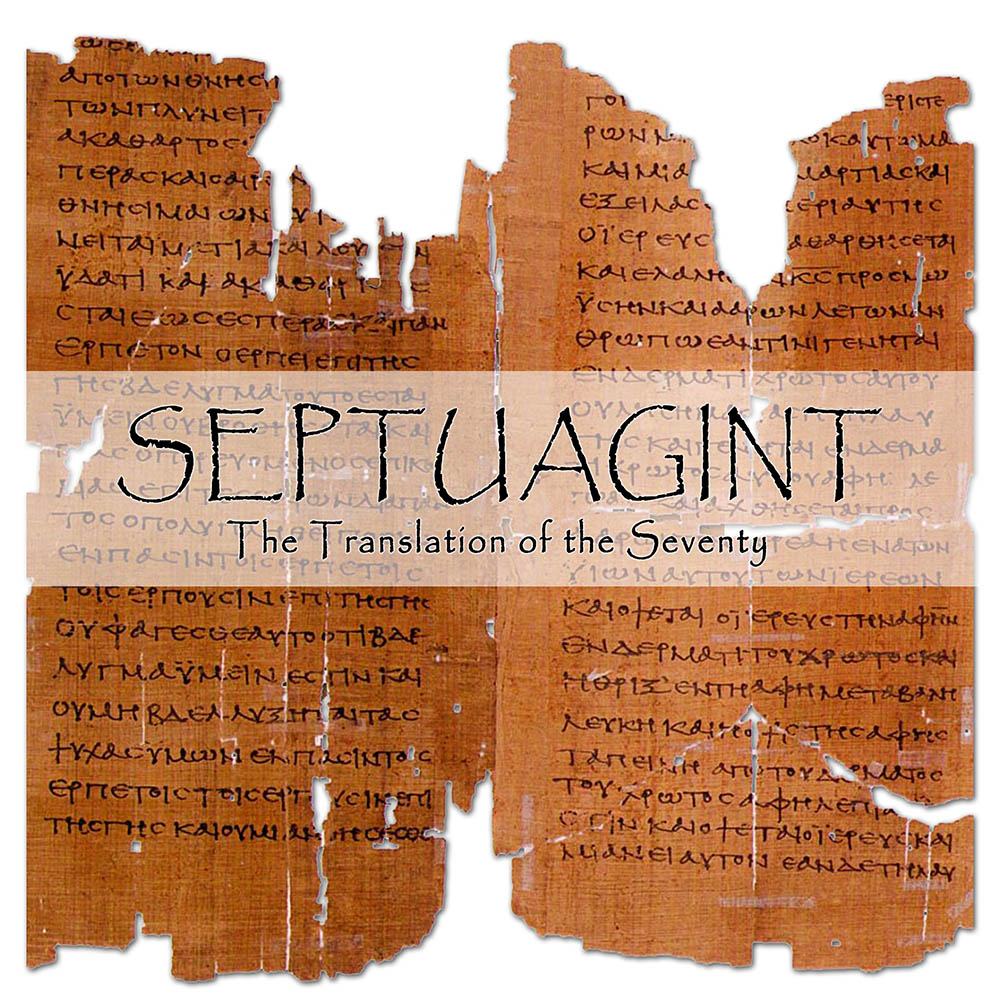
Here is a direct side-by-side comparison of the Masoretic Text with the LXX. I have concluded that the LXX is much to be preferred over the Masoretic Text, a position from which the Eastern Orthodox Church never deviated. Perhaps, if you take the time to read my comparisons and other articles, you will arrive at the same conclusion.
The Septuagint version I am using is the Lexham English Septuagint 2nd Edition, which is available in print or as part of Logos Bible Software. Occasionally I also use the Brenton translation of the LXX for insight into difficult passages.
If you want to know more, click on the following links.
- Why Christians Should Prefer the Septuagint over the Masoretic Text.
- Some Insights Gained through Comparing the Masoretic Text to the Septuagint
- More side by side comparisons of the Masoretic Text (MT) to the Septuagint (LXX).
| Masoretic Text | Septuagint | Significance |
|
9 “To whom would He teach knowledge, And to whom would He interpret the message? Those just weaned from milk? Those just taken from the breast? 10 “For He says, ‘Order on order, order on order, Line on line, line on line, A little here, a little there.’ ” 11 Indeed, He will speak to this people Through stammering lips and a foreign tongue, 12 He who said to them, “Here is rest, give rest to the weary,” And, “Here is repose,” but they would not listen. 13 So the word of the LORD to them will be, “Order on order, order on order, Line on line, line on line, A little here, a little there,” That they may go and stumble backward, be broken, snared and taken captive. Isaiah 28:9–13 (NASB95) |
9 To whom did we report evil things, and to whom did we report a message? Those who have been weaned from milk, who have been torn from the breast? 10 Accept “oppression upon oppression, hope upon hope, yet a little, yet a little,” 11 because of the contempt of lips, through a different tongue, because they will speak to this people, 12 saying to them, “This is the rest for the hungry, and this is the ruin.” And they did not want to hear it. 13 And the oracle of the Lord to them will be, “Oppression upon oppression, hope upon hope, yet a little, yet a little,” so that they should go and fall back and be crushed and in peril and captured. Isaiah 28:9–13 (LES2) |
Here we have a clear example of how the MT obscures the pronouncement of a severe judgment against Israel. There is a quite a disparity between the MT’s “knowledge” and the LXX’s “evil.” Likewise there is a chasm between “interpret” and “report.” The MT takes us down a path that tries to skirt an oncoming freight train of judgment from God. In verse 10, the MT says, “order on order” or “command upon command,” which is rather unintelligible, especially when compared to the clear voice of the LXX, which says, “oppression upon oppression.” The MT turns the LXX’s “hope upon hope” into “line upon line,” another rather meaningless saying. The LXX’s “yet a little, yet a little” becomes “a little here, a little there.” This last phrase in the LXX is one that is sometimes used to describe the quick approach of judgment. (Psalm 37:10, Isaiah 29:17, Jeremiah 51:33, and Hosea 1:4) In verse 11, the MT says “stammering” lips will speak a foreign tongue, but the LXX says “contemptible” lips. Contempt is scorn directed at someone considered inferior. Apparently Isaiah meant the Babylonians, but Paul paraphrased this passage and interpreted it through the inspiration of the Holy Spirit to apply to the gift of speaking in tongues, which those who do not understand often hold in contempt. 21 In the law it is written: “With men of other tongues and other lips I will speak to this people; And yet, for all that, they will not hear Me,” says the Lord. 22 Therefore tongues are for a sign, not to those who believe but to unbelievers; but prophesying is not for unbelievers but for those who believe. 1 Corinthians 14:21–22 (NKJV) He concludes that such speaking is a sign to those who do not believe, as it was on Pentecost in the New Testament, just as the foreign tongue of the Babylonians were a sign of judgment to the Jews. The Jewish leaders did not want to hear the judgment of ruin (verse 12 in LXX). For some reason, the MT agrees with the LXX in the last verse of this passage where Isaiah prophesied the destruction of the city and capture of the people. |
|
14 Therefore, hear the word of the LORD, O scoffers, Who rule this people who are in Jerusalem, 15 Because you have said, “We have made a covenant with death, And with Sheol we have made a pact. The overwhelming scourge will not reach us when it passes by, For we have made falsehood our refuge and we have concealed ourselves with deception.” Isaiah 28:14–15 (NASB95) |
14 Because of this, hear the word of the Lord, you afflicted men and rulers of this people in Jerusalem. 15 Because you said, “We have made a covenant with Hades and treaties with death; if a rushing squall passes by, it will certainly not come upon us; we have made a lie our hope, and by a lie we will be protected.” Isaiah 28:14–15 (LES2) |
The MT and LXX basically agree in this passage. The Jews still continue in their covenant with death and hell since rejecting their Messiah. They try to protect themselves with lies, which will never work against the one called The Truth. (John 14:6) |
|
16 Therefore thus says the Lord GOD, “Behold, I am laying in Zion a stone, a tested stone, A costly cornerstone for the foundation, firmly placed. He who believes in it will not be disturbed. Isaiah 28:16 (NASB95) |
16 Because of this, this is what the lord Lord says: “Look, I am casting into [emballo] the foundations [themelion] of Zion a precious [entimos] choice [eklektos] stone, a valuable [entimos] cornerstone [akroguniaios] into its foundations [themelion] , and the one who trusts [pisteuo] will certainly not be disgraced [kataischuno]. Isaiah 28:16 (LES2) |
Peter paraphrases this passage from the LXX in his first letter. The second quote below is from Psalm 118:22, and the third is from Isaiah 8:14. Paul got much of his theology from the psalms and prophets, which is probably why the Masoretes changed these scriptures to such a degree. In addition, the prophetic is the voice of Jesus to the church. (Revelation 19:10) 6 For this is contained in Scripture: “BEHOLD, I LAY [tithemi] IN ZION A CHOICE [eklektos] STONE, A PRECIOUS [entimos] CORNER stone [akrogoniaios], AND HE WHO BELIEVES [pisteuo] IN HIM WILL NOT BE DISAPPOINTED [kataischuno].” 7 This precious value, then, is for you who believe; but for those who disbelieve, “THE STONE WHICH THE BUILDERS REJECTED, THIS BECAME THE VERY CORNER stone,” 8 and, “A STONE OF STUMBLING AND A ROCK OF OFFENSE”; for they stumble because they are disobedient to the word, and to this doom they were also appointed. 1 Peter 2:6–8 (NASB95) Peter connects the Jews’ rejection of our Lord with coming judgment – “this doom to which they were appointed,” just as Isaiah prophesied concerning the nation. The disobedient and rebellious Jews would be put to shame, but those who put their faith in Jesus are promised that this will never happen to them in the ultimate sense, that is, before God. Men try to shame us for believing God and his Word, but we must reject such satanic accusations and cling to God’s promise of vindication. |
|
17 “I will make justice the measuring line And righteousness the level; Then hail will sweep away the refuge of lies And the waters will overflow the secret place. 18 “Your covenant with death will be canceled, And your pact with Sheol will not stand; When the overwhelming scourge passes through, Then you become its trampling place. 19 “As often as it passes through, it will seize you; For morning after morning it will pass through, anytime during the day or night, And it will be sheer terror to understand what it means.” 20 The bed is too short on which to stretch out, And the blanket is too small to wrap oneself in. 21 For the LORD will rise up as at Mount Perazim, He will be stirred up as in the valley of Gibeon, To do His task, His unusual task, And to work His work, His extraordinary work. 22 And now do not carry on as scoffers, Or your fetters will be made stronger; For I have heard from the Lord GOD of hosts Of decisive destruction on all the earth. Isaiah 28:17–22 (NASB95) |
17 And I will turn judgment into hope, and my mercy into balances, and those who trust a lie pointlessly; for a storm will not pass by you, 18 lest it also take away your covenant of death; and your hope toward the netherworld will certainly not stand fast; if a rushing storm comes, you will become a trampling ground by it. 19 When it passes by, it will take hold of you. Early, early it will pass by during the day, and at night it will be an evil expectation. Learn to listen. 20 We are cramped, unable to fight, and we are too weak ourselves for us to be assembled. 21 Like a mountain of impious people, the Lord will rise up, and he will be in the ravine of Gibeon; he will do his deeds with wrath, a deed of bitterness. But his wrath will deal unfavorably, and his corruption unfavorably. 22 And you, may you not be cheerful or your bonds strong, because I have heard from the Lord Sabaoth about deeds that will be completed and cut short, that he will do against all the land. Isaiah 28:17–22 (LES2) |
This is a challenging passage. The essential message seems to be that the storm of God’s judgment will not pass by the Jews. They will be “trampled” by it. In verse 19, the LXX says, “learn to listen.” They will be too weak to resist the judgment against the land. This judgment was demonstrated when Babylon captured them and then again when Rome did the job in 70 AD and 135 AD. Sadly, still there is no repentance, except for those elect Jews who have turned to Christ. 29 And as Isaiah said before: “Unless the LORD of Sabaoth had left us a seed, We would have become like Sodom, And we would have been made like Gomorrah.” Romans 9:29 (NKJV) |
Summary: This passage again demonstrates the significant differences between the MT and LXX, giving us reason to prefer the ancient Septuagint over the Masoretic Text inherited from Jerome.