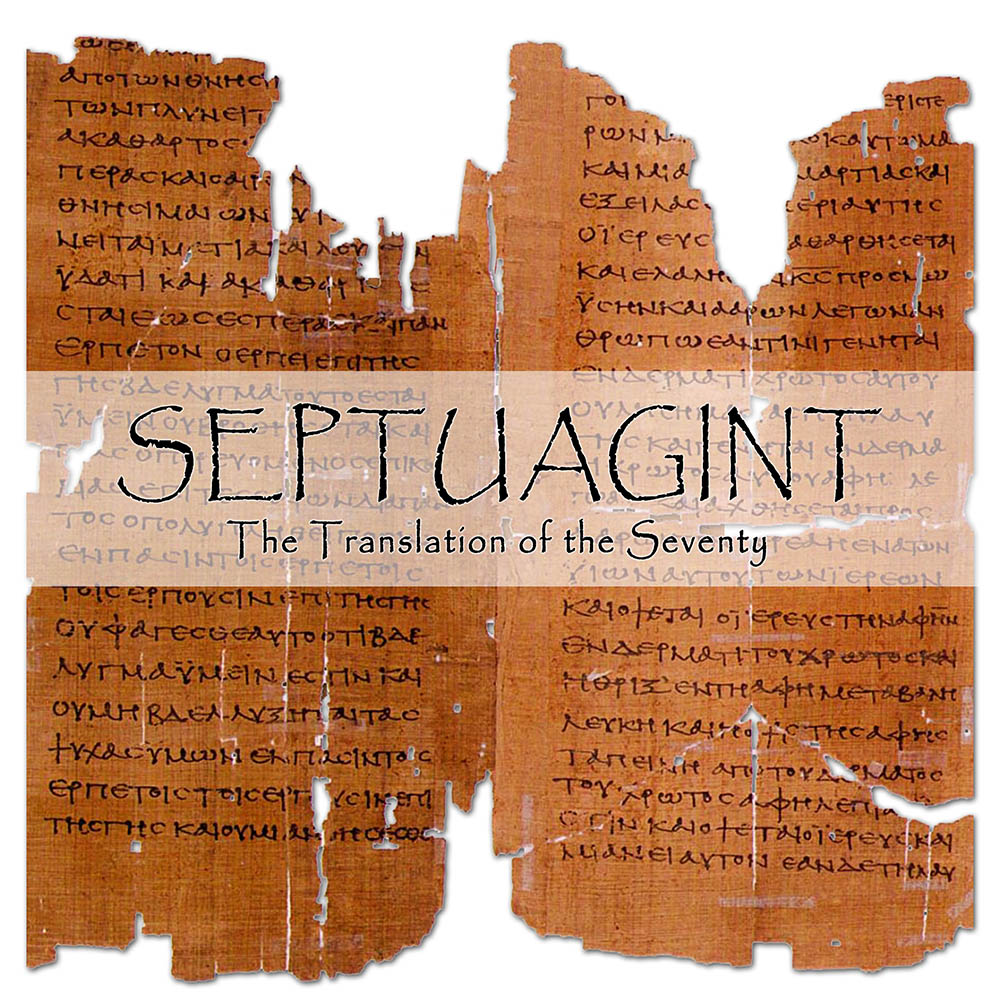
Here is a direct side-by-side comparison of the Masoretic Text (MT) with the Septuagint (LXX). I have concluded that the LXX is much to be preferred over the Masoretic Text, a position from which the Eastern Orthodox Church never deviated. Perhaps, if you take the time to read my comparisons and other articles, you will arrive at the same conclusion.
The Septuagint version I am using is the Lexham English Septuagint 2nd Edition, which is available in print or as part of Logos Bible Software. Occasionally I also use the Brenton translation of the LXX for insight into difficult passages.
If you want to know more, click on the following links.
- Why Christians Should Prefer the Septuagint over the Masoretic Text.
- Some Insights Gained through Comparing the Masoretic Text to the Septuagint
- More side by side comparisons of the Masoretic Text (MT) to the Septuagint (LXX).
| Masoretic Text | Septuagint | Significance |
|
To the Chief Musician. With Flutes. A Psalm of David. 1 Give ear to my words, O LORD, Consider my meditation. 2 Give heed to the voice of my cry, My King and my God, For to You I will pray. 3 My voice You shall hear in the morning, O LORD; In the morning I will direct it to You, And I will look up. Psalm 5:title–3 (NKJV) |
1 FOR THE END, ON BEHALF OF THE INHERITANCE, A PSALM OF DAVID. 2 Listen to my words, O Lord; understand my crying. 3 Pay attention to the voice of my supplication, my King and my God, because to you I will pray, O Lord. 4 Early in the day you will hear my voice. Early in the day I will approach you and gaze upon you, Psalm 5:1–4 (LES2) |
According to the LXX, King David was a passionate man who felt strong emotions when praying to God. The MT shows more reserve in the phrase, “Consider my meditation,” than the LXX shows with, “Consider my outcry.” In the next verse, the MT says, “Pay attention to my cry for help.” The LXX says, “Pay attention to the voice of my prayer or entreaty.” It seems the MT and LXX reverse the order, which indicates that someone tampered with the original for some reason, at least regarding the order. The end of this passage in the MT has David looking. The word up is inserted. The LXX says David “looked upon” with you inserted, which indicates he had a very personal relationship with God, something unknown to those without Christ and the Holy Spirit. David’s experience with God foreshadowed what was coming in the New Covenant. |
|
4 For You are not a God who takes pleasure in wickedness, Nor shall evil dwell with You. 5 The boastful shall not stand in Your sight; You hate all workers of iniquity. 6 You shall destroy those who speak falsehood; The LORD abhors the bloodthirsty and deceitful man. Psalm 5:4–6 (NKJV) |
5 because you are not a God who wants evil, nor will you dwell beside one who acts wickedly. 6 No lawless persons will remain before your eyes. You hate, O Lord, all those working lawlessness. 7 You will destroy all those speaking falsehood. The Lord detests a man of bloodshed and deceitfulness. Psalm 5:5–7 (LES2) |
The MT says God does not take pleasure in wickedness. The LXX says that he does not want “lawlessness.” The MT makes God passive when it says, “No evil will dwell with you.” The LXX says God takes the initiative by choosing not to dwell with someone who acts wickedly. This also foreshadows the New Covenant. God only indwells those made righteous by faith in Christ. The MT says that the boastful will not stand before God, but the LXX says that no lawless person will remain or stand before God’s eyes. The MT says God hates all workers of iniquity, but the LXX says he hates “those working lawlessness.” In verse 7 they agree. |
|
7 But as for me, I will come into Your house in the multitude of Your mercy; In fear of You I will worship toward Your holy temple. 8 Lead me, O LORD, in Your righteousness because of my enemies; Make Your way straight before my face. Psalm 5:7–8 (NKJV) |
8 But I will enter into your house in the multitude of your mercy; I will worship at your holy temple in the fear of you. 9 Lord, lead me in your righteousness because of my enemies. Make my way straight before you, Psalm 5:8–9 (LES2) |
The significant difference in this passage is found in the last part of verse 8/9. The MT says that David asked God to, “Make your way straight before my face.” The LXX has David praying, “Make my way straight before you.” This is no small difference. Perhaps one could interpret the MT to mean the same thing, but it does not say the same thing. One of the two altered the original text. We know that the MT altered the text in some places to hide clear references to Christ. Why then should it be trusted elsewhere to stick to the original? |
|
9 For there is no faithfulness in their mouth; Their inward part is destruction; Their throat is an open tomb; They flatter with their tongue. 10 Pronounce them guilty, O God! Let them fall by their own counsels; Cast them out in the multitude of their transgressions, For they have rebelled against You. Psalm 5:9–10 (NKJV) |
10 because there is no truth in their mouth. Their heart is vain. Their throat is an opened grave. With their tongue they deal treacherously. 11 Judge them, O God. Let them fall from their deliberations according to the greatness of their ungodliness. Expel them because they provoked you, O Lord. Psalm 5:10–11 (LES2) |
Here the MT and LXX differ significantly. The MT says the wicked are lacking faithfulness or certainty in the words. The LXX simply uses the word “truth.” One could be firm or certain in error or lying, but truthfulness never wavers. Next the MT says their “inward part” is destruction, but the LXX says that “Their heart is vain,” which can mean empty or frivolous. The verse 9/10 shows agreement. Flattery means to make slippery, which agrees with “deal treacherously.” Verse 10/11 basically agree except when identifying the offense, which the MT says is rebellion, but the LXX says it was a provocation. |
|
11 But let all those rejoice who put their trust in You; Let them ever shout for joy, because You defend them; Let those also who love Your name Be joyful in You. 12 For You, O LORD, will bless the righteous; With favor You will surround him as with a shield. Psalm 5:11–12 (NKJV) |
12 And let all who place their hope upon you rejoice in you for eternity. They will be exceedingly cheerful, and you shall dwell among them, and all who love your name will exult in you. 13 For you bless the righteous one, O Lord; you crowned us as with a shield of good will. Psalm 5:12–13 (LES2) |
The main difference in verse 11/12 is that the reason given for rejoicing in the MT is God’s defense, but in the LXX it’s God’s presence. This summarizes one of the identifying characteristics of the MT – the defense of Israel. The LXX points to Christ and the New Covenant in which the Holy Spirit indwells each believer. In verse 12/13, the MT says that God will bless the righteous, but the LXX uses the present tense, saying that right now God blesses the righteous one (singular), which points to Christ. We (plural -revealed in the word “us”) enjoy the benefits of his relationship with God, being crowned with a shield of good will. This points to the co-rulership we enjoy with Christ. (Ephesians 2:4-6) |