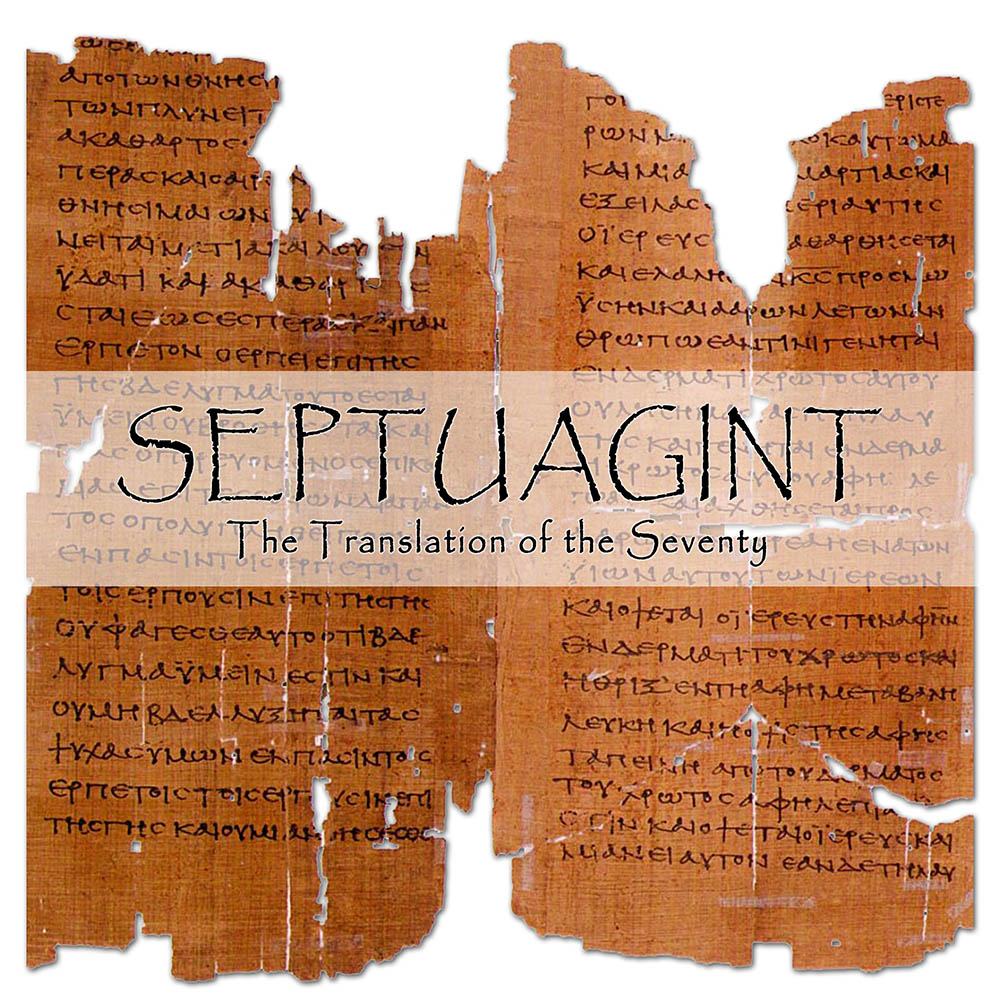
Here is a direct side-by-side comparison of the Masoretic Text with the LXX. I have concluded that the LXX is much to be preferred over the Masoretic Text, a position from which the Eastern Orthodox Church never deviated. Perhaps, if you take the time to read my comparisons and other articles, you will arrive at the same conclusion.
The Septuagint version I am using is the Lexham English Septuagint 2nd Edition, which is available in print or as part of Logos Bible Software. Occasionally I also use the Brenton translation of the LXX for insight into difficult passages.
If you want to know more, click on the following links.
- Why Christians Should Prefer the Septuagint over the Masoretic Text.
- Some Insights Gained through Comparing the Masoretic Text to the Septuagint
- More side by side comparisons of the Masoretic Text (MT) to the Septuagint (LXX).
| MT | LXX | Significance |
|
16 Upon rising from there, the men looked down on the face of Sodom and Gomorrah. Abraham was going along with them, accompanying them. 17 The Lord said, “Will I hide what I am doing from Abraham, my servant? 18 Abraham will become a great and numerous nation, and all the nations of the earth will be blessed in him. 19 For I know that he will appoint his sons and his household after himself, and they will keep the ways of the Lord by doing righteousness and justice, so that the Lord may bring upon Abraham all the things that he said over him.” 20 The Lord said, “The outcry of Sodom and Gomorrah has increased, and their sins are very great. 21 Therefore, I will go down and see if they are coming to an end according to their crying that is coming to me, and if not, so that I may know.” Genesis 18:16–21 (LES2) |
16 Then the men rose up from there, and looked down toward Sodom; and Abraham was walking with them to send them off. 17 The LORD said, “Shall I hide from Abraham what I am about to do, 18 since Abraham will surely become a great and mighty nation, and in him all the nations of the earth will be blessed? 19 “For I have chosen him, so that he may command his children and his household after him to keep the way of the LORD by doing righteousness and justice, so that the LORD may bring upon Abraham what He has spoken about him.” 20 And the LORD said, “The outcry of Sodom and Gomorrah is indeed great, and their sin is exceedingly grave. 21 “I will go down now, and see if they have done entirely according to its outcry, which has come to Me; and if not, I will know.” Genesis 18:16–21 (NASB95) |
Everything basically agrees until we get to verse 19.
|
|
22 Then the men turned away from there and went toward Sodom, while Abraham was still standing before the LORD. 23 Abraham came near and said, “Will You indeed sweep away the righteous with the wicked? 24 “Suppose there are fifty righteous within the city; will You indeed sweep it away and not spare the place for the sake of the fifty righteous who are in it? 25 “Far be it from You to do such a thing, to slay the righteous with the wicked, so that the righteous and the wicked are treated alike. Far be it from You! Shall not the Judge of all the earth deal justly?” Genesis 18:22–25 (NASB95) |
22 And, after turning back from there, the men came to Sodom, and Abraham was standing before the Lord. 23 And after approaching, Abraham said, “Will you destroy the righteous with the ungodly, and will the righteous be treated like the ungodly? 24 If there are fifty righteous in the city, will you destroy them? Will you leave the place unpunished on account of the fifty righteous, if they are in it? 25 No way shall you act according to this plan, to kill a righteous person with an ungodly one, so the righteous person will be like the ungodly, no way! Will the one who judges all the earth not do justice?” Genesis 18:22–25 (LES2) |
The MT omits Abraham’s second query in verse 23: “will the righteous be treated like the ungodly?” Otherwise, I see little difference worth noting. |
|
26 So the LORD said, “If I find in Sodom fifty righteous within the city, then I will spare the whole place on their account.” 27 And Abraham replied, “Now behold, I have ventured to speak to the Lord, although I am but dust and ashes. 28 “Suppose the fifty righteous are lacking five, will You destroy the whole city because of five?” And He said, “I will not destroy it if I find forty-five there.” 29 He spoke to Him yet again and said, “Suppose forty are found there?” And He said, “I will not do it on account of the forty.” 30 Then he said, “Oh may the Lord not be angry, and I shall speak; suppose thirty are found there?” And He said, “I will not do it if I find thirty there.” 31 And he said, “Now behold, I have ventured to speak to the Lord; suppose twenty are found there?” And He said, “I will not destroy it on account of the twenty.” 32 Then he said, “Oh may the Lord not be angry, and I shall speak only this once; suppose ten are found there?” And He said, “I will not destroy it on account of the ten.” 33 As soon as He had finished speaking to Abraham the LORD departed, and Abraham returned to his place. Genesis 18:26–33 (NASB95) |
26 The Lord said, “If I find in Sodom fifty righteous in the city, I will forgive the entire place because of them.” 27 And, replying, Abraham said, “Now I have begun to talk to the Lord, but I am earth and ashes. 28 If the fifty righteous are decreased by five, would you destroy the whole city on account of the five?” And he said, “I will certainly not destroy it if I find forty-five there.” 29 And he continued, still talking to him, and said, “If forty are found there?” And he said, “I will certainly not destroy it on account of the forty.” 30 And he said, “Is it anything, Lord, if I speak? If thirty are found there?” And he said, “I will certainly not destroy it if thirty are found there.” 31 And he said, “Since I am able to talk to the Lord, if twenty are found there?” And he said, “I will certainly not destroy on account of the twenty.” 32 And he said, “Is it anything, Lord, if I may speak yet once more? If ten are found there?” And he said, “I will certainly not destroy on account of the ten.” 33 And the Lord departed when he finished speaking to Abraham, and Abraham returned to his place. Genesis 18:26–33 (LES2) |
The only seeming difference worth noting is that the MT uses the word “spare,” but the LXX says, “forgive.” However, the notes say that the Hebrew word in the MT can also mean “forgive.” |
Summary: There is very little difference, which is often the case with more historical passages that do not point toward Christ or denigrate Israel.