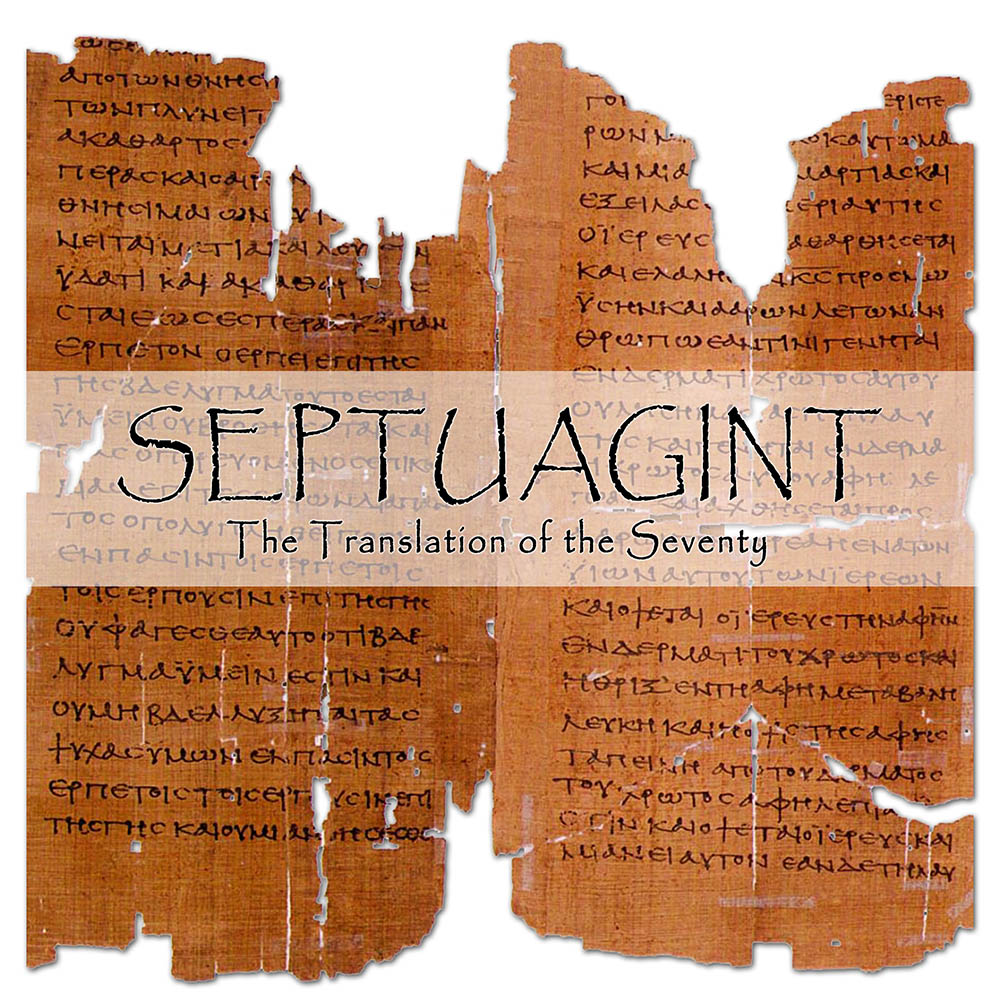
Here is a direct side-by-side comparison of the Masoretic Text with the LXX. I have concluded that the LXX is much to be preferred over the Masoretic Text, a position from which the Eastern Orthodox Church never deviated. Perhaps, if you take the time to read my comparisons and other articles, you will arrive at the same conclusion.
The Septuagint version I am using is the Lexham English Septuagint 2nd Edition, which is available in print or as part of Logos Bible Software. Occasionally I also use the Brenton translation of the LXX for insight into difficult passages.
If you want to know more, click on the following links.
- Why Christians Should Prefer the Septuagint over the Masoretic Text.
- Some Insights Gained through Comparing the Masoretic Text to the Septuagint
- More side by side comparisons of the Masoretic Text (MT) to the Septuagint (LXX).
| Masoretic Text | Septuagint | Significance |
|
1 Who is this who comes from Edom, With dyed garments from Bozrah, This One who is glorious in His apparel, Traveling in the greatness of His strength?— “I who speak in righteousness, mighty to save.” Isaiah 63:1 (NKJV) |
1 Who is this who arrives from Edom, with red garments from Bezer, so beautiful in clothing, forceful with strength? I discuss righteousness and a judgment of salvation. Isaiah 63:1 (LES2) |
Edom represented the most bitter enemy of Israel and, therefore, of God. Sadly, taken in the light of the new covenant, by which all scripture must be interpreted, natural Israel and those Jews who remain unrepentant are the most bitter enemies of our Lord Jesus and his people, the new covenant Israel of God. (1 Thessalonians 2:14-16) The red garments are tied to Edom, which means red, but more is going on here than the punishment of that inveterate enemy. God’s righteousness (in Christ) and a judgment of connected to our salvation could point to 70 AD, the predicted judgment of Jerusalem for rejecting and murdering her Messiah. |
|
2 Why is Your apparel red, And Your garments like one who treads in the winepress? 3 “I have trodden the winepress alone, And from the peoples no one was with Me. For I have trodden them in My anger, And trampled them in My fury; Their blood is sprinkled upon My garments, And I have stained all My robes. 4 For the day of vengeance is in My heart, And the year of My redeemed has come. 5 I looked, but there was no one to help, And I wondered That there was no one to uphold; Therefore My own arm brought salvation for Me; And My own fury, it sustained Me. 6 I have trodden down the peoples in My anger, Made them drunk in My fury, And brought down their strength to the earth.” Isaiah 63:2–6 (NKJV) |
2 Why are your clothes red, and your garments as if they came from a trodden winepress? 3 I was full of that which has been trampled, and there is no man of the nations with me; and I trampled them in my wrath, and I crushed them like dirt, and I brought down their blood. 4 For the day of repayment has come to them, and the year of ransoming is present. 5 I looked, and there was no helper, and I observed, and no one helped; and my arm rescued them, and my wrath was set. 6 And I trampled them in my anger, and I brought their blood down into the dirt. Isaiah 63:2–6 (LES2) |
This perfectly describes the fall of Jerusalem in 70 AD. (Matthew 21:38-44) Jesus called the Jewish leaders sons of the devil (John 8:44). They were the most vicious enemies of God in that they rejected and killed his only begotten Son, the one who created them. In verse 5, the MT indicates that God’s own arm saved him, but the LXX says that God’s arm (Jesus – Isaiah 53:1) saved THEM, meaning the elect. |
|
7 I will mention the lovingkindnesses of the LORD And the praises of the LORD, According to all that the LORD has bestowed on us, And the great goodness toward the house of Israel, Which He has bestowed on them according to His mercies, According to the multitude of His lovingkindnesses. Isaiah 63:7 (NKJV) |
7 I recalled the mercy of the Lord, the magnificent acts of the Lord in all the things by which he repays us. The Lord is a good judge to the house of Israel; he deals with us according to his mercy and according to the greatness of his righteousness. Isaiah 63:7 (LES2) |
This verse seems to switch to the Israel of God, the bride of Christ, the one new man in Christ, the church, composed of Jew and Gentile. |
|
8 For He said, “Surely they are My people, Children who will not lie.” So He became their Savior. 9 In all their affliction He was afflicted, And the Angel of His Presence saved them; In His love and in His pity He redeemed them; And He bore them and carried them All the days of old. 10 But they rebelled and grieved His Holy Spirit; So He turned Himself against them as an enemy, And He fought against them. Isaiah 63:8–10 (NKJV) |
8 And he said, “Are they not my people? Children, they will never rebel.” And he became their salvation 9 from all their affliction. Not an elder or a messenger but he himself has saved them, because he loved them and spared them. He himself ransomed them and took them up and exalted them all the days of eternity. 10 But they resisted and provoked his Holy Spirit, and he was turned to enmity against them; he himself made war with them. Isaiah 63:8–10 (LES2) |
Verses 8 and 9 seem to continue to speak of spiritual Israel, the elect in Christ. It is noteworthy that the MT says the Angel of his Presence saved them, but the LXX says that was not the case, but God himself (in Christ) redeemed them, the elect. Verse 10 seems to return to describing natural Israel, who resisted (Acts 7:51) God and irritated or provoked his Spirit. God made war with them, which came to head in 70 AD and later in Rome’s retaliation to the Bar Kohkba revolt.. |
|
11 Then he remembered the days of old, Moses and his people, saying: “Where is He who brought them up out of the sea With the shepherd of His flock? Where is He who put His Holy Spirit within them, 12 Who led them by the right hand of Moses, With His glorious arm, Dividing the water before them To make for Himself an everlasting name, 13 Who led them through the deep, As a horse in the wilderness, That they might not stumble?” 14 As a beast goes down into the valley, And the Spirit of the LORD causes him to rest, So You lead Your people, To make Yourself a glorious name. Isaiah 63:11–14 (NKJV) |
11 And he remembered the eternal days: “Where is the one who brings the shepherd of the sheep up from the sea? Where is the one who put the Holy Spirit among them, 12 who led Moses by the right hand? Where is the arm of his glory?” He overpowered the water from his face to make an eternal name for himself. 13 He led them through the deep like a horse through the desert, and they did not grow weary. 14 Like livestock through a plain, the spirit from the Lord came down and guided them; thus you led your people in order to make a glorious name for yourself. Isaiah 63:11–14 (LES2) |
This passage in the MT makes Moses the center of attention, but the LXX speaks of another shepherd who led Moses by the right hand. This can be no other than the Good Shepherd, our Lord Jesus. Jesus is the “arm of his glory.” (Isaiah 53:1) |
|
15 Look down from heaven, And see from Your habitation, holy and glorious. Where are Your zeal and Your strength, The yearning of Your heart and Your mercies toward me? Are they restrained? Isaiah 63:15 (NKJV) |
15 Turn from heaven and look from your holy house and from your glory. Where are your zeal and your strength? Where is the abundance of your mercy and your compassions, that you have upheld us? Isaiah 63:15 (LES2) |
These verses agree. |
|
16 Doubtless You are our Father, Though Abraham was ignorant of us, And Israel does not acknowledge us. You, O LORD, are our Father; Our Redeemer from Everlasting is Your name. Isaiah 63:16 (NKJV) |
16 For you are our father, because Abraham did not know us, and Israel did not recognize us, but you, O Lord, our father, rescue us; your name is upon us from the beginning. Isaiah 63:16 (LES2) |
Wow! If this doesn’t describe new covenant Israel, I am sadly mistaken. Christians were not known to Abraham, because the mystery of Christ (Ephesians 3:4-6), which Paul said was the inclusion of the Gentiles in the new covenant, was hidden from everyone until after Christ’s resurrection and Pentecost. The Jews still do not recognize Christians as God’s children to this day, but God is our Father, just as Jesus said, and his name is upon us. 17 Jesus said to her, “Do not cling to Me, for I have not yet ascended to My Father; but go to My brethren and say to them, ‘I am ascending to My Father and your Father, and to My God and your God.’ ” John 20:17 (NKJV) 16 You did not choose Me, but I chose you and appointed you that you should go and bear fruit, and that your fruit should remain, that whatever you ask the Father in My name He may give you. John 15:16 (NKJV) Those who reject Jesus do not know the Father. (1 John 2:23) |
|
17 O LORD, why have You made us stray from Your ways, And hardened our heart from Your fear? Return for Your servants’ sake, The tribes of Your inheritance. 18 Your holy people have possessed it but a little while; Our adversaries have trodden down Your sanctuary. 19 We have become like those of old, over whom You never ruled, Those who were never called by Your name. Isaiah 63:17–19 (NKJV) |
17 Why have you led us astray, O Lord, from your way? Why have you hardened our hearts to not fear you? Turn, because of your servants, because of the tribes of your inheritance, 18 so that we might inherit a little of your holy mountain. 19 We have become as from the beginning, when you did not rule over us and your name was not called over us. Isaiah 63:17–19 (LES2) |
This could well have been the apostle Paul’s prayer. He wished to see his countrymen saved by Christ. (Romans 9:3) Thankfully, a remnant will believe ( and be included in the Israel of God, the church, elect before the foundation of the world to belong to God. |