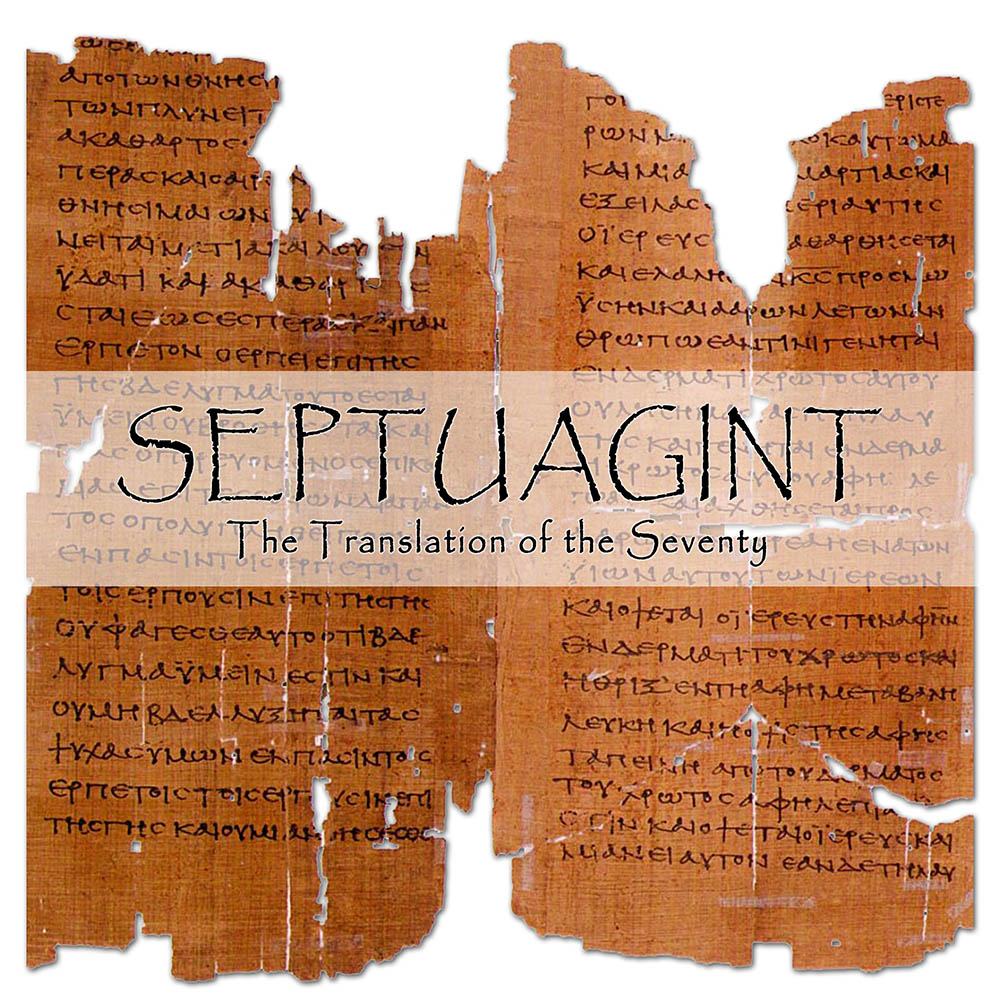
Here is a direct side-by-side comparison of the Masoretic Text with the LXX. I have concluded that the LXX is much to be preferred over the Masoretic Text, a position from which the Eastern Orthodox Church never deviated. Perhaps, if you take the time to read my comparisons and other articles, you will arrive at the same conclusion.
The Septuagint version I am using is the Lexham English Septuagint 2nd Edition, which is available in print or as part of Logos Bible Software. Occasionally I also use the Brenton translation of the LXX for insight into difficult passages.
If you want to know more, click on the following links.
- Why Christians Should Prefer the Septuagint over the Masoretic Text.
- Some Insights Gained through Comparing the Masoretic Text to the Septuagint
- More side by side comparisons of the Masoretic Text (MT) to the Septuagint (LXX).
| Masoretic Text | Septuagint | Significance |
|
1 And it came about in the days of Amraphel king of Shinar, Arioch king of Ellasar, Chedorlaomer king of Elam, and Tidal king of Goiim, 2 that they made war with Bera king of Sodom, and with Birsha king of Gomorrah, Shinab king of Admah, and Shemeber king of Zeboiim, and the king of Bela (that is, Zoar). 3 All these came as allies to the valley of Siddim (that is, the Salt Sea). 4 Twelve years they had served Chedorlaomer, but the thirteenth year they rebelled. Genesis 14:1–4 (NASB95) |
1 This happened in the reign of Amraphel, king of Shinar: Arioch, king of Ellasar, and Chedorlaomer, king of Elam, and Thargal, king of nations, 2 made war with Bilhah, king of Sodom, and with Birsha, king of Gomorrah, and Shinar, king of Admah, and Shemeber, king of Zeboiim, and with the king of Bela (this is Zoar). 3 All these conspired at the salt chasm (this is the sea of salt). 4 For twelve years they served Chedorlaomer, but in the thirteenth year they revolted. Genesis 14:1–4 (LES2) |
Some of the names differ, but the passage basically agrees. |
|
5 In the fourteenth year Chedorlaomer and the kings that were with him, came and defeated the Rephaim in Ashteroth-karnaim and the Zuzim in Ham and the Emim in Shaveh-kiriathaim, 6 and the Horites in their Mount Seir, as far as El-paran, which is by the wilderness. 7 Then they turned back and came to En-mishpat (that is, Kadesh), and conquered all the country of the Amalekites, and also the Amorites, who lived in Hazazon-tamar. Genesis 14:5–7 (NASB95) |
5 In the fourteenth year, Chedorlaomer and the kings who were with him came and massacred the giants who were in Ashtaroth Carnaim, and strong nations together with them, and the Emim who were in the city of Shaveh, 6 and the Horites who were in the mountains of Seir, as far as the terebinth of Paran, which is in the wilderness. 7 And, when they returned, they came to the fountain of judgment (this is Kadesh) and massacred all the rulers of Amalek, and the Amorites who were dwelling in Hazazon Tamar. Genesis 14:5–7 (LES2) |
Here the MT uses the word “Rephaim” but the LXX calls them “giants.” Which was in the original Paleo-Hebrew, I wonder? Did the LXX translate a proper name into something understandable to the reader? That is likely. So we see that the Jewish scholars understood that these were indeed giants, perhaps like the ones found earlier in Genesis before the flood. Perhaps a “hybrid” DNA found its way into the population through one of Noah’s family, or could it be the dark angels were still up to their perversion? |
|
8 And the king of Sodom and the king of Gomorrah and the king of Admah and the king of Zeboiim and the king of Bela (that is, Zoar) came out; and they arrayed for battle against them in the valley of Siddim, 9 against Chedorlaomer king of Elam and Tidal king of Goiim and Amraphel king of Shinar and Arioch king of Ellasar—four kings against five. 10 Now the valley of Siddim was full of tar pits; and the kings of Sodom and Gomorrah fled, and they fell into them. But those who survived fled to the hill country. 11 Then they took all the goods of Sodom and Gomorrah and all their food supply, and departed. 12 They also took Lot, Abram’s nephew, and his possessions and departed, for he was living in Sodom. Genesis 14:8–12 (NASB95) |
8 The king of Sodom and the king of Gomorrah and the king of Admah and the king of Zeboiim and the king of Bela (this is Zoar) came out, and they arrayed their armies against them for a battle in the salt valley, 9 against Chedorlaomer, king of Elam, and Tidal, king of nations, and Amraphel, king of Shinar, and Arioch, king of Ellasar—these four kings against the five. 10 Now the salt valley had pits of tar. The king of Sodom and the king of Gomorrah fled and fell in there. Those who were left behind fled into the mountain. 11 They took every horse that belonged to Sodom and Gomorrah and all their provisions and went away. 12 They took also Lot, the son of the brother of Abram, and his household stuff, and they left, for he was living in Sodom. Genesis 14:8–12 (LES2) |
The passage is in agreement, except in verse 11 where the MT says the kings captured “all the goods,” but the LXX says they took “every horse.” This difference repeats in verse 16. |
|
13 Then a fugitive came and told Abram the Hebrew. Now he was living by the oaks of Mamre the Amorite, brother of Eshcol and brother of Aner, and these were allies with Abram. 14 When Abram heard that his relative had been taken captive, he led out his trained men, born in his house, three hundred and eighteen, and went in pursuit as far as Dan. 15 He divided his forces against them by night, he and his servants, and defeated them, and pursued them as far as Hobah, which is north of Damascus. 16 He brought back all the goods, and also brought back his relative Lot with his possessions, and also the women, and the people. Genesis 14:13–16 (NASB95) |
13 And one of those who had been delivered approached and reported to Abram, the migrant. Now the Amorite himself dwelt at the oak of Mamre, the brother of Eshcol and the brother of Onan, who were allies of Abram. 14 Abram, upon hearing that his brother Lot was taken prisoner, counted his own household members, three hundred and eighteen, and he pursued them as far as Dan. 15 And he fell upon them at night, he and his servants, and he struck them and chased them to Hobah, which is on the left of Damascus. 16 And he brought back every horse of Sodom, and he brought back Lot, his brother, and all his possessions and the women and the people. Genesis 14:13–16 (LES2) |
The MT calls Abram “the Hebrew,” but the LXX identifies him as “the wanderer.” This fits with Peter’s description of the church. (1 Peter 1:1) The MT says Abram was living by the oaks (oak in LXX) of Mamre, but the LXX says Eshcol lived there, too. The MT calls Eshcol’s brother Aner, but the LXX says it was Onan. Whatever was the case, these men were Abram’s allies. Verse 14 gives us a better idea of Abram’s wealth. He was a man of substance and power. Verse 15 adds that he divided his forces. We see here that Abram was also a capable commander and warrior. |
Summary: Except for some relatively minor discrepancies this passage agrees.