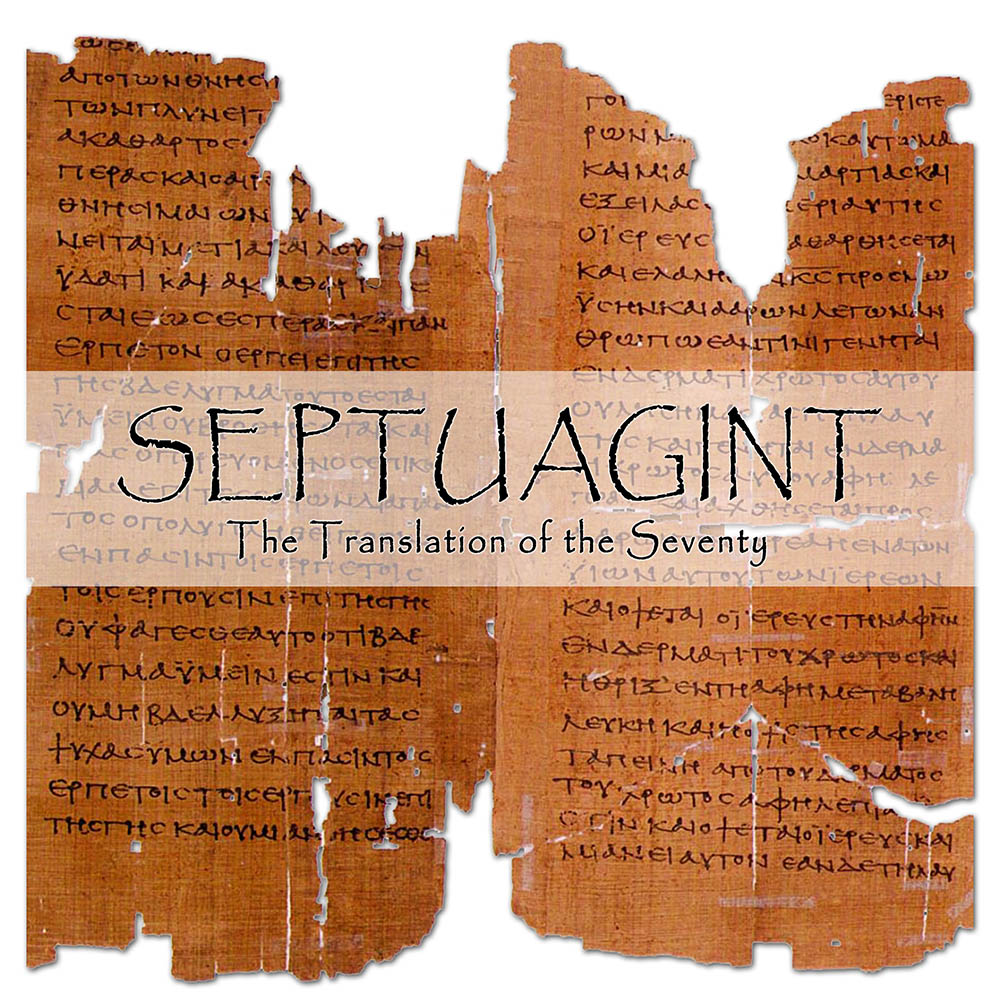
Here is a direct side-by-side comparison of the Masoretic Text with the LXX. I have concluded that the LXX is much to be preferred over the Masoretic Text, a position from which the Eastern Orthodox Church never deviated. Perhaps, if you take the time to read my comparisons and other articles, you will arrive at the same conclusion.
The Septuagint version I am using is the Lexham English Septuagint 2nd Edition, which is available in print or as part of Logos Bible Software. Occasionally I also use the Brenton translation of the LXX for insight into difficult passages.
If you want to know more, click on the following links.
- Why Christians Should Prefer the Septuagint over the Masoretic Text.
- Some Insights Gained through Comparing the Masoretic Text to the Septuagint
- More side by side comparisons of the Masoretic Text (MT) to the Septuagint (LXX).
| Masoretic Text | Septuagint | Significance |
|
1 I cry aloud with my voice to the LORD; I make supplication with my voice to the LORD. 2 I pour out my complaint before Him; I declare my trouble before Him. Psalm 142:1–2 (NASB95) |
2 With my voice I cried out to the Lord. With my voice I besought the Lord. 3 I poured out before him my entreaty. I will report my affliction before him. Psalm 141:2–3 (LES2) |
Jesus said we will live by every word of God (Matthew 4:4); therefore, every word is important. The MT uses the word “complaint” in verse 2, but the LXX uses “entreaty.” Big difference. The MT uses “trouble” instead of “affliction.” Not much difference, but affliction carries the idea of being under pressure in the Greek. Trouble is more generic. |
|
3 When my spirit was overwhelmed within me, You knew my path. In the way where I walk They have hidden a trap for me. 4 Look to the right and see; For there is no one who regards me; There is no escape for me; No one cares for my soul. Psalm 142:3–4 (NASB95) |
4 When my spirit came to an end from me, you also knew my paths. In this way in which I was going, they hid a trap for me. 5 I was looking to the right hand, and I was seeing that there was no one who knew me. Escape passed away from me, and there is no one who seeks out my soul. Psalm 141:4–5 (LES2) |
The MT depersonalizes verse 4 by saying, “Look to the right.” The LXX says that the subject “was looking and seeing” that no one acknowledged or knew him. This is beginning to sound like a prophetic glimpse into Christ’s suffering. |
|
5 I cried out to You, O LORD; I said, “You are my refuge, My portion in the land of the living. 6 “Give heed to my cry, For I am brought very low; Deliver me from my persecutors, For they are too strong for me. Psalm 142:5–6 (NASB95) |
6 To you, O Lord, I cried out, and I said, “You are my hope, my portion in the land of the living.” 7 Pay attention to my entreaty, because I was made low very much. Rescue me from those who are persecuting me, because they were strengthened beyond me. Psalm 141:6–7 (LES2) |
As in other places, the MT uses “refuge” instead of the word “hope” that the LXX employs. Hope makes much more sense in the context of suffering. Christ hoped in God while enduring horrible suffering and contradiction on our behalf. |
|
7 “Bring my soul out of prison, So that I may give thanks to Your name; The righteous will surround me, For You will deal bountifully with me.” Psalm 142:7 (NASB95) |
8 Lead my soul out from prison, so that I could give thanks to your name, O Lord. The righteous ones wait for me until when you will give recompense to me. Psalm 141:8 (LES2) |
Here is where it gets interesting. The last part of the verse seems to refer either to Christ’s resurrection or Second Coming, or both; whereas, the MT says something entirely different. Another way to word the LXX in light of the New Covenant might be, “Those who are righteous through faith in Christ will wait for his return when our Lord will be vindicated before the entire world.” |
| It is important for us to remember that the entire Bible points to Christ. Any time I see the MT pointing away from Christ, when the LXX points toward him, it gives me pause. Words matter… |