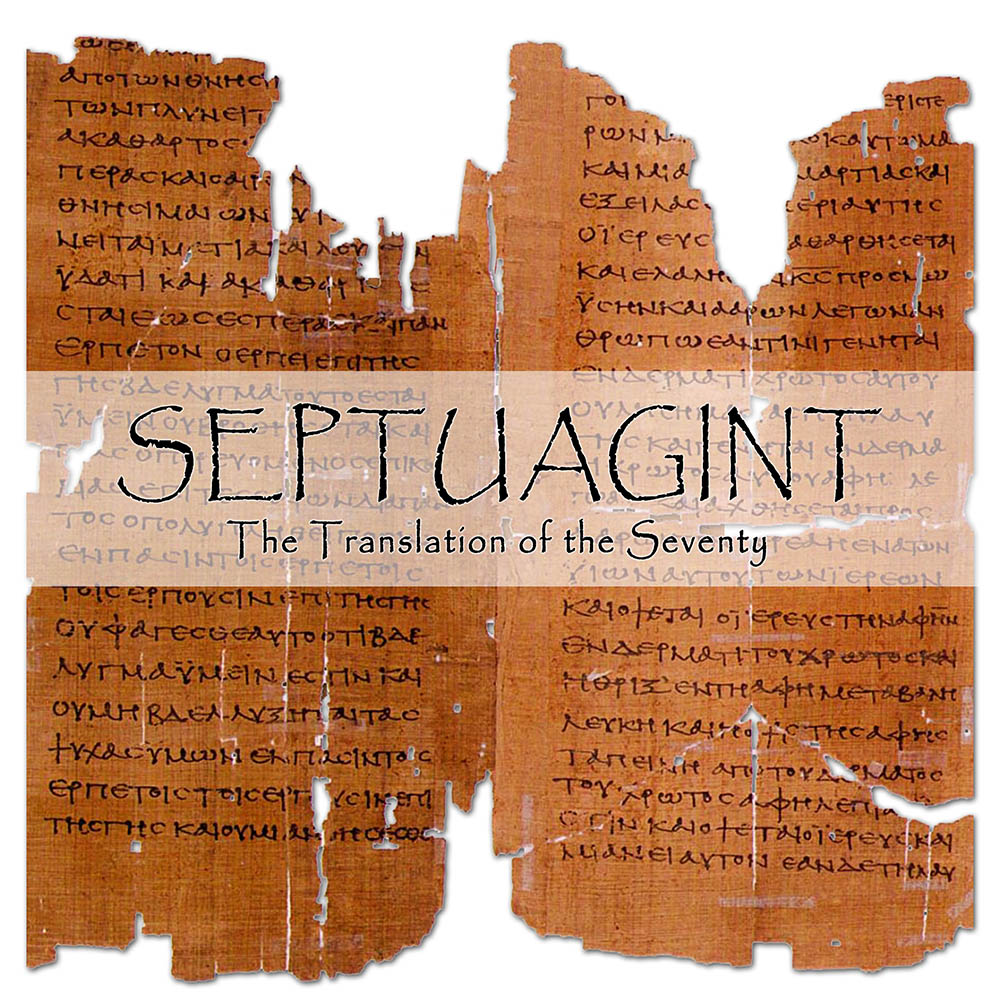
Here is a direct side-by-side comparison of the Masoretic Text with the LXX. I have concluded that the LXX is much to be preferred over the Masoretic Text, a position from which the Eastern Orthodox Church never deviated. Perhaps, if you take the time to read my comparisons and other articles, you will arrive at the same conclusion.
The Septuagint version I am using is the Lexham English Septuagint 2nd Edition, which is available in print or as part of Logos Bible Software. Occasionally I also use the Brenton translation of the LXX for insight into difficult passages.
If you want to know more, click on the following links.
- Why Christians Should Prefer the Septuagint over the Masoretic Text.
- Some Insights Gained through Comparing the Masoretic Text to the Septuagint
- More side by side comparisons of the Masoretic Text (MT) to the Septuagint (LXX).
| Septuagint | MT | Significance |
|
1 The one dwelling in the support of the Most High, in the protection of the God of the heavens, that one will find lodging. 2 That one will say to God, “You are my helper and my refuge, my God, I will hope upon him,” Psalm 90:1–2 (LES2) |
1 He who dwells in the secret place of the Most High Shall abide under the shadow of the Almighty. 2 I will say of the LORD, “He is my refuge and my fortress; My God, in Him I will trust.” Psalm 91:1–2 (NKJV) |
The main difference in this passage is that the LXX emphasizes that God is our helper. The MT highlights that he is our fortress or protection. Certainly, the Lord is both, but the idea of God’s being our helper is an emphasis of the NT. The Holy Spirit is specifically identified that way. (John 14:26) |
|
3 because he will rescue from the trap of hunters and from a terrifying word. 4 With his shoulders he will overshadow you, and under his wings you will have hope; with a shield his truth will surround you. Psalm 90:3–4 (LES2) |
3 Surely He shall deliver you from the snare of the fowler And from the perilous pestilence. 4 He shall cover you with His feathers, And under His wings you shall take refuge; His truth shall be your shield and buckler. Psalm 91:3–4 (NKJV) |
The LXX in verse 3 says that God will deliver us from a “terrifying word,” but the MT replaces that with “perilous pestilence.” The Hebrew can mean engulfing ruin. The LXX says God’s “shoulders” or “back” will overshadow us, but the MT extends the wings metaphor to translate it as “feathers.” The result of this protection will be our having “hope” according to the LXX, but the MT says God will be our refuge instead. The LXX says God’s truth will surround us. The MT gives the idea that the protection is only in front, as from a shield. |
|
5 That one will not be afraid from fear by night, from the arrow flying by day, 6 from the deed carried out in darkness, from mishap and demon at midday. 7 A thousand will fall from your side, and ten thousand from your right side. But they will not come near to you. Psalm 90:5–7 (LES2) |
5 You shall not be afraid of the terror by night, Nor of the arrow that flies by day, 6 Nor of the pestilence that walks in darkness, Nor of the destruction that lays waste at noonday. 7 A thousand may fall at your side, And ten thousand at your right hand; But it shall not come near you. Psalm 91:5–7 (NKJV) |
The LXX says that we will be protected from the “deed” done in darkness; whereas, the MT uses the world “pestilence.” Next the LXX says that protection will include what might happen to us by “mishap” or by demonic attack. The MT rather innocuously gives us “the destruction that lays waste at noonday.” The MT is more “poetic,” but the LXX sounds more authentic and specific. |