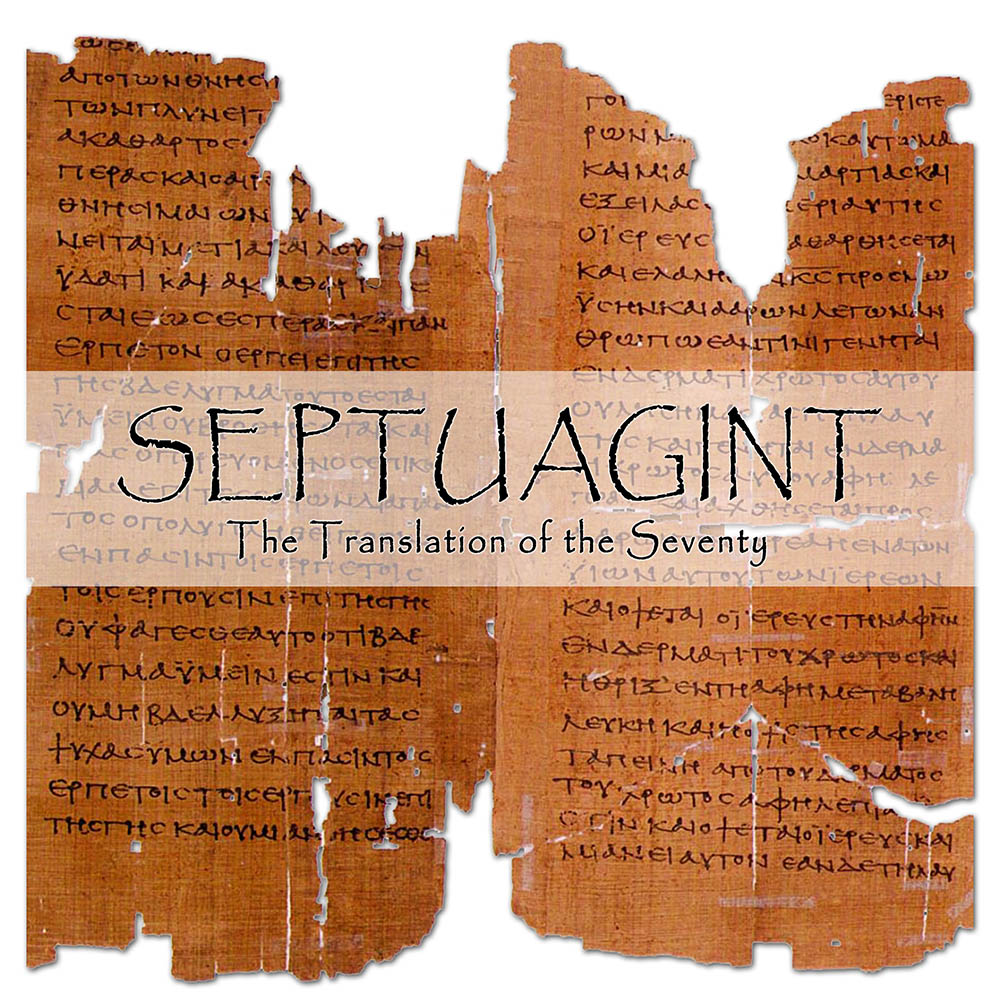
Here is a direct side-by-side comparison of the Masoretic Text with the LXX. I have concluded that the LXX is much to be preferred over the Masoretic Text, a position from which the Eastern Orthodox Church never deviated. Perhaps, if you take the time to read my comparisons and other articles, you will arrive at the same conclusion.
The Septuagint version I am using is the Lexham English Septuagint 2nd Edition, which is available in print or as part of Logos Bible Software. Occasionally I also use the Brenton translation of the LXX for insight into difficult passages.
If you want to know more, click on the following links.
- Why Christians Should Prefer the Septuagint over the Masoretic Text.
- Some Insights Gained through Comparing the Masoretic Text to the Septuagint
- More side by side comparisons of the Masoretic Text (MT) to the Septuagint (LXX).
| Masoretic Text | Septuagint | Significance |
|
1 “I was sought by those who did not ask for Me; I was found by those who did not seek Me. I said, ‘Here I am, here I am,’ To a nation that was not called by My name. Isaiah 65:1 (NKJV) |
1 “I became evident [emphanes] to those who did not consult [eperotao] me; I was found [heurisko] by those who did not seek [zeteo] me. I said, ‘Look! Here I am,’ to a people [nation – ethnos] who have not called upon my name. Isaiah 65:1 (LES2) |
The subtle differences between the MT and LXX often hide God’s grace in the New Covenant. The MT says God was “sought” by people who did not ask for him, which is a contradictory statement. The LXX says that God made himself manifest to those who did not inquire, consult, or ask for him. God revealed and reveals himself to those who were or are not actively seeking him or perhaps did or do not know who he is. This seems to fit with one of Jesus’ parables, when he said that after the ones first invited to the feast (the Jews) refused to come, he instructed his servant… 23 … ‘Go out into the highways and hedges, and compel them to come in, that my house may be filled. Luke 14:23 (NKJV) We cannot know God until he reveals himself to us. (Matthew 16:17) Jesus made it clear that unless the Spirit of God draws us, we cannot come to him. (John 6:44) The Son of God himself can stand in front of a person whose heart is hard and closed to God, and he will not understand who he is or heed his words. But when God reveals himself, as he did to Peter and to countless thousands of others, our hearts will see and we will respond by properly revering and worshiping the Lord. This people or nation who had not previously called upon God’s name can be no other than the Gentiles. Paul confirms this in Romans Chapter 10, a passage in which he explains that God has included the Gentiles in God’s kingdom. (Romans 10:12) Then he goes on to quote Isaiah 65:1. 20 But Isaiah is very bold and says: “I was found [heurisko] by those who did not seek [zeteo] Me; I was made manifest [emphanes] to those who did not ask [eperotao] for Me.” Romans 10:20 (NKJV) No doubt, he recited this from memory. His quote agrees with the Greek in the LXX, except he switched the order of the phrases. Paul personally experienced God’s mercy in this way when Jesus dramatically revealed himself to him as he was on the way to persecute believers in Damascus. God still reveals himself to people who are not seeking him. This is currently happening on a large scale in Muslim countries through dreams and visions. |
|
2 I have stretched out My hands all day long to a rebellious people, Who walk in a way that is not good, According to their own thoughts; 3 A people who provoke Me to anger continually to My face; Who sacrifice in gardens, And burn incense on altars of brick; 4 Who sit among the graves, And spend the night in the tombs; Who eat swine’s flesh, And the broth of abominable things is in their vessels; 5 Who say, ‘Keep to yourself, Do not come near me, For I am holier than you!’ These are smoke in My nostrils, A fire that burns all the day. 6 “Behold, it is written before Me: I will not keep silence, but will repay— Even repay into their bosom— 7 Your iniquities and the iniquities of your fathers together,” Says the LORD, “Who have burned incense on the mountains And blasphemed Me on the hills; Therefore I will measure their former work into their bosom.” Isaiah 65:2–7 (NKJV) |
2 I stretched out my hands all day to a people who resisted [apeitheo] and opposed [antilego] , to those who walked in a way that was not good but followed after their sins. 3 This people who provokes me is before me always; they sacrifice in their gardens and burn incense on their bricks to demons that do not exist; 4 among their graves and in caves they who eat swine meat and the broth of sacrifices sleep for the sake of dreams; all their vessels are defiled, 5 they who say, ‘Depart far from me, do not approach me for I am clean.’ This is the smoke of my wrath; fire burns in it all the day. 6 Look! It is written before me, ‘I will not keep silent, until I pay back into their bosom 7 their sins and the sins of their fathers,’ ” says the Lord. “They burn incense upon the mountains, and they taunt me upon the hills. I will pay back their deeds to their bosom.” Isaiah 65:2–7 (LES2) |
This section applies to the nation of Israel, those who are not part of God’s elect. The MT calls them a “rebellious people,” but the LXX is more specific, calling them “a people who resisted and opposed” God. Stephen used the same sort of language in his final sermon before the Jews stoned him to death. 51 “You stiff-necked and uncircumcised in heart and ears! You always resist the Holy Spirit; as your fathers did, so do you. Acts 7:51 (NKJV) Paul quoted this verse in Romans chapter 10. 21 But to Israel he says: “All day long I have stretched out My hands To a disobedient [apeitheo] and contrary [antilego] people.” Romans 10:21 (NKJV) The Greeks words match those in Isaiah, showing that he used the LXX as his source and understood this passage to apply to unrepentant Israel. The MT says Israel followed after her “thoughts.” The LXX say, “sins.” The LXX says that the sacrifices they made upon bricks were to demons (who did not exist). We know from other places that demons are real; so, this passage must be a reference to demons portraying themselves as gods, which are not really gods at all. This seems to be Paul’s line of thinking in other places were he addresses the subject. (Galatians 4:8, 1 Corinthians 10:21) People who bow down to idols are surrendering to evil spirits who are not by nature gods at all, but who do oppress people in all sorts of ways. This is another example of how the devil deceives people into serving him. The rest of this passage lays out the reasons for God’s judgement of the Jews who rejected him and his Son, Jesus the Messiah. All who reject the magnificently gracious offer in the gospel, both Jew and Gentile, judge themselves unworthy of eternal life and worthy of God’s judgment. (Acts 13:46) |