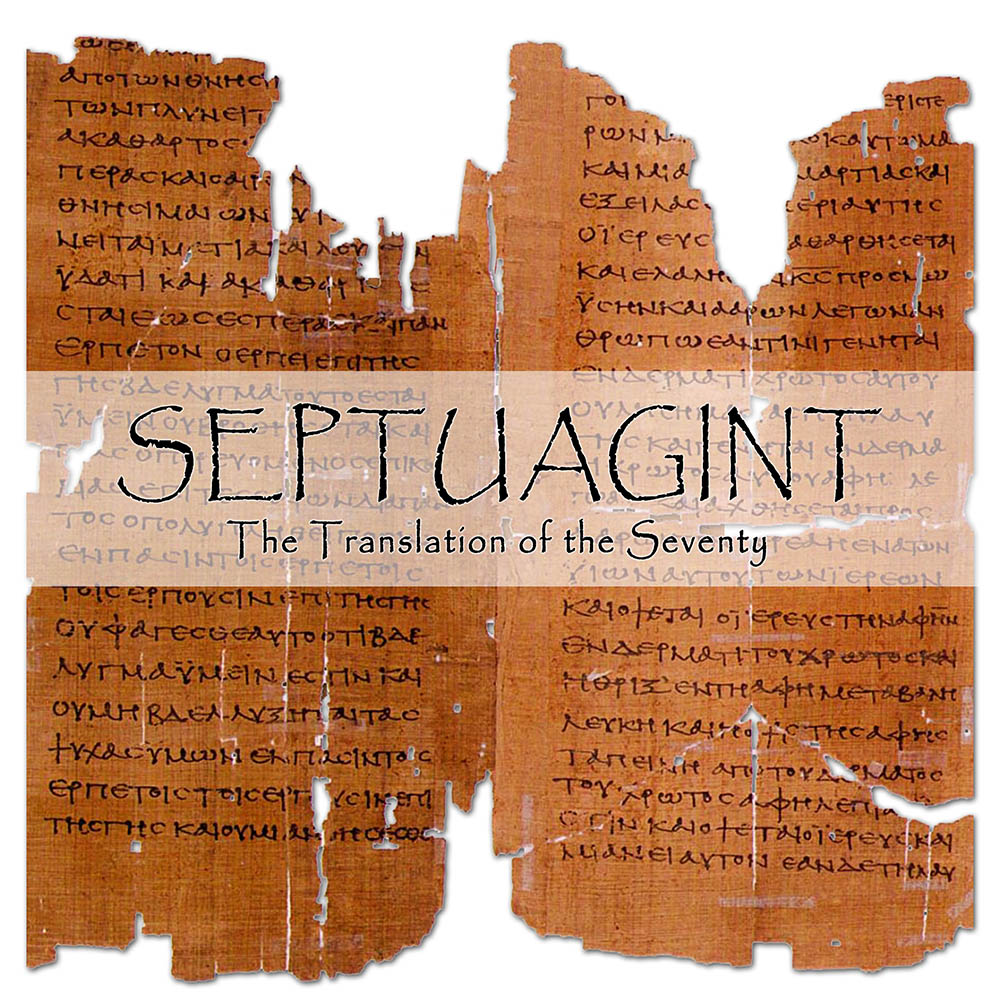
Here is a direct side-by-side comparison of the Masoretic Text with the LXX. I have concluded that the LXX is much to be preferred over the Masoretic Text, a position from which the Eastern Orthodox Church never deviated. Perhaps, if you take the time to read my comparisons and other articles, you will arrive at the same conclusion.
The Septuagint version I am using is the Lexham English Septuagint 2nd Edition, which is available in print or as part of Logos Bible Software. Occasionally I also use the Brenton translation of the LXX for insight into difficult passages.
If you want to know more, click on the following links.
- Why Christians Should Prefer the Septuagint over the Masoretic Text.
- Some Insights Gained through Comparing the Masoretic Text to the Septuagint
- More side by side comparisons of the Masoretic Text (MT) to the Septuagint (LXX).
| Septuagint | MT | Significance |
|
1 Lord, you were a place of refuge for us from generation to generation. 2 Before mountains were made and the earth and the inhabited world formed, and from eternity until eternity you are. Psalm 89:1–2 (LES2) |
1 LORD, You have been our dwelling place in all generations. 2 Before the mountains were brought forth, Or ever You had formed the earth and the world, Even from everlasting to everlasting, You are God. Psalm 90:1–2 (NKJV) |
The LXX uses “place of refuge” rather than the MT’s less descriptive “dwelling place.” The LXX adds “inhabited” to world and emphasizes God’s existence – “you are.” This seems to be the intended meaning of the tetragrammaton. |
|
3 Do not turn back humanity to lowliness. But you said, “Return, O sons of humans.” 4 For a thousand years in your eyes are as the day of yesterday that passed by and as a watch at night. 5 Their contempt will be years. In the morning may they pass by like grass. 6 In the morning may it blossom and pass away. In the evening may it fall away, be hardened and dried up. 7 For we came to an end at your anger, and at your wrath we were troubled. 8 You placed our lawlessnesses before you. Our eternity is in the illumination of your face. 9 For all our days came to an end, and at your anger we came to an end. Our years were meditated on like a spider’s web. Psalm 89:3–9 (LES2) |
3 You turn man to destruction, And say, “Return, O children of men.” 4 For a thousand years in Your sight Are like yesterday when it is past, And like a watch in the night. 5 You carry them away like a flood; They are like a sleep. In the morning they are like grass which grows up: 6 In the morning it flourishes and grows up; In the evening it is cut down and withers. 7 For we have been consumed by Your anger, And by Your wrath we are terrified. 8 You have set our iniquities before You, Our secret sins in the light of Your countenance. 9 For all our days have passed away in Your wrath; We finish our years like a sigh. Psalm 90:3–9 (NKJV) |
The LXX asks God not to return us to lowliness, humiliation, or spiritual abasement – Greek: tapeinosis. The MT uses the Hebrew word, dakka, which means contrite or crushed. The NASB translates that as “dust,” and the NKJV as “destruction.” The LXX prays that God NOT do this; whereas, the MT says that God does this. The LXX uses the phrase, “Their contempt will be years,” which is hard to understand. The MT continues the thought of the previous verse by using, “You carry them away like a flood. They are like sleep.” The MT sounds better, but the LXX is perhaps more authentic. It seems to me that the MT sometimes (often?) renders difficult passages in a way that makes them sound “better,” but in fact is unfaithful to the original text. I cannot prove this, but it appears that may be the case to me. The LXX says about the grass “May it,” but the MT uses the indicative, “It is…” Verse 8 has a tremendous variance. “Our eternity is in the illumination of your face” is nothing like “our secret sins in the light of your countenance.” The LXX gives insight into the psalmist’s view of eternity, the MT of judgment. Likewise, “Our years were meditated on like a spider’s web” is light years away from “We finish our years like a sigh.” Both emphasize life’s fragility and brevity, but “sigh” and “spider’s web” are so different. We have been programmed to think the MT is superior, but I do not accept that, since the LXX is the one the Holy Spirit chose to quote in the NT. |
|
10 The days of our years, in years are seventy years. But if in power they might be eighty years. Then even the majority of them are work and toil, because humility has come upon us, and we will be disciplined. Psalm 89:10 (LES2) |
10 The days of our lives are seventy years; And if by reason of strength they are eighty years, Yet their boast is only labor and sorrow; For it is soon cut off, and we fly away. Psalm 90:10 (NKJV) |
This verse is completely different. The LXX emphasizes the curse God placed upon humanity after the Fall – toil, and gives its purpose, to develop humility and discipline in our lives. The MT replaces that insight with our being “cut off” and “flying away.” One is not faithful to the original paleo-Hebrew. My personal experience in reading the LXX for the first time is that I feel as if I am getting to know King David and how he thought better, which is very refreshing. |