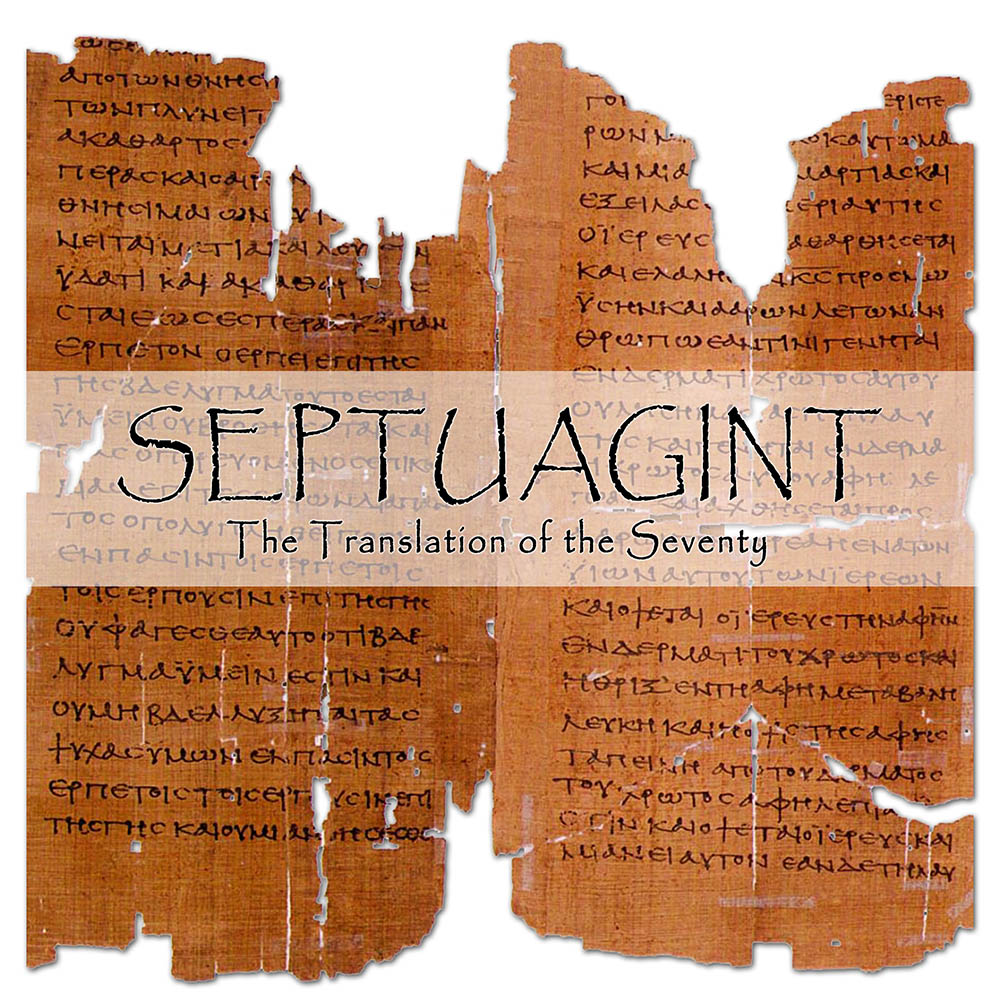
I hope you will journey with me in rediscovering the beauty of God’s Word in the Septuagint (LXX). In 285 BC, the LXX was translated from paleo-Hebrew by 70 Jewish translators into Greek, the language of most of the civilized world at that time. Due to its pre-Christ and pre-fall of Jerusalem date, the LXX cannot be accused of being influenced by any underlying animosity toward Christ or Christianity or desire to elevate Judaism’s claim to God’s blessings or the promised land. Most Christians believe the Masoretic Text (MT), upon which our English Old Testament is based, is written in the original Hebrew, but it too is a translation from the ancient and by then dead paleo-Hebrew Phoenician pictograph script into the modern Hebrew block script derived from Aramaic. The Masoretes completed it between 600 t0 1000 AD, by which time the Jews had become hostile to the Christian message, which shows up in various omissions, changes, and obfuscations of verses and passages that clearly point to Christ in the LXX.
Jesus taught us that all scripture points to him (John 5:39). As a rule, the Septuagint more clearly points to Jesus than does the MT.
In the West, Christians have not questioned the MT since Jerome chose it as the basis for his Latin Vulgate Old Testament. The Eastern Orthodox Church, to their credit, never deviated from the Septuagint, preserving it for later generations to rediscover. Because of the power of tradition, it is quite difficult for many of us in the West to think of the LXX as being more trustworthy than the MT, but I have found that a side-by-side comparison indicates otherwise.
In this series of articles, I have undertaken to illustrate the similarities and differences between the MT and LXX by examining various passages. Below is another example. The Septuagint version I am using is the Lexham English Septuagint 2nd Edition. It is available in print or digitally through Logos Bible Software. Occasionally I reference Brenton’s translation, which is a good one, but the English is somewhat dated.
| Masoretic Text | Septuagint | Significance |
|
1 “Sing, O barren, You who have not borne! Break forth into singing, and cry aloud, You who have not labored with child! For more are the children of the desolate Than the children of the married woman,” says the LORD. 2 “Enlarge the place of your tent, And let them stretch out the curtains of your dwellings; Do not spare; Lengthen your cords, And strengthen your stakes. 3 For you shall expand to the right and to the left, And your descendants will inherit the nations, And make the desolate cities inhabited. Isaiah 54:1–3 (NKJV) |
1 Be cheerful, O barren one who does not father! Break forth and cry aloud, you who are not in labor, because the children of the deserted woman will be more than those of the woman who has a husband, for the Lord has said it. 2 Enlarge the place of your tent and of your curtains; pitch it, do not spare; lengthen your borders and strengthen your tent pegs! 3 Spread out your dwellings even to the right and the left, and your seed will inherit nations, and you will settle wasted cities. Isaiah 54:1–3 (LES2) |
The LXX says the barren one should be cheerful. Since this is a woman, “father” is an odd choice of words, when the Greek word “tikto” means to bring forth, bear , or produce. The context is child birth; so, I prefer the LXX’s “break forth and cry aloud.” I also prefer the LXX’s use of the present tense, which seems to fit better. The use of the word “husband” by the LXX fits better with what follows, rather than using “married woman.” The use of “lengthen your borders [portion or allotment]” in the LXX has more meaning than the MT’s “lengthen your cords.” The middle part of verse three requires us to decide if “seed” (singular) refers to natural Israel or to Jesus. The natural descendants of Abraham were promised a land located in Canaan, but Jesus, the Messiah, was specifically told he would inherit the nations. 6 “But I was appointed by him in Mount Zion, his holy place, 7 announcing the ordinance of the Lord. The Lord said to me, ‘You are my son; today I have fathered you. 8 Ask from me, and I will give to you the nations as your inheritance, and as your possession the ends of the earth. Psalm 2:6–8 (LES2) The church is included in this promise since we are “in Christ” can will co-rule with him at the end. (2 Timothy 2:12) 26 ‘He who overcomes, and he who keeps My deeds until the end, TO HIM I WILL GIVE AUTHORITY OVER THE NATIONS; 27 AND HE SHALL RULE THEM WITH A ROD OF IRON, AS THE VESSELS OF THE POTTER ARE BROKEN TO PIECES, as I also have received authority from My Father; 28 and I will give him the morning star. 29 ‘He who has an ear, let him hear what the Spirit says to the churches.’ Revelation 2:26–29 (NASB95) As I have written elsewhere, this cannot apply to the modern nation of Israel because the natural man cannot inherit the kingdom of God. The natural nation of Israel will not receive what is promised to the “Israel of God,” the one new man in Christ. The church has spread all over the world since Pentecost and inhabits desolate cities bringing new life to the inhabitants through the gospel. |
|
4 “Do not fear, for you will not be ashamed; Neither be disgraced, for you will not be put to shame; For you will forget the shame of your youth, And will not remember the reproach of your widowhood anymore. 5 For your Maker is your husband, The LORD of hosts is His name; And your Redeemer is the Holy One of Israel; He is called the God of the whole earth. 6 For the LORD has called you Like a woman forsaken and grieved in spirit, Like a youthful wife when you were refused,” Says your God. Isaiah 54:4–6 (NKJV) |
4 Do not be frightened because you were disgraced or feel shame because you were reviled, because you will forget the eternal shame and will not remember the reproach of your widowhood. 5 For the Lord who made you—the Lord Sabaoth is his name—and the God of Israel himself is the one who rescues you; so will he be called in all the earth. 6 “The Lord has called you not like an abandoned and discouraged woman or like a woman who was hated from her youth,” said your God. Isaiah 54:4–6 (LES2) |
This passage highlights some of the differences between the MT and LXX that appear very often, particularly the difference in the tenses of the verbs. The MT tells the barren, desolate woman not to fear for she will not be ashamed. From the context we know that she has already experienced the shame of abandonment and barrenness. The LXX says it better by telling her not to be frightened because she has already experienced the shame and disgrace of her widowhood. Fear would have been real because society then depended on the family for support for the aged. A childless widow would likely have been in real trouble, unless other family members came to her aid. Both the MT and LXX say this woman will no longer remember this shame for the Lord himself will rescue her. Interestingly, the MT says she was called “like a woman forsaken,” but the LXX says the Lord has called her “not like an abandoned and discouraged woman.” In the LXX, her abandonment is a thing of the past. The Lord is calling her to a new identity. We are required to try to try to identify this formerly abandoned woman. Is it Israel or another woman, perhaps the Bride of Christ? We know from other scriptures that the Gentile nations, who were not a people, in Christ are called God’s people. 9 But you are A CHOSEN RACE, A royal PRIESTHOOD, A HOLY NATION, A PEOPLE FOR God’s OWN POSSESSION, so that you may proclaim the excellencies of Him who has called you out of darkness into His marvelous light; 10 for you once were NOT A PEOPLE, but now you are THE PEOPLE OF GOD; you had NOT RECEIVED MERCY, but now you have RECEIVED MERCY. 1 Peter 2:9–10 (NASB95) Peter’s quote is from Hosea 2:23, which Paul quotes in his letter to the Romans. 23 and that He might make known the riches of His glory on the vessels of mercy, which He had prepared beforehand for glory, 24 even us whom He called, not of the Jews only, but also of the Gentiles? 25 As He says also in Hosea: “I will call them My people, who were not My people, And her beloved, who was not beloved.” Romans 9:23–25 (NKJV) Ultimately, the Jewish people were cast aside for their rejection of the Messiah and the kingdom was given to the church, the Israel of God, the one new man in Christ composed of born again Jews and Gentiles, just as Jesus said would happen. (Matthew 21:43) |
|
7 “For a mere moment I have forsaken you, But with great mercies I will gather you. 8 With a little wrath I hid My face from you for a moment; But with everlasting kindness I will have mercy on you,” Says the LORD, your Redeemer. 9 “For this is like the waters of Noah to Me; For as I have sworn That the waters of Noah would no longer cover the earth, So have I sworn That I would not be angry with you, nor rebuke you. 10 For the mountains shall depart And the hills be removed, But My kindness shall not depart from you, Nor shall My covenant of peace be removed,” Says the LORD, who has mercy on you. Isaiah 54:7–10 (NKJV) |
7 “I abandoned you for a little time, and I will show mercy to you with great mercy. 8 I turned my face back from you with a little wrath, but I will show mercy to you with eternal mercy,” said the Lord who rescues you. 9 “Since the water that was at the time of Noah, this is my oath, just as I swore to him at that time: to be no longer angry at the earth over you; nor in your terror 10 to remove the mountains; nor will your hills be moved away. So neither will my compassion for you come to an end, and the covenant of your peace will certainly not depart, for he has said, ‘Mercy be with you, Lord.’ Isaiah 54:7–10 (LES2) |
All people have experienced a time of God’s turning away due to the sin of Adam which has reproduced itself in every successive generation. God’s anger against sin burned against the entire earth in the time of Noah, resulting in his sending a flood as judgment. But in his mercy, God saved a remnant, Noah’s family. Even now, God’s anger against sin continues, but for those who put their faith in Christ, who took that righteous indignation upon himself at the cross, we experience God’s mercy, which will never end. The MT says in verse ten that the “mountains shall depart,” but the LXX says that he will NOT remove the mountains. The certainty of his everlasting covenant is compared to the stability of the mountains. 1 Those who trust in the Lord are like the mountain of Zion. The one who inhabits Jerusalem will not be shaken for eternity. 2 Mountains are in a circle around it, and the Lord is in a circle around his people, from now and until eternity. Psalm 124:1–2 (LES2) |
|
11 “O you afflicted one, Tossed with tempest, and not comforted, Behold, I will lay your stones with colorful gems, And lay your foundations with sapphires. 12 I will make your pinnacles of rubies, Your gates of crystal, And all your walls of precious stones. Isaiah 54:11–12 (NKJV) |
11 “Low and unsettled one, you have not been comforted. Look! I am preparing a ruby for you as your stone and sapphire as your foundations, 12 and I will make your bulwarks jasper, and your gates stones of crystal, and your wall choice stones. Isaiah 54:11–12 (LES2) |
This must be a promise to the church, the Israel of God, because the setting is heaven, where the foundation or floor, which is the firmament, is made of a sapphire-like pavement. The New Jerusalem, which descends from heaven, is described in a similar fashion. 9 Then one of the seven angels who had the seven bowls filled with the seven last plagues came to me and talked with me, saying, “Come, I will show you the bride, the Lamb’s wife.” 10 And he carried me away in the Spirit to a great and high mountain, and showed me the great city, the holy Jerusalem, descending out of heaven from God, 11 having the glory of God. Her light was like a most precious stone, like a jasper stone, clear as crystal. Revelation 21:9–11 (NKJV) After leaving heaven, this New Jerusalem would no longer have a foundation of sapphire, but would be set upon the recreated earth. |
|
13 All your children shall be taught by the LORD, And great shall be the peace of your children. Isaiah 54:13 (NKJV) |
13 And all your sons will be instructed by God, and your children will live in great peace. Isaiah 54:13 (LES2) |
In the New Covenant, everyone is personally instructed by God to know him. 11 None of them shall teach his neighbor, and none his brother, saying, ‘Know the LORD,’ for all shall know Me, from the least of them to the greatest of them. 12 For I will be merciful to their unrighteousness, and their sins and their lawless deeds I will remember no more.” 13 In that He says, “A new covenant,” He has made the first obsolete. Now what is becoming obsolete and growing old is ready to vanish away. Hebrews 8:11–13 (NKJV) The promise is to “you,” which is singular, which must refer to the church, from whom all believers are related through the new birth as a result of hearing and believing the gospel. We receive God’s peace through being justified by faith in Christ. Romans 5:1 |
|
14 In righteousness you shall be established; You shall be far from oppression, for you shall not fear; And from terror, for it shall not come near you. 15 Indeed they shall surely assemble, but not because of Me. Whoever assembles against you shall fall for your sake. Isaiah 54:14–15 (NKJV) |
14 You will be built up in righteousness. Abstain from an unjust person, and you will not be frightened, and trembling will not approach you. 15 Look! Strangers will come to you through me and will dwell beside you and flee to you for refuge. Isaiah 54:14–15 (LES2) |
What a difference here! The MT says, “You shall be far from oppression,” but the LXX says, “Abstain or put off an unjust person.” Both promise that the “you” will not be frightened. Once again, I think this must refer to the church, not natural Israel, who cannot inherit the kingdom of God any more than our physical bodies can. (1 Corinthians 15:50) It is only through the new birth and resurrection that this is possible. Since this is so, the LXX makes more sense to me. Rather than being a promise that enemies will fall for our sake, the LXX says that “strangers,” those outside God’s New Covenant, will be drawn to Christ and the church and find refuge. 11 Therefore remember that you, once Gentiles in the flesh—who are called Uncircumcision by what is called the Circumcision made in the flesh by hands—12 that at that time you were without Christ, being aliens from the commonwealth of Israel and strangers from the covenants of promise, having no hope and without God in the world. 13 But now in Christ Jesus you who once were far off have been brought near by the blood of Christ. Ephesians 2:11–13 (NKJV) |
|
16 “Behold, I have created the blacksmith Who blows the coals in the fire, Who brings forth an instrument for his work; And I have created the spoiler to destroy. 17 No weapon formed against you shall prosper, And every tongue which rises against you in judgment You shall condemn. This is the heritage of the servants of the LORD, And their righteousness is from Me,” Says the LORD. Isaiah 54:16–17 (NKJV) |
16 Look! I created you, not like a coppersmith blowing on coals and bringing forth a vessel fit for work; but I did not create you for destruction to destroy you. 17 I will not prosper any artificial vessel against you, and every voice will rise up against you in judgment. You will overcome all of them, and they will be subject to you in it. There is an inheritance for those who attend the Lord, and you will be my righteous ones,” says the Lord. Isaiah 54:16–17 (LES2) |
What a divergence! The MT focuses on Israel’s enemies and promises she will defeat them. The LXX focuses on the church and his promise that she was not created for destruction. Both promise that weapons formed against us will not succeed, nor will condemning voices. Jesus promised both of these things to the church. 18 And He said to them, “I saw Satan fall like lightning from heaven. 19 Behold, I give you the authority to trample on serpents and scorpions, and over all the power of the enemy, and nothing shall by any means hurt you. 20 Nevertheless do not rejoice in this, that the spirits are subject to you, but rather rejoice because your names are written in heaven.” Luke 10:18–20 (NKJV) 24 “Most assuredly, I say to you, he who hears My word and believes in Him who sent Me has everlasting life, and shall not come into judgment, but has passed from death into life. John 5:24 (NKJV) God’s protection and the authority he gives us cannot compare to the inheritance that awaits us in heaven, to which the LXX refers. Our inheritance is not the blessing of protection, as indicated in the MT, but our heavenly reward, which will be for God’s righteous ones, those justified by faith in Christ. |
Conclusion
If you want to know more about why Christians should prefer the Septuagint to the MT, click on this link. In another article, I share some of the things I have so far learned by making this comparison. As for me, I now prefer the LXX. It was Paul’s and the other apostles’ standard for Old Covenant truth, was used by synagogues in Jesus’s day, and is most often quoted in the New Testament. That makes it good enough for me.