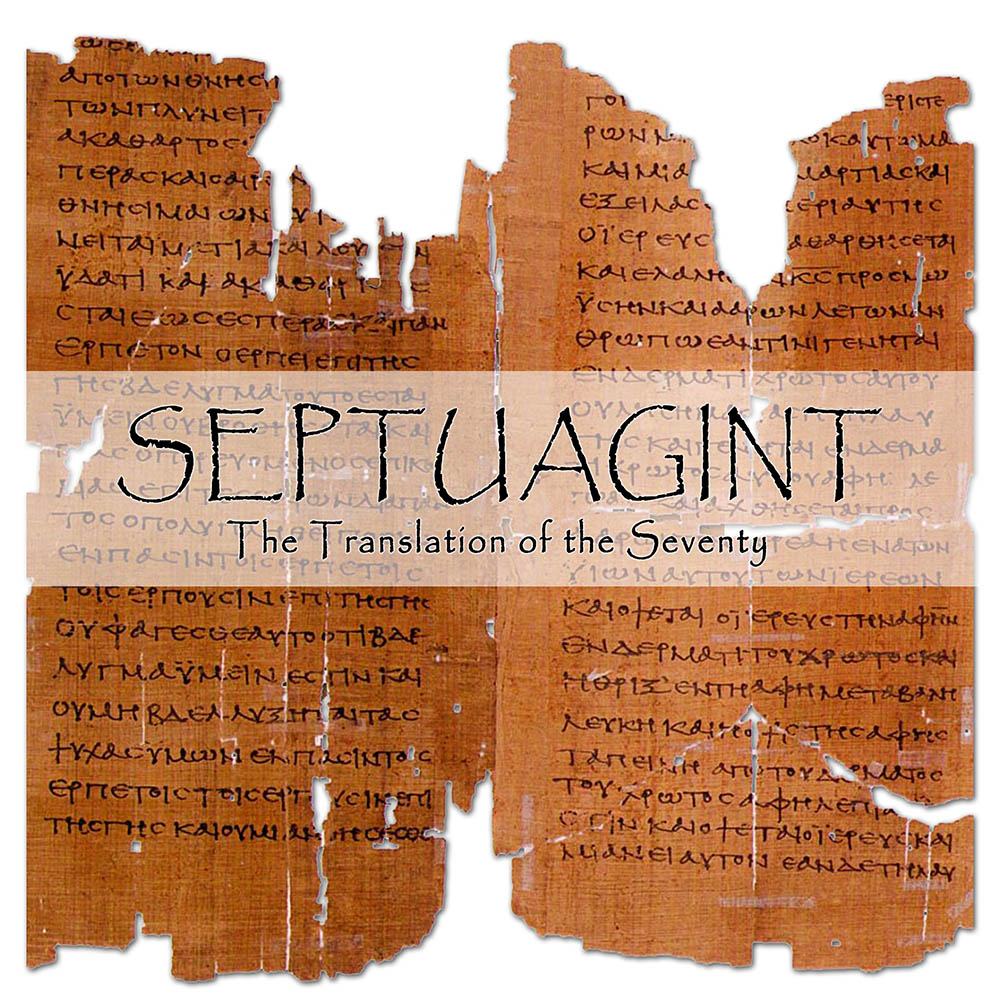
Here is a direct side-by-side comparison of the Masoretic Text with the LXX. I have concluded that the LXX is much to be preferred over the Masoretic Text, a position from which the Eastern Orthodox Church never deviated. Perhaps, if you take the time to read my comparisons and other articles, you will arrive at the same conclusion.
The Septuagint version I am using is the Lexham English Septuagint 2nd Edition, which is available in print or as part of Logos Bible Software. Occasionally I also use the Brenton translation of the LXX for insight into difficult passages.
If you want to know more, click on the following links.
- Why Christians Should Prefer the Septuagint over the Masoretic Text.
- Some Insights Gained through Comparing the Masoretic Text to the Septuagint
- More side by side comparisons of the Masoretic Text (MT) to the Septuagint (LXX).
| Masoretic Text | Septuagint | Significance |
|
1 I will extol You, O LORD, for You have lifted me up, And have not let my enemies rejoice over me. 2 O LORD my God, I cried to You for help, and You healed me. 3 O LORD, You have brought up my soul from Sheol; You have kept me alive, that I would not go down to the pit. Psalm 30:1–3 (NASB95) |
2 I lift you up, O Lord, because you answered me and did not make my enemies cheerful over me. 3 O Lord, my God, I cried aloud to you, and you healed me. 4 O Lord, you brought my soul up from Hades; you saved me from the ones who are going down into the pit. Psalm 29:2–4 (LES2) |
In verse 1/2, the LXX could be translated, “I lift you up because you lifted me.” In verse 3/4, the LXX differs. Instead of keeping David out of the pit, God saved him from the ones going to the pit. |
|
4 Sing praise to the LORD, you His godly ones, And give thanks to His holy name. 5 For His anger is but for a moment, His favor is for a lifetime; Weeping may last for the night, But a shout of joy comes in the morning. Psalm 30:4–5 (NASB95) |
5 Sing to the Lord, O his holy ones, and give thanks to the memory of his holiness, 6 because his wrath is in his anger, and life is in his will. Weeping will find lodging in the evening, and in the morning there will be great joy. Psalm 29:5–6 (LES2) |
In verse 4/5, the LXX says to “give thanks to the memory of his holiness,” which differs from the MT. In the next verse, the MT says his anger is but for a moment, but the LXX says that his wrath in in his anger. |
|
6 Now as for me, I said in my prosperity, “I will never be moved.” 7 O LORD, by Your favor You have made my mountain to stand strong; You hid Your face, I was dismayed. Psalm 30:6–7 (NASB95) |
7 But I said in my prosperity, “I will not be shaken for eternity.” 8 O Lord, in your will provide power for my beauty. And you turned away your face, and I became troubled. Psalm 29:7–8 (LES2) |
Verse 7/8 do not agree in the first part. Everything else in the passage does. |
|
8 To You, O LORD, I called, And to the Lord I made supplication: 9 “What profit is there in my blood, if I go down to the pit? Will the dust praise You? Will it declare Your faithfulness? 10 “Hear, O LORD, and be gracious to me; O LORD, be my helper.” Psalm 30:8–10 (NASB95) |
9 To you, O Lord, I will cry aloud, and to my God I will pray. 10 What use is there in my blood when I go down into destruction? Will dust give thanks to you or confess your truth? 11 The Lord heard and showed mercy upon me. The Lord became my helper. Psalm 29:9–11 (LES2) |
The MT puts David’s call upon the Lord in the past, but the LXX makes it David’s plan for the future. In verse 10/11, in the MT David uses an imperative, but in the LXX David uses a past tense. |
|
11 You have turned for me my mourning into dancing; You have loosed my sackcloth and girded me with gladness, 12 That my soul may sing praise to You and not be silent. O LORD my God, I will give thanks to You forever. Psalm 30:11–12 (NASB95) |
12 You turned my mourning into joy for me. You broke through my sackcloth, and you girded me with cheer, 13 that my glory would sing psalms to you, and never ever would I be pained. O Lord, my God, I will give thanks to you for eternity. Psalm 29:12–13 (LES2) |
In verse 12/13, the MT uses the word “soul,” but the LXX uses “glory,” which I understand to be the recreated spirit, which Paul says has already been glorified. (Romans 8:30) The MT says, “and not be silent,” but the LXX says, “and never ever [double negative makes it stronger] be pained [literally pierced].” Brenton translates it “never be pierced by pain.” Perhaps David knew by revelation that his death would not come by the sword, or maybe he was prophetically referring to Christ’s being pierced so that he would not be. (Psalm 22:16) Whatever the case, it warrants praise to God for eternity. |
Summary: I have said before that the MT, at its best, wounds us by inflicting a thousand little cuts – changed verb tenses, omissions, additions, etc. It also contains some very disturbing changes, as we have seen. This psalm is an example of small cuts. The changes are relatively minor, unless we remember God’s admonition that no one should dare tamper with his Word (Deuteronomy 12:32). We know from Jesus that the Jewish leaders, even in his day, were willing to nullify God’s Word with their tradition (Mark 7:13). Barry Setterfield and Daniel Gruber reveal how Rabbi Akiva and his followers considered rabbinic authority to trump God’s Word. In the aftermath of the horrors inflicted upon the Jews in 70 AD and 135 AD and the rise of Christianity, which used the LXX to defend its claims, it is no great surprise that the Masoretic Text was used to fight against Christianity by altering the source book for their messianic claims regarding Jesus. We can still find Jesus in the MT, but the clarity and beauty of the LXX’s testimony to our Lord was destroyed. Oh, that the church would wake up and recover this marvelous testimony.