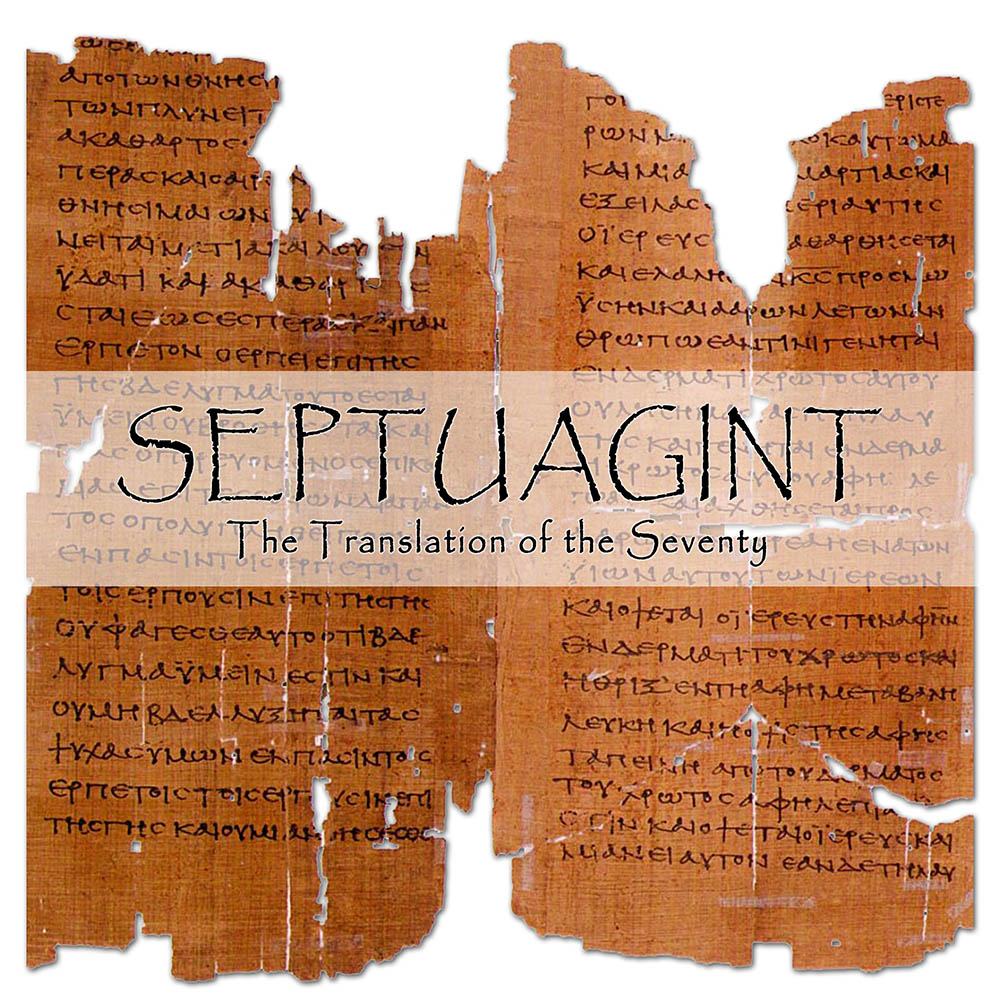
Here is a direct side-by-side comparison of the Masoretic Text with the LXX. I have concluded that the LXX is much to be preferred over the Masoretic Text, a position from which the Eastern Orthodox Church never deviated. Perhaps, if you take the time to read my comparisons and other articles, you will arrive at the same conclusion.
The Septuagint version I am using is the Lexham English Septuagint 2nd Edition, which is available in print or as part of Logos Bible Software. Occasionally I also use the Brenton translation of the LXX for insight into difficult passages.
If you want to know more, click on the following links.
- Why Christians Should Prefer the Septuagint over the Masoretic Text.
- Some Insights Gained through Comparing the Masoretic Text to the Septuagint
- More side by side comparisons of the Masoretic Text (MT) to the Septuagint (LXX).
| Masoretic Text | Septuagint | Significance |
|
1 To You, O LORD, I call; My rock, do not be deaf to me, For if You are silent to me, I will become like those who go down to the pit. 2 Hear the voice of my supplications when I cry to You for help, When I lift up my hands toward Your holy sanctuary. Psalm 28:1–2 (NASB95) |
1 To you, O Lord, I cried out. O my God, do not pass in silence over me, lest you pass in silence over me, and I will be like those who go down into the pit. 2 Give ear to the voice of my supplication when I pray to you, when I raise up my hands to your holy temple. Psalm 27:1–2 (LES2) |
The MT adds “My Rock” to the text. The LXX uses the phrase “do not pass over me in silence” where the MT says “do not be deaf to me.” The meaning is the same, but the picture in the LXX has more depth of meaning, in my opinion. |
|
3 Do not drag me away with the wicked And with those who work iniquity, Who speak peace with their neighbors, While evil is in their hearts. 4 Requite them according to their work and according to the evil of their practices; Requite them according to the deeds of their hands; Repay them their recompense. 5 Because they do not regard the works of the LORD Nor the deeds of His hands, He will tear them down and not build them up. Psalm 28:3–5 (NASB95) |
3 Do not draw together my soul with sinners and with those working injustice. Do not destroy me together with the ones who speak peace with their neighbor but have evil things in their hearts. 4 Give to them according to their works and according to the wickedness of their practices. Give to them according to the works of their hands. Repay their recompense to them, 5 because they did not have understanding into the works of the Lord and into the works of his hands. You will destroy them, and you will never build them up. Psalm 27:3–5 (LES2) |
The MT omits “do not destroy” in verse 3. The rest of the passage agrees. Interestingly, the LXX has David saying to God, “You will never destroy them, and you will never build them up.” He is having a conversation with God that the MT turns into a mere declaration of fact. |
|
6 Blessed be the LORD, Because He has heard the voice of my supplication. 7 The LORD is my strength and my shield; My heart trusts in Him, and I am helped; Therefore my heart exults, And with my song I shall thank Him. 8 The LORD is their strength, And He is a saving defense to His anointed. 9 Save Your people and bless Your inheritance; Be their shepherd also, and carry them forever. Psalm 28:6–9 (NASB95) |
6 Blessed is the Lord, because he heard the voice of my supplication. 7 The Lord is my helper and my protector. My heart hoped in him, and I was helped, and my flesh was refreshed; and from my will I will give thanks to him. 8 The Lord is the strength of his people and the protector of the salvation of his anointed one. 9 Save your people, and bless your inheritance. Shepherd them, and magnify them until eternity. Psalm 27:6–9 (LES2) |
The MT calls God our “strength,” but the LXX uses the word meaning “helper,” a clear connection to the Holy Spirit as revealed by Jesus in the New Testament. (John 14:16) The MT says, “My heart trusts in him and I am helped;” whereas, the LXX says, “I was helped.” David was reflecting on God’s past faithfulness, which, inspires faith in the present. The MT says, “Therefore my heart exults,” but the LXX says, “my flesh was refreshed.” The MT says, “with my song I will thank him,” but the LXX says, “from my will I will give thanks to him.” The rest of the passage is in general agreement. The Greek word translated “magnify” means to carry. |
Summary: The psalm essentially agrees with a few relatively minor differences.