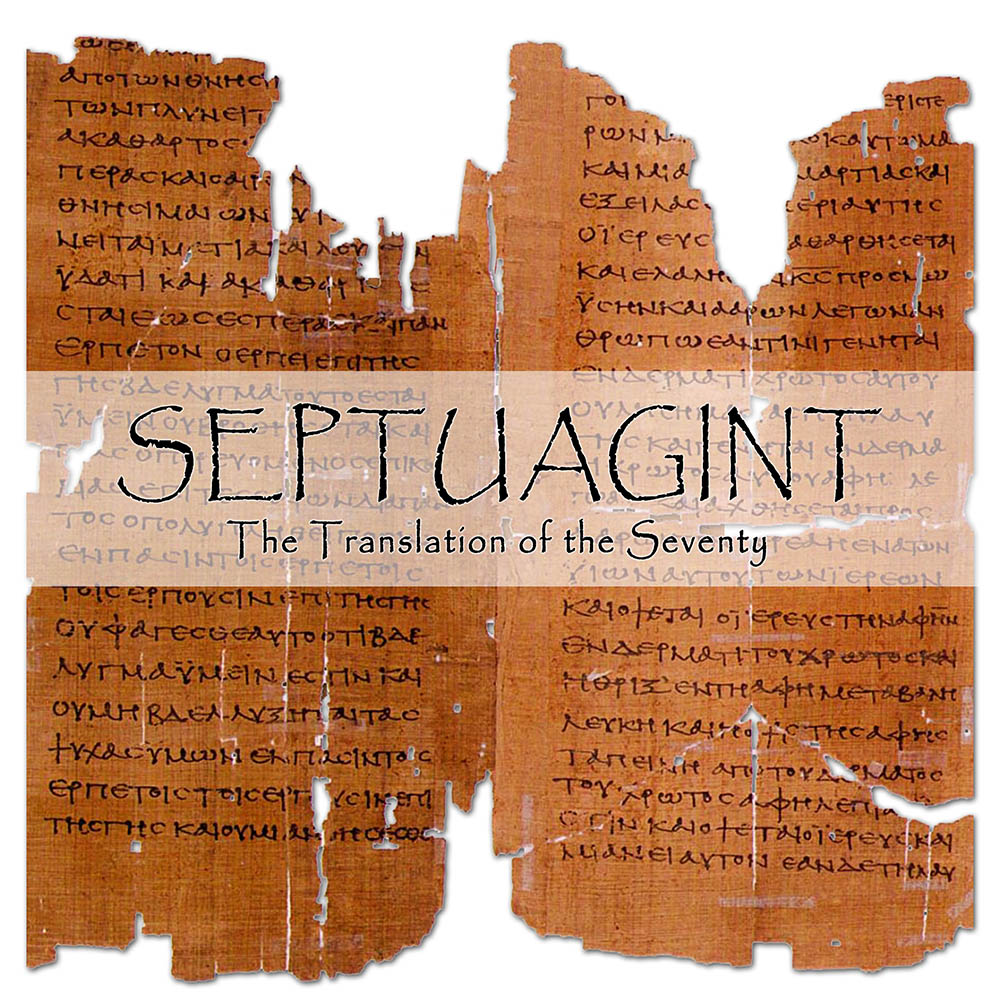
Here is a direct side-by-side comparison of the Masoretic Text with the LXX. I have concluded that the LXX is much to be preferred over the Masoretic Text, a position from which the Eastern Orthodox Church never deviated. Perhaps, if you take the time to read my comparisons and other articles, you will arrive at the same conclusion.
The Septuagint version I am using is the Lexham English Septuagint 2nd Edition, which is available in print or as part of Logos Bible Software. Occasionally I also use the Brenton translation of the LXX for insight into difficult passages.
If you want to know more, click on the following links.
- Why Christians Should Prefer the Septuagint over the Masoretic Text.
- Some Insights Gained through Comparing the Masoretic Text to the Septuagint
- More side by side comparisons of the Masoretic Text (MT) to the Septuagint (LXX).
| Masoretic Text | Septuagint | Significance |
|
1 The king shall have joy in Your strength, O LORD; And in Your salvation how greatly shall he rejoice! 2 You have given him his heart’s desire, And have not withheld the request of his lips. Selah Psalm 21:1–2 (NKJV) |
2 O Lord, the king will be cheerful in your power, and for your salvation he will rejoice very much. 3 You gave to him the desire of his soul, and the petition of his lips you have not deprived him. Psalm 20:2–3 (LES2) |
These passages agree as I wish the entire Old Testament did. |
|
3 For You meet him with the blessings of goodness; You set a crown of pure gold upon his head. 4 He asked life from You, and You gave it to him— Length of days forever and ever. Psalm 21:3–4 (NKJV) |
4 For you came near to him with blessings of kindness; you set upon his head a crown made from costly stone. 5 He asked you for life, and you gave him length of days for eternity of eternity. Psalm 20:4–5 (LES2) |
The only real difference here is the MT says the crown was of gold, but the LXX said it was made from costly stone. It seems that the last part of verse 4/5 may apply to the Lord Jesus. |
|
5 His glory is great in Your salvation; Honor and majesty You have placed upon him. 6 For You have made him most blessed forever; You have made him exceedingly glad with Your presence. Psalm 21:5–6 (NKJV) |
6 Great is his glory with your salvation; you will place upon him glory and magnificence, 7 because you will give him blessing for eternity of eternity; you will make him cheerful in joy with your face. Psalm 20:6–7 (LES2) |
This passage seems to point to Jesus, too. Only the Lord deserves to be crowned with glory and magnificence. |
|
7 For the king trusts in the LORD, And through the mercy of the Most High he shall not be moved. 8 Your hand will find all Your enemies; Your right hand will find those who hate You. 9 You shall make them as a fiery oven in the time of Your anger; The LORD shall swallow them up in His wrath, And the fire shall devour them. Psalm 21:7–9 (NKJV) |
8 For the king hopes upon the Lord, and in the mercy of the Most High he will not be shaken. 9 May your hand be found against all your enemies. May your right hand find all those who are hating you. 10 You will set them as an oven of fire for the time of your face, O Lord. With your wrath you will confound them, and fire will devour them. Psalm 20:8–10 (LES2) |
In this passage a few of the words are different. The MT says God will punish his enemies in the time of his anger, but the LXX says “in the time of your face [or presence].” The MT says the Lord will “swallow them up,” but the LXX says he will “confound them.” |
|
10 Their offspring You shall destroy from the earth, And their descendants from among the sons of men. 11 For they intended evil against You; They devised a plot which they are not able to perform. 12 Therefore You will make them turn their back; You will make ready Your arrows on Your string toward their faces. Psalm 21:10–12 (NKJV) |
11 You will destroy their fruit from the earth, and their seed from the sons of humans, 12 because they inclined evil things against you; they devised a will that they were not able to establish. 13 For you will set them back with your remnant. You will prepare their face. Psalm 20:11–13 (LES2) |
The MT says God will destroy their “offspring,” but the Hebrew word means “fruit,” which agrees with the LXX. The MT’s “descendants” in Hebrew is “seed,” which agrees with the LXX. Verse 12/13 is quite interesting. The MT says, “You will make them turn their back,” but the LXX says, “For you will set them back with your remnant.” This reminds me of Paul’s words. 20 And the God of peace will crush Satan under your feet shortly. The grace of our Lord Jesus Christ be with you. Amen. Romans 16:20 (NKJV) God always saves and uses a remnant, as with Gideon. (Judges 7) In the last part of verse 12/13, the LXX says, “You will prepare their face,” but the MT seems to add word to try to make sense of the sentence. |
|
13 Be exalted, O LORD, in Your own strength! We will sing and praise Your power. Psalm 21:13 (NKJV) |
14 Be lifted high, O Lord, with your power. We will sing and make psalms of your sovereign powerful acts. Psalm 20:14 (LES2) |
This verse shows little difference. |
Summary: Here is a psalm that points to Christ. In this case, the MT and LXX largely agree, except in a few places, especially in verse 12/13, which I believe points to the role of the church in the last days, as I showed.