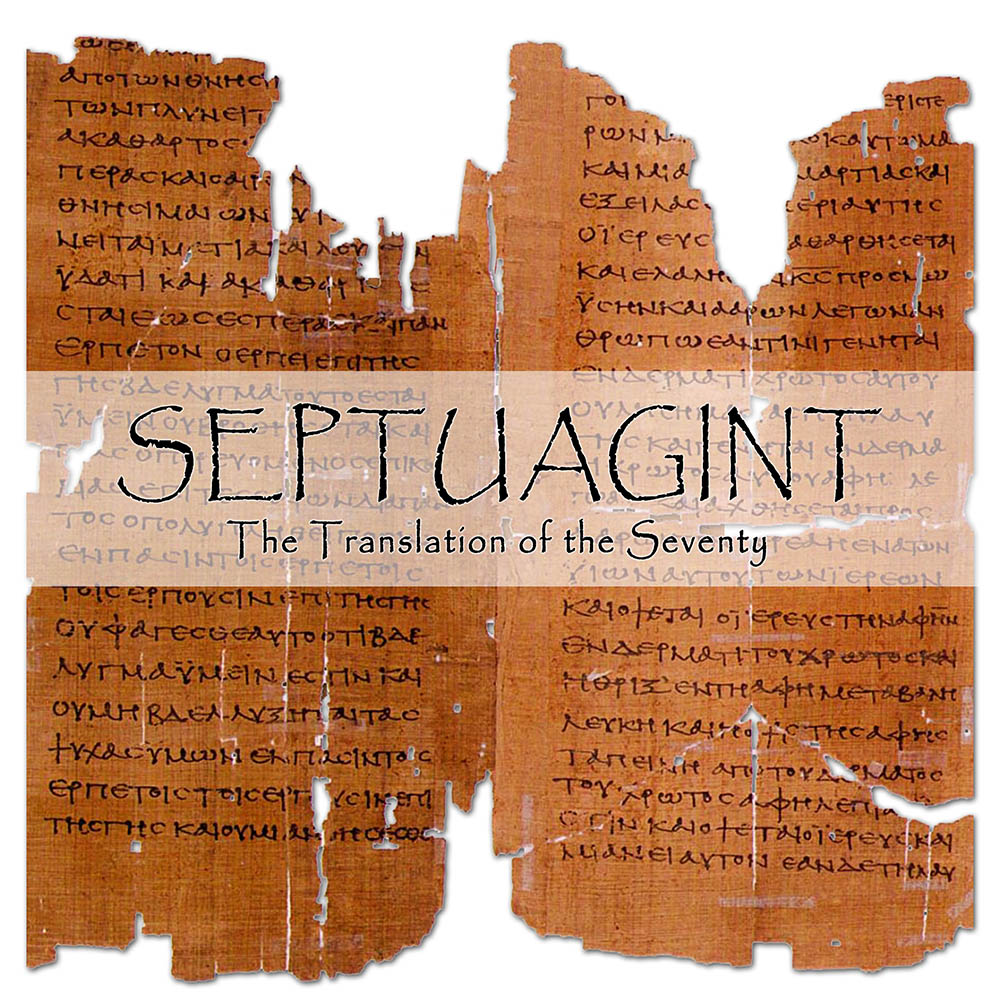
Here is a direct side-by-side comparison of the Masoretic Text with the LXX. I have concluded that the LXX is much to be preferred over the Masoretic Text, a position from which the Eastern Orthodox Church never deviated. Perhaps, if you take the time to read my comparisons and other articles, you will arrive at the same conclusion.
The Septuagint version I am using is the Lexham English Septuagint 2nd Edition, which is available in print or as part of Logos Bible Software. Occasionally I also use the Brenton translation of the LXX for insight into difficult passages.
If you want to know more, click on the following links.
- Why Christians Should Prefer the Septuagint over the Masoretic Text.
- Some Insights Gained through Comparing the Masoretic Text to the Septuagint
- More side by side comparisons of the Masoretic Text (MT) to the Septuagint (LXX).
| Masoretic Text | Septuagint | Significance |
|
25 “Did you offer Me sacrifices and offerings In the wilderness forty years, O house of Israel? 26 You also carried Sikkuth your king And Chiun, your idols, The star of your gods, Which you made for yourselves. 27 Therefore I will send you into captivity beyond Damascus,” Says the LORD, whose name is the God of hosts. Amos 5:25–27 (NKJV) |
25 Did you bring me offerings and sacrifices in the wilderness forty years, O house of Israel? 26 And you took along the tent of Molech and the star of your god Kaiwan, the images of them that you made for yourselves. 27 So I will resettle you beyond Damascus,” says the Lord; the Almighty God is his name. Amos 5:25–27 (LES2) |
This passage from Amos is quoted by Stephen in his last sermon before being stoned to death by the Jews. It calls to mind Israel’s inveterate idolatry which goes all the way back to Abraham’s day and was on display during the wilderness wandering and throughout their history. Stephen used this particular passage from Amos to indict his listeners for their spiritual adultery and habitual resistance of the Holy Spirit, which continues to this day. Before introducing the NT quote, I will do a comparison between the MT and LXX. Then we will see how Stephen’s quote compares and contrasts. Verse 25 contains little or no differences. In verse 26, however, MT says Israel “carried Sikkuth your King,” but the LXX says, they “took along the tent of Molech.” Sikkuth referred to an obscure Babylonian god named Sakkut. The LXX, which was translated from the paleo-Hebrew centuries before the MT came into being, says the false god was Molech, for which the Israelites even had a tent. The next idol mentioned in the MT is Chiun, with which the star is associated. Chiun was another name for the astral deity called Saturn, whose star was a hexagon. Today this star is on the Israeli flag and has been euphemistically renamed the star of David. The LXX calls this god Kaiwan, which is an alternate spelling, and it makes the direct link to the star. In the MT, verse 27 says that Israel, the northern kingdom, will be sent into captivity beyond Damascus, which referred to Assyria. The LXX says they will be resettled there. |
|
25 “Did you offer Me sacrifices and offerings In the wilderness forty years, O house of Israel? 26 You also carried Sikkuth your king And Chiun, your idols, The star of your gods, Which you made for yourselves. 27 Therefore I will send you into captivity beyond Damascus,” Says the LORD, whose name is the God of hosts. Amos 5:25–27 (NKJV) |
25 Did you bring me (prosphero) offerings (sphagion) and sacrifices (thusia) in the wilderness forty years, O house of Israel? 26 And you took along (analambano) the tent (skene) of Molech and the star (astron) of your god Kaiwan, the images (tupos) of them that you made (poieo) for yourselves. 27 So I will resettle (metoikizo) you beyond (epekeina) Damascus,” says the Lord; the Almighty God is his name. Amos 5:25–27 (LES2) |
Below is Stephen’s quote from Acts. I underlined the part that is from Amos and inserted the Greek words in parenthesis in both the LXX and NT quote. 42 Then God turned and gave them up to worship the host of heaven, as it is written in the book of the Prophets: ‘Did you offer (prosphero) Me slaughtered animals (sphagion) and sacrifices (thusia) during forty years in the wilderness, O house of Israel? 43 You also took up (analambano) the tabernacle (skene) of Moloch, And the star (astron) of your god Remphan, Images (tupos) which you made (poieo) to worship (proskuneo); And I will carry you away (metoikizo) beyond (epekeina) Babylon.’ Acts 7:42–43 (NKJV) It is clear that the Greek of the LXX tracks with that of the NT quote. As in the LXX, Stephen identifies the first idol as Molech. The second idol he calls Remphan, which is an alternate name for Kaiwan or Saturn. In addition, Stephen, (Or should I say the Holy Spirit?) jumped forward to the second exile to Babylon because, unlike Amos, Stephen was talking to people from the southern kingdom of Judah who were indeed sent into exile there. One again we see evidence that the early church relied upon the Greek translation of the Old Testament Scriptures because the Masoretic translation would not be completed for another 1000 years. The fact that the LXX is quoted in the New Testament confirms that it is the Word of God. |