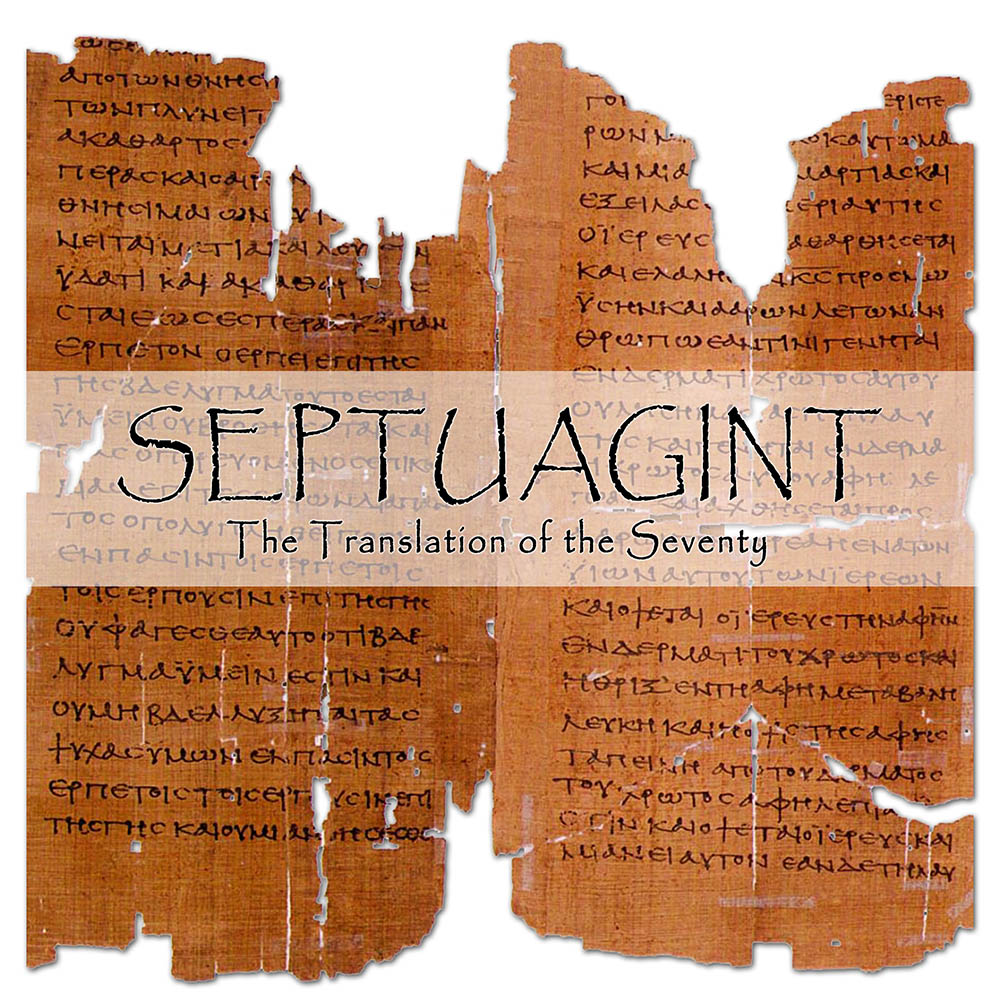
Here is a direct side-by-side comparison of the Masoretic Text with the LXX. I have concluded that the LXX is much to be preferred over the Masoretic Text, a position from which the Eastern Orthodox Church never deviated. Perhaps, if you take the time to read my comparisons and other articles, you will arrive at the same conclusion.
The Septuagint version I am using is the Lexham English Septuagint 2nd Edition, which is available in print or as part of Logos Bible Software. Occasionally I also use the Brenton translation of the LXX for insight into difficult passages.
If you want to know more, click on the following links.
- Why Christians Should Prefer the Septuagint over the Masoretic Text.
- Some Insights Gained through Comparing the Masoretic Text to the Septuagint
- More side by side comparisons of the Masoretic Text (MT) to the Septuagint (LXX).
| Masoretic Text | Septuagint | Significance |
|
1 Why do the nations rage, And the people plot a vain thing? 2 The kings of the earth set themselves, And the rulers take counsel together, Against the LORD and against His Anointed, saying, Psalm 2:1–2 (NKJV) |
1 Why were the nations (ethnos) unruly (phruasso), and the people (laos) meditated (meletao) on vain things (kenos)? 2 The kings of the earth are present (parhistemi), and the rulers are gathered together (sunago) against the Lord and against his anointed one (Christos). Psalm 2:1–2 (LES2) |
The MT asks why are the nations in an uproar. The LXX calls them unruly. This passage is quoted in Acts. 24 So when they heard that, they raised their voice to God with one accord and said: “Lord, You are God, who made heaven and earth and the sea, and all that is in them, 25 who by the mouth of Your servant David have said: ‘Why did the nations (ethnos) rage (phruasso), And the people (laos) plot (meletao) vain things (kenos)? 26 The kings of the earth took their stand (parhistemi), And the rulers were gathered together (sunago) Against the LORD and against His Christ (Christos).’ 27 “For truly against Your holy Servant Jesus, whom You anointed, both Herod and Pontius Pilate, with the Gentiles and the people of Israel, were gathered together 28 to do whatever Your hand and Your purpose determined before to be done. Acts 4:24–28 (NKJV) It is evident that the quote from Acts came directly from the LXX. It is also clear that the early church understood this psalm to apply to Jesus the Lord. |
|
3 “Let us break Their bonds in pieces And cast away Their cords from us.” 4 He who sits in the heavens shall laugh; The Lord shall hold them in derision. 5 Then He shall speak to them in His wrath, And distress them in His deep displeasure: 6 “Yet I have set My King On My holy hill of Zion.” Psalm 2:3–6 (NKJV) |
3 They say, “Let us break their bonds,” and “Let us throw their yoke off us.” 4 The one dwelling in the heavens will laugh at them, and the Lord will mock them. 5 At that time he will speak against them in his wrath, and in his anger he will bring trouble to them. 6 “But I was appointed by him in Mount Zion, his holy place, Psalm 2:3–6 (LES2) |
The main difference in this passage is that verse six speaks of this “king” in the third person, but the LXX has this anointed one, who is Christ, speaking in the first person. Jesus understood his calling and position. |
|
7 “I will declare the decree: The LORD has said to Me, ‘You are My Son, Today I have begotten You. 8 Ask of Me, and I will give You The nations for Your inheritance, And the ends of the earth for Your possession. 9 You shall break them with a rod of iron; You shall dash them to pieces like a potter’s vessel.’ ” Psalm 2:7–9 (NKJV) |
7 announcing the ordinance of the Lord. The Lord said to me, ‘You are my son; today I have fathered you. 8 Ask from me, and I will give to you the nations as your inheritance, and as your possession the ends of the earth. 9 You will rule (poimano – shepherd or tend) them with a steel rod. Like a vessel of a potter you will break them.’ ” Psalm 2:7–9 (LES2) |
The MT tracks with the LXX until verse 9 where it says the Christ will break the nations with a rod of iron, but the LXX says he will shepherd or tend them as sheep. Apparently those who are willing to acknowledge Jesus as Lord will be shepherded, but the disobedient will be crushed at the final judgment. |
|
10 Now therefore, be wise, O kings; Be instructed, you judges of the earth. 11 Serve the LORD with fear, And rejoice with trembling. 12 Kiss the Son, lest He be angry, And you perish in the way, When His wrath is kindled but a little. Blessed are all those who put their trust in Him. Psalm 2:10–12 (NKJV) |
10 And now, O kings, understand; be educated, all who judge the earth. 11 Serve the Lord with fear and rejoice exceedingly because of him with trembling. 12 Take hold of instruction, in case the Lord become angry, and you perish from the righteous way when his anger burns out quickly. Blessed are all who trust in him. Psalm 2:10–12 (LES2) |
Verses 10 and 11 agree for the most part. In verse 12 the MT says, “Kiss the Son,” but the LXX says “Take hold of instruction.” The warning is that unless we do we may “perish in the way” according to the MT. The LXX says, “perish from the righteous way.” |