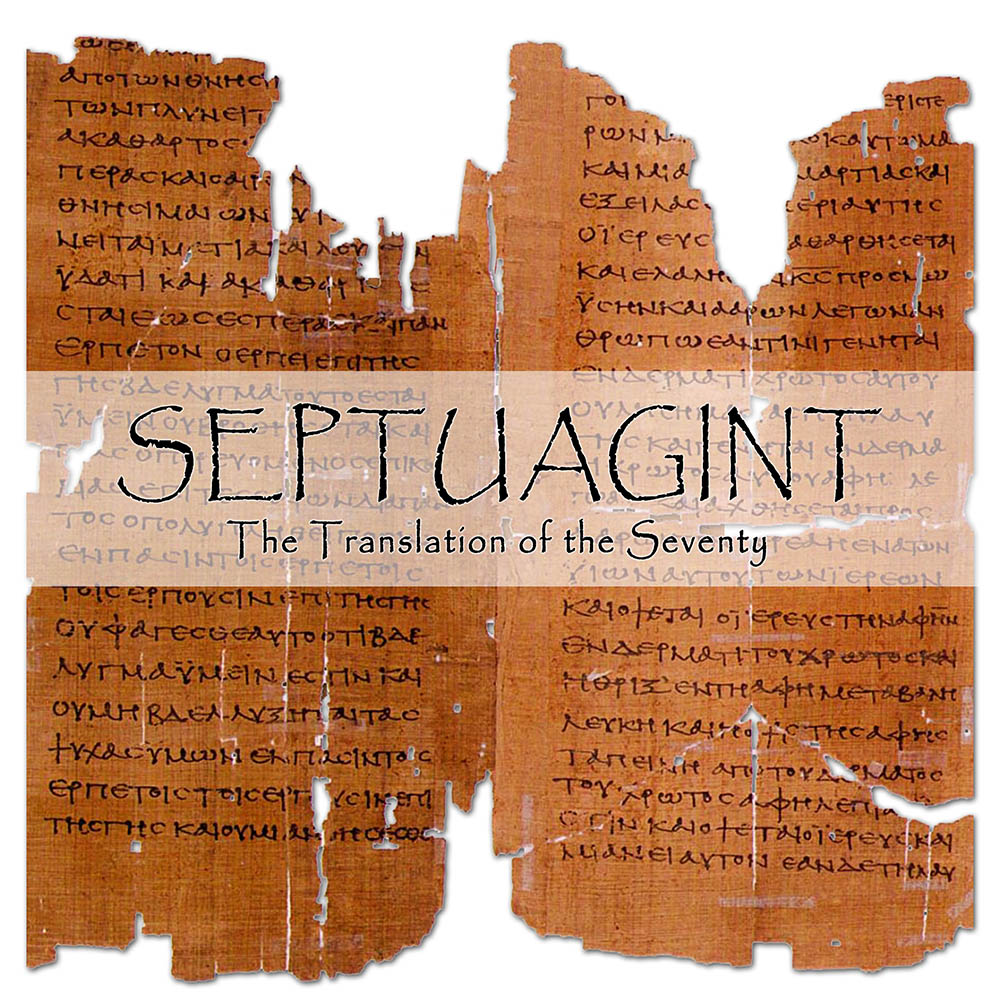
Rediscovering the Septuagint (LXX): Isaiah 40:1-5

Here is a direct side-by-side comparison of the Masoretic Text with the LXX.  I have concluded that the LXX is much to be preferred over the Masoretic Text, a position from which the Eastern Orthodox Church never deviated. Perhaps, if you take the time to read my comparisons and other articles, you will arrive at the same conclusion.

The Septuagint version I am using is the Lexham English Septuagint 2nd Edition, which is available in print or as part of Logos Bible Software. Occasionally I also use the Brenton translation of the LXX for insight into difficult passages.

If you want to know more, click on the following links.

Masoretic Text Septuagint Significance

1 “Comfort, yes, comfort My people!” Says your God. 2 “Speak comfort to Jerusalem, and cry out to her, That her warfare is ended, That her iniquity is pardoned; For she has received from the LORD’s hand Double for all her sins.” Isaiah 40:1–2 (NKJV) 

1 “Comfort, comfort my people,” says God. 2 Priests, speak to the heart of Jerusalem; comfort her, because her lowliness has been satisfied; her sin has been forgiven, because she has received from the hand of the Lord double for her sins. Isaiah 40:1–2 (LES2) 

The main difference between the MT and LXX in this passage is that the LXX addresses the priests who are to speak comfort to the heart of Jerusalem because her humility has been satisfied rather than the MT’s saying that her warfare is ended. 

3 The voice of one crying in the wilderness: “Prepare the way of the LORD; Make straight in the desert A highway for our God. 4 Every valley shall be exalted And every mountain and hill brought low; The crooked places shall be made straight And the rough places smooth; 5 The glory of the LORD shall be revealed, And all flesh shall see it together; For the mouth of the LORD has spoken.” Isaiah 40:3–5 (NKJV) 

3 The voice of one calling in the desert, “Prepare the way of the Lord! Make the paths of our God straight!” 4 Every ravine will be filled, and every mountain and hill will be made low, and all the crooked ways will be made straight, and every rough spot a plain; 5 and the glory of the Lord will be seen, and all flesh will see the salvation of God, for the Lord has spoken. Isaiah 40:3–5 (LES2) 

There is little difference between these passages. The LXX uses the Greek word tribos for path, which the MT uses the Hebrew word for highway. The MT adds “in the desert,” but this is not significant to me. 

However, the NT quotes this passage in Matthew 3:3 and Mark 1:3.

3 For this is he who was spoken of by the prophet Isaiah, saying: “The voice of one crying in the wilderness: ‘Prepare the way of the LORD; Make His paths straight.’ ” Matthew 3:3 (NKJV) 

3 “The voice of one crying in the wilderness: ‘Prepare the way of the LORD; Make His paths straight.’ ” Mark 1:3 (NKJV) 

The Greek in the Matthew and Mark verses agrees with the Greek in the LXX, even though some English words are different. 

Luke quotes a longer portion of Isaiah 40.

4 as it is written in the book of the words of Isaiah the prophet, saying: “The voice of one crying in the wilderness: ‘Prepare the way of the LORD; Make His paths straight. 5 Every valley shall be filled And every mountain and hill brought low; The crooked places shall be made straight And the rough ways smooth; 6 And all flesh shall see the salvation of God.’ ” Luke 3:4–6 (NKJV) 

The English word valley is a translation of the same Greek word that the LXX translates as ravine. The other words are the same in Greek, except for Luke’s use of the word “smooth” (Greek – leios) in place of the LXX’s “plain” (Greek – pedinos).

This shows that the three gospel writers used the LXX as their source for Old Testament scriptures.


Rediscovering the Septuagint (LXX): Psalm 40:6-8

Here is a direct side-by-side comparison of the Masoretic Text with the LXX.  I have concluded that the LXX is much to be preferred over the Masoretic Text, a position from which the Eastern Orthodox Church never deviated. Perhaps, if you take the time to read my comparisons and other articles, you will arrive at the same conclusion.

The Septuagint version I am using is the Lexham English Septuagint 2nd Edition, which is available in print or as part of Logos Bible Software. Occasionally I also use the Brenton translation of the LXX for insight into difficult passages.

If you want to know more, click on the following links.

Septuagint MT Significance

7 You did not want sacrifice and offering, but you restored a body to me. You did not ask for whole burnt offering and an offering concerning sin. 8 Then I said, “Look, I have arrived. In the scroll of the document it has been written concerning me. 9 I wish to do your will, O my God, and your law is in the middle of my heart.” Psalm 39:7–9 (LES2) 

6 Sacrifice and offering You did not desire; My ears You have opened. Burnt offering and sin offering You did not require. 7 Then I said, “Behold, I come; In the scroll of the book it is written of me. 8 I delight to do Your will, O my God, And Your law is within my heart.” Psalm 40:6–8 (NKJV) 

This is a notable example of the MT removing a clear reference to Christ that is quoted from the LXX in the New Testament.

As with many of the Psalms, the numbering of the LXX differs from the MT.

The LXX says in verse 7 that God restored (Greek: katartidzo, which can mean established or furnished) a body to me. This is a reference to the Incarnation of Christ, and quite possibly to his resurrection, if restore is used. The author of Hebrews quotes this text in his argument for Christ’s supremacy.

5 Therefore, when He came into the world, He said: “Sacrifice and offering You did not desire, But a body You have prepared for Me. 6 In burnt offerings and sacrifices for sin You had no pleasure. 7 Then I said, ‘Behold, I have come— In the volume of the book it is written of Me— To do Your will, O God.’ ” 8 Previously saying, “Sacrifice and offering, burnt offerings, and offerings for sin You did not desire, nor had pleasure in them” (which are offered according to the law), 9 then He said, “Behold, I have come to do Your will, O God.” He takes away the first that He may establish the second. 10 By that will we have been sanctified through the offering of the body of Jesus Christ once for all. Hebrews 10:5–10 (NKJV) 

The Masoretes knew of this argument with which Christians were using OT scriptures to prove that Christ is the Messiah. By changing the text to “My ears have you opened,” they sought to discredit the reference in the NT and remove the foundation of the argument. Remember, this translation was produced centuries after Christ’s resurrection. Jesus had already condemned the rabbis for altering God’s Word. We should not put it past them to do such a thing.


Rediscovering the Septuagint (LXX): Isaiah 56

Here is a direct side-by-side comparison of the Masoretic Text with the LXX.  I have concluded that the LXX is much to be preferred over the Masoretic Text, a position from which the Eastern Orthodox Church never deviated. Perhaps, if you take the time to read my comparisons and other articles, you will arrive at the same conclusion.

The Septuagint version I am using is the Lexham English Septuagint 2nd Edition, which is available in print or as part of Logos Bible Software. Occasionally I also use the Brenton translation of the LXX for insight into difficult passages.

If you want to know more, click on the following links.

Masoretic Text Septuagint Significance

1 Thus says the LORD: “Keep justice, and do righteousness, For My salvation is about to come, And My righteousness to be revealed. 2 Blessed is the man who does this, And the son of man who lays hold on it; Who keeps from defiling the Sabbath, And keeps his hand from doing any evil.” Isaiah 56:1–2 (NKJV) 

1 This is what the Lord says: “Keep judgment and do righteousness, for my salvation has come close to appearing; and my mercy to being revealed.” 2 Blessed is the man who does these things and the person who cleaves to them and keeps the Sabbaths undefiled and takes care that his hands do no injustice. Isaiah 56:1–2 (LES2) 

We see immediately that the MT says that God’s righteousness is about to come, but the LXX says his mercy has come close to being revealed. Mercy and truth came by way of Jesus. (John 1:17) Jesus is the revelation of God’s righteousness. His death on the cross and resurrection provides those who believe in him with a right standing (righteousness) with God. (Romans 5:1) This came as a result of God’s extending his mercy to us.

3 Do not let the son of the foreigner Who has joined himself to the LORD Speak, saying, “The LORD has utterly separated me from His people”; Nor let the eunuch say, “Here I am, a dry tree.” 4 For thus says the LORD: “To the eunuchs who keep My Sabbaths, And choose what pleases Me, And hold fast My covenant, 5 Even to them I will give in My house And within My walls a place and a name Better than that of sons and daughters; I will give them an everlasting name That shall not be cut off. Isaiah 56:3–5 (NKJV) 

3 May the stranger who adheres to the Lord not say, “Therefore the Lord will separate me from his people.” And may the eunuch not say, “I am a dry tree.” 4 This is what the Lord says to the eunuchs: “As many as should keep my Sabbaths and choose the things that I want and cleave to my covenant, 5 I will give a renowned place to them in my house and within my fortification, a place better than sons and daughters. I will give them an eternal name, and it will not come to an end. Isaiah 56:3–5 (LES2) 

This passage can only be understood properly by viewing it through the lens of the New Covenant. In Christ God has torn down the wall that formerly separated Jew from Gentile, which is the Law. (Ephesians 2:14-18) Christ has brought the two together in “one new man.” Every born again believer, no matter what gender, nationality, or socio-economic status, has the privileged position of being an eternal child of God. (Galatians 3:28) Jesus is the “Sabbath rest” for God’s New Covenant people (Hebrews 4:8-11) who have been released from the demands of the Law in order to serve God from the heart. (Romans 2:29, 7:4)

6 “Also the sons of the foreigner Who join themselves to the LORD, to serve Him, And to love the name of the LORD, to be His servants— Everyone who keeps from defiling the Sabbath, And holds fast My covenant— 7 Even them I will bring to My holy mountain, And make them joyful in My house of prayer. Their burnt offerings and their sacrifices Will be accepted on My altar; For My house shall be called a house of prayer for all nations.” 8 The Lord GOD, who gathers the outcasts of Israel, says, “Yet I will gather to him Others besides those who are gathered to him.” Isaiah 56:6–8 (NKJV) 

6 And for the strangers who adhere to the Lord, to serve him and to love the name of the Lord, to be male servants and female servants to him, and all who keep my Sabbaths undefiled and cleave to my covenant, 7 I will bring them to my holy mountain and make them be cheerful in my house of prayer. Their whole burnt offerings and sacrifices will be acceptable upon my altar, for my house will be called a house of prayer for all the nations,” 8 said the Lord who gathers the scattered ones of Israel, for I will gather an assembly to him. Isaiah 56:6–8 (LES2) 

 There is very little difference in these two passages.

9 All you beasts of the field, come to devour, All you beasts in the forest. 10 His watchmen are blind, They are all ignorant; They are all dumb dogs, They cannot bark; Sleeping, lying down, loving to slumber. 11 Yes, they are greedy dogs Which never have enough. And they are shepherds Who cannot understand; They all look to their own way, Every one for his own gain, From his own territory. 12 “Come,” one says, “I will bring wine, And we will fill ourselves with intoxicating drink; Tomorrow will be as today, And much more abundant.” Isaiah 56:9–12 (NKJV) 

9 All you wild beasts, come and eat, all you beasts of the forest. 10 See that they all have become blind; they have not learned, young dogs, unable to bark, dreaming on their bed, loving to slumber. 11 And the dogs are shameless in soul, not knowing satisfaction, and they are evil, not knowing understanding. They all have followed their ways, each according to his own. Isaiah 56:9–11 (LES2) 

Here the MT identifies the beasts as “blind watchmen.” It identifies the dogs as “shepherds who cannot understand.” I believe the Masoretes added these descriptors to help make sense of the passage.

Jesus accused the Jewish leaders o being blind guides of the people who could not see or understand God’s way or help the people in that regard. (Matthew 13:13-15, 15:14, 23:16, 24)

We also see that the MT added verse 12, which is not in the LXX and seems to be out of place. 


Rediscovering the Septuagint (LXX): Isaiah 61

Here is a direct side-by-side comparison of the Masoretic Text with the LXX.  I have concluded that the LXX is much to be preferred over the Masoretic Text, a position from which the Eastern Orthodox Church never deviated. Perhaps, if you take the time to read my comparisons and other articles, you will arrive at the same conclusion.

The Septuagint version I am using is the Lexham English Septuagint 2nd Edition, which is available in print or as part of Logos Bible Software. Occasionally I also use the Brenton translation of the LXX for insight into difficult passages.

If you want to know more, click on the following links.

Masoretic Text Septuagint Significance

1 “The Spirit of the Lord GOD is upon Me, Because the LORD has anointed Me To preach good tidings to the poor; He has sent Me to heal the brokenhearted, To proclaim liberty to the captives, And the opening of the prison to those who are bound; Isaiah 61:1 (NKJV) 

1 The Spirit of the Lord is upon me, on account of which he has anointed me; he has sent me to bring good news to the poor, to heal those who are crushed in heart, to announce release to the captives and recovery of sight to the blind, Isaiah 61:1 (LES2) 

This seems to be a deliberate suppression of one of the most important signs that pointed to Jesus’ being the Messiah, the healing of blind eyes.

There are two differences worth noting in this verse. The first is that the LXX says that this anointed one was “sent” to bring good news (the gospel message) to the poor. The NT calls Jesus a “sent one” or “apostle” of the New Covenant. (Hebrews 3:1) Jesus was sent to earth by his heavenly Father to offer himself as the Lamb of God for the forgiveness of our sins and to recapture the authority Adam ceded to Satan. Likewise, Jesus “sent” his church to announce the good news of his victory to all who would listen and believe. 

21 So Jesus said to them again, “Peace to you! As the Father has sent Me, I also send you.” 22 And when He had said this, He breathed on them, and said to them, “Receive the Holy Spirit. John 20:21–22 (NKJV) 

The second even more significant difference is that the LXX says this anointed one was sent to announce “recovery of sight to the blind.” 

This is not the only place in Isaiah where this coming sign was mentioned.

2 And the desolate places of the Jordan will blossom and rejoice. The glory of Lebanon was given to it, and the honor of Carmel. And my people will see the glory of the Lord and the exaltation of God. 3 Be strong, hands at ease and feeble knees! 4 Give comfort, fainthearted in mind! Be strong; do not be frightened! Look, our God is repaying judgment, and he will repay! He himself will come and save us! 5 Then blind people’s eyes will be opened, and dumb people’s ears will hear. Isaiah 35:2–5 (LES2) 

In this case, the MT agrees with the LXX in saying the blind and dumb will be healed when God will visit his people, both of which were fulfilled by Jesus. Perhaps because this verse was not so conspicuously quoted as a proof of Jesus’ messiahship is why it was left intact.

When Jesus stood in the synagogue in Capernaum at the outset of his public ministry, he read this verse aloud and claimed it applied to him personally.

18 “The Spirit of the LORD is upon Me, Because He has anointed Me To preach the gospel to the poor; He has sent Me to heal the brokenhearted, To proclaim liberty to the captives And recovery of sight to the blind, To set at liberty those who are oppressed; Luke 4:18 (NKJV) 

The healing of the blind by Jesus was specifically mentioned in five distinct episodes in the gospels. (Matthew 9:27-31, Matthew 12:22, which was also mentioned in Luke 11:14, Mark 8:22-26, John 9:1-41, and Matthew 20:29-34, which is also mentioned in the other two synoptic gospels – Mark 10:46-52 and Luke 18:35-43). In addition, healing the blind was mentioned in three different summaries of Jesus’ ministry – Matthew 15:30-31, Matthew 21:14, and Luke 7:21-22. Since healing the blind was so remarkable and rare, it served as a primary credential for Jesus’ claim to be the promised one. It is no wonder the Masoretes would wish to cover it up some 1000 years later. 

Someone might at this point contend that the Great Isaiah Scroll from Qumran agrees with the MT. That does not undo the Holy Spirit’s and Jesus’ choice to quote the LXX, proving it is indeed the inspired Word of God. In addition, it is important to remember that there is no chain of custody proving the antiquity, authorship, and credibility of the Dead Sea Scrolls. Some doubt that they are as ancient as claimed. Even if they are  “genuine articles,” it does not prove inspiration by the Holy Spirit. Anything written in the NT, however, is the “official” Word of God.

The only other comment I have is to note that Jesus’ quote in Luke 4:18 also adds at the end, “To set at liberty those who are oppressed.” This not the same as the phrase the MT uses to replace the healing of the blind – “the opening of the prison to those who are bound.” I personally think the Holy Spirit added this phrase to Jesus’ quote to point to his setting demonized people free from that horrible oppression, such as when he healed the woman bound by a spirit of infirmity for eighteen years. (Luke 13:10-17)

2 To proclaim the acceptable year of the LORD, And the day of vengeance of our God; To comfort all who mourn, 3 To console those who mourn in Zion, To give them beauty for ashes, The oil of joy for mourning, The garment of praise for the spirit of heaviness; That they may be called trees of righteousness, The planting of the LORD, that He may be glorified.” Isaiah 61:2–3 (NKJV) 

2 to proclaim the acceptable year of the Lord and the day of repayment, to comfort all who mourn, 3 to give to those who mourn in Zion glory instead of ashes, the anointing of cheer to those who mourn, a garment of glory instead of a spirit of weariness. And they will be called generations of righteousness, a planting of the Lord for glory. Isaiah 61:2–3 (LES2) 

Instead of receiving beauty, which is good, we will receive glory, which is far better. Of course, it can be argued that God’s glory will beautify the saints. Likewise a garment of glory will be given to us, which is the righteousness of Christ, with which we clothe ourselves by faith. (Ephesians 4:24) Instead of being “trees” of righteousness, the LXX says we will be generations of righteousness, which describes all those born of the Spirit.

4 And they shall rebuild the old ruins, They shall raise up the former desolations, And they shall repair the ruined cities, The desolations of many generations. 5 Strangers shall stand and feed your flocks, And the sons of the foreigner Shall be your plowmen and your vinedressers. 6 But you shall be named the priests of the LORD, They shall call you the servants of our God. You shall eat the riches of the Gentiles, And in their glory you shall boast. 7 Instead of your shame you shall have double honor, And instead of confusion they shall rejoice in their portion. Therefore in their land they shall possess double; Everlasting joy shall be theirs. Isaiah 61:4–7 (NKJV)

4 And they will build eternal deserts; they will raise up those that had formerly been deserted, and they will renew deserted cities that have been deserted for generations. 5 Strangers will come tending your sheep, and foreigners will be your plowmen and vine dressers. 6 But you will be called priests of the Lord, ministers of God. You will devour the strength of nations, and you will be amazed at their wealth. 7 So they will inherit the earth a second time, and eternal cheer will be upon their head. Isaiah 61:4–7 (LES2) 

These two passages are very close. The interpretation is difficult. Zionists would apply that to the modern nation of Israel, but that is very doubtful since unredeemed humanity cannot inherit the kingdom of God. I believe this must apply to the Israel of God, the bride of Christ. 

8 “For I, the LORD, love justice; I hate robbery for burnt offering; I will direct their work in truth, And will make with them an everlasting covenant. 9 Their descendants shall be known among the Gentiles, And their offspring among the people. All who see them shall acknowledge them, That they are the posterity whom the LORD has blessed.” Isaiah 61:8–9 (NKJV) 

8 For I am the Lord who loves righteousness and hates the spoils from wrongdoing, and I will give their labor to the righteous, and I will establish an eternal covenant with them. 9 And their seed and their offspring will be known among the nations, in the middle of the peoples. Everyone who sees them will take notice of them, because these are the seed who have been blessed by God, Isaiah 61:8–9 (LES2) 

There are some difference in this passage. Instead of God’s loving justice, the LXX says he loves righteousness, but hates the spoils of wrongdoing, which matches the sentence structure. The MT, however, says he hates “robbery in the burnt offering.” The LXX says that the spoils of wrongdoing will be given to the righteous. The MT says God will direct their work in truth. Both agree that God will make an everlasting covenant with the subjects, which is the New Covenant. This means that the “seed” or descendants are born-again persons, the church. The rest of the promises apply to them.

10 I will greatly rejoice in the LORD, My soul shall be joyful in my God; For He has clothed me with the garments of salvation, He has covered me with the robe of righteousness, As a bridegroom decks himself with ornaments, And as a bride adorns herself with her jewels. 11 For as the earth brings forth its bud, As the garden causes the things that are sown in it to spring forth, So the Lord GOD will cause righteousness and praise to spring forth before all the nations. Isaiah 61:10–11 (NKJV) 

10 and they will be cheerful with cheer in the Lord. Let my soul rejoice in the Lord, for he has clothed me with a garment of salvation and a tunic of cheer. He has wrapped a headband on me as on a bridegroom, and he has adorned me with ornamentation like a bride. 11 And as the earth has grown her blossom and like a garden has grown its seeds, so will the lord Lord make righteousness and rejoicing spring forth before all the nations. Isaiah 61:10–11 (LES2) 

The garments, plural, in the MT become garment, singular, in the LXX, which refers to the righteousness of Christ, as mentioned earlier. It is very interesting that the MT indicates that the person adorns himself or herself, but the LXX says that God is the one who adorns us. The gospel has gone forth into the nations causing righteousness and praise to spring up all over the earth.


Rediscovering the Septuagint (LXX): Psalm 16:8-11

Here is a direct side-by-side comparison of the Masoretic Text with the LXX.  I have concluded that the LXX is much to be preferred over the Masoretic Text, a position from which the Eastern Orthodox Church never deviated. Perhaps, if you take the time to read my comparisons and other articles, you will arrive at the same conclusion.

The Septuagint version I am using is the Lexham English Septuagint 2nd Edition, which is available in print or as part of Logos Bible Software. Occasionally I also use the Brenton translation of the LXX for insight into difficult passages.

If you want to know more, click on the following links.

Masoretic Text Septuagint Significance

8 I have set the LORD always before me; Because He is at my right hand I shall not be moved. Psalm 16:8 (NKJV) 

8 I saw the Lord in front, before me through everything, because he is from my right side, that I would not be shaken. Psalm 15:8 (LES2) 

This is another psalm quoted in the New Testament from the LXX. 

25 For David says concerning Him: ‘I foresaw the LORD always before my face, For He is at my right hand, that I may not be shaken. Acts 2:25 (NKJV) 

Instead of the MT’s “I have set the Lord always before me,” the LXX and NT quote both use the Greek word “proorao,” which the LXX translates as “saw” and the NT as “foresaw,” which is the literal meaning. The MT has David choosing to “set” God before him, but the LXX and NT both agree that David saw the Lord. One is a choice, the other is a revelation. However, once we receive the revelation, we ought to make the choice to walk in that revelation.

Both the LXX and NT also use the word “shaken,” which carries the same idea as moved.

9 Therefore my heart is glad, and my glory rejoices; My flesh also will rest in hope. 10 For You will not leave my soul in Sheol, Nor will You allow Your Holy One to see corruption. Psalm 16:9–10 (NKJV) 

9 On account of this, my heart was cheerful, and my tongue rejoiced exceedingly. Moreover, my flesh will dwell in hope, 10 because you will not abandon my soul in Hades, nor will you give your holy one to see destruction. Psalm 15:9–10 (LES2) 

The big difference in this passage is that the MT says “my glory rejoices,” but the LXX and NT agree that the word is “tongue.” The Greek word “aggaliao” for “rejoiced exceedingly” and “was glad.” 

26 Therefore my heart rejoiced, and my tongue was glad; Moreover my flesh also will rest in hope. 27 For You will not leave my soul in Hades, Nor will You allow Your Holy One to see corruption. Acts 2:26–27 (NKJV) 

Both the LXX and NT quote use the Greek word diaphthora, which is translated as “destruction” in the LXX and as “corruption” in the NT.

11 You will show me the path of life; In Your presence is fullness of joy; At Your right hand are pleasures forevermore. Psalm 16:11 (NKJV) 

11 You made known to me ways of life. You will make me full of cheer with your face. There are delights at your right side completely. Psalm 15:11 (LES2) 

The quote from Acts is only a part of this verse.

28 You have made known to me the ways of life; You will make me full of joy in Your presence.’ Acts 2:28 (NKJV) 

Even though the English seems a little different when comparing the LXX and NT quote, the Greek in each is exactly the same. The translators simply chose different English words. 

Once again we have evidence that the Bible used by the apostles was the LXX.


Rediscovering the Septuagint (LXX): Psalm 14:1-3

Here is a direct side-by-side comparison of the Masoretic Text with the LXX.  I have concluded that the LXX is much to be preferred over the Masoretic Text, a position from which the Eastern Orthodox Church never deviated. Perhaps, if you take the time to read my comparisons and other articles, you will arrive at the same conclusion.

The Septuagint version I am using is the Lexham English Septuagint 2nd Edition, which is available in print or as part of Logos Bible Software. Occasionally I also use the Brenton translation of the LXX for insight into difficult passages.

If you want to know more, click on the following links.

Masoretic Text Septuagint Significance

1 The fool has said in his heart, “There is no God.” They are corrupt, They have done abominable works, There is none who does good. 2 The LORD looks down from heaven upon the children of men, To see if there are any who understand, who seek God. 3 They have all turned aside, They have together become corrupt; There is none who does good, No, not one. Psalm 14:1–3 (NKJV) 

1 The foolish said in his heart, “There is no God.” They destroyed and were abhorred in their practices. There is no one doing goodness; there is not even one. 2 The Lord looked out from the heavens upon the sons of humans, to see if there is one who understands or one who seeks out God. 3 All turned aside together. They became useless. There is not one doing goodness; there is not even one. Their throat is an opened grave. With their tongues they have dealt treacherously with one another. The poison of asps is under their lips, whose mouth is full of curses and bitterness. Their feet are quick to pour out blood. Destruction and misery are in their ways, and they know not the way of peace. There is no fear of God before their eyes. Psalm 13:1–3 (LES2) 

This psalm proves that the New Testament, as is the case 70-80% of the time, quotes from the LXX and not from the MT. In his letter to the Romans Paul quotes a portion of verse three that the MT omits. I underlined the part omitted from the MT. Below is Paul’s quote from Romans. 

10 As it is written: “There is none righteous, no, not one; 11 There is none who understands; There is none who seeks after God. 12 They have all turned aside; They have together become unprofitable; There is none who does good, no, not one.” 13 “Their throat is an open tomb; With their tongues they have practiced deceit”; “The poison of asps is under their lips”; 14 “Whose mouth is full of cursing and bitterness.” 15 “Their feet are swift to shed blood; 16 Destruction and misery are in their ways; 17 And the way of peace they have not known.” 18 “There is no fear of God before their eyes.” Romans 3:10–18 (NKJV) 

This confirms that the LXX is the inspired Word of God. 

In addition, the MT says in verse three that those who forget God have become “corrupt,” but the LXX and NT agree that the word is “unprofitable” or “useless.” The same Greek word is used in both the LXX and NT, but is translated using different English words which mean the same thing.

Why did the Masoretes omit this passage? Was it to delegitimize Paul or falsify the New Testament? We will probably never know for sure.


Rediscovering the Septuagint (LXX): Haggai 2:6-9

Here is a direct side-by-side comparison of the Masoretic Text with the LXX.  I have concluded that the LXX is much to be preferred over the Masoretic Text, a position from which the Eastern Orthodox Church never deviated. Perhaps, if you take the time to read my comparisons and other articles, you will arrive at the same conclusion.

The Septuagint version I am using is the Lexham English Septuagint 2nd Edition, which is available in print or as part of Logos Bible Software. Occasionally I also use the Brenton translation of the LXX for insight into difficult passages.

If you want to know more, click on the following links.

Masoretic Text Septuagint Significance

6 “For thus says the LORD of hosts: ‘Once more (it is a little while) I will shake heaven and earth, the sea and dry land; 7 and I will shake all nations, and they shall come to the Desire of All Nations, and I will fill this temple with glory,’ says the LORD of hosts. Haggai 2:6–7 (NKJV) 

6 Because the Lord Almighty says, ‘Once again I shall shake heaven and earth and sea and dry land. 7 And I shall shake all nations, and selected people of all nations shall come and fill this house with glory,’ says the Lord Almighty. Haggai 2:6–7 (LES2) 

This passage clearly illustrates how the MT seeks to elevate national Israel and the Old Covenant at the expense of Christ and the New Covenant.

Verse six in both translations agree, but in verse seven the MT changes the “elect from all nations” in the LXX to “the Desire of All Nations,” which is an uncertain term likely meaning either God himself, the temple, or Israel. It could also mean the Lord Jesus, who is desired by God, but by using an ambiguous phrase the meaning is left open to interpretation instead of being clear as it is in the LXX.

The idea in the MT is that the nations will come to whatever or whoever the Desire of All Nations is, and God will then fill the temple with glory. The LXX indicates that after or because of the shaking of the nations, God will draw from them an elect group who will fill his house. Interestingly, the Hebrew word that the MT translates as temple here means house, too.

The temple was intended to “house” God’s presence, but this was a temporary situation in the Old Covenant that served as a picture of what was coming. In the New Covenant, God would dwell in a temple or house made of people, who Peter calls “living stones.” 

4 Coming to Him as to a living stone, rejected indeed by men, but chosen by God and precious, 5 you also, as living stones, are being built up a spiritual house, a holy priesthood, to offer up spiritual sacrifices acceptable to God through Jesus Christ. 1 Peter 2:4–5 (NKJV) 

His eternal purpose has always been to dwell with and in his people. (Revelation 21:22-27)

We know that the Old Covenant scriptures point to Christ and the New Covenant. (John 5:39) Because of this, the New Testament teaches us how to interpret the Old, and not the other way around. The New Covenant “house” or temple is the church, the body of Christ, the new man in Christ, the Israel of God. Because the gospel has gone to the nations, God is drawing to himself his elect from every people group to be part of this “house.” This house is filled with the glory of God, the very presence of the Holy Spirit.

8 ‘The silver is Mine, and the gold is Mine,’ says the LORD of hosts. 9 ‘The glory of this latter temple shall be greater than the former,’ says the LORD of hosts. ‘And in this place I will give peace,’ says the LORD of hosts.” Haggai 2:8–9 (NKJV) 

8 ‘The silver is mine, and the gold is mine,’ says the Lord Almighty. 9 ‘Because the latter glory of this house shall be great beyond the former,’ says the Lord Almighty. ‘And in this place I shall give peace,’ says the Lord Almighty, ‘even peace of spirit for a possession to all those who build, so as to raise up this temple.’ ” Haggai 2:8–9 (LES2) 

In the last days, it will no doubt be important for us to understand that there is no financial shortage in God’s kingdom, especially if the evil world system seeks to control the flow of money based on allegiance to evil. 

The glory of the New Testament church, the temple or house made of people, will exceed the glory of the one made with stones in the Old Testament. 

Peace will fill the New Covenant house because all those who are part of it have been justified or made right with God, with peace being the natural result. (Romans 5:1) God gives his Spirit as a possession to those who belong to him via the new birth. 

16 Do you not know that you are the temple of God and that the Spirit of God dwells in you? 17 If anyone defiles the temple of God, God will destroy him. For the temple of God is holy, which temple you are. 1 Corinthians 3:16–17 (NKJV) 

God has promised to give peace to his New Covenant saints to be workers who build this new glorious temple through preaching the gospel and nurturing his born-again people.

The Holy Spirit is given to us as an eternal “possession” or companion. He is called the “Helper,” one called alongside us who indwells us. (John 14:16) More importantly, perhaps, the indwelling Spirit of God guarantees that we are God’s eternal possession. 

13 In Him you also trusted, after you heard the word of truth, the gospel of your salvation; in whom also, having believed, you were sealed with the Holy Spirit of promise, 14 who is the guarantee of our inheritance until the redemption of the purchased possession, to the praise of His glory. Ephesians 1:13–14 (NKJV) 

This mutual possession is pictured in marriage which gives each spouse ownership of the other. (1 Corinthians 7:3-4) This is also pictured in the Song of Solomon, a foreshadowing of the love between Christ and his bride, the church.

2 I am my beloved’s, and my beloved is mine, he who shepherds among the lilies. Song of Solomon 6:2 (LES2) 


Rediscovering the Septuagint (LXX): Isaiah 55

Here is a direct side-by-side comparison of the Masoretic Text with the LXX.  I have concluded that the LXX is much to be preferred over the Masoretic Text, a position from which the Eastern Orthodox Church never deviated. Perhaps, if you take the time to read my comparisons and other articles, you will arrive at the same conclusion.

The Septuagint version I am using is the Lexham English Septuagint 2nd Edition, which is available in print or as part of Logos Bible Software. Occasionally I also use the Brenton translation of the LXX for insight into difficult passages.

If you want to know more, click on the following links.

Masoretic Text Septuagint Significance

1 “Ho! Everyone who thirsts, Come to the waters; And you who have no money, Come, buy and eat. Yes, come, buy wine and milk Without money and without price. 2 Why do you spend money for what is not bread, And your wages for what does not satisfy? Listen carefully to Me, and eat what is good, And let your soul delight itself in abundance. Isaiah 55:1–2 (NKJV) 

1 You who thirst, go to the water, and whoever has no silver, go buy and eat wine and fat without silver or price. 2 For what purpose do you value silver, and your labor does not satisfy? And you will eat good things, and your soul will exult in good things. Isaiah 55:1–2 (LES2) 

Building upon my idea that the MT presents Isaiah in a way that generally elevates Israel and hides Jesus, the opening words of this chapter of Isaiah in the MT invite the thirsty and hungry to come, presumably to Israel. The LXX, however, exhorts us to go to the water, which is not found in Old Covenant or the nation of Israel, per se, or Judaism, but in Christ alone. He alone can satisfy the deepest longings and needs of our souls.

Jesus suffered outside the city of Jerusalem as something unclean. We must go outside the camp, outside the walls of Judaism, to find the Lord.

10 We have an altar from which those who serve the tabernacle have no right to eat. 11 For the bodies of those animals, whose blood is brought into the sanctuary by the high priest for sin, are burned outside the camp. 12 Therefore Jesus also, that He might sanctify the people with His own blood, suffered outside the gate. 13 Therefore let us go forth to Him, outside the camp, bearing His reproach. Hebrews 13:10–13 (NKJV) 

3 Incline your ear, and come to Me. Hear, and your soul shall live; And I will make an everlasting covenant with you— The sure mercies of David. 4 Indeed I have given him as a witness to the people, A leader and commander for the people. Isaiah 55:3–4 (NKJV) 

3 Pay attention with your ear and attend to my ways. Hear me, and your soul will live among good things, and I will establish an eternal covenant with you; the holy things of David are sure. 4 Look! I gave him as a testimony among the nations, a ruler and one who commands the nations. Isaiah 55:3–4 (LES2) 

The MT invites the hearer to come to God. The LXX says to attend to his ways. Both are good. Both promise that God will establish an eternal (New) covenant with such a person. The MT calls this covenant “the sure mercies of David.” The LXX says “the holy things of David (Christ) are sure.” Both are true.

It is important for us to understand that all scripture points to Christ. (John 5:39) David, in this case, is pointer to his descendant, the Messiah, our Lord Jesus. Jesus has been given as a testimony or witness among the nations, a ruler (Lord) over the nations. (Revelation 2:27)

5 Surely you shall call a nation you do not know, And nations who do not know you shall run to you, Because of the LORD your God, And the Holy One of Israel; For He has glorified you.” Isaiah 55:5 (NKJV) 

5 The nations, which do not know you, will call upon you, and the peoples, who do not know you, will flee to you for refuge because of the Lord your God, the holy one of Israel, because he has magnified you. Isaiah 55:5 (LES2) 

Here is another example, in my opinion, where the MT obfuscates a clear reference to Christ. It changed “the nations which do not know you will call upon you,” to “you shall call a nation you do not know.” The remainder of the verse shows agreement between the MT and LXX.

The verse clearly refers to Christ. The Gentile nations and elect Jews have run to him for refuge upon hearing the gospel because Jesus has been elevated to the position of Lord of lords.

6 Seek the LORD while He may be found, Call upon Him while He is near. 7 Let the wicked forsake his way, And the unrighteous man his thoughts; Let him return to the LORD, And He will have mercy on him; And to our God, For He will abundantly pardon. Isaiah 55:6–7 (NKJV) 

6 Seek out the Lord, and when you find him, call upon him. And if ever he approaches you, 7 let the ungodly abandon his ways and the man of lawlessness his counsels, and let him return to the Lord, and he will be shown mercy, because he will forgive your sins abundantly. Isaiah 55:6–7 (LES2) 

The LXX is quite different in that it promises that those who seek God will find him…. “and when you find him.” Instead of “while he is near,” the LXX says, “And if he ever approaches you.” The truth is that God finds us, not we him. It is God who comes knocking on the door of our hearts. Our job is to open it to him by inviting him in, repenting for our sins, and receiving the forgiveness he offers. 

8 “For My thoughts are not your thoughts, Nor are your ways My ways,” says the LORD. 9 “For as the heavens are higher than the earth, So are My ways higher than your ways, And My thoughts than your thoughts. Isaiah 55:8–9 (NKJV) 

8 “For my counsels are not like your counsels or my ways like your ways,” says the Lord, 9 “but as the heaven is far off from the earth, so my way is far off from your ways and your thoughts from my mind. Isaiah 55:8–9 (LES2) 

The MT and LXX essentially agree in this passage.

10 “For as the rain comes down, and the snow from heaven, And do not return there, But water the earth, And make it bring forth and bud, That it may give seed to the sower And bread to the eater, 11 So shall My word be that goes forth from My mouth; It shall not return to Me void, But it shall accomplish what I please, And it shall prosper in the thing for which I sent it. Isaiah 55:10–11 (NKJV) 

10 For as the rain or snow comes down from the heavens and does not return until it has drenched the earth and brings forth and sprouts and gives seed to the sower and bread for food, 11 so will be my word, which goes out from my mouth: It will not return until that which I want is completed, and I will cause your ways and my orders to prosper.” Isaiah 55:10–11 (LES2) 

The MT is not scientifically accurate. The water cycle includes evaporation, rain, re-evaporation, and so on. The LXX gets this right by saying the rain stays until it accomplishes it purpose to water the ground and bring forth food. The Holy Spirit applies this to the Word of God, which can be broadly understood or narrowed to apply to the gospel message. God promises to those who publish his word that they will prosper personally, just as will God’s will.

12 “For you shall go out with joy, And be led out with peace; The mountains and the hills Shall break forth into singing before you, And all the trees of the field shall clap their hands. 13 Instead of the thorn shall come up the cypress tree, And instead of the brier shall come up the myrtle tree; And it shall be to the LORD for a name, For an everlasting sign that shall not be cut off.” Isaiah 55:12–13 (NKJV) 

12 For you will go out with cheer, and you will be taught with delight, for the mountains and the hills will leap and welcome you with delight, and all the trees of the field will clap their branches. 13 And the cypress will grow up instead of the shrub, and the myrtle will grow up instead of the nettle, and the Lord will become a name and an eternal sign, and he will not come to an end. Isaiah 55:12–13 (LES2) 

Both the MT and LXX provide insight into God’s blessings on the evangelist and teacher of his Word. They will go out with joy, be led in peace, and taught with delight. Nature itself rejoices because of the gospel, which eventually, at Christ’s return, will result in its deliverance from the bondage initiated by Adam’s sin. (Romans 8:21)

The MT resorts to using a passive voice in verse 13. The LXX changes the subject and voice of the verb when it says, “the Lord will become a name and an eternal sign.” The only name under heaven given among men whereby we can be saved is the name of Jesus. His resurrection is an eternal sign. The life he provides will never end.


Rediscovering the Septuagint (LXX): Psalm 12

Here is a direct side-by-side comparison of the Masoretic Text with the LXX.  I have concluded that the LXX is much to be preferred over the Masoretic Text, a position from which the Eastern Orthodox Church never deviated. Perhaps, if you take the time to read my comparisons and other articles, you will arrive at the same conclusion.

The Septuagint version I am using is the Lexham English Septuagint 2nd Edition, which is available in print or as part of Logos Bible Software. Occasionally I also use the Brenton translation of the LXX for insight into difficult passages.

If you want to know more, click on the following links.

Masoretic Text Septuagint Significance

1 Help, LORD, for the godly man ceases! For the faithful disappear from among the sons of men. Psalm 12:1 (NKJV) 

2 Save me, O Lord, because the holy one has come to an end, because the truths have diminished from the sons of humans. Psalm 11:2 (LES2) 

I believe in the LXX  this is a prophecy about Jesus and the church; whereas, the MT is written from the perspective of natural Israel. This will inform how I approach it. 

I believe the “holy one” is Jesus, and this is a reference to his death on the cross. He is the Truth. When he perished, truth died, too.

2 They speak idly everyone with his neighbor; With flattering lips and a double heart they speak. 3 May the LORD cut off all flattering lips, And the tongue that speaks proud things, 4 Who have said, “With our tongue we will prevail; Our lips are our own; Who is lord over us?” Psalm 12:2–4 (NKJV) 

3 Each person spoke vanities to his neighbor. deceitful lips spoke in heart and in heart. 4 May the Lord destroy all the deceitful lips and a boasting tongue, 5 those who said, “We are powerful with respect to our tongue; our lips are from us. Who is our lord?” Psalm 11:3–5 (LES2) 

The MT and LXX essentially agree in this passage. The most interesting thing to me is how important surrendering the tongue to God is. I believe this is why our salvation requires us to confess that Christ is the Lord. (Romans 10:9-10) It also sheds light on the importance of speaking in tongues, which is a surrender of our tongue to the Holy Spirit which allows us to pray and praise God perfectly.

5 “For the oppression of the poor, for the sighing of the needy, Now I will arise,” says the LORD; “I will set him in the safety for which he yearns.” Psalm 12:5 (NKJV) 

6 “From the distress of the needy, and from the groaning of the poor ones, I will now stand up,” says the Lord. “I will set him in salvation; I will speak openly for him.” Psalm 11:6 (LES2) 

This verse declares the resurrection of Christ, which is our salvation. The Greek word for “stand up” in the LXX is the same one used for Christ’s being risen, which agrees with the MT. The LXX says that God will set the poor one in “salvation,” which is the Greek word soteria, from which Savior is derived. I believe God speaks openly for us, declaring that we belong to him, just as a bridegroom proudly declares that his wife is his by covenant (and vice versa). The gift of the Holy Spirit is God’s seal proving his ownership. (2 Corinthians 1:22)

7 You shall keep them, O LORD, You shall preserve them from this generation forever. 8 The wicked prowl on every side, When vileness is exalted among the sons of men. Psalm 12:7–8 (NKJV) 

8 You, O Lord, will guard us, and you will preserve us from this generation and for eternity. 9 The ungodly ones walk around in a circle. According to your height you treated with much care the sons of humans. Psalm 11:8–9 (LES2) 

The MT promises God will preserve “them,” but the LXX says he will preserve “us.” Perhaps this is because the MT is written from natural Israel’s perspective and knows that salvation is for “them,” the born again ones, but the LXX is written from the church’s viewpoint, for which salvation is for “us.” Just a thought.

In the New Covenant, our salvation and life is eternal. 

The LXX mentions the presence of evil ones who are going nowhere fast, but God treats us with much care.


Rediscovering the Septuagint (LXX): Isaiah 54

Here is a direct side-by-side comparison of the Masoretic Text with the LXX.  I have concluded that the LXX is much to be preferred over the Masoretic Text, a position from which the Eastern Orthodox Church never deviated. Perhaps, if you take the time to read my comparisons and other articles, you will arrive at the same conclusion.

The Septuagint version I am using is the Lexham English Septuagint 2nd Edition, which is available in print or as part of Logos Bible Software. Occasionally I also use the Brenton translation of the LXX for insight into difficult passages.

If you want to know more, click on the following links.

Masoretic Text Septuagint Significance

1 “Sing, O barren, You who have not borne! Break forth into singing, and cry aloud, You who have not labored with child! For more are the children of the desolate Than the children of the married woman,” says the LORD. 2 “Enlarge the place of your tent, And let them stretch out the curtains of your dwellings; Do not spare; Lengthen your cords, And strengthen your stakes. 3 For you shall expand to the right and to the left, And your descendants will inherit the nations, And make the desolate cities inhabited. Isaiah 54:1–3 (NKJV) 

1 Be cheerful, O barren one who does not father! Break forth and cry aloud, you who are not in labor, because the children of the deserted woman will be more than those of the woman who has a husband, for the Lord has said it. 2 Enlarge the place of your tent and of your curtains; pitch it, do not spare; lengthen your borders and strengthen your tent pegs! 3 Spread out your dwellings even to the right and the left, and your seed will inherit nations, and you will settle wasted cities. Isaiah 54:1–3 (LES2) 

The LXX says the barren one should be cheerful. Since this is a woman, “father” is an odd choice of words, when the Greek word “tikto” means to bring forth, bear , or produce. The context is child birth; so, I prefer the LXX’s “break forth and cry aloud.” I also prefer the LXX’s use of the present tense, which seems to fit better. The use of the word “husband” by the LXX fits better with what follows, rather than using “married woman.”

The use of “lengthen your borders [portion or allotment]” in the LXX has more meaning than the MT’s “lengthen your cords.” 

The middle part of verse three requires us to decide if “seed” (singular) refers to natural Israel or to Jesus. The natural descendants of Abraham were promised a land located in Canaan, but Jesus, the Messiah, was specifically told he would inherit the nations. 

6 “But I was appointed by him in Mount Zion, his holy place, 7 announcing the ordinance of the Lord. The Lord said to me, ‘You are my son; today I have fathered you. 8 Ask from me, and I will give to you the nations as your inheritance, and as your possession the ends of the earth. Psalm 2:6–8 (LES2) 

The church is included in this promise since we are “in Christ” can will co-rule with him at the end. (2 Timothy 2:12)

26 ‘He who overcomes, and he who keeps My deeds until the end, TO HIM I WILL GIVE AUTHORITY OVER THE NATIONS; 27 AND HE SHALL RULE THEM WITH A ROD OF IRON, AS THE VESSELS OF THE POTTER ARE BROKEN TO PIECES, as I also have received authority from My Father; 28 and I will give him the morning star. 29 ‘He who has an ear, let him hear what the Spirit says to the churches.’ Revelation 2:26–29 (NASB95) 

As I have written elsewhere, this cannot apply to the modern nation of Israel because the natural man cannot inherit the kingdom of God. The natural nation of Israel will not receive what is promised to the “Israel of God,” the one new man in Christ.

The church has spread all over the world since Pentecost and inhabits desolate cities bringing new life to the inhabitants through the gospel.

4 “Do not fear, for you will not be ashamed; Neither be disgraced, for you will not be put to shame; For you will forget the shame of your youth, And will not remember the reproach of your widowhood anymore. 5 For your Maker is your husband, The LORD of hosts is His name; And your Redeemer is the Holy One of Israel; He is called the God of the whole earth. 6 For the LORD has called you Like a woman forsaken and grieved in spirit, Like a youthful wife when you were refused,” Says your God. Isaiah 54:4–6 (NKJV) 

4 Do not be frightened because you were disgraced or feel shame because you were reviled, because you will forget the eternal shame and will not remember the reproach of your widowhood. 5 For the Lord who made you—the Lord Sabaoth is his name—and the God of Israel himself is the one who rescues you; so will he be called in all the earth. 6 “The Lord has called you not like an abandoned and discouraged woman or like a woman who was hated from her youth,” said your God. Isaiah 54:4–6 (LES2) 

This passage highlights some of the differences between the MT and LXX that appear very often, particularly the difference in the tenses of the verbs.

The MT tells the barren, desolate woman not to fear for she will not be ashamed. From the context we know that she has already experienced the shame of abandonment and barrenness. The LXX says it better by telling her not to be frightened because she has already experienced the shame and disgrace of her widowhood. Fear would have been real because society then depended on the family for support for the aged. A childless widow would likely have been in real trouble, unless other family members came to her aid. 

Both the MT and LXX say this woman will no longer remember this shame for the Lord himself will rescue her. Interestingly, the MT says she was called “like a woman forsaken,” but the LXX says the Lord has called her “not like an abandoned and discouraged woman.”

In the LXX, her abandonment is a thing of the past. The Lord is calling her to a new identity. We are required to try to try to identify this formerly abandoned woman. Is it Israel or another woman, perhaps the Bride of Christ? We know from other scriptures that the Gentile nations, who were not a people, in Christ are called God’s people. 

9 But you are A CHOSEN RACE, A royal PRIESTHOOD, A HOLY NATION, A PEOPLE FOR God’s OWN POSSESSION, so that you may proclaim the excellencies of Him who has called you out of darkness into His marvelous light; 10 for you once were NOT A PEOPLE, but now you are THE PEOPLE OF GOD; you had NOT RECEIVED MERCY, but now you have RECEIVED MERCY. 1 Peter 2:9–10 (NASB95) 

Peter’s quote is from Hosea 2:23, which Paul quotes in his letter to the Romans.

23 and that He might make known the riches of His glory on the vessels of mercy, which He had prepared beforehand for glory, 24 even us whom He called, not of the Jews only, but also of the Gentiles? 25 As He says also in Hosea: “I will call them My people, who were not My people, And her beloved, who was not beloved.” Romans 9:23–25 (NKJV) 

Ultimately, the Jewish people were cast aside for their rejection of the Messiah and the kingdom was given to the church, the Israel of God, the one new man in Christ composed of born again Jews and Gentiles, just as Jesus said would happen. (Matthew 21:43)

7 “For a mere moment I have forsaken you, But with great mercies I will gather you. 8 With a little wrath I hid My face from you for a moment; But with everlasting kindness I will have mercy on you,” Says the LORD, your Redeemer. 9 “For this is like the waters of Noah to Me; For as I have sworn That the waters of Noah would no longer cover the earth, So have I sworn That I would not be angry with you, nor rebuke you. 10 For the mountains shall depart And the hills be removed, But My kindness shall not depart from you, Nor shall My covenant of peace be removed,” Says the LORD, who has mercy on you. Isaiah 54:7–10 (NKJV) 

7 “I abandoned you for a little time, and I will show mercy to you with great mercy. 8 I turned my face back from you with a little wrath, but I will show mercy to you with eternal mercy,” said the Lord who rescues you. 9 “Since the water that was at the time of Noah, this is my oath, just as I swore to him at that time: to be no longer angry at the earth over you; nor in your terror 10 to remove the mountains; nor will your hills be moved away. So neither will my compassion for you come to an end, and the covenant of your peace will certainly not depart, for he has said, ‘Mercy be with you, Lord.’ Isaiah 54:7–10 (LES2) 

All people have experienced a time of God’s turning away due to the sin of Adam which has reproduced itself in every successive generation. God’s anger against sin burned against the entire earth in the time of Noah, resulting in his sending a flood as judgment. But in his mercy, God saved a remnant, Noah’s family. Even now, God’s anger against sin continues, but for those who put their faith in Christ, who took that righteous indignation upon himself at the cross, we experience God’s mercy, which will never end.

The MT says in verse ten that the “mountains shall depart,” but the LXX says that he will NOT remove the mountains. The certainty of his everlasting covenant is compared to the stability of the mountains. 

1 Those who trust in the Lord are like the mountain of Zion. The one who inhabits Jerusalem will not be shaken for eternity. 2 Mountains are in a circle around it, and the Lord is in a circle around his people, from now and until eternity. Psalm 124:1–2 (LES2) 

11 “O you afflicted one, Tossed with tempest, and not comforted, Behold, I will lay your stones with colorful gems, And lay your foundations with sapphires. 12 I will make your pinnacles of rubies, Your gates of crystal, And all your walls of precious stones. Isaiah 54:11–12 (NKJV) 

11 “Low and unsettled one, you have not been comforted. Look! I am preparing a ruby for you as your stone and sapphire as your foundations, 12 and I will make your bulwarks jasper, and your gates stones of crystal, and your wall choice stones.  Isaiah 54:11–12 (LES2) 

This must be a promise to the church, the Israel of God, because the setting is heaven, where the foundation or floor, which is the firmament, is made of a sapphire-like pavement. The New Jerusalem, which descends from heaven, is described in a similar fashion. 

9 Then one of the seven angels who had the seven bowls filled with the seven last plagues came to me and talked with me, saying, “Come, I will show you the bride, the Lamb’s wife.” 10 And he carried me away in the Spirit to a great and high mountain, and showed me the great city, the holy Jerusalem, descending out of heaven from God, 11 having the glory of God. Her light was like a most precious stone, like a jasper stone, clear as crystal. Revelation 21:9–11 (NKJV) 

After leaving heaven, this New Jerusalem would no longer have a foundation of sapphire, but would be set upon the recreated earth. 

13 All your children shall be taught by the LORD, And great shall be the peace of your children. Isaiah 54:13 (NKJV) 

13 And all your sons will be instructed by God, and your children will live in great peace. Isaiah 54:13 (LES2) 

In the New Covenant, everyone is personally instructed by God to know him. 

11 None of them shall teach his neighbor, and none his brother, saying, ‘Know the LORD,’ for all shall know Me, from the least of them to the greatest of them. 12 For I will be merciful to their unrighteousness, and their sins and their lawless deeds I will remember no more.” 13 In that He says, “A new covenant,” He has made the first obsolete. Now what is becoming obsolete and growing old is ready to vanish away. Hebrews 8:11–13 (NKJV) 

The promise is to “you,” which is singular, which must refer to the church, from whom all believers are related through the new birth as a result of hearing and believing the gospel.

We receive God’s peace through being justified by faith in Christ. Romans 5:1

14 In righteousness you shall be established; You shall be far from oppression, for you shall not fear; And from terror, for it shall not come near you. 15 Indeed they shall surely assemble, but not because of Me. Whoever assembles against you shall fall for your sake. Isaiah 54:14–15 (NKJV) 

14 You will be built up in righteousness. Abstain from an unjust person, and you will not be frightened, and trembling will not approach you. 15 Look! Strangers will come to you through me and will dwell beside you and flee to you for refuge. Isaiah 54:14–15 (LES2) 

What a difference here! The MT says, “You shall be far from oppression,” but the LXX says, “Abstain or put off an unjust person.” Both promise that the “you” will not be frightened. Once again, I think this must refer to the church, not natural Israel, who cannot inherit the kingdom of God any more than our physical bodies can. (1 Corinthians 15:50) It is only through the new birth and resurrection that this is possible. Since this is so, the LXX makes more sense to me. Rather than being a promise that enemies will fall for our sake, the LXX says that “strangers,” those outside God’s New Covenant, will be drawn to Christ and the church and find refuge.

11 Therefore remember that you, once Gentiles in the flesh—who are called Uncircumcision by what is called the Circumcision made in the flesh by hands—12 that at that time you were without Christ, being aliens from the commonwealth of Israel and strangers from the covenants of promise, having no hope and without God in the world. 13 But now in Christ Jesus you who once were far off have been brought near by the blood of Christ. Ephesians 2:11–13 (NKJV) 

16 “Behold, I have created the blacksmith Who blows the coals in the fire, Who brings forth an instrument for his work; And I have created the spoiler to destroy. 17 No weapon formed against you shall prosper, And every tongue which rises against you in judgment You shall condemn. This is the heritage of the servants of the LORD, And their righteousness is from Me,” Says the LORD. Isaiah 54:16–17 (NKJV) 

16 Look! I created you, not like a coppersmith blowing on coals and bringing forth a vessel fit for work; but I did not create you for destruction to destroy you. 17 I will not prosper any  artificial vessel against you, and every voice will rise up against you in judgment. You will overcome all of them, and they will be subject to you in it. There is an inheritance for those who attend the Lord, and you will be my righteous ones,” says the Lord. Isaiah 54:16–17 (LES2) 

What a divergence! The MT focuses on Israel’s enemies and promises she will defeat them. The LXX focuses on the church and his promise that she was not created for destruction. Both promise that weapons formed against us will not succeed, nor will condemning voices. 

Jesus promised both of these things to the church.

18 And He said to them, “I saw Satan fall like lightning from heaven. 19 Behold, I give you the authority to trample on serpents and scorpions, and over all the power of the enemy, and nothing shall by any means hurt you. 20 Nevertheless do not rejoice in this, that the spirits are subject to you, but rather rejoice because your names are written in heaven.” Luke 10:18–20 (NKJV) 

24 “Most assuredly, I say to you, he who hears My word and believes in Him who sent Me has everlasting life, and shall not come into judgment, but has passed from death into life. John 5:24 (NKJV) 

God’s protection and the authority he gives us cannot compare to the inheritance that awaits us in heaven, to which the LXX refers. Our inheritance is not the blessing of protection, as indicated in the MT, but our heavenly reward, which will be for God’s righteous ones, those justified by faith in Christ.


Share this post...