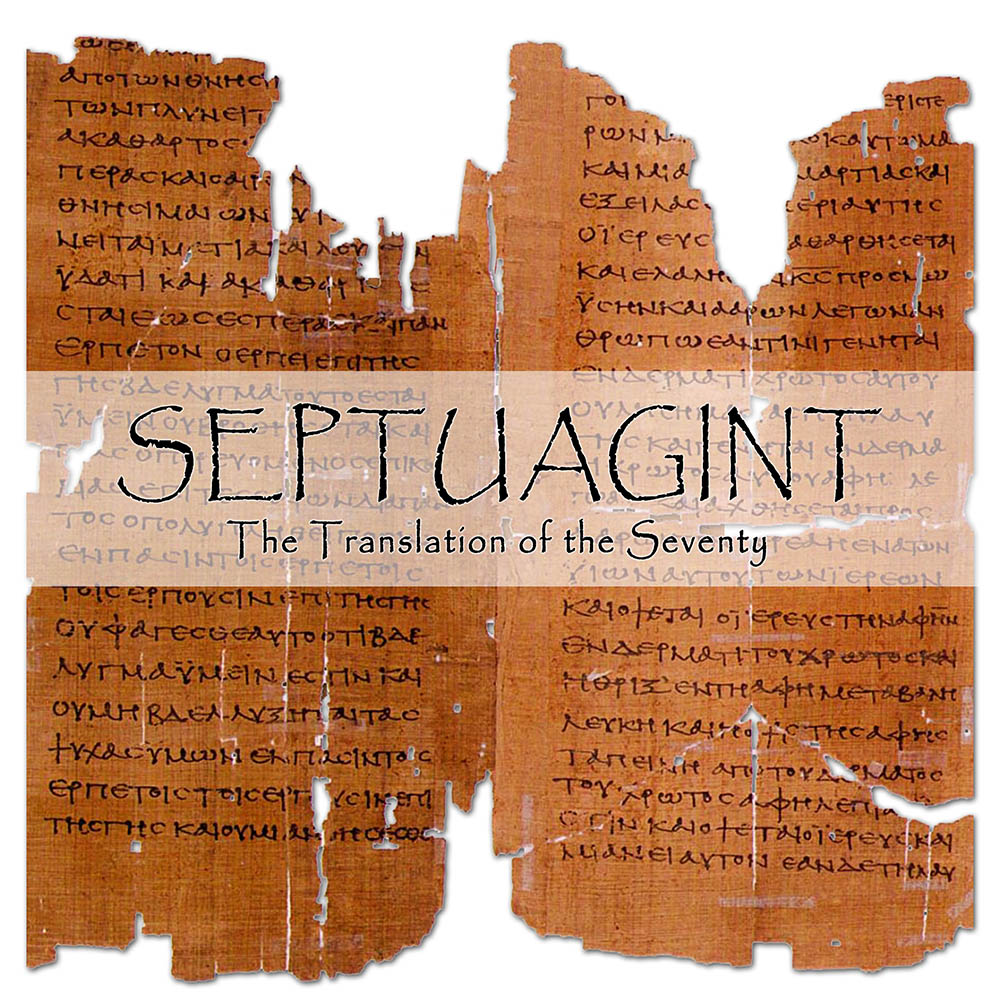
Here is a direct side-by-side comparison of the Masoretic Text with the LXX. I have concluded that the LXX is much to be preferred over the Masoretic Text, a position from which the Eastern Orthodox Church never deviated. Perhaps, if you take the time to read my comparisons and other articles, you will arrive at the same conclusion.
The Septuagint version I am using is the Lexham English Septuagint 2nd Edition, which is available in print or as part of Logos Bible Software. Occasionally I also use the Brenton translation of the LXX for insight into difficult passages.
If you want to know more, click on the following links.
- Why Christians Should Prefer the Septuagint over the Masoretic Text.
- Some Insights Gained through Comparing the Masoretic Text to the Septuagint
- More side by side comparisons of the Masoretic Text (MT) to the Septuagint (LXX).
| Masoretic Text | Septuagint | Significance |
|
1 Now the whole earth had one language and one speech. 2 And it came to pass, as they journeyed from the east, that they found a plain in the land of Shinar, and they dwelt there. 3 Then they said to one another, “Come, let us make bricks and bake them thoroughly.” They had brick for stone, and they had asphalt for mortar. 4 And they said, “Come, let us build ourselves a city, and a tower whose top is in the heavens; let us make a name for ourselves, lest we be scattered abroad over the face of the whole earth.” Genesis 11:1–4 (NKJV) |
1 And all the earth was one language, and there was one voice for all. 2 And this happened when they moved from the east: they found a plain in the land of Shinar, and they settled there. 3 And a human said to their neighbor, “Come on, let’s make bricks and bake them in the fire.” And the brick turned into stone for them, and the clay was asphalt for them. 4 And they said, “Come on, let’s build ourselves a city and a tower whose head will be as far as the heavens, and we will make a name for ourselves before we are scattered over the face of the whole earth.” Genesis 11:1–4 (LES2) |
The two passages essentially agree with a few minor discrepancies. Instead of the MT’s “they said to one another,” the LXX reads, “a man said to his neighbor.” Instead of the MT’s, “they had asphalt for mrotar,” the LXX has, “the clay was asphalt for them.” The MT makes a plural of heaven, while the LXX uses the singular, even though the English translations makes a plural. The general idea of the passage is exactly the same, however. |
|
5 But the LORD came down to see the city and the tower which the sons of men had built. 6 And the LORD said, “Indeed the people are one and they all have one language, and this is what they begin to do; now nothing that they propose to do will be withheld from them. 7 Come, let Us go down and there confuse their language, that they may not understand one another’s speech.” Genesis 11:5–7 (NKJV) |
5 And the Lord came down to see the city and the tower, which the sons of humans built. 6 And the Lord said, “Look, there is one race and one language of all, and they have begun to do this, and now they will not fail at all that they try to do. 7 Come on, let’s go down there to confound their tongue, so that each of them will not understand their neighbor’s voice.” Genesis 11:5–7 (LES2) |
I see no significant differences here. |
|
8 So the LORD scattered them abroad from there over the face of all the earth, and they ceased building the city. 9 Therefore its name is called Babel, because there the LORD confused the language of all the earth; and from there the LORD scattered them abroad over the face of all the earth. Genesis 11:8–9 (NKJV) |
8 And the Lord scattered them from that place over the face of all the earth, and they stopped building the city and the tower. 9 Because of this they called its name Confusion, because there the Lord confounded the language of all the earth, and from there the Lord God scattered them over the face of all the earth. Genesis 11:8–9 (LES2) |
The LXX adds that the construction of the tower ceased as well as the city. It is interesting that the MT gives us the Hebrew word for the city, which is Babel, which means confusion, but the LXX uses the Greek word for confusion because it assumes the reader will not get the word play in Hebrew. |
| Summary: As is often the case with the more historical sections of Scripture, there is very little difference between the MT and LXX. These contrasts generally show up in the Psalms and Prophets, in my opinion because the spirit of prophecy is the testimony of Jesus, which the devil hates. (Revelation 19:10) |