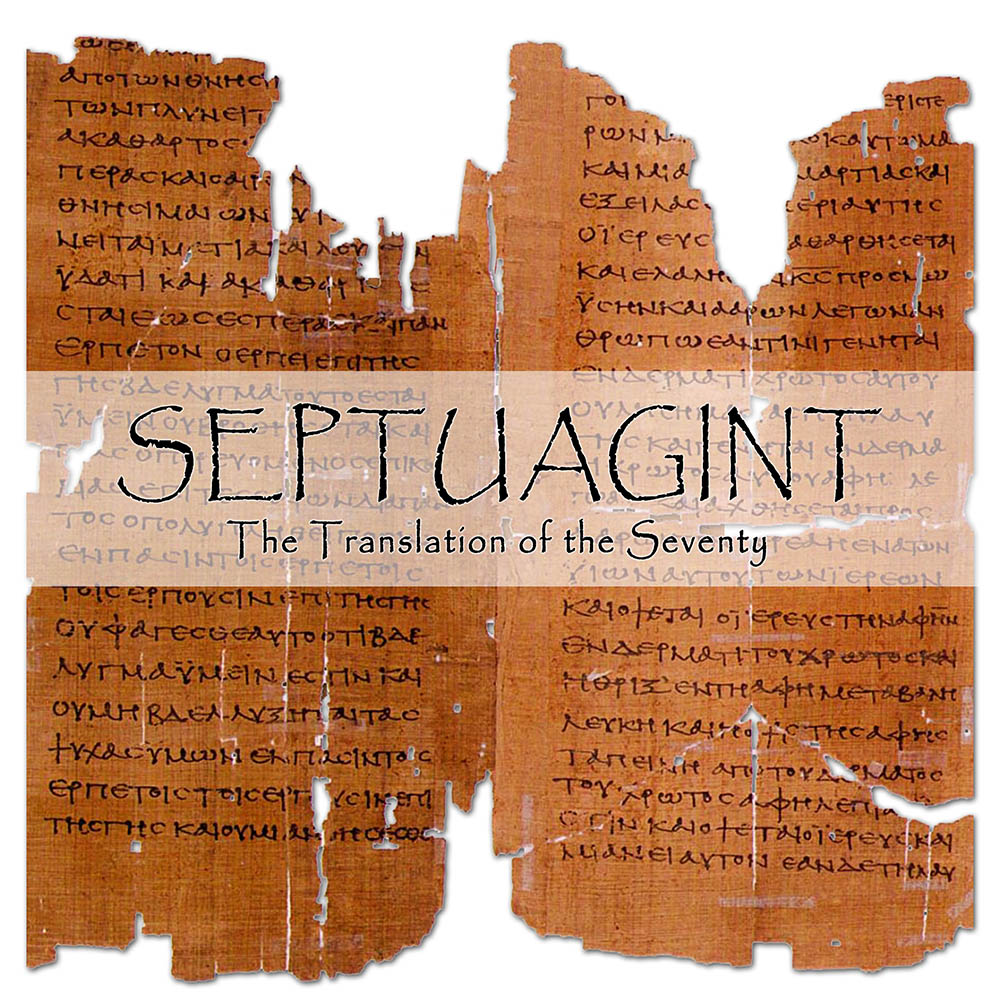
What I Have Learned by Comparing the Masoretic Text to the Septuagint

Since I began reading through the Old Testament comparing the Masoretic Text (MT) of our EnglishSeptuagint Bibles to the English Translation of the Septuagint (LXX) I have learned some important things for myself. I was told that the differences between the two are minor, but that is not true. Most of the differences are not theological in nature, but when one sees differences throughout, it makes one question which one is the true Word of God. I have come to some conclusions, which I will share below. I encourage you to make your own comparison. Don’t just take my word for it.

  1. Death by a thousand cuts. Theoretically it is possible to kill someone by making small cuts all over his or her body, rather than inflicting one critical wound. This is what I suspect the Masoretic Text has done to the Old Testament. There are so many differences, both big and small, between the MT and LXX that it casts doubt on what was the inspired version. Scholars claim that they are derived from different textual traditions. I have heard some say that the MT is the best of them, but without offering any sort of proof. Why should one think that? Usually older means better because there would have been less opportunity for copiest errors and deliberate changes to have occurred. But there is no way for anyone to know which version is based on the oldest, since virtually all paleo-Hebrew manuscripts are now gone. The Dead Sea Scrolls that are written in the older paleo script mostly agree with the LXX, which lends credence to my contention that the LXX is more reliable. However, logically having differing versions means one cannot have complete assurance which is the actual the Word of God. This is what I mean by death by a thousand cuts. Such ambiguity is not a good thing. Since Jesus and the early church used the LXX, that is good enough for me to go with it when forced to choose. Fortunately, none of the thousand cuts is enough to make someone change his or her theology.
  2. Both the MT and the LXX are translations. Proponents of the MT argue that the LXX is a translation, while the MT is not. Actually, both are translated from the original paleo-Hebrew, which was a Phoenician script that died out as an active language around 400 BC. The LXX was translated presumably from the paleo-Hebrew into Greek around 285 BC and became the official Bible for the Jews who lived in the Greek speaking world, which was most everywhere in the Roman Empire. As a result, the LXX was what Jesus would have read, been familiar with, and quoted since it was being used in the synagogues. The apostles and early church used the LXX for hundreds of years, and the Eastern Orthodox Church never stopped. In addition, it is the version quoted in the New Testament about 70-80% of the time, thus giving it the Holy Spirit’s stamp of approval. The MT also was translated from the paleo-Hebrew into a more modern form of Hebrew that is based on Aramaic. So, it too is a translation, but since it was not completed until around 1000 AD by the Masoretes, it is the newer one. That being the case, we are not sure if those translators were able to put their hands on the same paleo-Hebrew manuscripts that had been available to the Seventy. Perhaps some of those had been lost or destroyed. Certainly much must have been lost when the temple was burned in 70 AD. By the time the MT was produced, Christianity had spread all over the world and was using quotes from the LXX to prove that Jesus is the Messiah. The Jews were decidedly hostile to Christianity and to Jesus; so, there is no reason to suppose that they harbored any good will toward either when making their more recent translation. It would seem reasonable that they would choose to translate key verses in a way that would cast doubt on the claims of the New Testament, which is exactly what seems to have happened. 
  3. The most egregious changes are found in the prophetic writings. I do not believe the changes that are theological and Christological in nature are due to accident or differences in textual traditions. That is because those changes are almost always in one direction – pointing away from Christ or serving to elevate Israel. The passages most used by Christians to prove that Jesus is the Messiah are often obscured, changed, or even omitted. Other passages that should be applied to Christ are changed to apply to Israel. Judgments against Israel are sometimes softened, but those against her enemies are sometimes made more severe. I believe that prophetic scriptures were the main target because by nature prophecy points to Christ. Revelation 19:10 says that “the revelation of Jesus is the spirit of prophecy.” 2 Peter 1:19-21 says that prophecy is like a “day star” that points to Christ, which agrees with Jesus’ own claim that all scripture points to him. (John 5:39) Even some of the prophetic portions of historical sections have been altered. If one compares Genesis 49 in the MT to that of the LXX, the changes are so numerous that it sometimes does not seem like the same material. At this point, I have been through Isaiah 40-49. The changes are huge in my point of view. Many of the psalms are prophetic in nature, too; so, those have been changed to a great degree in some places. Some of the changes were so severe that the translators of our English Bibles switched to the LXX as a source. One example is Psalm 22:16-17. The MT reads something like, “like a lion, my hands and my feet.” The LXX, which the New Testament quotes, says, “they pierced my hands and my feet,” which is a clear allusion to the crucifixion of our Lord. My question, then, is why do translators generally stick to the MT? Perhaps it is because at times it is more readable and easier to understand. However, that does not mean it is therefore more accurate.
  4. The LXX seems more literal and authentic. My opinion is that the best way to illustrate the difference between the LXX and the MT is to compare it to the difference between the NASB, which is more literal and follows the Greek syntax, and the New Living Translation, which is more readable and easier to comprehend, but doesn’t always give you the exact wording as does the NASB. Any true student of the Bible wants to know exactly what it says. Sometimes the NLT hits a “home run.” Other times it misses the mark, but one would not know that unless he or she has access to a more literal translation. Not being able to read paleo-Hebrew, and since hardly any manuscripts in that ancient language still exist, no one can say for sure, but when reading the two, it seems to me that a more literal LXX translation has been edited in the MT to make it more readable and comprehensible, while perhaps making it less accurate in the process. I thoroughly enjoy reading the LXX. In some cases, it seems that I am getting to know Old Testament characters, such as David, more intimately. The wording often seems more believable to me than what is offered in the MT. Check it out for yourself and see what you think.

So there you have my interim report. I will write again later after I have compared a greater number of books from the OT.

Christian Zionism Opposes Jesus’ Own Words

I have previously written how Dispensationalism, which is the root that produced Christian Zionism, opposes the New Covenant. In this article I will show that Christian Zionism also contradicts Jesus’ own words. My goal in this series of articles is to illustrate that Dispensationalism and Christian Zionism both oppose the clear teachings of Jesus and the New Testament. This I believe will help the reader move from a misguided Israel-centered eschatology to a proper New Covenant Jesus-focused view of salvation and the end times. Through ignorance of God’s Word we should not allow Israel to usurp what belongs to Christ alone.

Example #1

33 “Listen to another parable. There was a landowner who PLANTED A VINEYARD AND PUT A WALL AROUND IT AND DUG A WINE PRESS IN IT, AND BUILT A TOWER, and rented it out to vine-growers and went on a journey. 34 “When the harvest time approached, he sent his slaves to the vine-growers to receive his produce. 35 “The vine-growers took his slaves and beat one, and killed another, and stoned a third. 36 “Again he sent another group of slaves larger than the first; and they did the same thing to them. 37 “But afterward he sent his son to them, saying, ‘They will respect my son.’ 38 “But when the vine-growers saw the son, they said among themselves, ‘This is the heir; come, let us kill him and seize his inheritance.’ 39 “They took him, and threw him out of the vineyard and killed him. 40 “Therefore when the owner of the vineyard comes, what will he do to those vine-growers?” 41 They said to Him, “He will bring those wretches to a wretched end, and will rent out the vineyard to other vine-growers who will pay him the proceeds at the proper seasons.” 42 Jesus said to them, “Did you never read in the Scriptures, ‘THE STONE WHICH THE BUILDERS REJECTED, THIS BECAME THE CHIEF CORNER stone; THIS CAME ABOUT FROM THE LORD, AND IT IS MARVELOUS IN OUR EYES’? 43 “Therefore I say to you, the kingdom of God will be taken away from you and given to a people, producing the fruit of it. 44 “And he who falls on this stone will be broken to pieces; but on whomever it falls, it will scatter him like dust.” 45 When the chief priests and the Pharisees heard His parables, they understood that He was speaking about them. 46 When they sought to seize Him, they feared the people, because they considered Him to be a prophet. Matthew 21:33–46 (NASB95) 

This parable clearly illustrates Israel’s ongoing hostile attitude toward Jesus the Lord. They killed him and are still doing their best to usurp Jesus’ kingdom for themselves. This is despite the fact that God summarily destroyed the city, temple, and nation in 70 AD at the hands of the Romans, just as Jesus prophesied. Except for those descendants of Abraham who are part of God’s elect and confess Christ is Lord, the Jews still oppose Jesus, which makes them, by definition, anti-Christ. The kingdom has been given to another people, who before were not a people. (Romans 9:25-26) This new people is called the church, which is composed of both Jew and Gentile. The church is also called the body of Christ, “one new man in Christ,” (Ephesians 2:15) and the Israel of God (Galatians 6:16). One becomes part of this nation (1 Peter 2:9) through the new birth. Biological inheritance has no meaning whatsoever in God’s New Covenant kingdom.

10 He was in the world, and the world was made through Him, and the world did not know Him. 11 He came to His own, and His own did not receive Him. 12 But as many as received Him, to them He gave the right to become children of God, to those who believe in His name: 13 who were born, not of blood, nor of the will of the flesh, nor of the will of man, but of God. John 1:10–13 (NKJV) 

Example #2

33 Therefore Pilate entered again into the Praetorium, and summoned Jesus and said to Him, “Are You the King of the Jews?” 34 Jesus answered, “Are you saying this on your own initiative, or did others tell you about Me?” 35 Pilate answered, “I am not a Jew, am I? Your own nation and the chief priests delivered You to me; what have You done?” 36 Jesus answered, “My kingdom is not of this world. If My kingdom were of this world, then My servants would be fighting so that I would not be handed over to the Jews; but as it is, My kingdom is not of this realm [literally: from here].” 37 Therefore Pilate said to Him, “So You are a king?” Jesus answered, “You say correctly that I am a king. For this I have been born, and for this I have come into the world, to testify to the truth. Everyone who is of the truth hears My voice.” John 18:33–37 (NASB95) 

Jesus own testimony is that his kingdom is not of this world or “from here.” He rules over the kingdom of heaven, a very real place where he now sits at his Father’s right hand waiting for his enemies to made his footstool. (Luke 20:42-43, Ephesians 1:20, Hebrews 8:1) At this point in history, the earth is a battleground that is destined to be destroyed and replaced along with the current heaven. (2 Peter 3:10-13) God sits in heaven and laughs at his enemies who conspire to throw off his rule. (Psalm 2:1-4) This ongoing conspiracy among the nations includes the Jewish people who have not submitted themselves to Christ’s rule. All of the efforts to secure the land of Palestine by modern day Jews is an illegitimate attempt to do so with authorization from God. It is impossible for natural born Jewish people to inherit God’s spiritual kingdom, which can only be inherited spiritually from Christ through the new birth. Trying to build a physical kingdom on earth through natural means is misguided and doomed to failure.

50 Now this I say, brethren, that flesh and blood cannot inherit the kingdom of God; nor does corruption inherit incorruption. 1 Corinthians 15:50 (NKJV) 

Example #3

37 “I know that you are Abraham’s descendants, but you seek to kill Me, because My word has no place in you. 38 I speak what I have seen with My Father, and you do what you have seen with your father.” 39 They answered and said to Him, “Abraham is our father.” Jesus said to them, “If you were Abraham’s children, you would do the works of Abraham. 40 But now you seek to kill Me, a Man who has told you the truth which I heard from God. Abraham did not do this. 41 You do the deeds of your father.” Then they said to Him, “We were not born of fornication; we have one Father—God.” 42 Jesus said to them, “If God were your Father, you would love Me, for I proceeded forth and came from God; nor have I come of Myself, but He sent Me. 43 Why do you not understand My speech? Because you are not able to listen to My word. 44 You are of your father the devil, and the desires of your father you want to do. He was a murderer from the beginning, and does not stand in the truth, because there is no truth in him. When he speaks a lie, he speaks from his own resources, for he is a liar and the father of it. 45 But because I tell the truth, you do not believe Me. 46 Which of you convicts Me of sin? And if I tell the truth, why do you not believe Me? 47 He who is of God hears God’s words; therefore you do not hear, because you are not of God.” John 8:37–47 (NKJV) 

This passage undoes every argument that physical descendants of Abraham are still God’s chosen people. Jesus made it clear that those biologically descended from Abraham are not automatically God’s children. This agrees with Jesus’ authoritative statement, “You must be born again.” (John 3:7) The new birth is the only way into God’s New Covenant kingdom. Biological descent means absolutely nothing.

6 But it is not that the word of God has taken no effect. For they are not all Israel who are of Israel, 7 nor are they all children because they are the seed of Abraham; but, “In Isaac your seed shall be called.” 8 That is, those who are the children of the flesh, these are not the children of God; but the children of the promise are counted as the seed. Romans 9:6–8 (NKJV) 

Jesus went further to assert that the father of the Jews who refuse his rule is the devil. As a result of the New Covenant, there are two groups of people in the world – those who are God’s born-again children and those who are not and are, by default, children of the devil. A remnant of biological descendants of Abraham have and will come to Christ, but the rest are lost. Those who refuse to acknowledge Christ as Lord are “not of God” according to Jesus. This agrees with John’s other statements.

22 Who is a liar but he who denies that Jesus is the Christ? He is antichrist who denies the Father and the Son. 23 Whoever denies the Son does not have the Father either; he who acknowledges the Son has the Father also. 1 John 2:22–23 (NKJV) 

23 He who hates Me hates My Father also. John 15:23 (NKJV) 

Isn’t it about time for Christians to agree with what God’s Word says rather than continue to believe the teachings of a convicted fraudster named Cyrus Scofield? Those who refuse to confess that Christ is Lord cannot possibly be God’s “chosen people.” There is only one chosen people, those who are elect in Christ.

3 Blessed be the God and Father of our Lord Jesus Christ, who has blessed us with every spiritual blessing in the heavenly places in Christ, 4 just as He chose us in Him before the foundation of the world, that we should be holy and without blame before Him in love, 5 having predestined us to adoption as sons by Jesus Christ to Himself, according to the good pleasure of His will, 6 to the praise of the glory of His grace, by which He made us accepted in the Beloved. Ephesians 1:3–6 (NKJV) 

In fact, according to Jesus, those who refuse to believe in him are not God’s at all. This includes both Jews and Gentiles who reject Christ. Jews are not a special class of people to whom Jesus’ words do not apply. The ground is level at the foot of the cross, and in Christ all are equal.

26 For you are all sons of God through faith in Christ Jesus. 27 For as many of you as were baptized into Christ have put on Christ. 28 There is neither Jew nor Greek, there is neither slave nor free, there is neither male nor female; for you are all one in Christ Jesus. 29 And if you are Christ’s, then you are Abraham’s seed, and heirs according to the promise. Galatians 3:26–29 (NKJV) 

Until We Believe, We Cannot See

We have a saying that seeing is believing. The spiritual truth, however, is that until we believe, we cannot see. Worldly wisdom requires proof before believing that something is true, and generally that is a good practice, except when it comes to the Word of God.

Before Jesus went to the cross, he warned his disciples about what was coming. 

31 Then He took the twelve aside and said to them, “Behold, we are going up to Jerusalem, and all things that are written by the prophets concerning the Son of Man will be accomplished. 32 For He will be delivered to the Gentiles and will be mocked and insulted and spit upon. 33 They will scourge Him and kill Him. And the third day He will rise again.” Luke 18:31–33 (NKJV) 

How plainly he spoke; yet, this disciples understood none of it. They could not fathom that such a thing could happen. Their understanding of who the Messiah would be did not mesh with Jesus’ words; so, they could not understand or believe them. The Bible says that those things were hidden from them. (John 18:34)

When our preconceptions fail to mesh with God’s Word, we tend to reject his Word instead of alter our thinking. How sad.

Unless we let go of our preconceptions and unbelief, we will remain spiritually blind even though God himself talks to us.

Later as Jesus and his disciples were approaching Jericho, “a certain blind man” heard that Jesus was passing by. He believed that Jesus could open his blind eyes; so, he began to cry out, “Jesus, Son of David, have mercy on me.” This blind man saw what many could not: Jesus is the Messiah, the Son of David! When Jesus had him brought into his presence, he asked him, “What do you want me to do for you?”  The blind man said, “Lord, that I might receive my sight.”

42 Then Jesus said to him, “Receive your sight; your faith has made you well.” Luke 18:42 (NKJV) 

The blind man received his physical sight because he believed. He believed that Jesus is who the Bible says he is, the Messiah and Lord. His faith preceded his seeing. That is how it often works.

Faith precedes seeing. If we believe what God says, he will open our spiritual eyes to understand even more. If we refuse to believe, God’s truth will likely remain hidden from us.

Thomas the apostle refused to believe that Jesus had risen from the dead, even after the hearing the testimony of the other apostles. 

...“Unless I see in His hands the print of the nails, and put my finger into the print of the nails, and put my hand into His side, I will not believe.” John 20:25 (NKJV) 

Such cautiousness would be applauded by the world, where deception is rampant, and no one wants to play the fool by falling for a ruse. Jesus was extremely gracious to Thomas, as he is to us. Rather than withholding himself until Thomas believed, he appeared to that man and invited him to do just what he had requested.

26 And after eight days His disciples were again inside, and Thomas with them. Jesus came, the doors being shut, and stood in the midst, and said, “Peace to you!” 27 Then He said to Thomas, “Reach your finger here, and look at My hands; and reach your hand here, and put it into My side. Do not be unbelieving, but believing.” 28 And Thomas answered and said to Him, “My Lord and my God!” John 20:26–28 (NKJV) 

I can only imagine what this scene was like. What was the look on Thomas’ face? What was he feeling inside? Was he overcome with a sense of grief for his unbelief? Was he overwhelmed by Jesus’ presence? All we know for sure is that he immediately confessed that Jesus is Lord and worshiped him as God.

Jesus then gave him this mild rebuke.

29 Jesus said to him, “Thomas, because you have seen Me, you have believed. Blessed are those who have not seen and yet have believed.” John 20:29 (NKJV) 

Jesus appeared to hundreds of people after his resurrection, giving them first-hand proof of his resurrection and lordship. (1 Corinthians 15:6) Most of us disciples since that time, however, fall into the camp of those who having not seen, yet believe. 

God has other ways of confirming to us the truth of the gospel. We have the external witness of God’s Word and the internal testimony of the Holy Spirit in our hearts.

13 However, when He, the Spirit of truth, has come, He will guide you into all truth; for He will not speak on His own authority, but whatever He hears He will speak; and He will tell you things to come. 14 He will glorify Me, for He will take of what is Mine and declare it to you. 15 All things that the Father has are Mine. Therefore I said that He will take of Mine and declare it to you. John 16:13–15 (NKJV) 

This is how I became a believer. I head the testimony of other Christians, including the woman who is now my wife, but I desired some sort of confirmation that the gospel is true. I asked Jesus, if he were real, to come into my life and reveal himself to me. Amazingly enough, he did just that. It wasn’t long after, when I was all alone pondering these things, that I recalled praying that prayer. The instant I did, it was as if Jesus’ presence filled the room. I knew in my heart all at once that he is who the Bible says he is. I believed he is Savior and Lord! That night my life’s trajectory completely changed. From that moment forward, following and serving him became extremely important. I have done so quite imperfectly, but still today, some 55 years later, I find great joy in knowing him and studying his Word.

We do not usually start out simply believing what the Bible says. We begin our journey with the Word of God carrying all sorts of preconceptions and presuppositions that did not originate with God. If these do not agree with the Word of God, we often quite naturally and sinfully choose to question the Bible instead of our preconceived ideas and beliefs.

We are prone to construct logical arguments in our minds that fight against simply believing God’s Word as a child.

When that is the case, it hinders our ability to comprehend truth and believe it from the heart. Paul wrote:

4 For the weapons of our warfare are not carnal but mighty in God for pulling down strongholds, 5 casting down arguments and every high thing that exalts itself against the knowledge of God, bringing every thought into captivity to the obedience of Christ, 2 Corinthians 10:4–5 (NKJV) 

Satan has produced a vast number of such “arguments” that fight against faith. Sadly, many born-again, Bible-believing disciples have swallowed some of these lies “hook, line and sinker.” As a result, we may inadvertently choose to believe a lie instead of placing our complete confidence in the absolute truthfulness and integrity of God’s Word. Paradoxically, however, we may remain blind to our condition and deny it vehemently when confronted. Until God mercifully opens our hearts and brings us to repentance, spiritual blindness will continue to exist even in the church.

34 But they understood none of these things; this saying was hidden from them, and they did not know the things which were spoken. Luke 18:34 (NKJV) 

The more we study the Bible, the greater is its claim upon us. It is not enough simply to intellectually comprehend God’s Word. It is vital that we believe it from the heart and surrender to its authority.

Paul praised the church in Thessaloniki, Greece for receiving God’s Word in this way.

13 For this reason we also thank God without ceasing, because when you received the word of God which you heard from us, you welcomed it not as the word of men, but as it is in truth, the word of God, which also effectively works in you who believe. 1 Thessalonians 2:13 (NKJV) 

If we remain aloof from the Bible’s authority over our lives, it will hinder our believing it and seeing its truth by revelation. God reveals himself to the pure in heart. (Matthew 5:8)

Jesus did not come to scratch our itching intellects, but to satisfy the hungry heart.

Until we come to the place where we accept and believe what God’s Word says – period, we will be somewhat on the outside looking in. God reveals himself to those whose hearts are open to believe. 

Spiritual blindness, the inability to see or understand spiritual things, can be impervious to Christ’s healing touch because it is rooted in unbelief, the one thing that can block us from being able to receive God’s blessings. (Matthew 13:58) We all have areas regarding which we are still blind to some degree as a result of unbelief and hardness of heart.

We do well to heed Jesus’ words to Martha before he raised her brother Lazarus from the dead.

40 Jesus said to her, “Did I not say to you that if you would believe you would see the glory of God?” John 11:40 (NKJV) 
Prayer

Lord, help me to believe simply as a child. Reveal to me where I may hold beliefs that oppose your Word and help me to repent. Amen.


Click here to see more articles about identifying and countering deception.

Comparing MT to the Septuagint (LXX): Genesis 49:8-10

In the West, Christians have used the Masoretic Text (MT) since Jerome chose to use it as the basis for his Latin Vulgate Bible Old Testament. The Eastern Orthodox Church, to their credit, never deviated from the Septuagint (LXX). The LXX is a much older translation than the MT (285 BC compared to hundreds of years after Christ), was the predominant source used and quoted by the New Testament writers, and was translated from Hebrew before any animosity toward Christ could influence it. Notwithstanding, because of the power of tradition, it is quite difficult for many to think of it as a more trustworthy version. Sadly for us Christians and the world in general, the MT has obscured or omitted many texts that clearly refer to Christ.

Jesus taught us that all scripture points to him (John 5:39). Therefore, any translation that gets in the way of our seeing Christ is suspicious.

Doing a side by side comparison of the LXX and the MT makes this obfuscation obvious. I have observed that most of the significant changes that pertain to Christ take place in prophetic passages, rather than historical ones. Here is an example. The Septuagint version I am using is the Lexham English Septuagint 2nd Edition, which I prefer. It is available in print or digitally through Logos Bible Software.

Masoretic Text Septuagint Significance

8 “Judah, your brothers shall praise you; Your hand shall be on the neck of your enemies; Your father’s sons shall bow down to you. 9 “Judah is a lion’s whelp; From the prey, my son, you have gone up. He couches, he lies down as a lion, And as a lion, who dares rouse him up? 10 “The scepter shall not depart from Judah, Nor the ruler’s staff from between his feet, Until Shiloh comes, And to him shall be the obedience of the peoples. Genesis 49:8–10 (NASB95) 

8 Judah, may your brothers praise you; may your hands be upon the back of your enemies. The sons of your father will revere you. 9 A cub of a lion, Judah; from a shoot, my son, you went up. After lying back, you slept like a lion and like a cub. Who will stir him up? 10 A ruler will not cease from Judah, and one who leads from his thighs, until the things laid away for him come, and he is the expectation of nations. Genesis 49:8–10 (LES2) 

The MT and LXX agree that Judah is associated with a lion. This is significant regarding Christ, who is descended from the line of David, who was descended from Judah. (Luke 2:4, 3:23-38)

Jesus is called the Lion of the tribe of Judah in Revelation 5:5. 

The promise that a ruler will not cease from Judah’s line cannot refer to the kings of Judah because that line of rulers came to an end, unless one considers the eternal rule of Jesus the Messiah. David was a type of Christ. Being prophetic, that king of Judah foresaw the coming of the Lord. (Psalm 110:1)

The angel Gabriel announced to Mary that the child in her womb, that was conceived by the Holy Spirit, would “be great, and he will be called the Son of the Highest; and the Lord God will give him the throne of his father David. And he will reign over the house of Jacob forever and of his kingdom there will be no end.” (Luke 1:31-33)

What the MT translates as “until Shiloh,” whose meaning is uncertain, the LXX translates “until the things laid away for him come,” which makes much more sense, especially regarding Christ.

The last part of verse 10 in the MT reads, “to him shall be the obedience of the peoples.” The MT uses an unusual Hebrew word “am” which means paternal people or family. The LXX, on the other hand, says that this one, Christ, will be the “expectation of the nations.” The LXX uses the Greek word “ethnos,” which corresponds to other verses that predict that the Messiah or Christ will become a blessing to all nations. 

10 Then the angel said to them, “Do not be afraid, for behold, I bring you good tidings of great joy which will be to all people. Luke 2:10 (NKJV) 

Eventually every knee will bow to him, which corroborates the claim of the MT. (Philippians 2:10-11)

    Both the MT and LXX point to Christ is the above passage, but the LXX makes it plainer, especially in the very last phrase.

Conclusion

If you want to know more about why Christians should prefer the Septuagint to the MT, click on this link.The Eastern Orthodox Church had the wisdom to retain the LXX for its Old Testament scriptures. As for me, I now rely on the LXX. It was Paul’s standard for Old Covenant truth and is quoted in the New Testament. That makes it good enough for me.

More articles on the Septuagint

Comparing MT to the Septuagint (LXX): Isaiah 46

The Septuagint (LXX) was the accepted version of the Old Testament at the time of Christ and during the early church period. It was much later that the Masoretic Text (MT) became the basis for our English translations, which continues to this day in the Western church. The Eastern Orthodox Church stayed with the LXX. Conventional wisdom is that there were various textual versions of the paleo-Hebrew that were passed down, the LXX using one of them. The MT is supposed to be based on an alternate source and to be superior. However, 70 – 80 % of the quotes from the Old Testament that are found in the New Testament come directly from the Septuagint, which appears to be God’s affirmation of that version. Another noteworthy point is that the MT sometimes omits or obscures references to Christ that are quoted from the LXX in the New Testament. This makes we question the MT. After perusing the MT alongside the LXX, I have discovered numerous textual differences, but not all of them, or even the majority of them, have theological or Christological significance. Unfortunately, having such variations tends to engender doubt as to what is the true Word of God. This, I believe, is a satanic strategy.

Generally, I prefer the LXX after comparing both. It seems more “literal.” Almost always the LXX provides the clearest references to Christ. In those few cases when the MT does, I go with it.

I choose whichever version most closely agrees with the New Testament and gives the clearest reference to Christ and the New Covenant.

Jesus said that all of Scripture points to him (John 5:39); therefore, this should be our litmus test.

In this series, I have done my best to compare and contrast what I consider to be significant passages. Here is an another example. The Septuagint version I am using is the Lexham English Septuagint 2nd Edition, which I like the best. It is available in print or through Logos Bible Software.

Masoretic Text Septuagint Significance

1 Bel has bowed down, Nebo stoops over; Their images are consigned to the beasts and the cattle. The things that you carry are burdensome, A load for the weary beast. 2 They stooped over, they have bowed down together; They could not rescue the burden, But have themselves gone into captivity. Isaiah 46:1–2 (NASB95) 

1 Bel has fallen! Nabo is shattered! Their graven images have become wild animals and livestock! Lift them up, bound like a burden for the weary, 2 for the faint and the hungry not having might together, who will not be able to be delivered from war, but they themselves will be led captive. Isaiah 46:1–2 (LES2) 

This chapter in the MT once again hides Jesus from the eyes of Old Testament readers. The first two verses do not have any theologically significant differences. The main point is that all who worship false gods go into captivity, something that happened to the Jews on more than one occasion, the last being when they renounced their Messiah.

3 “Listen to Me, O house of Jacob, And all the remnant of the house of Israel, You who have been borne by Me from birth And have been carried from the womb; 4 Even to your old age I will be the same, And even to your graying years I will bear you! I have done it, and I will carry you; And I will bear you and I will deliver you. Isaiah 46:3–4 (NASB95) 

3 Listen to me, O house of Jacob, and all the remnant of Israel who have been raised from the belly and brought up from their youth 4 (until old age I am he, and until you have grown old I am he). I bear you up; I made you, and I will lift you up; I will take you up and will save you. Isaiah 46:3–4 (LES2) 

In verse four the MT says, “Even to old age I will be the same, and even to your graying years I wear bear you.” In contrast, the LXX says “until old age I AM, and until you have grown old I AM.” This of course refers to God’s identity as the great I AM, which is eternal. Then the LXX emphasizes that God created the Israelites rather than having done the work of carrying them.

5 “To whom would you liken Me And make Me equal and compare Me, That we would be alike? Isaiah 46:5 (NASB95) 

5 To whom have you compared me? Look! Act cunningly, you who are misled. Isaiah 46:5 (LES2) 

Why does the MT leave out the second part of this verse, which brings to light the cunning of Israel’s rejection of God which led to their being deceived? Once again, the Greek word planao is translated as “misled.”

As I have pointed out before, the word “planet” is derived from it. The NT uses planao to describe angels and stars that left their assigned places is disobedience to God. (Jude 6, 12-13) It is significant that the heliocentric theory, which contradicts Genesis Chapter One, calls the biblical “wandering stars” planets. I think we have a clear clue that heliocentrism is a satanic deception, which is true of anything that contradicts scripture.

However, that is not the point of this passage. Here we have a reference to Israel’s idolatry, which continues to this day. Whatever Judaism now purports to worship, it is not the God of the Bible. Anyone who rejects the Son does not have the Father either. (Luke 10:16, 1 John 2:23)

6 “Those who lavish gold from the purse And weigh silver on the scale Hire a goldsmith, and he makes it into a god; They bow down, indeed they worship it. 7 “They lift it upon the shoulder and carry it; They set it in its place and it stands there. It does not move from its place. Though one may cry to it, it cannot answer; It cannot deliver him from his distress. Isaiah 46:6–7 (NASB95) 

6 Those who contribute gold from a pouch and silver in a scale will weigh it in a balance, and they hired a goldsmith and made idols, and with heads hung in shame they worship them! 7 They raise it upon their shoulder and walk; and if they set it down, it remains in its place. It cannot move, and it cannot hear whoever cries aloud to it; it cannot save him from disasters. Isaiah 46:6–7 (LES2) 

No significant differences here.

8 “Remember this, and be assured; Recall it to mind, you transgressors. 9 “Remember the former things long past, For I am God, and there is no other; I am God, and there is no one like Me, 10 Declaring the end from the beginning, And from ancient times things which have not been done, Saying, ‘My purpose will be established, And I will accomplish all My good pleasure’; Isaiah 46:8–10 (NASB95) 

8 Remember these things and sigh. Repent, you who have been misled, return in the heart. 9 Remember the former things from eternity, that I am God, and there is no one further besides me, 10 who declares beforehand the final things before they happen, and at once they are accomplished. And I said, “All my counsel will stand, and I will do all that I have resolved.” Isaiah 46:8–10 (LES2) 

There is a huge difference between being assured or courageous in the Hebrew MT and sighing deeply or groaning as the Greek word stenazo in the LXX is properly translated. This passage calls to repentance those who have been previously misled.

11 Calling a bird of prey from the east, The man of My purpose from a far country. Truly I have spoken; truly I will bring it to pass. I have planned it, surely I will do it. Isaiah 46:11 (NASB95) 

11 Summoning a bird from the east and from a land afar concerning what I have resolved, I spoke and I brought forth; I created and I made him, I brought him forth and prospered him on his way. Isaiah 46:11 (LES2) 

The MT identifies the “bird” as a man from the east or far country, which is probably the case. Perhaps this was Cyrus. Whoever it was, God prospered him on his way.

12 “Listen to Me, you stubborn-minded, Who are far from righteousness. 13 “I bring near My righteousness, it is not far off; And My salvation will not delay. And I will grant salvation in Zion, And My glory for Israel. Isaiah 46:12–13 (NASB95) 

12 Listen to me, you who have destroyed the heart, who are far from righteousness. 13 I have brought my righteousness near and will not delay the salvation that is from me. I have given salvation to Israel in Zion for an act of glory. Isaiah 46:12–13 (LES2) 

I believe Isaiah had Israel in mind when he wrote verse 12. God is calling that nation to repent of their idolatry and believe in God’s appointed Messiah, of whom Cyrus was a type or forerunner.

5 But because of your stubbornness and unrepentant heart you are storing up wrath for yourself in the day of wrath and revelation of the righteous judgment of God, Romans 2:5 (NASB95) 

God’s salvation is near to those who believe, but far off from those who reject the gospel. 

8 But what does it say? “The word is near you, in your mouth and in your heart” (that is, the word of faith which we preach): 9 that if you confess with your mouth the Lord Jesus and believe in your heart that God has raised Him from the dead, you will be saved. 10 For with the heart one believes unto righteousness, and with the mouth confession is made unto salvation. 11 For the Scripture says, “Whoever believes on Him will not be put to shame.” 12 For there is no distinction between Jew and Greek, for the same Lord over all is rich to all who call upon Him. 13 For “whoever calls on the name of the LORD shall be saved.” Romans 10:8–13 (NKJV)

As Jesus said in John 5:39, all scripture points to him in whom is salvation for all who come to him in faith.

Conclusion

If you want to know more about why Christians should prefer the Septuagint to the MT, click on this link. 

More articles on the Septuagint

Comparing MT to the Septuagint (LXX): Psalm 4:1-3

The Septuagint (LXX) was the accepted version of the Old Testament at the time of Christ and during the early church period. It was much later that the Masoretic Text (MT) became the basis for our English translations, which continues to this day in the Western church. The Eastern Orthodox Church stayed with the LXX. Conventional wisdom is that there were various textual versions of the paleo-Hebrew that were passed down, the LXX using one of them. The MT is supposed to be based on an alternate source and to be superior. However, 70 – 80 % of the quotes from the Old Testament that are found in the New Testament come directly from the Septuagint, which appears to be God’s affirmation of that version. Another noteworthy point is that the MT sometimes omits or obscures references to Christ that are quoted from the LXX in the New Testament. This makes we question the MT. After perusing the MT alongside the LXX, I have discovered numerous textual differences, but not all of them, or even the majority of them, have theological or Christological significance. Unfortunately, having such variations tends to engender doubt as to what is the true Word of God. This, I believe, is a satanic strategy.

Generally, I prefer the LXX after comparing both. It seems more “literal.” Almost always the LXX provides the clearest references to Christ. In those few cases when the MT does, I go with it.

I choose whichever version most closely agrees with the New Testament and gives the clearest reference to Christ and the New Covenant.

In this series, I have done my best to compare and contrast what I consider to be significant passages. Here is an another example. The Septuagint version I am using is the Lexham English Septuagint 2nd Edition, which I like the best. It is available in print or through Logos Bible Software.

Masoretic Text Septuagint Significance

1 Answer me when I call, O God of my righteousness! You have relieved me in my distress; Be gracious to me and hear my prayer. 2 O sons of men, how long will my honor become a reproach? How long will you love what is worthless and aim at deception? Selah. Psalm 4:1–2 (NASB95) 

2 When I called, the God of my righteousness heard me. In tribulation you made room for me. Have mercy upon me and hearken to my prayer. 3 Sons of humans, how long are you slow of heart? Why do you love vanity and seek a lie? Psalm 4:2–3 (LES2) 

The first difference we see is that in the LXX David wrote that God already answered his prayer and made room for him in his tribulation. 

The second difference is that what the MT translates “how long will my honor become a reproach” the LXX gives as “how long are you slow of heart?” This is significant because Jesus used a similar phrase to upbraid the disciples in the road to Emmaus for their unbelief after his resurrection. (Luke 24:25) This links Psalm 4 to Jesus and helps us to see it as a prophecy regarding Christ.

Ever since rejecting Christ as Messiah, the Jews who are not among the elect have actively embraced deception and pursued worthlessness, which is what happens to everyone who rejects God’s gracious offer in the gospel. Stephen’s rebuke was that the Jews “always resist the Holy Spirit.” (Acts 7:51) This is true of those Jews and Gentiles who refuse to acknowledge Christ as the Lord.

3 But know that the LORD has set apart the godly man for Himself; The LORD hears when I call to Him. Psalm 4:3 (NASB95) 

4 Know that the Lord magnifies his holy one. The Lord will hear me when I have cried out to him. Psalm 4:4 (LES2) 

Here the MT again hides a clear reference to Christ that was intimated in the above verse. Jesus is the holy one that God magnifies. Jesus was glorified on the Mount of Transfiguration and after his resurrection. (Matthew 17:1-8)

All who call upon the Lord Jesus will be saved. (Romans 10:13)

    I have observed that the most egregious changes the MT makes are found in the prophets and psalms. King David was a prophet; so, it is not surprising that his prophetic psalms that refer to our Lord would be altered.

Conclusion

If you want to know more about why Christians should prefer the Septuagint to the MT, click on this link. 

More articles on the Septuagint

Comparing MT to the Septuagint (LXX): Isaiah 45:15-25

The Septuagint (LXX) was the accepted version of the Old Testament at the time of Christ and during the early church period. It was much later that the Masoretic Text (MT) became the basis for our English translations, which continues to this day in the Western church. The Eastern Orthodox Church stayed with the LXX. Conventional wisdom is that there were various textual versions of the paleo-Hebrew that were passed down, the LXX using one of them. The MT is supposed to be based on an alternate source and to be superior. However, 70 – 80 % of the quotes from the Old Testament that are found in the New Testament come directly from the Septuagint, which appears to be God’s affirmation of that version. Another noteworthy point is that the MT sometimes omits or obscures references to Christ that are quoted from the LXX in the New Testament. This makes we question the MT. After perusing the MT alongside the LXX, I have discovered numerous textual differences, but not all of them, or even the majority of them, have theological or Christological significance. Unfortunately, having such variations tends to engender doubt as to what is the true Word of God. This, I believe, is a satanic strategy.

Generally, I prefer the LXX after comparing both. It seems more “literal.” Almost always the LXX provides the clearest references to Christ. In those few cases when the MT does, I go with it.

I choose whichever version most closely agrees with the New Testament and gives the clearest reference to Christ and the New Covenant.

In this series, I have done my best to compare and contrast what I consider to be significant passages. Here is an another example. The Septuagint version I am using is the Lexham English Septuagint 2nd Edition, which I like the best. It is available in print or through Logos Bible Software.

Masoretic Text Septuagint Significance

15 Truly, You are a God who hides Himself, O God of Israel, Savior! 16 They will be put to shame and even humiliated, all of them; The manufacturers of idols will go away together in humiliation. 17 Israel has been saved by the LORD With an everlasting salvation; You will not be put to shame or humiliated To all eternity. Isaiah 45:15–17 (NASB95) 

15 For you are God, and we did not know it, God of Israel. 16 All who resist him will be dishonored and be shamed and go in shame. Be restored to me, islands. 17 Israel will be saved by the Lord with an eternal salvation; they will not be shamed or dishonored until eternity. Isaiah 45:15–17 (LES2) 

The first difference we see is that instead of the MT’s “You are a God who hides himself,” the LXX gives us, “You are God and we did not know it.” This to me is a reference to Christ. The Jews knew who YHWH is, but they did not recognize that Jesus is also the “I Am.” Instead, when he claimed to be, they decided to kill him for blasphemy. (John 8:58)

Next, we are told in the LXX that “all who resist him will be dishonored and shamed.” The big question is to whom is this a reference? The makers of idols, those who refuse to recognize Cyrus, or is it again pointing to Christ? Since John 5:39 says that the Scriptures point to Christ, I go with the last choice, which indeed fits with the chapter and agrees with Deuteronomy 18:15 and Acts 3:22-23.

The insertion of “Be restored to me, islands,” must refer to the future preaching of the gospel, through which people from all nations are restored to God through Christ.

The last promise of eternal salvation for Israel is a clear reference to the salvation that is available through Christ in the New Covenant. The Old Covenant of Law was not eternal but conditional. (Hebrews 10:1-10)

18 For thus says the LORD, who created the heavens (He is the God who formed the earth and made it, He established it and did not create it a waste place, but formed it to be inhabited), “I am the LORD, and there is none else. 19 “I have not spoken in secret, In some dark land; I did not say to the offspring of Jacob, ‘Seek Me in a waste place’; I, the LORD, speak righteousness, Declaring things that are upright. Isaiah 45:18–19 (NASB95) 

18 This is what the Lord who made the heavens—this one is God who brought the earth to light and made it; he himself marked it as a boundary; he did not make it for nothing but formed it to be inhabited—says: “I am, and there is none further. 19 I have not spoken in secret or in a dark place of the earth. I did not say to the seed of Jacob, ‘Seek pointlessly!’ I am, I am the Lord who speaks righteousness and announces truth.” Isaiah 45:18–19 (LES2) 

The only differences I will point out in this passage is that MT says that God did not say “Seek me in a waste place.” I prefer the LXX’s translation in which God says do not “Seek me pointlessly, vainly, or frivolously.” Lastly, the LXX says that God “speaks righteousness and announces truth.” Certainly, righteousness, grace, and truth comes through our Lord Jesus and the gospel message.

20 “Gather yourselves and come; Draw near together, you fugitives of the nations; They have no knowledge, Who carry about their wooden idol And pray to a god who cannot save. Isaiah 45:20 (NASB95) 

20 Gather together and come here; plan together, you who have been delivered from among the nations. Those who lift up wood, their engraved figure, and pray to gods that do not save, do not know. Isaiah 45:20 (LES2) 

The LXX adds that idols have no knowledge, a recurrent theme. Only God knows the future.

21 “Declare and set forth your case; Indeed, let them consult together. Who has announced this from of old? Who has long since declared it? Is it not I, the LORD? And there is no other God besides Me, A righteous God and a Savior; There is none except Me. Isaiah 45:21 (NASB95) 

21 If they announce, let them approach, that they might know at once who made these things audible from the beginning. Then it will be announced to you, “I am God, and there is no other besides me; there is no righteous or savior besides me. Isaiah 45:21 (LES2) 

There is no important difference here.

22 “Turn to Me and be saved, all the ends of the earth; For I am God, and there is no other. 23 “I have sworn by Myself, The word has gone forth from My mouth in righteousness And will not turn back, That to Me every knee will bow, every tongue will swear allegiance. Isaiah 45:22–23 (NASB95) 

22 Return upon me, and you will be saved, you who come from the end of the earth. I am God, and there is no other. 23 I am swearing an oath according to myself: Unless righteousness shall go forth from my mouth, my words shall not turn back, because every knee shall bend to me, and every tongue shall swear by God, Isaiah 45:22–23 (LES2) 

I see no significant difference here.

24 “They will say of Me, ‘Only in the LORD are righteousness and strength.’ Men will come to Him, And all who were angry at Him will be put to shame. 25 “In the LORD all the offspring of Israel Will be justified and will glory.” Isaiah 45:24–25 (NASB95) 

24 saying, “Righteousness and glory will come with him, and all who separate them will be shamed. 25 All the seed of the sons of Israel will be vindicated by the Lord and will be glorified by God.” Isaiah 45:24–25 (LES2) 

There is a difference between strength and glory; although, both come from God. The MT seems to try to make the vague “all who separate them” into something more understandable – “all who were angry at him.” 

I prefer the LXX saying that the seed will be glorified by God. This agrees with Romans 8:30, where Paul says that God has glorified his elect, those who were chosen before the foundation of the world in Christ (Ephesians 1:4) and justified through faith in him.

    In conclusion, I see only minor omissions or obfuscations of references to Christ in the MT is this section of Isaiah. Still, however, death can come by a thousand cuts.

Conclusion

If you want to know more about why Christians should prefer the Septuagint to the MT, click on this link. 

More articles on the Septuagint

Comparing MT to the Septuagint (LXX): Psalm 110

In this ongoing series I am comparing passages from the Septuagint (LXX) to the Masoretic Text (MT) that our English Old Testaments follow. The LXX is a much older translation of the now dead paleo-Hebrew language, and I believe is truer to the original than is the MT. I have two main reasons for believing this. First, the LXX was used by the Jews living in the Greek-speaking world at the time of Christ. It was quoted in the New Testament and used by the early church, which regarded it as the inspired word of God. Secondly, the MT, which uses the modern Hebrew block script rather than the paleo-Hebrew Phoenician script, was completed hundreds of years after Christ and contains omissions and obfuscations of several verses and passages that clearly refer to Christ in the LXX. This I believe was deliberate. By altering LXX texts, which are quoted in the New Testament, it hides Christ and casts doubt on the accuracy of the New Testament. You can decide for yourself.

Here is an another example. The Septuagint version I am using is the Lexham English Septuagint 2nd Edition, which I like the best. It is available in print or through Logos Bible Software.

Masoretic Text Septuagint Significance

1 The LORD says to my Lord: “Sit at My right hand Until I make Your enemies a footstool for Your feet.” 2 The LORD will stretch forth Your strong scepter from Zion, saying, “Rule in the midst of Your enemies.” Psalm 110:1–2 (NASB95) 

1 The Lord said to my Lord, “Be seated at my right side until I set your enemies as a footstool for your feet.” 2 The Lord will send out a rod of power from Zion, “Rule in the middle of your enemies. Psalm 109:1–2 (LES2) 

There is no difference here between the LXX and MT. Perhaps this is because it seems to support the nation of Israel’s being the subject of God’s address. For covenant theologians, we know that the Israel of God is the One New Man in Christ, the church, which is composed of both Jew and Gentile.

The New Testament quotes verse one in several places (Matthew 22:44, Mark 12:36, Luke 20:42-43, Acts 2:35, and Hebrews 1:13). Jesus used it to illustrate his divinity, when he asked the Pharisees why his ancestor David called him “lord,” something no father would ever say to his son. 

3 Your people will volunteer freely in the day of Your power; In holy array, from the womb of the dawn, Your youth are to You as the dew. Psalm 110:3 (NASB95) 

3 With you is authority in the day of your power, with the splendor of the holy ones. From the womb, before the morning, I fathered you.” Psalm 109:3 (LES2) 

The MT changed “with the splendor of your holy ones,” to “in holy array.” The Bible calls born-again believers “holy ones” or saints, who will accompany Christ at his second coming, the day of his power and authority. (Revelation 19:14)

In addition, here is where the MT erases a clear reference to Christ, God’s Son. The MT changed “I begot you” to “your youth are to you as the dew.” What!? I begot you is a clear reference to Christ. (Psalm 2:7, Acts 13:33, Hebrews 1:5) In Psalm 2, the MT retains the reference to the begotten Son. Perhaps it was changed in Psalm 110 because the first and the fourth verses are quoted in the New Testament to prove Christ is the Messiah. Maybe it was just too much to leave the reference to his being begotten in there, too. 

Jesus is the eternal Logos who was born of a virgin after being conceived by the Holy Spirit. He is the “first begotten from the dead” (Colossians 1:18) by means of the resurrection. Through Christ all who believe in him are reborn by the Spirit.

4 The LORD has sworn and will not change His mind, “You are a priest forever According to the order of Melchizedek.” Psalm 110:4 (NASB95) 

4 The Lord swore and will not regret, “You are a priest for eternity according to the order of Melchizedek.” Psalm 109:4 (LES2) 

The MT and LXX are essentially in agreement. This verse is quoted in Hebrews 5:6 and 7:17 and cited in Hebrews 5, 6, and 7, to illustrate that Christ’s priesthood is of an entirely different order and nature than the Levitical one, his being the priest of the New Covenant.

5 The Lord is at Your right hand; He will shatter kings in the day of His wrath. 6 He will judge among the nations, He will fill them with corpses, He will shatter the chief men over a broad country. 7 He will drink from the brook by the wayside; Therefore He will lift up His head. Psalm 110:5–7 (NASB95) 

5 The Lord at your right hand crushed together kings in the day of his anger. 6 He will judge among the nations. He will fill up with corpses. He will crush the heads of many upon the earth. 7 From a torrent in the way he will drink. On account of this he will raise up his head. Psalm 109:5–7 (LES2) 

In this passage the MT and LXX are essentially in agreement. 
    As I compare numerous Old Testament passages in the MT to the LXX, I am reminded of the old saying, “death by a thousand cuts.”  Nothing in the MT destroys the New Testament claims about Christ, but the recurrence of omissions and obfuscations hides Christ and erodes confidence in the New Testament, which quotes the LXX, all in a way that dishonors God.

Conclusion

If you want to know more about why Christians should prefer the Septuagint to the MT, click on this link.The Eastern Orthodox Church had the wisdom to retain the LXX for its Old Testament scriptures. As for me, I now rely on the LXX. It was Paul’s standard for Old Covenant truth and is quoted in the New Testament. That makes it good enough for me.

More articles on the Septuagint

Comparing MT to the Septuagint (LXX): Ecclesiastes 1:5

When we are programmed as children what to believe, later, as adults, we will have a difficult time accepting anything different. In the case of our Old Testament scriptures, we in the West have been fed the Masoretic Text (MT) since Jerome chose it to use it as the basis for his Latin Vulgate Bible Old Testament. When confronted with the historical facts that the Septuagint (LXX) is a much older translation than the MT (285 BC compared to hundreds of years after Christ), was used and quoted by the New Testament writers, and was translated directly from the paleo-Hebrew before any animosity toward Christ could influence it, it is quite difficult for many to accept it as a more trustworthy version. Sadly for us, the MT has robbed us of several Christological texts and changed the general wording regularly, thus changing the meaning over and over again, either in highly significant ways or small ways. Either is bad. Doing a side by side comparison of the LXX and the MT makes this obvious. I am doing a series of articles to illustrate this as a I work my way through the Old Testament.

Here is an another example. The Septuagint version I am using is the Lexham English Septuagint 2nd Edition, which I like the best. It is available in print or through Logos Bible Software.

Masoretic Text Septuagint Significance

5 Also, the sun rises and the sun sets; And hastening to its place it rises there again. 6 Blowing toward the south, Then turning toward the north, The wind continues swirling along; And on its circular courses the wind returns. Ecclesiastes 1:5–6 (NASB95) 

5 And the sun rises and the sun withdraws and draws to its place. Rising there, 6 it goes to the south and circles round to the north. It circles around and around, the wind goes, and the wind returns to its circuits. Ecclesiastes 1:5–6 (LES2) 

This is not Christological, but the LXX does support biblical cosmology and syncs with Psalm 19. On the biblical earth, the sun runs a circuit over the earth, being contained inside the “tent” of the firmament.

2 The heavens set out in detail the glory of God. And the firmament reports the creation of his hands. 3 Day to day spits out speech, and night to night reports knowledge. 4 There are no speeches nor words in which their voices are not heard. 5 Into all the earth their voice went out, and their words into the ends of the inhabited world. 6 In the sun he has placed his tent. And he, as a bridegroom going out from his bridal chamber, will rejoice exceedingly, as a giant to run its course. 7 From the top of the heavens is its going out, and its end is until the top of the heavens. And there is none who will be hidden from its heat. Psalm 18:2–7 (LES2) (Psalm 19:1-6 MT)

Verse 6 is better translated as it is in the MT, the sun was placed in the tent of the heavens or firmament, in which it runs its course, or circuit in the MT. The Bible says that the sun moves under the tent of the firmament over the earth, not the earth around the sun. This is later confirmed in Joshua 10:12-13 and in Isaiah 38:8. 

Ecclesiastes 1:5-6 links the path of the sun to the circular path of the winds, which also circle the biblical earth. 

The biblical earth has a magnetic north pole. Any direction going north is going toward the pole. Any south direction goes way from the north pole and toward the perimeter of the enclosed earth. The east direction goes right from north and circles the earth. The west direction is just the opposite. The circular path of the sun from most places on the biblical earth appears to go from east to west across the south. After sunset, the sun circles back around, which would be west to earth across the north. This agrees with the passage in Ecclesiastes and with Psalm 19. 

Conclusion

If you want to know more about why Christians should prefer the Septuagint to the MT, click on this link.The Eastern Orthodox Church had the wisdom to retain the LXX for its Old Testament scriptures. As for me, I now rely on the LXX. It was Paul’s standard for Old Covenant truth and is quoted in the New Testament. That makes it good enough for me.

More articles on the Septuagint

A Convoluted Reason to Reject Biblical Cosmology

Since coming to believe that the cosmology of Genesis Chapter One is the truth, I have encountered two main arguments Christians use to reject the Bible’s testimony regarding the heavens and earth. First, the claims of modern theoretical astrophysics is offered as proof that Genesis cannot be literally true and therefore must be interpreted poetically. Secondly, it is argued that believing in the literal truth of Genesis Chapter One will biblical cosmologymake Christians seem ridiculous and hinder people’s ability to accept the gospel’s claims.

The first argument is something I have written about extensively and have shown that true science, that which is observable, testable, repeatable, and falsifiable, actually supports the biblical view. Regarding allowing so-called science to dictate how we interpret the Bible, however, let me summarize my rebuttal here.

If we allow the claims of the so-called science of astrophysics, which is largely theoretical and untestable, to dictate how we interpret the Bible, it means we recognize that it has authority over God’s Word, which, of course, is a form of idolatry.

20 O Timothy, guard what has been entrusted to you, avoiding worldly and empty chatter and the opposing arguments of what is falsely called “knowledge”— 21 which some have professed and thus gone astray from the faith. Grace be with you. 1 Timothy 6:20–21 (NASB95) 

But that is enough on that subject. My response to the second argument will make up the remainder of this article.

The contention that professing belief in biblical cosmology will hinder the effectiveness of the gospel is convoluted reasoning and is what I call a guardian lie. Such a lie stands guard over the entrance to the path leading to truth to block access. It convinces us to go no further, often much to our relief. Most people hope for an excuse to reject this amazing truth because we inherently recognize how costly it will be to embrace it. The world provides all sorts of arguments against the truth, and YouTube has worked its algorithms so that any one doing a search can only mainly find opposing arguments. That is why I created my Resource Page for honest inquirers. But, back to our topic…

The Bible is filled with miracles that defy what is called rational thinking, which is why so many categorically reject all such claims. For example, the very least a person can believe in order to be a Christian was summarized by the apostle Paul.

9 that if you confess with your mouth Jesus as Lord, and believe in your heart that God raised Him from the dead, you will be saved; Romans 10:9 (NASB95) 

When Jesus died, he paid the penalty for our sins and made us right with our heavenly Father. When he rose from the dead, it proved that his sacrifice had been accepted and that God made him the undisputed Lord over all creation.

4 who was declared the Son of God with power by the resurrection from the dead, according to the Spirit of holiness, Jesus Christ our Lord, Romans 1:4 (NASB95) 

Science tells us, however, that even though people can be dead for a short time and be resuscitated, it is impossible for someone to be in the tomb for three days and come back to life, never to die again. Yet, that is what people must believe in order to be saved. We do not blink an eye or make any sort of excuse when we tell people that this is the case.

If we rightly ask people to lay aside all previous understanding of life and death, the testimony of medical science, and our own experience, in order to accept the gospel’s claims, why then is believing in biblical cosmology a bridge too far? Is it not because the world allows us to believe in Jesus but refuses to let us believe that Genesis is true?

This raises the question, why? Is believing in biblical cosmology a greater threat to the satanic world system than simply believing in Jesus? Is it not because biblical cosmology requires a creator; whereas, modern astrophysics purports to provide a way for us to have gotten here all by ourselves? Will not accepting biblical cosmology turn the hearts of an unbelieving world toward God and ultimately Christ, something Satan fears?

If we believe the Word of God is the truth, we who preach the gospel also believe that God formed Adam out of the dust and breathed his Spirit into him. We believe that Eve was formed from one of Adam’s ribs. We believe that God flooded the entire earth, killing all creatures that breathe, except for those in the Ark. We believe that God appeared to and spoke with Abraham, Isaac, and Jacob. We believe God raised up Moses to deliver Israel from Pharaoh, whose army he drowned in the Red Sea. We believe God gave Moses the Ten Commandments and eventually led Israel into the promised land under Joshua. We believe he stopped a flooding Jordan River to allow Israel to cross over. We believe God knocked down the walls of Jericho when Israel shouted. We believe God took Elijah into heaven via a chariot sucked up by a whirlwind. The list goes on. In the New Testament, we believe that Jesus was born miraculously to a virgin. We believe he turned water into wine, walked on water, healed the sick, and raised the dead. If we believe the Bible, it means we do not believe in evolution. If we embrace the Scripture, it means that sex outside of marriage, abortion, homosexuality, and transgenderism are not good things.

But when we preach the gospel, we do not demand that our hearers must first believe in all these miracles or agree to accept that  the aforementioned things the world embraces are sinful in God’s eyes, unless of course one might be an issue that God is particularly focused on and wants the person to repent. No, in most cases we introduce them to Christ, what he did for us on the cross, and the claim that he is Lord as a result of his resurrection. This demands a response from our hearers, the proper one being to acknowledge and declare allegiance to Jesus the Lord.

We trust that once a person acknowledges Christ’s lordship over every area of life, he or she will eventually be led by the Spirit to surrender to all the claims of God’s Word.

When I share the gospel, I do not bring up every miracle of the Bible, some controversial doctrine, or tell people that I believe the earth is an enclosed circular plane as described in the Bible rather than what modern astrophysics says. That topic may come up later, but it is not essential to the gospel and the new birth. However, if I declare that I do not believe Genesis Chapter One is true, why should anyone believe me if a say that the rest of the Bible is true? If God lied in the first chapter of his book, why would anyone think he tells the truth elsewhere? If the creation of the heavens and earth is just poetry and has no basis in reality, why should I think differently about the resurrection?

Refusing to believe that biblical cosmology is true undermines the entire Bible, including the gospel.

Therefore, both of these arguments against believing in biblical cosmology are untenable. We should not be embarrassed to boldlycosmology claim that all of God’s Word is absolutely true, not just the parts approved by so-called science or which agree with what is currently socially acceptable in the world.

So, perhaps the real reason Christians reject biblical cosmology is not because it would make the gospel look ridiculous, but because we are afraid it will make us look that way.

If so, it means we love ourselves more than God’s Word.

26 “For whoever is ashamed of Me and My words, the Son of Man will be ashamed of him when He comes in His glory, and the glory of the Father and of the holy angels. Luke 9:26 (NASB95) 
Share this post...