What Is the Proper Pronunciation of God’s Name?

Today there is a debate regarding how to properly pronounce God’s name as was revealed to Moses in Exodus 3:14-15. Those involved believe that knowing this is important. The central verse is what follows.

14 God said to Moses, “I AM WHO I AM”; and He said, “Thus you shall say to the sons of Israel, ‘I AM has sent me to you.’ ” Exodus 3:14 (NASB95)

14 And God said to Moses, saying “I am the One who exists.” And he said, “Thus you shall say to the sons of Israel, ‘The One who exists has sent me to you.’ ” Exodus 3:14 (LES2)
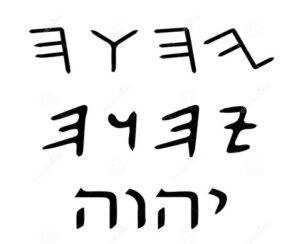
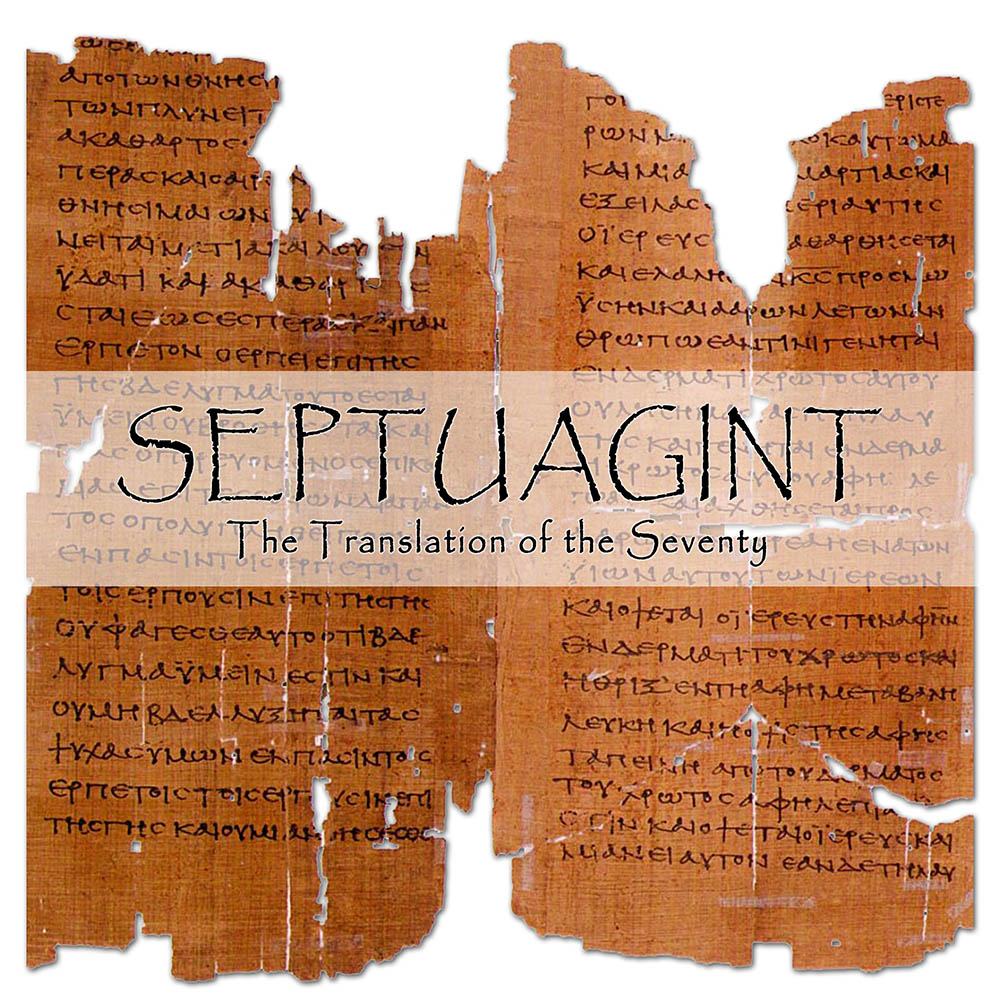
nameThe first quote from the NASB is translated into English from the Hebrew Masoretic text (MT), which is written in modern Hebrew block script derived from Aramaic. This new written form of Hebrew was completed somewhere between 500-1000 AD. The second reference is from the Lexham English Septuagint (LXX), an English translation of the Greek Old Testament in use at the time of Christ, which was translated from the now dead paleo-Hebrew Phoenician script. The MT translates the tetragrammaton, YHVH, as “I am who I am.” The LXX translated the same into the Greek language in 285 BC as “Ego eimi ho on,” which literally means, “I am the Being.”

Scholars believe that when God revealed his name as YHVH he meant to communicate his preexistence, unchangeableness, eternity, and his identity as the Creator. Some even think it was a promise God gave to Moses that he would be with him in the future.

12 And God spoke to Moses, saying, “I will be with you...” Exodus 3:12a (LES2) 

God’s promised presence was certainly a major motivation for Moses to trust and obey him. It is for us as well.

16 And I will pray the Father, and He will give you another Helper, that He may abide with you forever—17 the Spirit of truth, whom the world cannot receive, because it neither sees Him nor knows Him; but you know Him, for He dwells with you and will be in you. John 14:16–17 (NKJV) 

When God revealed his name to Moses, the purpose seemed to be related more to what it communicated about God rather than its being simply a proper name.

This became more obvious during the ministry of our Lord Jesus. 

The Old Covenant scriptures all pointed to Jesus (John 5:39), who came from God’s very presence in heaven (John 1:1 and 1:14), who knows him intimately (John 1:18),  and is the exact representation or revelation of God (Hebrews 1:3).

What Jesus revealed to us about God interprets and completes everything that came before. 

It is highly significant that he did not teach us to use the tetragrammaton when speaking about or addressing God. He never even mentioned any proper name for God at all. Instead, he told us to call him “Abba Father,” Abba being Aramaic for “Daddy” or “Papa.” If the one who knows the most about God, who came from God, and is the exact representation of God told us only to call him Father, to go beyond that is tantamount to trying to resurrect the now defunct Old Covenant, which was set aside at the inauguration of the New.

18 For on the one hand there is an annulling of the former commandment because of its weakness and unprofitableness, 19 for the law made nothing perfect; on the other hand, there is the bringing in of a better hope, through which we draw near to God. Hebrews 7:18–19 (NKJV) 

Jesus warned us that it is impossible to put the “new wine” of the freedom of the Holy Spirit released in the New Covenant back into the “old wine skin” of Judaism.

37 And no one puts new wine into old wineskins; or else the new wine will burst the wineskins and be spilled, and the wineskins will be ruined. 38 But new wine must be put into new wineskins, and both are preserved. Luke 5:37–38 (NKJV) 

The Old Covenant was unable to contain the spiritual explosion that happened on Pentecost when the risen and ascended Lord poured out his Spirit. Shortly thereafter, the enormity of what God had done became apparent when the Gentile Roman centurion and his family were baptized in the Spirit while listening to Peter preach the gospel. The Jewish disciples of Christ could scarcely take it in that God now includes the Gentiles in his great worldwide salvation. The Apostle Paul seemed to be the one who understood it best. He, the former Jewish Pharisee and the persecutor of Christians, ardently defended the New Covenant “mystery” that the Gentiles are now part of God’s kingdom through faith in Christ.

14 For He Himself is our peace, who has made both one, and has broken down the middle wall of separation, 15 having abolished in His flesh the enmity, that is, the law of commandments contained in ordinances, so as to create in Himself one new man from the two, thus making peace, 16 and that He might reconcile them both to God in one body through the cross, thereby putting to death the enmity. 17 And He came and preached peace to you who were afar off and to those who were near. 18 For through Him we both have access by one Spirit to the Father. Ephesians 2:14–18 (NKJV) 

This expansion of God’s grace beyond those biologically descended from Abraham has drawn millions into God’s family from every ethnic group all over the world. 

Not surprisingly, Satan has done his level best to hinder what God is doing. Those called Judaizers hounded new converts during the days of the apostles in an effort to lure new Gentile Christians into forsaking their freedom and becoming Jews who follow the law of Moses. 

The effort to stuff the Spirit of God and the New Covenant back into the old wine skin of the Law is doomed to failure, but, sadly, many fall for the deception and voluntarily walk back into bondage thinking it is a purer form of Christianity.

Rather than looking backward to how God revealed himself to Moses, as Judaizers say we must, the New Covenant teaches us focus on Jesus and what the New Testament teaches us.

Jesus completely fulfilled the Law and is the highest revelation of God. (Romans 10:4 and John 14:9)

Jesus told us over and over that he is the manifestation of the “I Am” who revealed himself to Moses. His most direct statement was made to the Pharisees who attacked him viciously for claiming to be God’s Son.

Jesus said to them, “Most assuredly, I say to you, before Abraham was, I AM.” John 8:58 (NKJV) 

In several other places he made “I am” claims as well, each time revealing some aspect of God’s character and power. Each represents how God satisfies our deepest needs and desires.

48 I am the bread of life. John 6:48 (NKJV) 

12 Then Jesus spoke to them again, saying, “I am the light of the world. He who follows Me shall not walk in darkness, but have the light of life.” John 8:12 (NKJV) 

7 Then Jesus said to them again, “Most assuredly, I say to you, I am the door of the sheep. John 10:7 (NKJV) 

11 “I am the good shepherd. The good shepherd gives His life for the sheep. John 10:11 (NKJV) 

25 Jesus said to her, “I am the resurrection and the life. He who believes in Me, though he may die, he shall live. John 11:25 (NKJV) 

6 Jesus said to him, “I am the way, the truth, and the life. No one comes to the Father except through Me. John 14:6 (NKJV) 

1 “I am the true vine, and My Father is the vinedresser. John 15:1 (NKJV) 

These seven “I am” statements are New Testament revelations of who God is, showing us that God’s Old Testament revelation of his name to Moses should be received that way.

Peter preached that Jesus is the only name we need to know in order to be saved.

12 Nor is there salvation in any other, for there is no other name under heaven given among men by which we must be saved.” Acts 4:12 (NKJV) 

It seems to me that trying to figure out how to pronounce the name God revealed to Moses is taking giant step backward. If it were important for us to know a proper name for our Father in heaven, it is reasonable to assume that Jesus would have told us, but he did not. Therefore, since he did not, there is no reason to be concerned at all about having a proper pronunciation of YHVH. 

Why is it that when we are given an opportunity to partake of the freedom and life found in Christ alone that we are so often drawn to go back to the Law and the Old Covenant? Why are we so eager to trade our freedom for bondage?

1 O foolish Galatians! Who has bewitched you that you should not obey the truth, before whose eyes Jesus Christ was clearly portrayed among you as crucified? 2 This only I want to learn from you: Did you receive the Spirit by the works of the law, or by the hearing of faith?—3 Are you so foolish? Having begun in the Spirit, are you now being made perfect by the flesh? 4 Have you suffered so many things in vain—if indeed it was in vain? 5 Therefore He who supplies the Spirit to you and works miracles among you, does He do it by the works of the law, or by the hearing of faith? 6 just as Abraham “believed God, and it was accounted to him for righteousness.” 7 Therefore know that only those who are of faith are sons of Abraham. 8 And the Scripture, foreseeing that God would justify the Gentiles by faith, preached the gospel to Abraham beforehand, saying, “In you all the nations shall be blessed.” 9 So then those who are of faith are blessed with believing Abraham. Galatians 3:1–9 (NKJV) 

It is important to keep in mind what Paul wrote so long ago.

28 Now we, brethren, as Isaac was, are children of promise. 29 But, as he who was born according to the flesh then persecuted him who was born according to the Spirit, even so it is now. 30 Nevertheless what does the Scripture say? “Cast out the bondwoman and her son, for the son of the bondwoman shall not be heir with the son of the freewoman.” 31 So then, brethren, we are not children of the bondwoman but of the free. 1 Stand fast therefore in the liberty by which Christ has made us free, and do not be entangled again with a yoke of bondage. Galatians 4:28–5:1 (NKJV) 

The Jewish Kabbalah, an occult mystical perversion of God’s truth, is quite concerned about proper pronunciations of the names of God in its pursuit of esoteric magical power. It teaches that such power is released when a person says the divine names accurately. Some Kabbalistic traditions hold that Moses parted the Red Sea by pronouncing the 72-letter name of God, something which is decidedly occult. 

Therefore, a case can be made that placing an emphasis on properly pronouncing God’s Old Covenant proper name  is more related to the Kabbalah than to the New Covenant.

Since neither Jesus nor the New Testament give us any name for God besides Abba Father, there is absolutely no reason to pursue this matter.

The name of Jesus, which is given to us in the New Testament, is written in Greek and is pronounced very much like English or Spanish. We do not need to go back to the Hebrew to get his name right. If that were so, the New Testament would have given us the Hebrew version, but it did not. Once again, we are being seduced into thinking that there is some deeper truth associated with going back to Hebrew and Judaism. There is not. It is an attempt to re-enslave us. Paul warned us to “be not entangled again in a yoke of bondage.”

The Jews, except for the beloved remnant who have been born again through faith in Christ, continue to reject Jesus as the Messiah and Lord, which makes them against or “anti-Christ” in the simple definition of the word. Our Lord Jesus taught that the kingdom of God was taken from the Jews and given to another people who would bear fruit. (Matthew 21:43) The new people to whom Jesus referred includes both Jew and Gentile who have become part of the what Paul called the “one new man” in Christ through the new birth. (Ephesians 2:15) This group also is called “the Israel of God (Galatians 6:16),” the “bride of Christ,” and the church. I have written several articles on this very important topic. You can click here to see them.

God will be glorified for all eternity through the church, not through those descended from Abraham who refuse to acknowledge Christ. 

20 Now to Him who is able to do exceedingly abundantly above all that we ask or think, according to the power that works in us, 21 to Him be glory in the church by Christ Jesus to all generations, forever and ever. Amen. Ephesians 3:20–21 (NKJV)

We are not to reject any teaching that advocates a return to or reliance upon the Old Covenant or Old Testament for acquiring “deeper” knowledge about God and salvation beyond what is revealed in the New Testament. We are not to trust in any name but that of Jesus our Lord.

Therefore, the proper pronunciation of the only name under heaven whereby we can be saved, who is the exact representation of God, is – JESUS! If we believe on that name, we will be saved.
Find more articles on Identifying and Countering Deception.

Finding Courage to Be a Truth Speaker

The pursuit of truth can be a lonely journey along a difficult path that may take us to places we would not ordinarily choose to visit. Jesus ended up at the cross. The Apostle Peter also was taken where he did not wish to go, as Jesus warned him would happen.

18 Most assuredly, I say to you, when you were younger, you girded yourself and walked where you wished; but when you are old, you will stretch out your hands, and another will gird you and carry you where you do not wish.” John 21:18 (NKJV)

This has certainly been my experience for the last few years. In reference to God’s commanding Abraham to sacrifice his only son, Isaac, a wise person once told me that God sometimes saves the most difficult tests for our latter years. I can think of a few cases in the Bible when this proved true. In addition to Abraham, Moses, and Elijah come to mind. Can you think of others?

Rather than choose the narrow gate and difficult path, a lot of us opt for going along to get along, which might include an avoidance of “rocking the boat” by accepting a manufactured consensus rather than ferreting out and standing for truth.

The more deceived we are, the more alien the truth will seem.

Jesus, the embodiment of truth, summed it up.

43 Why do you not understand My speech? Because you are not able to listen to My word. 44 You are of your father the devil, and the desires of your father you want to do. He was a murderer from the beginning, and does not stand in the truth, because there is no truth in him. When he speaks a lie, he speaks from his own resources, for he is a liar and the father of it. 45 But because I tell the truth, you do not believe Me. John 8:43–45 (NKJV) 

People who are not born again by the Holy Spirit still belong to the devil and cannot hear or receive God’s truth.

Sadly, many Christians have severe difficulty with hearing and receiving truth, too, because many of us do not believe some parts of the Bible.

Most Christians I know approach the Bible like we are in a cafeteria line. We believe what suits us and reject that with which we disagree.

We fail to grasp that when we reject even a portion of God’s truth, it opens the door to deception and increases the likelihood that we may believe other lies. Few of us take seriously Jesus’ declaration that the devil is currently deceiving the whole world. (Revelation 12:9) As a result, we fail to comprehend the magnitude and depth of the deception all around us in a similar way that we are unaware usually of the air we breathe. We might think perhaps Satan has deceived some people who follow false religions and some heretics, but not the whole world, and certainly not me!

In a day when mass media talking heads routinely parrot approved talking points, and all the major players in the process of manufacturing an approved consensus are walking in lock step, it takes great courage to go against the grain by holding a divergent opinion.

truth

I discovered this during the COVID crisis when I was disparaged as an ignorant “science denier” for refusing to take the the experimental mRNA injection and encouraging others to make a similar stand. Surprising to me, many Christians do not seem to understand that the rationale behind that injection was the assumption that our immune systems were not sufficiently “evolved” to fend of the corona virus and needed and needed to be altered by our brilliant scientists. Not many seemed to consider that God created us with a perfect defense and that to think we have the competence to “improve” it is sheer arrogance. As a result millions of people, as lemmings plunging to destruction, lined up to voluntarily receive what turned out to be extremely harmful to many, without there being demonstrable benefits. This is what happens when people stop asking questions and put more faith in science and consensus than in God’s Word and our own common sense. This is what happens when fear replaces faith, and the government becomes a tyrant.

One of the big lies in our culture is that consensus equates to truth, especially when so-called experts are involved.

The global warming hoax is a perfect example; which apparently does not matter at all any longer as more and more data centers consume vast amounts of natural resources and energy. Those who refuse to bow down to the consensus are labeled as conspiracy theorists, science deniers, nut jobs, and worse. Being coerced into accepting what most people think is true is democracy at its worst.

truth
The more a lie is entrenched in the culture, the more hate will be leveled at anyone who challenges it.

Jesus is the perfect example. His presence and teachings threatened the power and prestige enjoyed by the high ranking Jews in Jerusalem. They convinced themselves that it was to the advantage of the entire nation for Jesus to be eliminated (John 11:49-50). Throughout history martyrs lost their lives for challenging the satanic world system through the preaching of biblical truth. One of my wife’s distant ancestors, William Tyndale, was burned at the stake for translating the Bible into English. What a price he paid to open the door for all of us to have access to truth!

Most of us are rather easily deceived, which is why we must rely upon God’s Word and the Holy Spirit.

King David was astonished and alarmed when he discovered just how rampant is deception in our world. When he shared with others what he believed, he suffered the consequences and was brought very low by the resistance and pressure he encountered. He came to the alarming conclusion that all men are liars who hate the truth . 

1 I trusted [Greek - believed]; therefore I spoke. But I was made low very much. 2 I said in my entrancement [Greek - ekstasis: displacement, alarm, dismay, astonishment], “Every person is a liar.” Psalm 115:1–2 (LES2) [The text above is from the Septuagint, the Greek OT that the early church used. The Masoretic Text number is Psalm 116:10-11 if you wish to compare and contrast.]

Liars tell lies, believe lies, and hate the truth.

19 And this is the condemnation, that the light has come into the world, and men loved darkness rather than light, because their deeds were evil. 20 For everyone practicing evil hates the light and does not come to the light, lest his deeds should be exposed. John 3:19–20 (NKJV) 

When God reveals the truth of his Word to us, the first thing required of us is to turn from believing lies and embrace God’s truth instead. To repent means to change our mind. Once we do that, the next step is for us to share the truth with others. Jesus taught that we are to be lamps set on a lamp stand to provide light for all to see, not hidden away somewhere for our own protection. (Matthew 5:14-16) If we choose to do that, we many every well join King David in saying, “Every person is a liar, including you and me.”

We only find out how much people hate God’s truth when we make a public stand for it. If we choose to go against the grain by becoming truth speakers, the world system will see to it that we suffer for it.

That is why most of us keep our mouths shut and simply go along to get along. That is why most Christians only share their faith within the walls of the echo chamber called the church building. That is why Satan has been able to pull a shroud of deception over the entire world for so long. God is waiting for us to join him in fearlessly proclaiming his truth to a world in desperate need of it.

The gateway to the path leading to truth is guarded by formidable sentries who threaten anyone who attempts to pass by them. I call these sentries “guardian lies,” which is a term I borrowed from Ed Smith, who developed something he called Theophostic Ministry.

A guardian lie tries to intimidate and block people from pursuing and speaking the truth. 

Anyone who awakens to truth and begins to speak out likely will be smacked down immediately. It takes courage to stand back up and continue on the journey despite the cost. According to Jesus, if we stay on the path, the truth will set us free. (John 8:31-32) 

I already shared the guardian lies that confronted me when I stood against the COVID injection. I was accused of being a conspiracy theorist and an ignorant science denier, two pejoratives designed to dehumanize and discredit. Later when I challenged the beliefs of Christian Zionism and showed how the Bible clearly contradicts Dispensationalism, I was accused of being antisemitic. A few years ago when people challenged Marxist Wokeism, they were labeled racists. Think about how frequently these harmful labels are placed upon people! You can imagine how upset the body of Christ became when I dared to say that I believe Genesis Chapter One is a true and reliable account of creation and the cosmos! The monstrous lie guarding the path toward understanding biblical cosmology is “Science has the authority to determine how we interpret the Bible.” What a bizarre world! Christians attacking Christians for believing God’s Word! But that is where we live.

There are plenty more guardian lies out there. How about, “It would be impossible to pull off a lie that big!”? Those who adhere to this example of faulty common wisdom willingly close their eyes to how successfully modern “experts” have convinced most of the world that we got here without being created. Propagandists understand that big deceptions are more readily received than small ones because we have convinced ourselves that people are too clever to fall for big lies. 

It requires great courage to be a truth seeker and even more to be a truth speaker.

But that is what is required with being a follower of Christ. Let us embrace our calling and ask the Lord for courage and strength.

13 “Enter by the narrow gate; for wide is the gate and broad is the way that leads to destruction, and there are many who go in by it. 14 Because narrow is the gate and difficult is the way which leads to life, and there are few who find it. Matthew 7:13–14 (NKJV) 
Click here to go to series home page.

Why We Deny Plain Evidence of the Truth

It is easy, perhaps inevitable, that we will deny plain evidence of the truth, if we have previously rejected the truth of God’s Word. God designed us to trust him and his words implicitly. We were not given the natural ability to navigate in a world of deception, any more than a squirrel has an innate ability to safely cross a heavily trafficked road. When Satan introduced his initial lie in the Garden, which plainly contradicted God’s Word, and Eve believed the lie, followed by Adam’s transgression, all descendants of those two find themselves embroiled in deception upon deception, while having an inherited propensity to believe a lie.

God has given us two trustworthy guides through this maze of falsehood – the Bible and the Holy Spirit. If we reject either of them, we are in trouble unless God’s helps us to repent.

Jesus gave an account of a rich man and a poor beggar named Lazarus. After each of them died, they went to their respective rewards. Lazarus was taken to a place called “Abraham’s Bosom,” which many believe was a safe “holding place” where the godly dead resided until Christ’s resurrection. The rich man went to a place of torment from where he could see Lazarus enjoying God’s blessings. He had a conversation with Abraham, which the Lord relayed to us, in which Lazarus asked Abraham to go warn his brothers to repent so they would not likewise be condemned. Here is the salient part of that exchange.

“Then he said, ‘I beg you therefore, father, that you would send him to my father’s house, 28 for I have five brothers, that he may testify to them, lest they also come to this place of torment.’ 29 Abraham said to him, ‘They have Moses and the prophets; let them hear them.’ 30 And he said, ‘No, father Abraham; but if one goes to them from the dead, they will repent.’ 31 But he said to him, ‘If they do not hear Moses and the prophets, neither will they be persuaded though one rise from the dead.’ ” Luke 16:27–31 (NKJV)

The principle is that once we deny and reject the truth of the Word of God, no amount of proof will suffice to pull us out of the quicksand of deception.

This is not true only of spiritual matters. It affects every area of life from cosmology to eschatology. Once we buy into a lie that contradicts God’s Word, we will remain trapped until we repent and turn again to the Word of God as the ultimate arbiter of truth. Only the Holy Spirit is able to accomplish this.

Consider this. Have I in any area accepted something as true that contradicts God’s Word? If so, you may wish to pray something as follows.

Prayer

Dear Lord Jesus, please forgive me for believing a lie. I ask you to help me judge all things by your Word. Holy Spirit, I depend on you to point out anywhere I am deceived and lead me into all truth. Amen.

13 However, when He, the Spirit of truth, has come, He will guide you into all truth... John 16:13 (NKJV) 


Click here to go to series home page.

Comparing MT to the Septuagint (LXX): Deuteronomy 32:8-9, 43

Here is a direct side-by-side comparison of the Masoretic Text with the LXX.  I have concluded that the LXX is much to be preferred over the Masoretic Text, a position from which the Eastern Orthodox Church never deviated. Perhaps, if you take the time to read my comparisons and other articles, you will arrive at the same conclusion.

The Septuagint version I am using is the Lexham English Septuagint 2nd Edition, which is available in print or as part of Logos Bible Software. Occasionally I also use the Brenton translation of the LXX for insight into difficult passages.

If you want to know more, click on the following links.

Masoretic Text Septuagint Significance

8 When the Most High divided their inheritance to the nations, When He separated the sons of Adam, He set the boundaries of the peoples According to the number of the children of Israel. 9 For the LORD’s portion is His people; Jacob is the place of His inheritance. Deuteronomy 32:8–9 (NKJV) 

43 “Rejoice, O Gentiles, with His people; For He will avenge the blood of His servants, And render vengeance to His adversaries; He will provide atonement for His land and His people.” Deuteronomy 32:43 (NKJV)

8 When the Most High distributed nations as he scattered the sons of Adam, he set up boundaries for the nations according to the number of the angels of God. 9 And his people Jacob became the portion of the Lord, Israel an allotment of his inheritance. Deuteronomy 32:8–9 (LES2) 

43 Delight, O heavens, with him and worship him, you sons of God. Delight, O nations, with his people and prevail with him, all you angels of God. For he will avenge the blood of his sons, and he will avenge and he will repay the enemies with vengeance, and he will repay those who hate, and the Lord will cleanse out the land of his people.’ ” Deuteronomy 32:43 (LES2)

In verse 8, the MT adds “their inheritance.” The NT uses the general word for “peoples” instead of the LXX’s more specific “nations.” The MT says that the land allotted to the nations is based somehow upon the children of Israel, perhaps implying their eventual ownership. The LXX says those boundaries were set up according to the number of the “angels of God,” apparently giving some sort of jurisdiction to the angels over the various parts of the earth. This idea is found in Daniel 10:20.

In verse 43, the MT says, “Rejoice, O Gentiles with his people (meaning Israel),” but the LXX says, “Delight, O heavens,with him and worship him, you sons of God [angels or born-again people]. Delight, O nations, with his people, and prevail with him, all you angels of God.” Since all Old Testament Scripture points to Christ (John 5:39), unless it has been doctored to obscure an otherwise clear reference. This is such a case. By eliminating all the references to “him,” the MT seeks to eliminate what points to Christ. Otherwise, the Masoretes’ choice to replace “him” with “his people” makes no sense.

Next the MT says that “He will avenge the blood of his servants,” but the LXX says that “he will avenge the blood of his sons.” The MT sometimes changes “son” to “servant,” thus illustrating a fundamental difference between the Old Covenant of law and the New Covenant of grace. Under the law, people are mere servants, but in the New Covenant, through the new birth, we become God’s sons. (1 John 3:1)

Finally, the MT says that God will “provide atonement for his land and people,” meaning Israel and the Jews. The LXX says that God / “he” (Jesus) will “repay those who hate, and the Lord will cleanse out the land of his people.” Christians understood this to apply to AD 70 when, as Jesus prophesied, the Romans destroyed those Jews, who remained enemies of Christ by refusing the gospel, and eventually cleansed the land of his people after the Bar Kohkba revolt in 135 AD.

Summary: This alteration in the MT promotes the Zionist position that the modern nation state of Israel is still the focus of God’s plan in the end times, rather than Christ. The Talmudic Jews believe they are destined to rule the world, something that is not found in the New Testament. Instead, Christ will rule over the nations and be glorified through the church, which is composed of both Jews and Gentiles, throughout all eternity (Ephesians 3:21).

Comparing MT to the Septuagint (LXX): A Few New Testament Quotes

Here are a few New Testament quotes that come directly from the Septuagint, showing that it was the version of the Scriptures used by the early church and the Holy Spirit. I have concluded that the LXX is much to be preferred over the Masoretic Text, a position from which the Eastern Orthodox Church never deviated. Perhaps, if you take the time to read my comparisons and other articles, you will arrive at the same conclusion.

The Septuagint version I am using is the Lexham English Septuagint 2nd Edition, which is available in print or as part of Logos Bible Software. Occasionally I also use the Brenton translation of the LXX for insight into difficult passages.

If you want to know more, click on the following links.

NT Quote
LXX
MT
Comment

23 “Behold, the virgin shall be with child, and bear a Son, and they shall call His name Immanuel,” which is translated, “God with us.” Matthew 1:23 (NKJV)

14 Because of this, the Lord himself will give you a sign: Look, the virgin [Greek – parthenos] will conceive in the womb and will bear a son, and you will call his name Immanuel. Isaiah 7:14 (LES2) 

14 Therefore the Lord Himself will give you a sign: Behold, the virgin [Hebrew – almah] shall conceive and bear a Son, and shall call His name Immanuel. Isaiah 7:14 (NKJV)

In the LXX, the Greek word parthenos is used for virgin. It has only that meaning. In the MT, the Hebrew word almah is used, the normal meaning of which is young girl, but it can mean virgin. The translators perhaps employed a bit of eisegesis here by choosing the word “virgin” to agree with the quote in Matthew 1:23. There is no reason to choose which word to use when quoting the LXX, which agrees 100% with the NT quote.

36 the son of Cainan, the son of Arphaxad, the son of Shem, the son of Noah, the son of Lamech, Luke 3:36 (NKJV) 

10 And these are the generations of Shem: Shem was one hundred years old when he fathered Arpachshad during the second year after the flood. 11 And Shem lived for five hundred years after he fathered Arpachshad, and he fathered sons and daughters, and he died. 12 And Arpachshad lived one hundred and thirty-five years and fathered Kenan. 13 And Arpachshad lived after he fathered Kenan for four hundred and thirty years, and he fathered sons and daughters, and he died. And Kenan lived one hundred and thirty years, and he fathered Shelah, and Kenan lived after he fathered Shelah for three hundred and thirty years, and he fathered sons and daughters, and he died. 14 And Shelah lived one hundred and thirty years and fathered Eber. Genesis 11:10–14 (LES2)

10 This is the genealogy of Shem: Shem was one hundred years old, and begot Arphaxad two years after the flood. 11 After he begot Arphaxad, Shem lived five hundred years, and begot sons and daughters. 12 Arphaxad lived thirty-five years, and begot Salah. 13 After he begot Salah, Arphaxad lived four hundred and three years, and begot sons and daughters. 14 Salah lived thirty years, and begot Eber. Genesis 11:10–14 (NKJV)

As I mentioned in a previous article, the MT omits 1300 hundred years from the genealogies in Genesis 5 and 11, it also omits Kenan’s name, which is written as Cainan in the NT.

18 “The Spirit of the LORD is upon Me, Because He has anointed Me To preach the gospel to the poor; He has sent Me to heal the brokenhearted, To proclaim liberty to the captives And recovery of sight to the blind, To set at liberty those who are oppressed; Luke 4:18 (NKJV) 

1 The Spirit of the Lord is upon me, on account of which he has anointed me; he has sent me to bring good news to the poor, to heal those who are crushed in heart, to announce release to the captives and recovery of sight to the blind, Isaiah 61:1 (LES2) 

1 “The Spirit of the Lord GOD is upon Me, Because the LORD has anointed Me To preach good tidings to the poor; He has sent Me to heal the brokenhearted, To proclaim liberty to the captives, And the opening of the prison to those who are bound; Isaiah 61:1 (NKJV)

Jesus was well-known for opening blind eyes (e.g. John 9), which Isaiah 61:1 says is one of the major signs of the Messiah. The MT leaves out this reference to Christ’s ministry, which is specifically quoted from the LXX in the NT. Once again, one thinks that this was a deliberate attempt to undermine the validity of the NT and the church’s claim that Jesus is the Messiah.

Jesus specifically referenced this sign to John the Baptist’s disciples.

4 Jesus answered and said to them, “Go and tell John the things which you hear and see: 5 The blind see and the lame walk; the lepers are cleansed and the deaf hear; the dead are raised up and the poor have the gospel preached to them. 6 And blessed is he who is not offended because of Me.” Matthew 11:4–6 (NKJV) 

14 Then Joseph sent and called his father Jacob and all his relatives to him, seventy-five people. Acts 7:14 (NKJV)

25 These are the sons of Bilhah, whom Laban gave to Rachel his daughter, who bore these for Jacob, all seven souls. 26 All souls who entered with Jacob into Egypt, who came out from his thighs, except for the wives of the sons of Jacob, all sixty-six souls. 27 The sons of Joseph who were born to him in the land of Egypt: nine souls. All the souls of the house of Jacob who entered into Egypt: seventy-five. Genesis 46:25–27 (LES2) 

1 These are the names of the sons of Israel who entered Egypt together with Jacob, their father; each one entered with their whole household: 2 Reuben, Simeon, Levi, Judah, 3 Issachar, Zebulun, and Benjamin, 4 Dan, Naphtali, Gad, and Asher. 5 Joseph was already in Egypt. And all the souls from Jacob were seventy-five. Exodus 1:1–5 (LES2) 

25 These were the sons of Bilhah, whom Laban gave to Rachel his daughter, and she bore these to Jacob: seven persons in all. 26 All the persons who went with Jacob to Egypt, who came from his body, besides Jacob’s sons’ wives, were sixty-six persons in all. 27 And the sons of Joseph who were born to him in Egypt were two persons. All the persons of the house of Jacob who went to Egypt were seventy. Genesis 46:25–27 (NKJV) 

1 Now these are the names of the children of Israel who came to Egypt; each man and his household came with Jacob: 2 Reuben, Simeon, Levi, and Judah; 3 Issachar, Zebulun, and Benjamin; 4 Dan, Naphtali, Gad, and Asher. 5 All those who were descendants of Jacob were seventy persons (for Joseph was in Egypt already). Exodus 1:1–5 (NKJV) 

This quote by Stephen in his speech before the Jews who afterward stoned him to death is directly from the LXX. It can only be surmised why the MT translators changed the number, but one cannot rule out their trying to contradict Stephen. The Holy Spirit’s summary judgment of the Jewish leaders, given by Stephen and recorded in Acts, is that they always resist the Holy Spirit. (Acts 7:51) Paul later corroborated these words by saying that they are contrary to all men and do not please God. (1 Thessalonians 2:15) The Talmud says that Jesus [Yeshu] is boiling in excrement for all eternity for contradicting the wisdom of the Jewish sages (Gittin 56b–57a). It seems reasonable that such a powerful group as the Jewish rabbis, which was and is so decidedly “antichrist,” would do everything in their power to discredit the gospel, which they consider to be pure heresy. If the changes in the MT were pure accident, one would think some of them would be positive regarding Christianity, but all I have observed go against Christ and the gospel.

9 Therefore God also has highly exalted Him and given Him the name which is above every name, Philippians 2:9 (NKJV) 

2 I will worship at your holy temple, and I will give thanks to your name, for your mercy and your truthfulness, because you magnified your holy one above every name. Psalm 137:2 (LES2) 

2 I will worship toward Your holy temple, And praise Your name For Your lovingkindness and Your truth; For You have magnified Your word above all Your name. Psalm 138:2 (NKJV) 

Paul by revelation from the Holy Spirit was able to see references to Christ throughout the Old Testament. He understood that the verse from the psalms on the left is a reference to Christ, which he quoted in Philippians 2:9. The MT gives us an incomprehensible substitute, which claims that God has magnified his word above his name. We know from John 1:14 that Jesus is the Word of God in human form. Jesus is not above himself or  his heavenly Father. The MT is a fabrication.

6 But when He again brings the firstborn into the world, He says: “Let all the angels of God worship Him.” Hebrews 1:6 (NKJV) 

43 Delight, O heavens, with him and worship him, you sons of God. Delight, O nations, with his people and prevail with him, all you angels of God. For he will avenge the blood of his sons, and he will avenge and he will repay the enemies with vengeance, and he will repay those who hate, and the Lord will cleanse out the land of his people.’ ” Deuteronomy 32:43 (LES2)  43 “Rejoice, O Gentiles, with His people; For He will avenge the blood of His servants, And render vengeance to His adversaries; He will provide atonement for His land and His people.” Deuteronomy 32:43 (NKJV) 

The Holy Spirit inspired the author of Hebrews to abbreviate this quote from the LXX. In this case, the phrase “sons (Greek – huios) of God” through context is understood to be angels by the author of Hebrews. This seems to be confirmed later in the LXX verse when Moses wrote, “all you angels (Greek – angelos) of God.” The MT eliminates this reference to Christ’s being worshiped by angels altogether.

But see how much the MT erases from what is contained in the LXX. One important phrase is “he will avenge the blood of his sons” which the MT replaced with “servants.” One of the defining elements of the New Covenant is that all born-again believers are sons of God and children of Abraham. (Galatians 3:26-29) Jesus also told us that as sons we will abide in God’s house forever, unlike the temporary place occupied by servants. (John 8:35) Because the Jews did not accept Jesus as their Messiah, the kingdom of God was stripped from them and given to the church, the other “nation” to which Jesus referred. (Matthew 21:43 and 1 Peter 2:9) Jesus clearly taught that the Jews who did not accept him were not even considered children of Abraham. (John 8:44) The New Covenant requires a new birth, as Jesus told Nicodemus. (John 3:7) It is the only basis for inclusion in the greater covenant Jesus inaugurated through his blood. The promise in Deuteronomy 32:43 is that God will avenge the blood of his sons who are martyred for their faith, something the Jews actively did at the time of the writing of the New Testament.

Instead of promising to provide atonement for his people, the promise is that the land will be cleansed, which happened in 70 AD. Those Jews who refused to acknowledge Jesus is Lord and Messiah were destroyed and the land was cleansed from a Jewish presence, except for those who had put their faith in Jesus and become part of the Israel of God. (Galatians 6:16)

7 You have made him a little lower than the angels; You have crowned him with glory and honor, And set him over the works of Your hands. Hebrews 2:7 (NKJV) 

5 What is a man that you remember him? Or a son of a man that you observe him? 6 You made him somewhat less than angels (Greek – angelos); you crowned him with glory and honor. Psalm 8:5–6 (LES2) 

4 What is man that You are mindful of him, And the son of man that You visit him? 5 For You have made him a little lower than the angels (Hebrew – elohim), And You have crowned him with glory and honor. Psalm 8:4–5 (NKJV) 

The quote comes directly from the LXX, which uses the Greek word for angels. The translators of the NKJV practiced some eisegesis by translating “elohim” into angels, when it is a common name for God in the MT. The NASB displays more integrity by properly rendering it as “God.” 

5 Therefore, when He came into the world, He said: “Sacrifice and offering You did not desire, But a body You have prepared (Greek – katartidzo) for Me. Hebrews 10:5 (NKJV) 

7 You did not want sacrifice and offering, but you restored (Greek – katartidzo) a body to me. You did not ask for whole burnt offering and an offering concerning sin. Psalm 39:7 (LES2) 

6 Sacrifice and offering You did not desire; My ears You have opened. Burnt offering and sin offering You did not require. Psalm 40:6 (NKJV) 

Don’t let the numbering of the Psalm confuse you. The LXX uses a different numbering system in some cases. The quote in Hebrews 10:5 is a direct quote of the LXX. The Greek word katartidzo is the same in both the LXX and the NT, but is translated differently into English as “prepared” and “restored.” Since this verse was used by Christians to prove that Jesus is the Christ, it seems that the translators of the MT conveniently removed it to cast suspicion on the reliability of the NT’s use of the LXX. If the Holy Spirit inspired the writers of the NT to quote the LXX, it confirms that the LXX is God’s Word.


Comparing MT to the Septuagint (LXX): Genesis 17

Here is a direct side-by-side comparison of the Masoretic Text with the LXX.  I have concluded that the LXX is much to be preferred over the Masoretic Text, a position from which the Eastern Orthodox Church never deviated. Perhaps, if you take the time to read my comparisons and other articles, you will arrive at the same conclusion.

The Septuagint version I am using is the Lexham English Septuagint 2nd Edition, which is available in print or as part of Logos Bible Software. Occasionally I also use the Brenton translation of the LXX for insight into difficult passages.

If you want to know more, click on the following links.

MT LXX Significance

1 When Abram was ninety-nine years old, the LORD appeared to Abram and said to him, “I am Almighty God; walk before Me and be blameless. 2 And I will make My covenant between Me and you, and will multiply you exceedingly.” 3 Then Abram fell on his face, and God talked with him, saying: 4 “As for Me, behold, My covenant is with you, and you shall be a father of many nations. 5 No longer shall your name be called Abram, but your name shall be Abraham; for I have made you a father of many nations. 6 I will make you exceedingly fruitful; and I will make nations of you, and kings shall come from you. 7 And I will establish My covenant between Me and you and your descendants after you in their generations, for an everlasting covenant, to be God to you and your descendants after you. 8 Also I give to you and your descendants after you the land in which you are a stranger, all the land of Canaan, as an everlasting possession; and I will be their God.” Genesis 17:1–8 (NKJV)

1 Abram became ninety-nine years old, and the Lord appeared to Abram and said to him, “I am your God. Be pleasing in my presence and be blameless, 2 and I will establish my covenant between me and you, and I will increase you very much.” 3 And Abram fell on his face, and God spoke to him, saying, 4 “And as for me, look, my covenant is with you, and you will be a father of many nations. 5 And your name will no longer be called Abram, but your name will be Abraham, because I have made you a father of many nations. 6 And I will increase you very much, and I will make you into nations, and kings will come from you. 7 And I will set up my covenant between me and you and your offspring after you, for their generations, as an ongoing covenant, to be your God and your offspring’s God after you. 8 And I will give to you and to your offspring after you the land that you inhabit, all the land of Canaan, as an ongoing possession, and I will be their God.” Genesis 17:1–8 (LES2)

In verse one, the MT uses YHVH, the tetragrammaton, for “Lord;” whereas, the LXX sticks with the Greek kurios or Lord. Then the MT uses El Shaddai, translated as Almighty God, but the LXX simply uses theos, God. In the Kabbalah, El Shaddai has various meanings. It is a name associated with breasts, which suggests there could be a connection with Baphomet, a transgender “god” which is highly regarded by Satanists. I find it highly instructive that Jesus, the one closest to God the Father, gave us no other name than “Father.” In light of that, it is fruitless to debate the proper pronunciation of YHVH. Perhaps the devil is trying to draw people into Kabbalistic magical thinking in which saying names correctly unleashes occult power.

While in Babylon, the Rabbis began to assimilate aspects of Babylonian occult mysticism and paganism, as evidenced in the Babylonian Talmud and the Kabbalah. By the time of Christ, Jesus’ judgment of Talmudic rabbinic Judaism was that its leaders were children of the devil (John 8:44) who were leading the people astray from God (Luke 11:52, Matthew 23:15). Modern rabbinic Judaism uses three primary books, which are, in order of importance to them, the Talmud, the Kabbalah, and the Torah. It is a far cry from what Moses and the early Israelites believed and practiced.

In the rest of this passage, the LXX and MT essentially agree. Again, it is important to understand that the word translated as “offspring” and “descendants” is the Greek word sperma, which is singular, as is the Hebrew zera in the MT. In Galatians 3:16, Paul taught that the “seed” is Christ. A New Testament understanding of this truth is that the generation of descendants to whom this promise was made are those born again through faith who are in Christ through the New Covenant.

9 And God said to Abraham: “As for you, you shall keep My covenant, you and your descendants after you throughout their generations. 10 This is My covenant which you shall keep, between Me and you and your descendants after you: Every male child among you shall be circumcised; 11 and you shall be circumcised in the flesh of your foreskins, and it shall be a sign of the covenant between Me and you. Genesis 17:9–11 (NKJV) 

9 And God said to Abraham, “You will maintain my covenant, you and your offspring after you, for their generations. 10 And this is the covenant that you will maintain between me and you and your offspring after you for their generations: Every male of yours will be circumcised, 11 and you will be circumcised in the flesh of your foreskin, and it will be a sign of the covenant between me and you. Genesis 17:9–11 (LES2) 

The LXX and MT essentially agree, except that the MT uses yet another name for God, elohim, which is a plural. When I thought the MT was our best Old Testament source translated directly from the original paleo-Hebrew, not something concocted centuries later, I thought this was a veiled allusion to the Trinity. Now I am suspicious. The Kabbalah teaches that elohim, which is associated with God’s judgment, limits or conceals God’s (Ein Sof’s) infinite light. 

The LXX sticks with theos – God. How refreshing, especially in light of the New Testament.

12 He who is eight days old among you shall be circumcised, every male child in your generations, he who is born in your house or bought with money from any foreigner who is not your descendant. 13 He who is born in your house and he who is bought with your money must be circumcised, and My covenant shall be in your flesh for an everlasting covenant. 14 And the uncircumcised male child, who is not circumcised in the flesh of his foreskin, that person shall be cut off from his people; he has broken My covenant.” Genesis 17:12–14 (NKJV) 

12 And a young boy of eight days will be circumcised by you, every male for your generations, the home-born servant of your house and the one purchased from any son of a foreigner who is not of your offspring. 13 The home-born servant of your house and the one purchased will be circumcised with a circumcision, and my covenant will be upon your flesh as an ongoing covenant. 14 And an uncircumcised male who does not have the flesh of his foreskin circumcised on the eighth day, that soul will be utterly destroyed from his family because he has rejected my covenant.” Genesis 17:12–14 (LES2)

I see very little difference here.

15 Then God said to Abraham, “As for Sarai your wife, you shall not call her name Sarai, but Sarah shall be her name. 16 And I will bless her and also give you a son by her; then I will bless her, and she shall be a mother of nations; kings of peoples shall be from her.” 17 Then Abraham fell on his face and laughed, and said in his heart, “Shall a child be born to a man who is one hundred years old? And shall Sarah, who is ninety years old, bear a child?” 18 And Abraham said to God, “Oh, that Ishmael might live before You!” 19 Then God said: “No, Sarah your wife shall bear you a son, and you shall call his name Isaac; I will establish My covenant with him for an everlasting covenant, and with his descendants after him. Genesis 17:15–19 (NKJV) 

15 God said to Abraham, “As for Sarai, your wife, her name will be called not Sarai, but her name will be Sarah. 16 I will bless her, and I will give you a child from her, and I will bless him, and he will give rise to nations, and there will be kings of nations from him.” 17 And Abraham fell on his face and laughed and said in his mind, saying, “Will a son really be born to someone a hundred years old, and how will Sarah, who is ninety years old, give birth?” 18 And Abraham said to God, “Let this Ishmael live before you.” 19 God said to Abraham, “Yes, look, Sarah, your wife, will bring forth a son for you, and you shall call his name Isaac, and I will set up my covenant with him as an ongoing covenant, and for his offspring after him. Genesis 17:15–19 (LES2) 

The most significant difference is that the LXX, in verse 16, says “I will bless him;” whereas, the MT says, “I will bless her.”  See bold text. 

Once again, keep in mind that “offspring” and “descendants” are plurals, but the original word is singular – seed, referring to Christ. (Galatians 3:16)

20 And as for Ishmael, I have heard you. Behold, I have blessed him, and will make him fruitful, and will multiply him exceedingly. He shall beget twelve princes, and I will make him a great nation. 21 But My covenant I will establish with Isaac, whom Sarah shall bear to you at this set time next year.” 22 Then He finished talking with him, and God went up from Abraham. Genesis 17:20–22 (NKJV) 

20 Regarding Ishmael, look, I have listened to you, and I have blessed him, and I will make him increase, and I will multiply him very much. He will bring forth twelve nations, and I will make him into a great nation. 21 But I will establish my covenant with Isaac, whom Sarah will bring forth for you at this time, in another full year.” 22 He finished speaking to him, and God went up from Abraham. Genesis 17:20–22 (LES2)

The LXX says that Ishmael will beget twelve nations. The MT says 12 princes. 

I think it is quite interesting, in light of biblical cosmology, that God went “up” from Abraham after speaking to him. 

The MT uses elohim for God, but the LXX sticks with theos.

23 So Abraham took Ishmael his son, all who were born in his house and all who were bought with his money, every male among the men of Abraham’s house, and circumcised the flesh of their foreskins that very same day, as God had said to him. 24 Abraham was ninety-nine years old when he was circumcised in the flesh of his foreskin. 25 And Ishmael his son was thirteen years old when he was circumcised in the flesh of his foreskin. 26 That very same day Abraham was circumcised, and his son Ishmael; 27 and all the men of his house, born in the house or bought with money from a foreigner, were circumcised with him. Genesis 17:23–27 (NKJV) 

23 And Abraham took Ishmael, his son, and all his servants and all the ones purchased with silver and every male of the men who were in the house of Abraham, and he circumcised their foreskins at the appointed time of that day, just as God told him. 24 Abraham was ninety-nine years old when he circumcised the flesh of his foreskin; 25 Ishmael, his son, was thirteen years old when he was circumcised in the flesh of his foreskin. 26 At the appointed time of that day Abraham was circumcised, and Ishmael his son; 27 and as for all the men of his house and the servants and those bought with silver from foreign nations, he circumcised them. Genesis 17:23–27 (LES2) 

The only thing to point out here is the MT use of elohim for God again.

Summary: As with most chapters in Genesis, the MT and LXX sync together nicely. It is only when we get to the more prophetic books and chapters that we find huge disparities.

Comparing MT to the Septuagint (LXX): Genesis 15

Here is a direct side-by-side comparison of the Masoretic Text with the LXX.  I have concluded that the LXX is much to be preferred over the Masoretic Text, a position from which the Eastern Orthodox Church never deviated. Perhaps, if you take the time to read my comparisons and other articles, you will arrive at the same conclusion.

The Septuagint version I am using is the Lexham English Septuagint 2nd Edition, which is available in print or as part of Logos Bible Software. Occasionally I also use the Brenton translation of the LXX for insight into difficult passages.

If you want to know more, click on the following links.

MT LXX Significance

1 After these things the word of the LORD came to Abram in a vision, saying, “Do not be afraid, Abram. I am your shield, your exceedingly great reward.” Genesis 15:1 (NKJV) 

1 After these words, the word of the Lord came to Abram in a vision, saying, “Do not fear, Abram, I am shielding you. Your reward will be very abundant.” Genesis 15:1 (LES2)

The wording is slightly different, but the idea is the same.

2 But Abram said, “Lord GOD, what will You give me, seeing I go childless, and the heir of my house is Eliezer of Damascus?” 3 Then Abram said, “Look, You have given me no offspring; indeed one born in my house is my heir!” 4 And behold, the word of the LORD came to him, saying, “This one shall not be your heir, but one who will come from your own body shall be your heir.” 5 Then He brought him outside and said, “Look now toward heaven, and count the stars if you are able to number them.” And He said to him, “So shall your descendants be.” 6 And he believed in the LORD, and He accounted it to him for righteousness. Genesis 15:2–6 (NKJV)

2 Abram said, “Master and Lord, what will you give me? I am departing childless, except for the son of Masek, my house servant, this Eliezer of Damascus.” 3 And Abram said, “Since you have not given to me offspring, my house servant will be my heir.” 4 And at once the voice of the Lord came to him, saying, “This man will not be your heir, rather one who will come from you, he will be your heir. 5 He led him outside and said to him, “Look up now to the heavens and count the stars, if you can count them.” And he said, “Your offspring will be like this.” 6 And Abram trusted God, and it was reckoned to him as righteousness.  Genesis 15:2–6 (LES2)

Secondly, the MT replaces “depart” with “go.” Depart emphasizes Abraham’s coming death; whereas, go indicates merely his present status. Also, the MT leaves out Masek’s name for some reason.

I am not sure why the MT leaves out the word “up” when God told Abraham to look toward heaven. The Up-Down aspect of theology is significant and is repeated all the way through the New Testament. 

In both the LXX and MT, the singular “seed” is translated as plural descendants, which is translator’s bias in operation. Although, “seed” implies its multiplication into many, the singular aspect of the Word is emphasized by Paul when he wrote that the seed is Christ. (Galatians 3:16) By changing “seed” to “descendants,” it makes it more difficult to see this wonderful Christological truth.

Genesis 15:6 is directly quoted by Paul from the LXX in Romans 4:3. Thankfully the MT agrees with the LXX here.

7 Then He said to him, “I am the LORD, who brought you out of Ur of the Chaldeans, to give you this land to inherit it.” 8 And he said, “Lord GOD, how shall I know that I will inherit it?” 9 So He said to him, “Bring Me a three-year-old heifer, a three-year-old female goat, a three-year-old ram, a turtledove, and a young pigeon.” 10 Then he brought all these to Him and cut them in two, down the middle, and placed each piece opposite the other; but he did not cut the birds in two. 11 And when the vultures came down on the carcasses, Abram drove them away. 12 Now when the sun was going down, a deep sleep fell upon Abram; and behold, horror and great darkness fell upon him. 13 Then He said to Abram: “Know certainly that your descendants will be strangers in a land that is not theirs, and will serve them, and they will afflict them four hundred years. 14 And also the nation whom they serve I will judge; afterward they shall come out with great possessions. 15 Now as for you, you shall go to your fathers in peace; you shall be buried at a good old age. 16 But in the fourth generation they shall return here, for the iniquity of the Amorites is not yet complete.” Genesis 15:7–16 (NKJV) 

7 And he said to him, “I am the God who brought you out of the territory of Chaldeans to give you this land to inherit.” 8 He said, “Master, Lord, how will I know that I will inherit it?” 9 He said to him, “Bring me a three-year-old heifer and a three-year-old goat and a three-year-old ram and a turtledove and a pigeon.” 10 He brought him all these and divided them down the middle and set them facing one another, but he did not divide the birds. 11 Birds came down on the carcasses, the halves, and Abram sat down with them. 12 About sunset, a trance fell on Abram, and look, a great dark fear fell upon him. 13 And it was said to Abram, “Knowing, you will know that your offspring will be foreign in a land not its own, and they will afflict it, and they will enslave them, and they will humble them for four hundred years. 14 I will judge the nation that they serve; after these things they will come out here with much baggage. 15 You will depart to your ancestors with peace, after growing to a good old age. 16 The fourth generation, they will be brought back here; for the sins of the Amorites have not yet become enough.” Genesis 15:7–16 (LES2)

The MT changes “territory” to “Ur.” Once again, as mentioned above, Abram uses “Master” and “Lord” to address God in the LXX, but Adonai and YHVH in the MT. According the New Testament, the approved way of addressing God, according to Christ, is “Abba” or “Father.” Any emphasis on using other Hebrew names for God is may be rooted in the Kabbalah.

The passage regarding dividing the animals is essentially the same.

In verse 11, the MT departs from the LXX by changing birds to vultures and replacing “Abram sat down with them” to “Abram drove them away.” 

In verse 12, the MT replaces “trance” or ekstasis in Greek with “deep sleep.” They seem like two very different things to me. Ekstasis is the same Greek word used in Acts 10:10 when Peter had the vision of a sheet lowered from heaven. 

In verse 13, the MT leaves out “humble them.”

Verse 15 changes “growing to a good old age” to “buried at a good old age.” 

Verse 16 changes “enough” to “complete.” The meaning is very close but not exact.

17 And it came to pass, when the sun went down and it was dark, that behold, there appeared a smoking oven and a burning torch that passed between those pieces. 18 On the same day the LORD made a covenant with Abram, saying: “To your descendants I have given this land, from the river of Egypt to the great river, the River Euphrates—19 the Kenites, the Kenezzites, the Kadmonites, 20 the Hittites, the Perizzites, the Rephaim, 21 the Amorites, the Canaanites, the Girgashites, and the Jebusites.” Genesis 15:17–21 (NKJV) 

17 When the sun approached the west, there was a flame and look, a smoking oven and torches of fire that went through between their divided parts. 18 God established a covenant with Abram in that place, saying, “I will give your offspring this land from the river of Egypt to the great Euphrates; 19 the Kenites and the Kenizzites and the Kadmonites 20 and the Hittites and the Perizzites and the Rephaim and the Amorites and the Canaanites and the Euaians and the Girgashites and the Jebusites.” Genesis 15:17–20 (LES2) 

“The sun approached the west” is different from “the sun went down.” The LXX wording is consistent with biblical cosmology. According to Psalm 19:6, the sun makes a circuit over the earth. 

The MT leaves out “there was a flame.” Why leave out this mysterious sentence? The MT also changes “torches of fire” to the singular. Why? Preachers have made much over there being a single torch, but according to the LXX there were several.

In verse 18, the LXX says that God established a covenant “in that place,” but the MT says “on that day.” The LXX says that God “will give your seed this land,” meaning it will eventually belong to Jesus, the promised one. The MT changes that to “have given,” which promotes the idea of a permanent possession, a claim made by Zionists who want us to believe that Palestine still belongs to the biological descendants of Abraham rather than to the singular “seed,” who is Christ. 

(Read “Five Ways Dispensationalism Opposes the New Covenant.”)

Summary: This chapter contains some significant differences.

Comparing MT to the Septuagint (LXX): Psalm 138:1-2

Here is a direct side-by-side comparison of the Masoretic Text with the LXX.  I have concluded that the LXX is much to be preferred over the Masoretic Text, a position from which the Eastern Orthodox Church never deviated. Perhaps, if you take the time to read my comparisons and other articles, you will arrive at the same conclusion.

The Septuagint version I am using is the Lexham English Septuagint 2nd Edition, which is available in print or as part of Logos Bible Software. Occasionally I also use the Brenton translation of the LXX for insight into difficult passages.

If you want to know more, click on the following links.

Masoretic Text Septuagint Significance

1 I will praise You with my whole heart; Before the gods I will sing praises to You. 2 I will worship toward Your holy temple, And praise Your name For Your lovingkindness and Your truth; For You have magnified Your word above all Your name. Psalm 138:1–2 (NKJV)

1 I will give thanks to you, O Lord, with my whole heart, because you heard the words of my mouth; and before angels I will sing psalms to you. 2 I will worship at your holy temple, and I will give thanks to your name, for your mercy and your truthfulness, because you magnified your holy one above every name. Psalm 137:1–2 (LES2) 

A case can be made that the MT introduces Kabbalistic names of God into the text; whereas, the LXX sticks to Lord and God. This is significant in that it agrees with what Jesus taught us. He told us to address our God as Abba – Father or Daddy. Never once in the New Testament are we taught to use any of the MT names of God.

Secondly, David sings before angels rather than “gods” or “elohim.” 

Thirdly, and directly to the point of this article, verse two in the LXX is a Christological verse quoted by Paul in Philippians 2:9.

9 Therefore God also has highly exalted Him and given Him the name which is above every name, 10 that at the name of Jesus every knee should bow, of those in heaven, and of those on earth, and of those under the earth, 11 and that every tongue should confess that Jesus Christ is Lord, to the glory of God the Father. Philippians 2:9–11 (NKJV) 

By changing the MT text of Psalm 138:2, the rabbis removed this obvious reference to the risen and glorified Christ. Instead they gave us a confusing verse that makes no sense whatsoever and has been used by “name it and claim it” preachers to promote that false doctrine. God would never magnify his word above his name. Jesus is the Word made flesh. The Word and the Name are the same.


Have We Sacrificed God’s Word to a False God?

In the early days of the Christian church an angel appeared to Cornelius, a Roman Centurion, and told him, “Send men to Joppa, and call for Simon whose surname is Peter, who will tell you words by which you and all your household will be saved.” (Acts 11:14) Not surprisingly, Cornelius immediately obeyed. Peter, with a group of men who accompanied him, visited Cornelius’ home, preached the words of the gospel to them, and watched somewhat dumbfounded as the Holy Spirit “fell upon” their listeners in the same way as had happened to the disciples in the upper room on Pentecost! As Jesus previously promised Peter, the Holy Spirit used that man to unlock the door of salvation to the Gentiles. A Jewish man, who had to be convinced by a vision repeated three times that he even was permitted to go into the home of a Gentile, was the one God used! God loves to use the most unlikely people to accomplish his will. Peter thought that salvation was for the Jews only, something that Jewish tradition steadfastly held and still does. But it was a lie. God’s purpose was always to include in his kingdom those from every people group. Peter, like many others, was reluctant to let go of such a dearly held belief that exalted his people, but once he did, he realized how much more glorious is the New Covenant compared to the old one. Paul showed how God’s promise of including the Gentiles went all the way back to Abraham. 

8 And the Scripture, foreseeing that God would justify the Gentiles by faith, preached the gospel to Abraham beforehand, saying, “In you all the nations shall be blessed.” 9 So then those who are of faith are blessed with believing Abraham. Galatians 3:8–9 (NKJV) 

When God opens our hearts to the truth of his Word, it can turn our lives upside down and bring down persecution upon us.

It certainly was so for Peter and the other disciples. Christ’s death and resurrection was the greatest story ever told. I could not be kept quiet. As those early disciples preached the good news, two things happened. Some believed and were saved. Others were incensed by the gospel and persecuted anyone who preached or believed it.

Truth brings division between those who love and receive it and those who hate and reject it.  

It is seldom easy for us to accept a new way of seeing things. We just naturally cling to our traditions and long held beliefs, even though they may be in error. That’s just part of what it means to be human. Jesus said:

39 “And no one, after drinking old wine wishes for new; for he says, ‘The old is good enough.’ ” Luke 5:39 (NASB95) 

When God restored the ancient truth of justification by faith during the Protestant Reformation, those steeped in the traditions and practices of the Roman Catholic Church reacted by persecuting those that promoted this new/old doctrine. When the Anabaptists took hold of the early Christian practice of believer baptism, those who held to the long accepted tradition of infant baptism, both Catholic and Protestant, persecuted, sometimes to death, those who held firmly to the new, yet old, way of baptizing people after they confess Christ is Lord.

Any time God restores truth to his church, we can be sure that the resistance will be fierce. 

Today we do not see persecution in the West regarding justification and believer baptism, but the fight for the restoration of old truth continues. There are other hotly contested issues presently before the church that divide people – abortion, LGTBQ+, Christian Zionism, and biblical cosmology, to list a few. Few in the early church had doubts about any of these hotly contested issues, but now they have become battlegrounds that require people to make a decision.

Truth, until it becomes commonly accepted, always causes conflict.

Mark Twain is reputed to have said, “It is easier to fool people than to convince them that they have been fooled.” Our pride finds it to becounterfeit quite difficult to admit we were conned. God did not deceive the Jews when he chose them for the glorious privilege of being his special people to receive his precious promises and be the bloodline for the coming Messiah. The Lord gave them plenty of hints that ultimately his plan was to save the world, not just the descendants of Abraham, but when we have a certain way of looking at things ingrained into us, it can be almost impossible to escape the power of that tradition. Today, despite the clear teachings of the New Testament to the contrary, many Christians have been deceived into believing that Jewish people are “God’s chosen people” just because of physical descent from Abraham. In the New Testament, there are no such distinctions. All that now matters is the new birth through faith in Christ, but old traditions die hard and tons of people refuse to let go of the lie of Christian Zionism.
It is sinful to adamantly cling to a lie when we are confronted by God’s truth, but we all are prone to it.

Only the Holy Spirit can set us free from powerful deceptions.

Simply by believing the words of life contained in the gospel message, Cornelius and his household were saved that day, which was confirmed by their speaking in tongues, an unmistakable sign of their having received the baptism in the Holy Spirit. Peter correctly reasoned that only born again children of God can receive the Holy Spirit (Luke 11:13); therefore it became crystal clear to him that, in the New Covenant, God no longer makes a distinction between Jews and Gentiles. All that matters now is faith in Christ, which includes publicly acknowledging him as the risen Lord.

9 that if you confess with your mouth the Lord Jesus and believe in your heart that God has raised Him from the dead, you will be saved. 10 For with the heart one believes unto righteousness, and with the mouth confession is made unto salvation. Romans 10:9–10 (NKJV) 

Isn’t it amazing that we can be forgiven, made right in God’s eyes, receive eternal life, and become part of God’s family simply by believing words that come from God?

Believing what God says not only saves us but also greatly honors God. Disbelieving him is a betrayal of the very worst sort. It is the same as calling him a liar.

Therefore, believing God’s words is our highest calling and poses the greatest test we will ever face.

Adam and Eve failed to believe God when confronted by Satan’s clever lie. They did not pass the test, but now we have the opportunity to honor God by holding what he has spoken in the highest esteem, even in the face of the devil’s most convincing lies to the contrary. 

4 But Jesus answered him, saying, “It is written, ‘Man shall not live by bread alone, but by every word of God.’ ” Luke 4:4 (NKJV) 

Jesus told us that we are to live by every single word that God has spoken. Not a single one is unimportant or can be discarded or rendered meaningless through artful manipulation.

Jesus reprimanded the Jews for doing just such a thing. (Mark 7:13) Yet, today many in the church practice the same sort of self-deception by changing the clear meaning of scripture to make it agree with a lie.

If we allow some other belief or criteria to determine how we understand and interpret the Bible, we have committed a form of idolatry.

The Holy Spirit inspired Moses to write Genesis. Chapter One describes the creation of the heavens and earth. Moses, the ancient Israelites, and the early church, including our Lord Jesus who created it all, believed the Genesis account to be literally true. But today, we prefer the theories developed by men who contradict the biblical account and have influenced God’s people to abandon the literal truth of the Word of God.

Anything that contradicts God’s Word is a lie by definition.

God did not hide the truth of his creation from his people so that later ungodly men could figure it out, proving that the Bible is false. Satan told Adam and Eve that God lied to them and was hiding the truth. He claims he can give us access to previously hidden (occult) knowledge that defies the Bible. He did it in the garden and repeated that ruse again through Copernicus, Newton, Einstein, Hawking, et al.  We should know his ways by now, but wordshuman beings fall for the same old tricks over and over. We desperately need a Savior and the Word of God!

God never authorized us to select which words of the Bible to believe and which to reject. Unless the context of a passage demands us to do so, we are not permitted to designate some verses as metaphorical only, phenomenological, or merely poetic. God regards us as his children. He would not lie to us.

God did not inspire words that have no credibility in the “real world.”

God never plays with words. He doesn’t use poetry to describe what he knows is not real. He uses poetry to reinforce and beautify the truth. He says what he means and means what he says. He never misleads us. He always speaks the truth, even when he employs poetry. Anyone who says otherwise is calling God a liar and trying to deceive us.

160 The beginning (Greek - arche) of your words is truth, and for eternity are all the judgments of your righteousness. Psalm 118:160 (LES2) [This is Psalm 119 in the MT]

1 In the beginning (Greek - arche) was the Word, and the Word was with God, and the Word was God. 2 He was in the beginning with God. John 1:1–2 (NKJV) 

The beginning of God’s Word in the Bible is Genesis. God wants us to know that the first book of the Bible is the truth, not “just poetry” or phenomenological language that describes false appearances.

Try to imagine that we are obliged to trust without reservation a God who misleads us in the very first chapter of his book! God is not like that! We trust him because he is faithful and true always.

In the beginning, Jesus, the Word made flesh, was present as the Creator. (John 1:3) Our Lord Jesus said we are not permitted to “break” any word of God, meaning we have no authority to alter it in any way. (John 10:35) Only God has the right to tell us how to interpret his Word. There is no higher authority than the Holy Spirit when it comes to teaching us what it means.

It is a violation of the highest order to allow the devil or men or science so-called to dictate how the Scriptures must be interpreted. The Holy Spirit shows us how scripture interprets scripture.

The Bible proclaims that Jesus rose physically from the dead. It claims that his resurrected body later physically ascended into heaven, where he now sits on God’s throne, waiting for his Father to give him the “green light” to return to earth as the Judge of the living and the dead. That is quite a claim, isn’t it? It is every bit as “unbelievable” as the Genesis account of creation, the flood of Noah, the parting of the Red Sea, and the taking of Elijah physically into heaven. Yet, without hesitation, many of us ask people to believe that these gospel claims are 100% true, while at the same time waffling on the Genesis account’s truthfulness. What is wrong with us? Can we not see that if Genesis is not true, nothing is believable after that?

The devil laughs at such duplicity in the church. He and the atheists know that we don’t really believe the whole Bible after all, just the parts we like.

Every generation has its giants to confront and idols to smash. Moses had to face down Pharaoh and the gods of Egypt. Joshua fought the Canaanites and the Anakim. David slew Goliath. Elijah confronted the prophets of Baal and Jezebel. Jesus stood firm against Satan himself. Paul refused to flinch before the persecutions of Rabbinic Judaism and heathen Rome. Some of the early Christians had to choose between death or bowing to Caesar’s claim to be lord. The reformers stood against the behemoth of the Roman Church, and many died upholding the right to have the Scriptures in our own language. 

What are the giants confronting the church today? One way to tell is by seeing what makes people mad.

During COVID, anyone who refused to go along with “trusting the science” was persecuted. The anger of the compliant against those who stood their ground against the government’s lies was tangible.

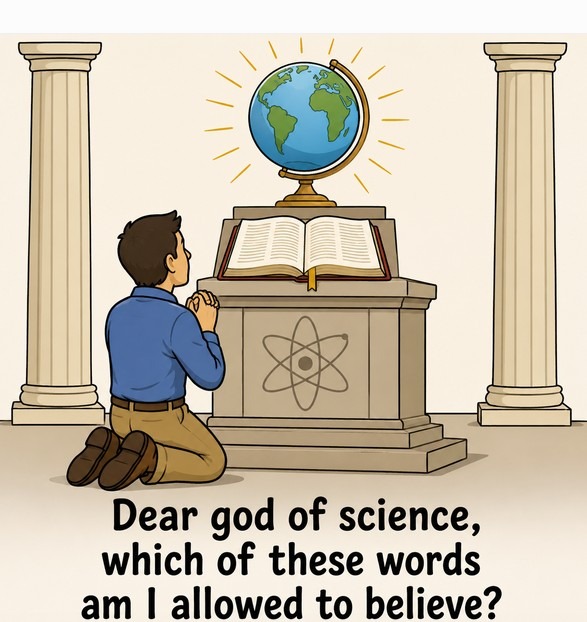
Science, or more properly the religion of scientism, has become a huge idol in our country and the world. Anyone who dares stand against it will suffer the consequences.

Many have allowed this god to dictate what we can believe in the Bible and what must be relegated to myth and poetry. Obeying this false god is a great sin which many, many Christians continue to commit.

The words of Nathan the prophet still boldly ring out to all who allow science to displace God’s Word in regard to creation. “You are the man!” We commit idolatry if we revere the authority of science more than God and his Word!

Since when does any worldly belief system have the right to tell us how to interpret the Bible? Since when do we have the authority to determine what parts of God’s Word can be believed and what parts can be winked at? Did God give us this freedom? Not to my knowledge. Why do we so easily betray our Reformation heritage of Sola Scriptura? Are we really so spineless that we cannot make a stand? Are we embarrassed by God’s Word? Are we afraid of being thought a fool? If so, let us consider Paul’s words.

3 But with me it is a very small thing that I should be judged by you or by a human court... 1 Corinthians 4:3 (NKJV) 

Do we think the credibility of the gospel improves by our agreeing that Genesis is not a trustworthy account of creation? Is the resurrection more believable if we at the same time we insist that the Bible is wrong when it says God’s throne is right above us atop the firmament? Can the resurrection be real if heaven and earth are not what the Bible says they are? Isn’t it time for the church to throw caution to the wind and embrace God’s Word without reservation or qualification? I wonder what would happen? I hope we find out.

Comparing MT to the Septuagint (LXX): Genesis Chapter One

Here is a direct side-by-side comparison of the Masoretic Text with the LXX.  I have concluded that the LXX is much to be preferred over the Masoretic Text, a position from which the Eastern Orthodox Church never deviated. Perhaps, if you take the time to read my comparisons and other articles, you will arrive at the same conclusion.

The Septuagint version I am using is the Lexham English Septuagint 2nd Edition, which is available in print or as part of Logos Bible Software. Occasionally I also use the Brenton translation of the LXX for insight into difficult passages.

If you want to know more, click on the following links.

Masoretic Text Septuagint Significance

1 In the beginning God created the heavens and the earth. 2 The earth was formless and void, and darkness was over the surface of the deep, and the Spirit of God was moving over the surface of the waters. Genesis 1:1–2 (NASB95) 

1 In the beginning, God made the heavens and the earth. 2 But the earth was unseen and unprepared, and darkness was upon the deep. And the spirit of God rushed upon the water. Genesis 1:1–2 (LES2) 

Little things matter. God warned us not to add to or subtract from God’s Word. The LXX uses better words to describe the earth in the beginning – unseen and unprepared, which is  different from formless and void or empty. The MT adds  the word surface to deep. “Rushed upon” is the Lexham translation of epiphero, which literally means to bring, put, or lay down. It carries a different idea than the MT’s moving or hovering over.

3 Then God said, “Let there be light”; and there was light. 4 God saw that the light was good; and God separated the light from the darkness. 5 God called the light day, and the darkness He called night. And there was evening and there was morning, one day. Genesis 1:3–5 (NASB95) 

3 And God said, “Let light come into being.” And light came into being. 4 And God saw the light, that it was good. And God made a separation between the light and the darkness. 5 And God named the light day and the darkness he named night. And there was evening, and there was morning, the first day. Genesis 1:3–5 (LES2) 

I see little difference between the MT and LXX in this passage.

6 Then God said, “Let there be an expanse in the midst of the waters, and let it separate the waters from the waters.” 7 God made the expanse, and separated the waters which were below the expanse from the waters which were above the expanse; and it was so. 8 God called the expanse heaven. And there was evening and there was morning, a second day. Genesis 1:6–8 (NASB95) 

6 And God said, “Let a firmament come into being in the midst of the water, and let a separator be in the midst of the water.” And so it happened. 7 And God made the firmament, and God made a separation in the midst of the water that was under the firmament and in the midst of the water that was upon the firmament. 8 And God named the firmament heaven. And God saw that it was good. And there was evening, and there was morning, the second day. Genesis 1:6–8 (LES2) 

The MT uses the Hebrew word raqia for the solid firmament, which the NASB translates as expanse in order to conform God’s Word to the heliocentric theory. The LXX uses the Greek word stereoma, which connotes something solid, just as raqia. The MT makes water plural, but the LXX uses the singular. I suppose this is because before the creation of the firmament on day two, there was simply water, not more than one. After the separation, there were waters above and below. The MT says the upper waters were above the firmament, but the LXX says upon the firmament. The MT leaves out God calling the firmament good.

9 Then God said, “Let the waters below the heavens be gathered into one place, and let the dry land appear”; and it was so. 10 God called the dry land earth, and the gathering of the waters He called seas; and God saw that it was good. 11 Then God said, “Let the earth sprout vegetation, plants yielding seed, and fruit trees on the earth bearing fruit after their kind with seed in them”; and it was so. 12 The earth brought forth vegetation, plants yielding seed after their kind, and trees bearing fruit with seed in them, after their kind; and God saw that it was good. 13 There was evening and there was morning, a third day. Genesis 1:9–13 (NASB95) 

9 And God said, “Let the water that is under the heavens be gathered together into one assembly, and let the dryness appear.” And so it happened. And the water under the heavens was brought together into their assembly, and the dryness appeared. 10 And God named the dryness earth, and the assemblies of the waters he named seas. And God saw that it was good. 11 And God said, “Let the earth sprout fodder plants, sowing seed according to kind and according to likeness, and fruit-bearing tree making fruit whose seed is itself in the tree, according to kind in regard to likeness upon the earth.” And so it happened. 12 And the earth brought forth fodder plants, sowing seed according to kind and according to likeness, and the fruit-bearing tree making fruit whose seed is itself in the tree, corresponding to its kind upon the earth. And God saw that it was good. 13 And there was evening, and there was morning, the third day. Genesis 1:9–13 (LES2) 

The MT leaves out a repetition in verse 9. Instead of dryness, the MT uses dry land. It also uses gathered instead of assembled, which carries a slightly different connotation. The LXX calls vegetation fodder plants yielding seed according to kind and likeness. The MT leaves out according to kind and likeness. The MT leaves out words in verse 11 concerning fruit trees, too. The MT makes for easier reading, but we are not supposed to omit words that God spoke. 

14 Then God said, “Let there be lights in the expanse of the heavens to separate the day from the night, and let them be for signs and for seasons and for days and years; 15 and let them be for lights in the expanse of the heavens to give light on the earth”; and it was so. 16 God made the two great lights, the greater light to govern the day, and the lesser light to govern the night; He made the stars also. 17 God placed them in the expanse of the heavens to give light on the earth, 18 and to govern the day and the night, and to separate the light from the darkness; and God saw that it was good. 19 There was evening and there was morning, a fourth day. Genesis 1:14–19 (NASB95) 

14 And God said, “Let luminaries come into being in the firmament of the heavens for illumination of the earth and rule the days and the nights and make a separation in the midst of the day and in the midst of the night. And let them be for a sign and for seasons and for days and for years. 15 And let them be for illumination in the firmament of the heavens so that they might give light upon the earth.” And so it happened. 16 And God made the two big luminaries, the big luminary to have authority over the day, and the little luminary to have authority over the night and the stars. 17 And God placed them in the firmament of the heavens so that they might shine upon the earth 18 and rule over the day and the night and to make a separation in the midst of the light and in the midst of the darkness. And God saw that it was good. 19 And there was evening, and there was morning, the fourth day. Genesis 1:14–19 (LES2)

The luminaries or lights were set in the solid firmament to illuminate the earth, but the MT leaves out this phrase and the phrase to rule the days and nights. The MT does include their separating role, however. Both versions call both the sun and moon lights or luminaries, contradicting modern science’s claim that the moon is merely a reflector. The LXX seems to indicate the moon has authority over the stars, but the MT changed the wording to be that God created the stars, which, of course, he did. 

20 Then God said, “Let the waters teem with swarms of living creatures, and let birds fly above the earth in the open expanse of the heavens.” 21 God created the great sea monsters and every living creature that moves, with which the waters swarmed after their kind, and every winged bird after its kind; and God saw that it was good. 22 God blessed them, saying, “Be fruitful and multiply, and fill the waters in the seas, and let birds multiply on the earth.” 23 There was evening and there was morning, a fifth day. Genesis 1:20–23 (NASB95) 

20 And God said, “Let the water bring forth living, creeping things and birds flying above the earth in relation to the firmament of the heavens.” And so it happened. 21 And God made the very large fish and every life of living creeping things that the water brought forth according to their kind and every bird with wings according to kind. And God saw that it was good. 22 And God blessed them, saying, “Increase and multiply and fill the waters in the seas, and let the birds multiply upon the earth.” 23 And there was evening, and there was morning, the fifth day. Genesis 1:20–23 (LES2)

Let the waters teem is quite different from let the water bring forth. The MT adds and let birds fly, whereas the LXX seems to indicate the water also brought forth the birds. The MT says that the birds fly above the earth in the face of the firmament (NKJV), whereas the LXX uses the Greek word kata, which means in relation to, under, or before the firmament. The NASB once again employs eisegesis to make the words agree with the heliocentric lie. The MT uses the words sea monsters. The LXX uses the Greek word ketos, which can mean huge fish or sea monsters. 

24 Then God said, “Let the earth bring forth living creatures after their kind: cattle and creeping things and beasts of the earth after their kind”; and it was so. 25 God made the beasts of the earth after their kind, and the cattle after their kind, and everything that creeps on the ground after its kind; and God saw that it was good. 26 Then God said, “Let Us make man in Our image, according to Our likeness; and let them rule over the fish of the sea and over the birds of the sky and over the cattle and over all the earth, and over every creeping thing that creeps on the earth.” 27 God created man in His own image, in the image of God He created him; male and female He created them. 28 God blessed them; and God said to them, “Be fruitful and multiply, and fill the earth, and subdue it; and rule over the fish of the sea and over the birds of the sky and over every living thing that moves on the earth.” 29 Then God said, “Behold, I have given you every plant yielding seed that is on the surface of all the earth, and every tree which has fruit yielding seed; it shall be food for you; 30 and to every beast of the earth and to every bird of the sky and to every thing that moves on the earth which has life, I have given every green plant for food”; and it was so. 31 God saw all that He had made, and behold, it was very good. And there was evening and there was morning, the sixth day.  Genesis 1:24–31 (NASB95) 

24 And God said, “Let the earth bring forth a living creature according to kind, quadrupeds and creeping things and wild animals of the earth according to kind.” And so it happened. 25 And God made the wild animals of the earth according to kind and the livestock according to kind and all the creeping things of the earth according to their kind. And God saw that it was good. 26 And God said, “Let us make humankind according to our image and according to our likeness, and let them rule over the fish of the sea and the birds of the heavens and the livestock and all the earth and all the creeping things that creep upon the earth.” 27 And God made humankind; he made him according to the image of God; he made them male and female. 28 And God blessed them, saying, “Increase and multiply, and fill the earth, and gain dominion over it, and rule over the fish of the sea and the birds of the heavens and all the livestock and all the earth and all the creeping things that creep upon the earth.” 29 And God said, “Look, I have given to you every herb that has sowable seed that is upon all the earth, and every tree that has sowable seed in its fruit will become food for you, 30 and for all the wild animals of the earth and for all the birds of the heavens and for every creeping thing that creeps upon the earth that has soul of life in itself. And all green fodder will be for food.” And so it happened. 31 And God saw everything that he made, and look, it was very good! And there was evening, and there was morning, the sixth day. Genesis 1:24–31 (LES2) 

The MT uses the word cattle, but the LXX uses quadrupeds, which is a much broader term. For some reason the MT repeats the phrase made them in his own image. In verse 30, the LXX uses the term “soul of life” instead of simply the word life, as is found in the MT. 


Share this post...