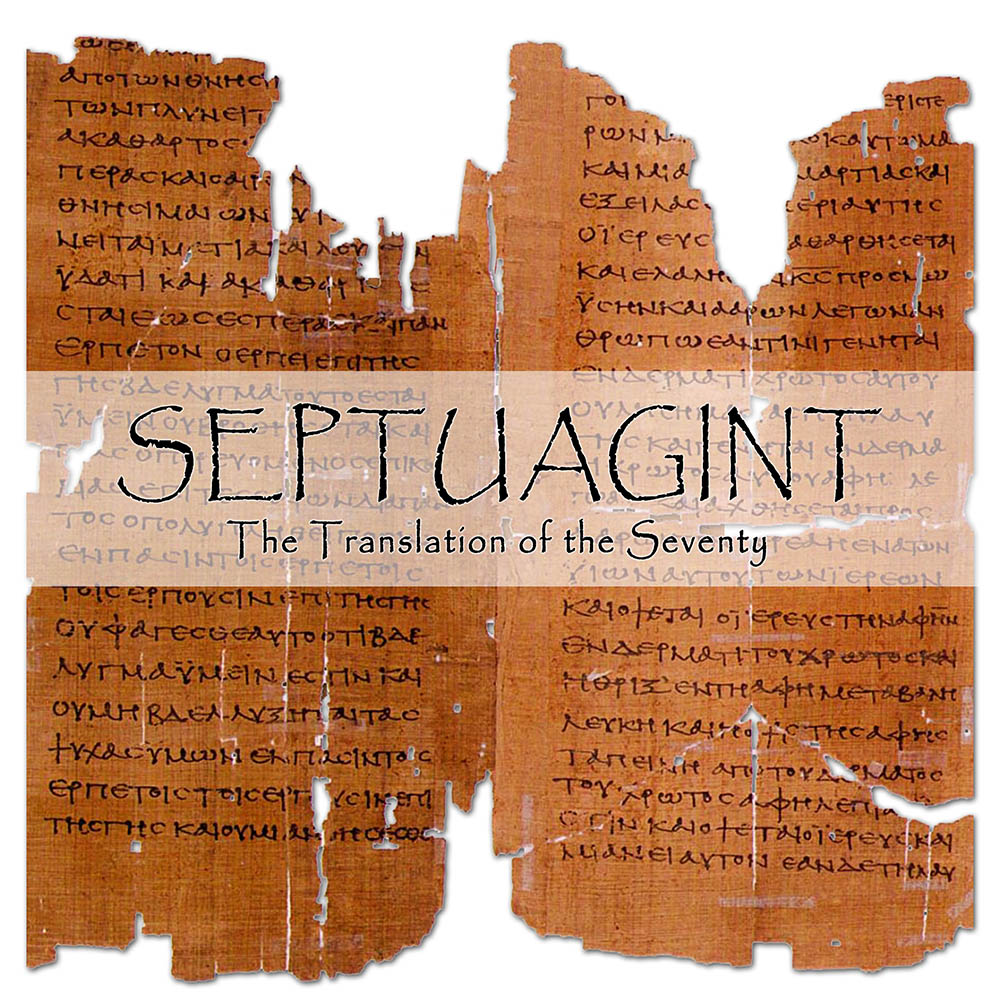
Here is a direct side-by-side comparison of the Masoretic Text with the LXX. I have concluded that the LXX is much to be preferred over the Masoretic Text, a position from which the Eastern Orthodox Church never deviated. Perhaps, if you take the time to read my comparisons and other articles, you will arrive at the same conclusion.
The Septuagint version I am using is the Lexham English Septuagint 2nd Edition, which is available in print or as part of Logos Bible Software. Occasionally I also use the Brenton translation of the LXX for insight into difficult passages.
If you want to know more, click on the following links.
- Why Christians Should Prefer the Septuagint over the Masoretic Text.
- Some Insights Gained through Comparing the Masoretic Text to the Septuagint
- More side by side comparisons of the Masoretic Text (MT) to the Septuagint (LXX).
| Septuagint | MT | Significance |
|
1 Abram became ninety-nine years old, and the Lord appeared to Abram and said to him, “I am your God. Be pleasing in my presence and be blameless, 2 and I will establish my covenant between me and you, and I will increase you very much.” 3 And Abram fell on his face, and God spoke to him, saying, 4 “And as for me, look, my covenant is with you, and you will be a father of many nations. 5 And your name will no longer be called Abram, but your name will be Abraham, because I have made you a father of many nations. 6 And I will increase you very much, and I will make you into nations, and kings will come from you. 7 And I will set up my covenant between me and you and your offspring after you, for their generations, as an ongoing covenant, to be your God and your offspring’s God after you. 8 And I will give to you and to your offspring after you the land that you inhabit, all the land of Canaan, as an ongoing possession, and I will be their God.” Genesis 17:1–8 (LES2) |
1 When Abram was ninety-nine years old, the LORD appeared to Abram and said to him, “I am Almighty God; walk before Me and be blameless. 2 And I will make My covenant between Me and you, and will multiply you exceedingly.” 3 Then Abram fell on his face, and God talked with him, saying: 4 “As for Me, behold, My covenant is with you, and you shall be a father of many nations. 5 No longer shall your name be called Abram, but your name shall be Abraham; for I have made you a father of many nations. 6 I will make you exceedingly fruitful; and I will make nations of you, and kings shall come from you. 7 And I will establish My covenant between Me and you and your descendants after you in their generations, for an everlasting covenant, to be God to you and your descendants after you. 8 Also I give to you and your descendants after you the land in which you are a stranger, all the land of Canaan, as an everlasting possession; and I will be their God.” Genesis 17:1–8 (NKJV) |
In verse one, the MT uses YHVH, the tetragrammaton, for “Lord;” whereas, the LXX sticks with the Greek kurios or Lord. Then the MT uses El Shaddai, translated as Almighty God, but the LXX simply uses theos, God. In the Kabbalah, El Shaddai has various meanings, primarily being that this “being” said, “Enough,” limiting God with respect to mankind, which is not able to understand Ein Sof, the transcendent God. It is a name associated with breasts, which brings up a suspicious connection with Baphomet, a transgender “god” which is highly regarded by Satanists. I find it highly instructive that Jesus, the one closest to God the Father, gave us no other name than Abba Father. It seems like he should know. What do you think? Do you think he wants us debating the proper pronunciation of YHVH, like so many do, as if that is even important. The devil is trying to draw people into Kabbalistic magical thinking in which saying names correctly unleashes occult power. Modern Hebrew was created well after the Torah was given to Moses, who wrote it in paleo-Hebrew, a pictograph script similar to Phoenician. While in Babylon, the Rabbis began to assimilate aspects of Babylonian mysticism and paganism, as evidenced in the Babylonian Talmud and the Kabbalah. By the time of Christ, Jesus’ judgment of Talmudic rabbinic Judaism was that its leaders were children of the devil (John 8:44) who were leading the people astray from God (Luke 11:52, Matthew 23:15). Modern rabbinic Judaism uses three primary books, which are, in order of importance to them, the Talmud, the Kabbalah, and the Torah. It is a far cry from what Moses and the early Israelites believed and practiced. Since the oldest translation of the ancient Hebrew scriptures is the LXX, and it contains no references to the tetragrammaton and other Hebrew names of God, we should be very wary of Kabbalistic influences in the MT. To support this assertion, Jesus gave us no other name for God than the Greek words theos (God) and kurios (Lord) and Abba (Father). Of course, being trinitarian, Jesus and the Holy Spirit are included, too. It is my contention that anything beyond this is not from God. The modern fad of trying to ascertain the proper translation of YHVH is a Kabbalistic lure. There is nothing magical about that name. In the rest of this passage, the LXX and MT essentially agree. Again, it is important to understand that the word translated as “offspring” and “descendants” is the Greek word sperma, which is singular, as is the Hebrew zera in the MT. In Galatians 3:16, Paul taught that the “seed” is Christ. A New Testament understanding of this truth is that the generation of descendants to whom this promise was made are those born again through faith who are in Christ through the New Covenant. |
|
9 And God said to Abraham, “You will maintain my covenant, you and your offspring after you, for their generations. 10 And this is the covenant that you will maintain between me and you and your offspring after you for their generations: Every male of yours will be circumcised, 11 and you will be circumcised in the flesh of your foreskin, and it will be a sign of the covenant between me and you. Genesis 17:9–11 (LES2) |
9 And God said to Abraham: “As for you, you shall keep My covenant, you and your descendants after you throughout their generations. 10 This is My covenant which you shall keep, between Me and you and your descendants after you: Every male child among you shall be circumcised; 11 and you shall be circumcised in the flesh of your foreskins, and it shall be a sign of the covenant between Me and you. Genesis 17:9–11 (NKJV) |
The LXX and MT essentially agree, except that the MT uses yet another name for God, elohim, which is a plural. When I thought the MT was our best Old Testament source translated directly from the original paleo-Hebrew, not something concocted centuries later, I thought this was a veiled allusion to the Trinity. Now I am suspicious. The Kabbalah teaches that elohim, which is associated with God’s judgment, limits or conceals God’s (Ein Sof’s) infinite light. The LXX sticks with theos – God. How refreshing, especially in light of the New Testament. |
|
12 And a young boy of eight days will be circumcised by you, every male for your generations, the home-born servant of your house and the one purchased from any son of a foreigner who is not of your offspring. 13 The home-born servant of your house and the one purchased will be circumcised with a circumcision, and my covenant will be upon your flesh as an ongoing covenant. 14 And an uncircumcised male who does not have the flesh of his foreskin circumcised on the eighth day, that soul will be utterly destroyed from his family because he has rejected my covenant.” Genesis 17:12–14 (LES2) |
12 He who is eight days old among you shall be circumcised, every male child in your generations, he who is born in your house or bought with money from any foreigner who is not your descendant. 13 He who is born in your house and he who is bought with your money must be circumcised, and My covenant shall be in your flesh for an everlasting covenant. 14 And the uncircumcised male child, who is not circumcised in the flesh of his foreskin, that person shall be cut off from his people; he has broken My covenant.” Genesis 17:12–14 (NKJV) |
I see very little difference here. |
|
15 God said to Abraham, “As for Sarai, your wife, her name will be called not Sarai, but her name will be Sarah. 16 I will bless her, and I will give you a child from her, and I will bless him, and he will give rise to nations, and there will be kings of nations from him.” 17 And Abraham fell on his face and laughed and said in his mind, saying, “Will a son really be born to someone a hundred years old, and how will Sarah, who is ninety years old, give birth?” 18 And Abraham said to God, “Let this Ishmael live before you.” 19 God said to Abraham, “Yes, look, Sarah, your wife, will bring forth a son for you, and you shall call his name Isaac, and I will set up my covenant with him as an ongoing covenant, and for his offspring after him. Genesis 17:15–19 (LES2) |
15 Then God said to Abraham, “As for Sarai your wife, you shall not call her name Sarai, but Sarah shall be her name. 16 And I will bless her and also give you a son by her; then I will bless her, and she shall be a mother of nations; kings of peoples shall be from her.” 17 Then Abraham fell on his face and laughed, and said in his heart, “Shall a child be born to a man who is one hundred years old? And shall Sarah, who is ninety years old, bear a child?” 18 And Abraham said to God, “Oh, that Ishmael might live before You!” 19 Then God said: “No, Sarah your wife shall bear you a son, and you shall call his name Isaac; I will establish My covenant with him for an everlasting covenant, and with his descendants after him. Genesis 17:15–19 (NKJV) |
The most significant difference is that the LXX, in verse 16, says “I will bless him;” whereas, the MT says, “I will bless her.” See bold text. Once again, keep in my that “offspring” and “descendants” are plurals, but the original word is singular – seed, referring to Christ. (Galatians 3:16) |
|
20 Regarding Ishmael, look, I have listened to you, and I have blessed him, and I will make him increase, and I will multiply him very much. He will bring forth twelve nations, and I will make him into a great nation. 21 But I will establish my covenant with Isaac, whom Sarah will bring forth for you at this time, in another full year.” 22 He finished speaking to him, and God went up from Abraham. Genesis 17:20–22 (LES2) |
20 And as for Ishmael, I have heard you. Behold, I have blessed him, and will make him fruitful, and will multiply him exceedingly. He shall beget twelve princes, and I will make him a great nation. 21 But My covenant I will establish with Isaac, whom Sarah shall bear to you at this set time next year.” 22 Then He finished talking with him, and God went up from Abraham. Genesis 17:20–22 (NKJV) |
The LXX says that Ishmael will beget twelve nations. The MT says 12 princes. I think it is quite interesting, in light of biblical cosmology, that God went “up” from Abraham after speaking to him. The MT uses elohim for God, but the LXX sticks with theos. |
|
23 And Abraham took Ishmael, his son, and all his servants and all the ones purchased with silver and every male of the men who were in the house of Abraham, and he circumcised their foreskins at the appointed time of that day, just as God told him. 24 Abraham was ninety-nine years old when he circumcised the flesh of his foreskin; 25 Ishmael, his son, was thirteen years old when he was circumcised in the flesh of his foreskin. 26 At the appointed time of that day Abraham was circumcised, and Ishmael his son; 27 and as for all the men of his house and the servants and those bought with silver from foreign nations, he circumcised them. Genesis 17:23–27 (LES2) |
23 So Abraham took Ishmael his son, all who were born in his house and all who were bought with his money, every male among the men of Abraham’s house, and circumcised the flesh of their foreskins that very same day, as God had said to him. 24 Abraham was ninety-nine years old when he was circumcised in the flesh of his foreskin. 25 And Ishmael his son was thirteen years old when he was circumcised in the flesh of his foreskin. 26 That very same day Abraham was circumcised, and his son Ishmael; 27 and all the men of his house, born in the house or bought with money from a foreigner, were circumcised with him. Genesis 17:23–27 (NKJV) |
The only thing to point out here is the MT use of elohim for God again. |