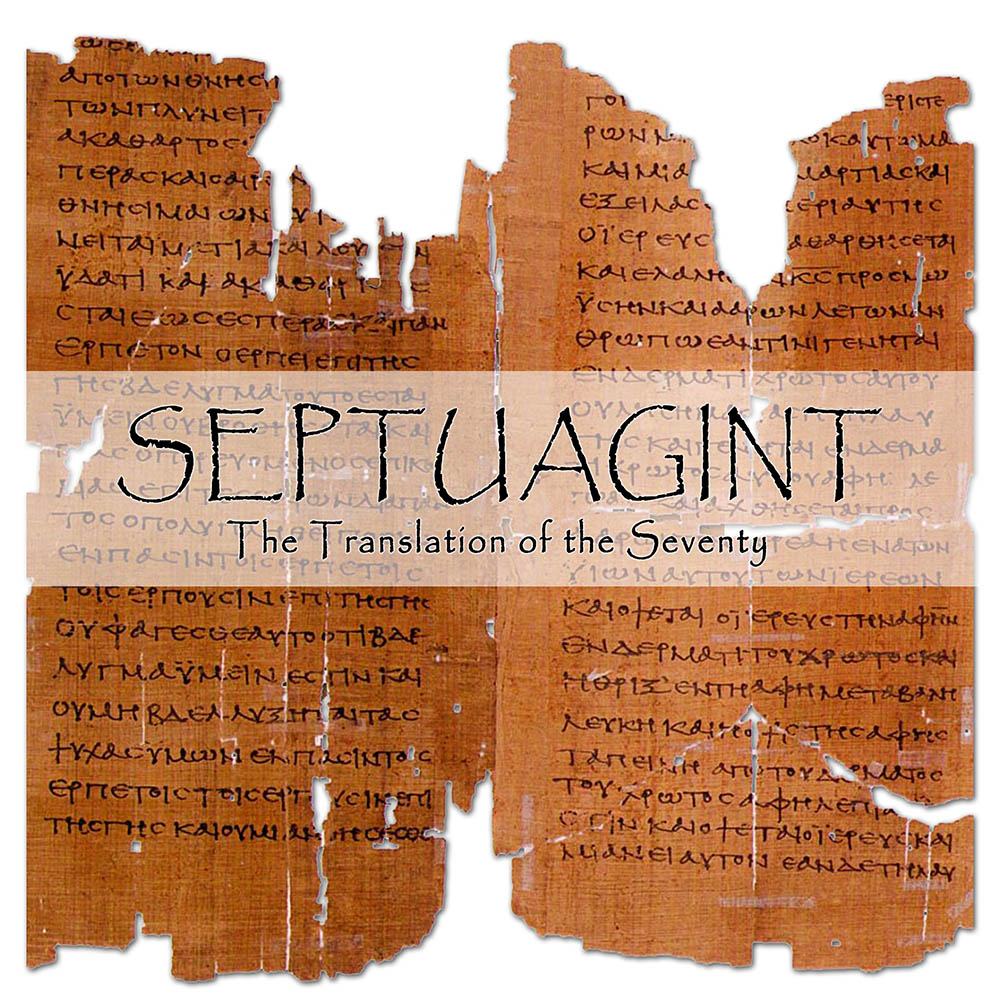
Here is a direct side-by-side comparison of the Masoretic Text with the LXX. I have concluded that the LXX is much to be preferred over the Masoretic Text, a position from which the Eastern Orthodox Church never deviated. Perhaps, if you take the time to read my comparisons and other articles, you will arrive at the same conclusion.
The Septuagint version I am using is the Lexham English Septuagint 2nd Edition, which is available in print or as part of Logos Bible Software. Occasionally I also use the Brenton translation of the LXX for insight into difficult passages.
If you want to know more, click on the following links.
- Why Christians Should Prefer the Septuagint over the Masoretic Text.
- Some Insights Gained through Comparing the Masoretic Text to the Septuagint
- More side by side comparisons of the Masoretic Text (MT) to the Septuagint (LXX).
| Masoretic Text | Septuagint | Significance |
|
8 When the Most High divided their inheritance to the nations, When He separated the sons of Adam, He set the boundaries of the peoples According to the number of the children of Israel. 9 For the LORD’s portion is His people; Jacob is the place of His inheritance. Deuteronomy 32:8–9 (NKJV) 43 “Rejoice, O Gentiles, with His people; For He will avenge the blood of His servants, And render vengeance to His adversaries; He will provide atonement for His land and His people.” Deuteronomy 32:43 (NKJV) |
8 When the Most High distributed nations as he scattered the sons of Adam, he set up boundaries for the nations according to the number of the angels of God. 9 And his people Jacob became the portion of the Lord, Israel an allotment of his inheritance. Deuteronomy 32:8–9 (LES2) 43 Delight, O heavens, with him and worship him, you sons of God. Delight, O nations, with his people and prevail with him, all you angels of God. For he will avenge the blood of his sons, and he will avenge and he will repay the enemies with vengeance, and he will repay those who hate, and the Lord will cleanse out the land of his people.’ ” Deuteronomy 32:43 (LES2) |
In verse 8, the MT adds “their inheritance.” The NT uses the general word for “peoples” instead of the LXX’s more specific “nations.” The MT says that the land allotted to the nations is based somehow upon the children of Israel, perhaps implying their eventual ownership. The LXX says those boundaries were set up according to the number of the “angels of God,” apparently giving some sort of jurisdiction to the angels over the various parts of the earth. This idea is found in Daniel 10:20. In verse 43, the MT says, “Rejoice, O Gentiles with his people (meaning Israel),” but the LXX says, “Delight, O heavens,with him and worship him, you sons of God [angels or born-again people]. Delight, O nations, with his people, and prevail with him, all you angels of God.” Since all Old Testament Scripture points to Christ (John 5:39), unless it has been doctored to obscure an otherwise clear reference. This is such a case. By eliminating all the references to “him,” the MT seeks to eliminate what points to Christ. Otherwise, the Masoretes’ choice to replace “him” with “his people” makes no sense. Next the MT says that “He will avenge the blood of his servants,” but the LXX says that “he will avenge the blood of his sons.” The MT sometimes changes “son” to “servant,” thus illustrating a fundamental difference between the Old Covenant of law and the New Covenant of grace. Under the law, people are mere servants, but in the New Covenant, through the new birth, we become God’s sons. (1 John 3:1) Finally, the MT says that God will “provide atonement for his land and people,” meaning Israel and the Jews. The LXX says that God / “he” (Jesus) will “repay those who hate, and the Lord will cleanse out the land of his people.” Christians understood this to apply to AD 70 when, as Jesus prophesied, the Romans destroyed those Jews, who remained enemies of Christ by refusing the gospel, and eventually cleansed the land of his people after the Bar Kohkba revolt in 135 AD. |
Summary: This alteration in the MT promotes the Zionist position that the modern nation state of Israel is still the focus of God’s plan in the end times, rather than Christ. The Talmudic Jews believe they are destined to rule the world, something that is not found in the New Testament. Instead, Christ will rule over the nations and be glorified through the church, which is composed of both Jews and Gentiles, throughout all eternity (Ephesians 3:21).