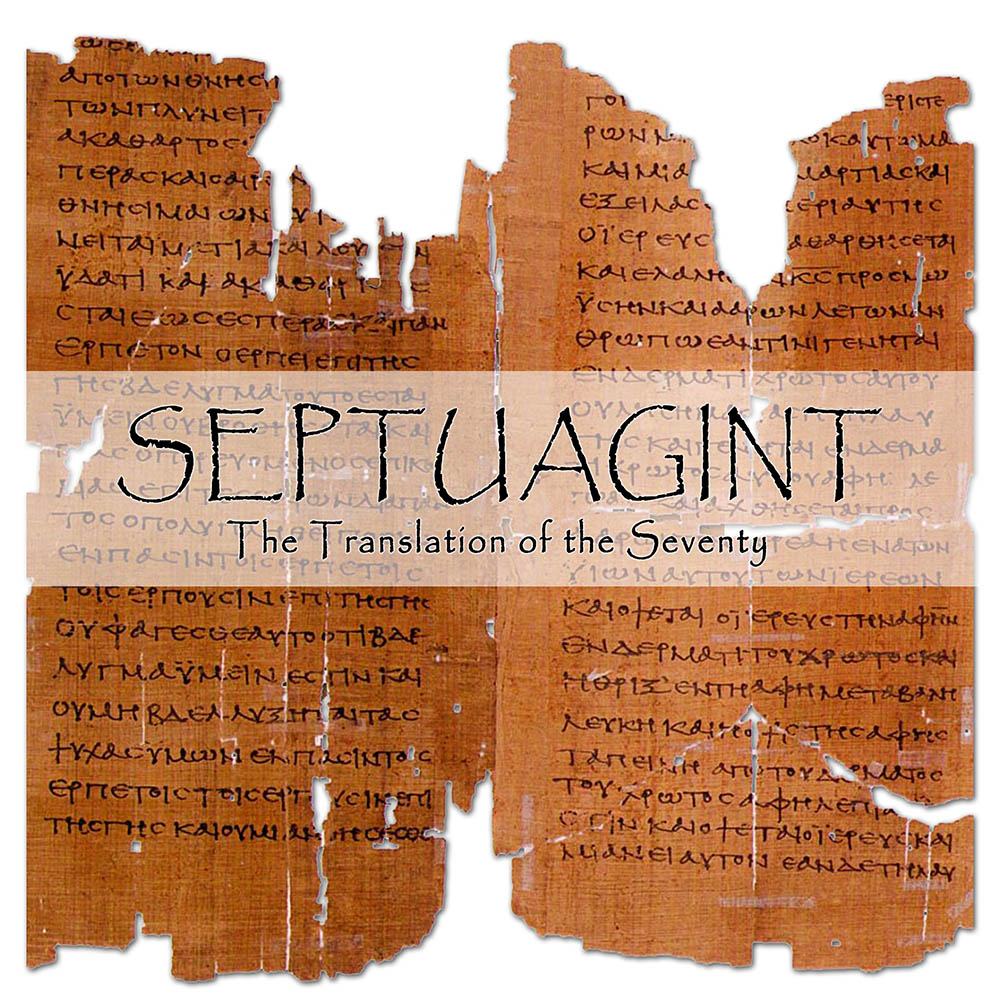
Here is a direct side-by-side comparison of the Masoretic Text with the LXX. I have concluded that the LXX is much to be preferred over the Masoretic Text, a position from which the Eastern Orthodox Church never deviated. Perhaps, if you take the time to read my comparisons and other articles, you will arrive at the same conclusion.
The Septuagint version I am using is the Lexham English Septuagint 2nd Edition, which is available in print or as part of Logos Bible Software. Occasionally I also use the Brenton translation of the LXX for insight into difficult passages.
If you want to know more, click on the following links.
- Why Christians Should Prefer the Septuagint over the Masoretic Text.
- Some Insights Gained through Comparing the Masoretic Text to the Septuagint
- More side by side comparisons of the Masoretic Text (MT) to the Septuagint (LXX).
| Masoretic Text | Septuagint | Significance |
|
1 Then Deborah and Barak the son of Abinoam sang on that day, saying, 2 “That the leaders led in Israel, That the people volunteered, Bless the LORD! 3 “Hear, O kings; give ear, O rulers! I—to the LORD, I will sing, I will sing praise to the LORD, the God of Israel. 4 “LORD, when You went out from Seir, When You marched from the field of Edom, The earth quaked, the heavens also dripped, Even the clouds dripped water. 5 “The mountains quaked at the presence of the LORD, This Sinai, at the presence of the LORD, the God of Israel. Judges 5:1–5 (NASB95) |
1 Deborah and Barak, son of Abinoam, sang in that day, saying: 2 A revelation was uncovered in Israel when the people ignorantly sinned: praise the Lord! 3 Hear, O kings, and hearken, O satraps: I am to the Lord, I am I will sing, I will sing psalms to the Lord God of Israel. 4 O Lord, when you were going out to Seir and marching forth from the field of Edom, the earth shook, and heaven dropped dew, and the clouds poured water. 5 Mountains were shaken before the face of the Lord Eloi, this Sinai before the face of the Lord God of Israel. Judges 5:1–5 (LES2) |
Chapters 1-4 in Judges show some disparities between the MT and LXX, but I found nothing worth including in the comparison I am making. Chapter 5 ,however, has some differences worth noting. In verse 2, the MT says about the song Deborah and Barak sang: “That the leaders led in Israel, That the people volunteered, Bless the Lord.” Hebrew language scholars say this is a difficult passage. The LXX version used by Lexham’s Second Edition translation, in contrast, says: “A revelation was uncovered in Israel when the people ignorantly sinned: praise the Lord!” Brenton’s translation, which uses the Codex Vaticanus, says, “when the people were made willing,” This is probably what we should use, since “ignorant sinning” is not expressed anywhere else in this chapter. The only sinning mentioned is by those who deliberately chose not to join the battle. The remainder matches sufficiently. One note I wish to make, however, is the inclusion of the word “Eloi” next to “Lord” in verse 5. This is the same word for God used by our Lord Jesus as he hung upon the cross. 34 At the ninth hour Jesus cried out with a loud voice, “ELOI, ELOI, LAMA SABACHTHANI?” which is translated, “MY GOD, MY GOD, WHY HAVE YOU FORSAKEN ME?” Mark 15:34 (NASB95) Truly, all scripture points to Christ! |
|
6 “In the days of Shamgar the son of Anath, In the days of Jael, the highways were deserted, And travelers went by roundabout ways. 7 “The peasantry ceased, they ceased in Israel, Until I, Deborah, arose, Until I arose, a mother in Israel. 8 “New gods were chosen; Then war was in the gates. Not a shield or a spear was seen Among forty thousand in Israel. 9 “My heart goes out to the commanders of Israel, The volunteers among the people; Bless the LORD! Judges 5:6–9 (NASB95) |
6 In the days of Shamgar son of Anath, in the day of Jael, they quit the ways, and they went on byways they went on twisted ways. 7 The mighty ones quit in Israel, they quit until Deborah arose, until a mother arose in Israel. 8 They chose new gods when cities of rulers fought; a shield perhaps was seen and a spearhead among forty thousand in Israel. 9 My heart is inclined to the commands given in Israel; those that are willing among the people: praise the Lord. Judges 5:6–9 (LES2) |
Verse 6 is an example of why I think the MT often takes rather stilted language and edits it to read more smoothly. In verse 7, the MT says that “the peasantry ceased,” but the LXX says the “mighty ones quit until Deborah arose.” This seems more in line with the leaders stepping up. Verse 8 is difficult. It describes the deplorable conditions in Israel prior to the deliverance God orchestrated through Deborah and Barak. |
|
10 “You who ride on white donkeys, You who sit on rich carpets, And you who travel on the road—sing! 11 “At the sound of those who divide flocks among the watering places, There they shall recount the righteous deeds of the LORD, The righteous deeds for His peasantry in Israel. Then the people of the LORD went down to the gates. Judges 5:10–11 (NASB95) |
10 Those going upon a she-donkey at noon, those seated upon a judgment seat, and those going upon the roads of councilors along the way: 11 Tell fully from the noise of those playing music, between those drawing water: there they will ascribe righteous acts. O Lord, righteous acts will increase in Israel. Then the people of the Lord went down into the cities. Judges 5:10–11 (LES2) |
In this passage we see some disparities, such as the MT’s “those who divide flocks,” as opposed to the LXX’s “those playing music.” However, the passage in general matches. |
|
12 “Awake, awake, Deborah; Awake, awake, sing a song! Arise, Barak, and take away your captives, O son of Abinoam. 13 “Then survivors came down to the nobles; The people of the LORD came down to me as warriors. 14 “From Ephraim those whose root is in Amalek came down, Following you, Benjamin, with your peoples; From Machir commanders came down, And from Zebulun those who wield the staff of office. 15 “And the princes of Issachar were with Deborah; As was Issachar, so was Barak; Into the valley they rushed at his heels; Among the divisions of Reuben There were great resolves of heart. 16 “Why did you sit among the sheepfolds, To hear the piping for the flocks? Among the divisions of Reuben There were great searchings of heart. 17 “Gilead remained across the Jordan; And why did Dan stay in ships? Asher sat at the seashore, And remained by its landings. 18 “Zebulun was a people who despised their lives even to death, And Naphtali also, on the high places of the field. Judges 5:12–18 (NASB95) |
12 Awake, awake, O Deborah. Awake, awake to utter a song. Rise up, Barak, and take captive your captivity, son of Abinoam. 13 Then comprehension went down to the strong ones, the people of the Lord went down for him, among the mighty ones from me. 14 Ephraim rooted out those in Amalek, behind you was Benjamin among your people. Machir went down with me searching out, and from Zebulun those who draw with the scribe’s rod of record. 15 And the leaders in Issachar were with Deborah and Barak. Thus she sent Barak into the valley by foot. Into the portion of Reuben, great was the resolution of the heart. 16 Into what did they sit between the sheepfolds to hear the bleating of the messengers? Among the divisions of Reuben, great was examination of the heart. 17 Gilead pitched his tents on the other side of the Jordan. Why did Dan stay with the ships? Asher remained at the coast of the seas and at its ports he camped. 18 Zebulun, the people reproached his soul to death; and Naphtali to the heights of the field. Judges 5:12–18 (LES2) |
In verse 13, the MT uses “survivors,” which does not make sense to me. The LXX says that the strong ones received “comprehension” or understanding, which motivated them to join Barak. That makes sense to me. The MT in verse 14 is peculiar. Why would it be said that Ephraim is rooted in Amalek, unless it means that the tribe lived in the land taken from Amalek? That way of understanding the MT fits with the LXX, which says that is what Ephraim did earlier in its history. Verse 16 begins a section that reproaches those who did not join the battle. |
|
19 “The kings came and fought; Then fought the kings of Canaan At Taanach near the waters of Megiddo; They took no plunder in silver. 20 “The stars fought from heaven, From their courses they fought against Sisera. 21 “The torrent of Kishon swept them away, The ancient torrent, the torrent Kishon. O my soul, march on with strength. 22 “Then the horses’ hoofs beat From the dashing, the dashing of his valiant steeds. 23 ‘Curse Meroz,’ said the angel of the LORD, ‘Utterly curse its inhabitants; Because they did not come to the help of the LORD, To the help of the LORD against the warriors.’ Judges 5:19–23 (NASB95) |
19 Their kings came, they arrayed themselves; then the kings of Canaan fought at Taanach on the water of Megiddo; a gift of silver they did not take. 20 From heaven the stars arrayed themselves, from their tracks they arrayed themselves against Sisera. 21 The wadi of Kishon swept them away, that ancient brook the Kishon brook; my mighty soul will trample him. 22 Then the heels of the horse were fettered; in haste his mighty ones hastened. 23 “Call down curses on Meroz,” said the angel of the Lord, “call down curses on all who dwell in it, for they did not come to the help of the Lord, to help among the mighty ones.” Judges 5:19–23 (LES2) |
Verse 20 is most interesting to those who take biblical cosmology seriously. The Bible is rather mysterious when it comes to the stars. At times it seems they are beings. At other times, simply lights or luminaries in the firmament. Below is a thoughtful presentation on the topic. In this passage, the stars are treated as active agents in war, which associates them with the angelic host. In verse 23, the location of Meroz is not known. The denunciation is because they did not join the battle against Sisera. Interestingly, Rev. David Caldwell, a minister from my area, used this passage in a sermon to denounce those who refused to join the battle against England in the American Revolution. |
|
24 “Most blessed of women is Jael, The wife of Heber the Kenite; Most blessed is she of women in the tent. 25 “He asked for water and she gave him milk; In a magnificent bowl she brought him curds. 26 “She reached out her hand for the tent peg, And her right hand for the workmen’s hammer. Then she struck Sisera, she smashed his head; And she shattered and pierced his temple. 27 “Between her feet he bowed, he fell, he lay; Between her feet he bowed, he fell; Where he bowed, there he fell dead. Judges 5:24–27 (NASB95) |
24 Blessed be Jael among women, wife of Heber the Kenite, above the women in tents may she be blessed. 25 He asked for water, she gave milk; in a bowl of superiors she brought butter. 26 Her left hand to a peg she stretched out, and her right hand to a hammer of laborers. Then she hammered Sisera, she drove a nail through his head and struck him; she drove a nail through his forehead. 27 Between her feet he rolled, he fell, and he lay between her feet. Bowing he fell; where he bowed, there he fell, departing. Judges 5:24–27 (LES2) |
This passage essentially agrees. What a fearless woman! |
|
28 “Out of the window she looked and lamented, The mother of Sisera through the lattice, ‘Why does his chariot delay in coming? Why do the hoofbeats of his chariots tarry?’ 29 “Her wise princesses would answer her, Indeed she repeats her words to herself, 30 ‘Are they not finding, are they not dividing the spoil? A maiden, two maidens for every warrior; To Sisera a spoil of dyed work, A spoil of dyed work embroidered, Dyed work of double embroidery on the neck of the spoiler?’ 31 “Thus let all Your enemies perish, O LORD; But let those who love Him be like the rising of the sun in its might.” And the land was undisturbed for forty years. Judges 5:28–31 (NASB95) |
28 Through the window peered the mother of Sisera, out of the loophole, saying, “Why was his chariot put to shame? Why do his chariot’s feet tarry?” 29 Her clever princesses answered to her, and she turned back her words herself: 30 “Will not they find him distributing the spoils? He will have compassion to the head of a man. The spoils of dyed garments for Sisera, spoils of embroidery dyes, they are embroiderers’ dyes, spoils for his neck.” 31 Thus may all your enemies be destroyed, O Lord, and those loving him as the going out of the sun in his might. And the land was at rest forty years. Judges 5:28–31 (LES2) |
In this passage there are some relatively minor disparities that I will not mention. A significant one is found in verse 30. The MT says, “A maiden, two maidens for every warrior,” but the LXX says, “He will have compassion on the head of a man.” This seems to be another example of the MT attempting to cast Israel’s enemies in a bad light. The rest of the passage agrees. |
Summary: This chapter illustrates a general agreement between the MT and LXX, but has a few disparities of significance. Even the historical books bear watching. It seems the Masoretes plied their deceit throughout the Old Testament.