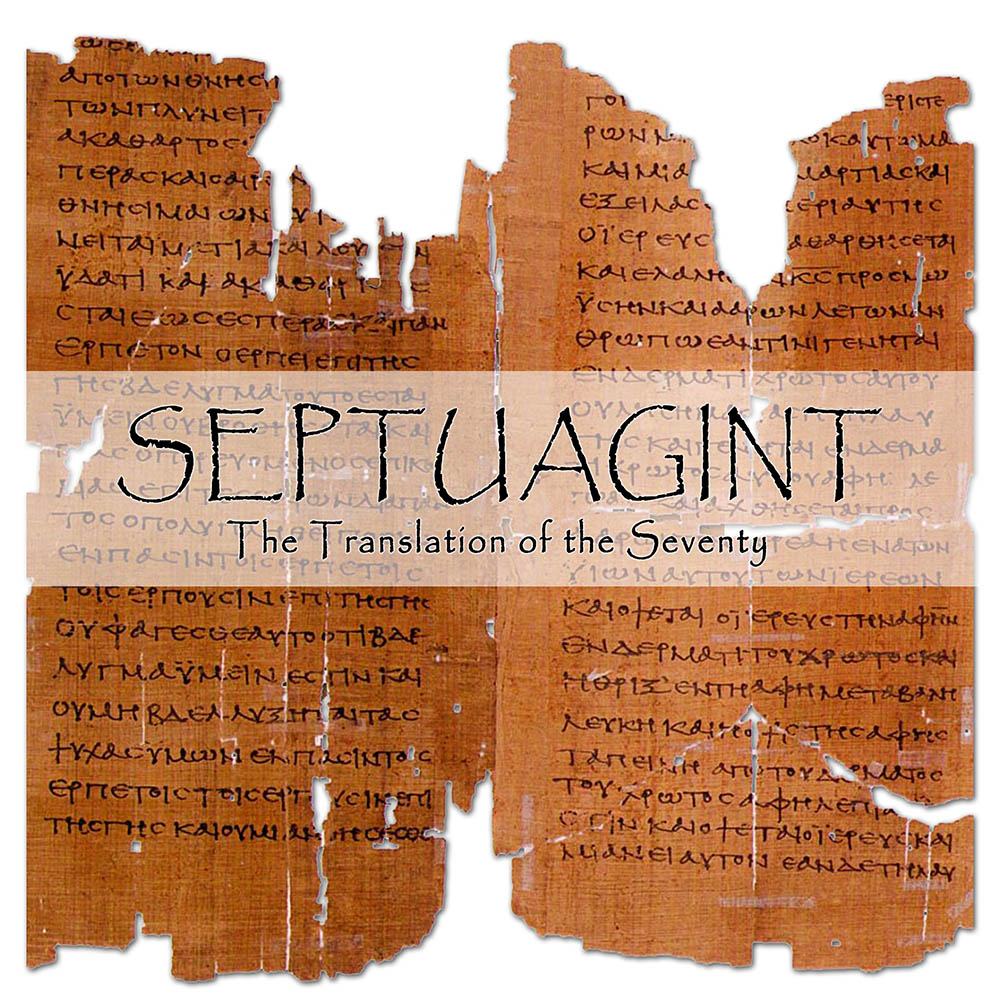
Here is New Testament quote from the Old that shows if the Septuagint was the version of the Scriptures used by the human author and the Holy Spirit, which is usually the case – 70-80% of the time, according to those who claim to know. I am doing my own investigation which is detailed below. The Septuagint version I am using is the Lexham English Septuagint 2nd Edition, which is available in print or as part of Logos Bible Software. It supposedly uses the version of the LXX closest to what the early church had available. Occasionally I also use the Brenton translation for insight into difficult passages.
If you want to know more, click on the following links.
- Why Christians Should Prefer the Septuagint over the Masoretic Text.
- Some Insights Gained through Comparing the Masoretic Text to the Septuagint
- Side-by-side comparisons of the Masoretic Text (MT) to the Septuagint (LXX).
- New Testament Quotes from the Septuagint
NT Quote |
LXX |
MT |
Comment |
|
20 “For it is written in the book of Psalms, ‘LET HIS HOMESTEAD [epaulis – habitation] BE MADE DESOLATE [ginomai eremos], AND LET NO ONE DWELL [katoikeo] IN IT’; and, ‘LET ANOTHER MAN TAKE HIS OFFICE [episkope – oversight].’ Acts 1:20 (NASB95) |
26 Let their dwelling [epaulis – habitation] become stripped bare [ginomai eremoo], and let there be no one dwelling [katoikeo] in their tents [skeinoma], Psalm 68:26 (LES2) 8 Let his days be few, and may another take away his visitation [episkope – oversight]. Psalm 108:8 (LES2) |
25 May their camp [tirah – encampment] be desolate [shamem – desolate]; May none dwell [yashob – dwell] in their tents [ohel – tents]. Psalm 69:25 (NASB95) 8 Let his days be few; Let another take his office [pequddah – oversight]. Psalm 109:8 (NASB95) |
I give this to the LXX barely, based on the difference between the Greek epaulis and the Hebrew tirah. |