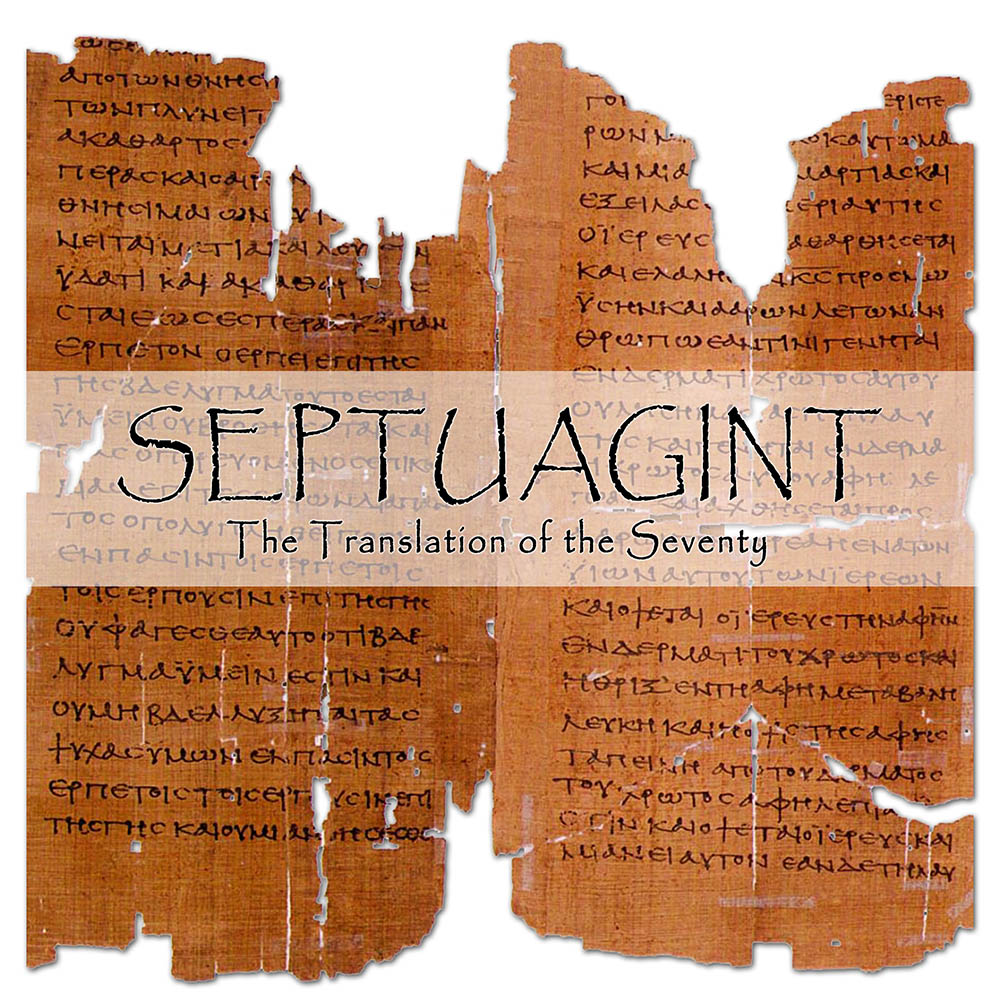
Here is a direct side-by-side comparison of the Masoretic Text with the LXX. I have concluded that the LXX is much to be preferred over the Masoretic Text, a position from which the Eastern Orthodox Church never deviated. Perhaps, if you take the time to read my comparisons and other articles, you will arrive at the same conclusion.
The Septuagint version I am using is the Lexham English Septuagint 2nd Edition, which is available in print or as part of Logos Bible Software. Occasionally I also use the Brenton translation of the LXX for insight into difficult passages.
If you want to know more, click on the following links.
- Why Christians Should Prefer the Septuagint over the Masoretic Text.
- Some Insights Gained through Comparing the Masoretic Text to the Septuagint
- More side by side comparisons of the Masoretic Text (MT) to the Septuagint (LXX).
| Masoretic Text | Septuagint | Significance |
|
1 Now it came to pass in the days of Ahaz the son of Jotham, the son of Uzziah, king of Judah, that Rezin king of Syria and Pekah the son of Remaliah, king of Israel, went up to Jerusalem to make war against it, but could not prevail against it. 2 And it was told to the house of David, saying, “Syria’s forces are deployed in Ephraim.” So his heart and the heart of his people were moved as the trees of the woods are moved with the wind. Isaiah 7:1–2 (NKJV) |
1 And this happened in the days of Ahaz, the son of Jotham, the son of Uzziah, king of Judah: Rezin, king of Aram, went up with Pekah, son of Remaliah, king of Israel, to Jerusalem to fight against it, and they were not able to besiege it. 2 And it was reported to the house of David, saying, “Aram has come to an agreement with Ephraim!” And his soul was confounded, along with the soul of his people, the way a tree in a forest is shaken by the wind. Isaiah 7:1–2 (LES2) |
The MT says that the united army of Israel and Syria “could not prevail.” The LXX says, “they were not able to besiege it.” The MT says the army of Syria was deployed against Jerusalem along with Ephraim. The LXX says the two nations conspired against the house of David. The MT says the heart of the king and the people were “moved.” The LXX uses the word “confounded” or “amazed.” |
|
3 Then the LORD said to Isaiah, “Go out now to meet Ahaz, you and Shear-Jashub your son, at the end of the aqueduct from the upper pool, on the highway to the Fuller’s Field, 4 and say to him: ‘Take heed, and be quiet; do not fear or be fainthearted for these two stubs of smoking firebrands, for the fierce anger of Rezin and Syria, and the son of Remaliah. 5 Because Syria, Ephraim, and the son of Remaliah have plotted evil against you, saying, 6 “Let us go up against Judah and trouble it, and let us make a gap in its wall for ourselves, and set a king over them, the son of Tabel”— Isaiah 7:3–6 (NKJV) |
3 And the Lord said to Isaiah, “Go out for a meeting with Ahaz, you and your remaining son Jashub, to the reservoir of the high road of the fuller’s field. 4 And you shall say to him, ‘Be careful to be still and do not be frightened or let your soul be weak because of these two smoking firebrand timbers, for when my wrathful anger comes, I will heal again. 5 And as for the son of Aram and the son of Remaliah, because they planned an evil plan: 6 “We shall go up into Judea and, talking with them, we shall return them to us, and we shall rule it by the son of Tabeel.” Isaiah 7:3–6 (LES2) |
The MT calls Isaiah’s son, Shear-Jashub. Shear means remnant. The LXX calls him, “your remaining son, Jashub.” Interesting. The MT adds the word, “aqueduct.” In verse 4, the two translations diverge quite a bit, beginning in the last part of the verse. The MT tells Ahaz not to fear the wrath of Rezin and Remaliah. The LXX says when God’s wrathful anger comes, he will heal again. The MT says that Jerusalem’s enemies planned to make a gap in the wall, but the LXX says they planned to talk them into surrender. Both agree that their goal is to set their own king over Jerusalem. |
|
7 thus says the Lord GOD: “It shall not stand, Nor shall it come to pass. 8 For the head of Syria is Damascus, And the head of Damascus is Rezin. Within sixty-five years Ephraim will be broken, So that it will not be a people. 9 The head of Ephraim is Samaria, And the head of Samaria is Remaliah’s son. If you will not believe, Surely you shall not be established.” ’ ” Isaiah 7:7–9 (NKJV) |
7 Thus says the Lord Sabaoth, “This plan will certainly not stand nor will it be. 8 But the head of Aram is Damascus, and the head of Damascus is Rezin; and yet within sixty-five years, the kingdom of Ephraim will cease being a people. 9 And the head of Ephraim is Samaria, and the head of Samaria is the son of Remaliah, and if you do not trust, neither will you understand.” ’ ” Isaiah 7:7–9 (LES2) |
The prophet Isaiah delivered a prophetic word to calm the fears of the people. He told them that the evil conspiracy would not stand or take place. Instead, Ephraim would cease to be a people! The final exhortation was to have faith, without which one cannot comprehend God’s promises. Fear causes our ability to think critically to shut down. |
|
10 Moreover the LORD spoke again to Ahaz, saying, 11 “Ask a sign for yourself from the LORD your God; ask it either in the depth or in the height above.” 12 But Ahaz said, “I will not ask, nor will I test the LORD!” 13 Then he said, “Hear now, O house of David! Is it a small thing for you to weary men, but will you weary my God also? 14 Therefore the Lord Himself will give you a sign: Behold, the virgin shall conceive and bear a Son, and shall call His name Immanuel. Isaiah 7:10–14 (NKJV) |
10 And the Lord continued to speak to Ahaz, saying, 11 “Ask for yourself a sign from the Lord your God, up to a depth or up to a height.” 12 And Ahaz said, “I will not ask, and I will not test the Lord.” 13 And he said, “Hear now, house of David! Is it not a small thing for you to put up a fight with human? And how do you put up a fight with the Lord? 14 Because of this, the Lord himself will give you a sign: Look, the virgin will conceive in the womb and will bear a son, and you will call his name Immanuel. Isaiah 7:10–14 (LES2) |
The false humility of Ahaz is exposed as resistance against God. The Lord decided to give the messianic sign of a virgin conceiving and giving birth to a son named Immmanuel or “God with us,” which was fulfilled when Jesus was born. I believe the messianic sign was given because the attack upon Jerusalem by the combined forces of apostate Israel and the world resembles the combined attack upon God’s chosen by those who reject the gospel and the devil. Only Jesus could save us. The MT used the word “almah,” which means young woman. The LXX used the word, “parthenos,” which means virgin. The translators of the MT chose the English word “virgin,” knowing that the New Testament agrees with the LXX. 22 So all this was done that it might be fulfilled which was spoken by the Lord through the prophet, saying: 23 “Behold, the virgin shall be with child, and bear a Son, and they shall call His name Immanuel,” which is translated, “God with us.” Matthew 1:22–23 (NKJV) |
Summary: This passage should be understood on two levels. The first is regarding historical Jerusalem. The second concerns God’s elect who have been under constant threat since the garden of Eden, which is the reason God sent us a Savior to take back the authority ceded to Satan and rule as Lord or Lords over God’s New Covenant kingdom.