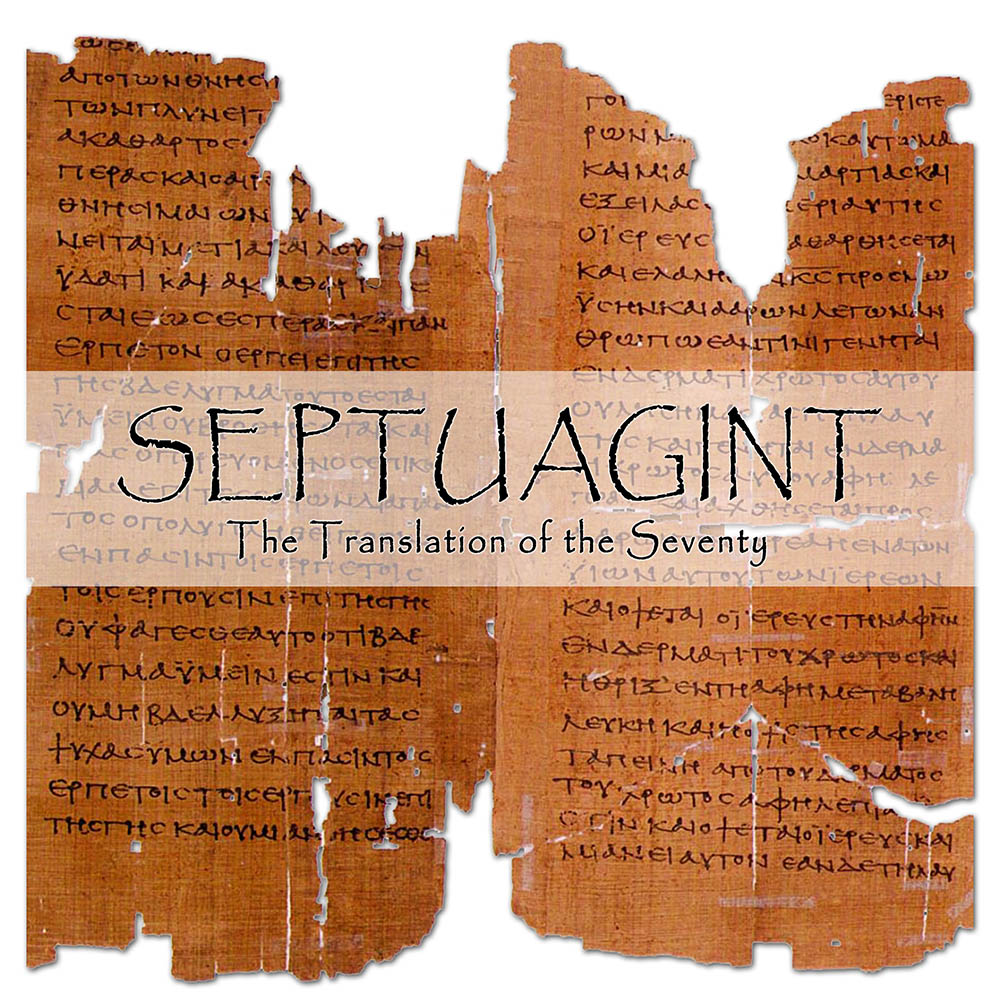
Here is a direct side-by-side comparison of the Masoretic Text with the LXX. I have concluded that the LXX is much to be preferred over the Masoretic Text, a position from which the Eastern Orthodox Church never deviated. Perhaps, if you take the time to read my comparisons and other articles, you will arrive at the same conclusion.
The Septuagint version I am using is the Lexham English Septuagint 2nd Edition, which is available in print or as part of Logos Bible Software. Occasionally I also use the Brenton translation of the LXX for insight into difficult passages.
If you want to know more, click on the following links.
- Why Christians Should Prefer the Septuagint over the Masoretic Text.
- Some Insights Gained through Comparing the Masoretic Text to the Septuagint
- More side by side comparisons of the Masoretic Text (MT) to the Septuagint (LXX).
| Masoretic Text | Septuagint | Significance |
|
1 Answer me when I call, O God of my righteousness! You have relieved me in my distress; Be gracious to me and hear my prayer. 2 O sons of men, how long will my honor become a reproach? How long will you love what is worthless and aim at deception? Selah. Psalm 4:1–2 (NASB95) |
2 When I called, the God of my righteousness heard me. In tribulation you made room for me. Have mercy upon me and hearken to my prayer. 3 Sons of humans, how long are you slow of heart? Why do you love vanity and seek a lie? Psalm 4:2–3 (LES2) |
The first difference we see is that in the LXX David wrote that God already answered his prayer and made room for him in his tribulation. The second difference is that what the MT translates “how long will my honor become a reproach” the LXX gives as “how long are you slow of heart?” This is significant because Jesus used a similar phrase to upbraid the disciples in the road to Emmaus for their unbelief after his resurrection. (Luke 24:25) This links Psalm 4 to Jesus and helps us to see it as a prophecy regarding Christ. Ever since rejecting Christ as Messiah, the Jews who are not among the elect have actively embraced deception and pursued worthlessness, which is what happens to everyone who rejects God’s gracious offer in the gospel. Stephen’s rebuke was that the Jews “always resist the Holy Spirit.” (Acts 7:51) This is true of those Jews and Gentiles who refuse to acknowledge Christ as the Lord. |
|
3 But know that the LORD has set apart the godly man for Himself; The LORD hears when I call to Him. Psalm 4:3 (NASB95) |
4 Know that the Lord magnifies his holy one. The Lord will hear me when I have cried out to him. Psalm 4:4 (LES2) |
Here the MT again hides a clear reference to Christ that was intimated in the above verse. Jesus is the holy one that God magnifies. Jesus was glorified on the Mount of Transfiguration and after his resurrection. (Matthew 17:1-8) All who call upon the Lord Jesus will be saved. (Romans 10:13) |
| I have observed that the most egregious changes the MT makes are found in the prophets and psalms. King David was a prophet; so, it is not surprising that his prophetic psalms that refer to our Lord would be altered. |