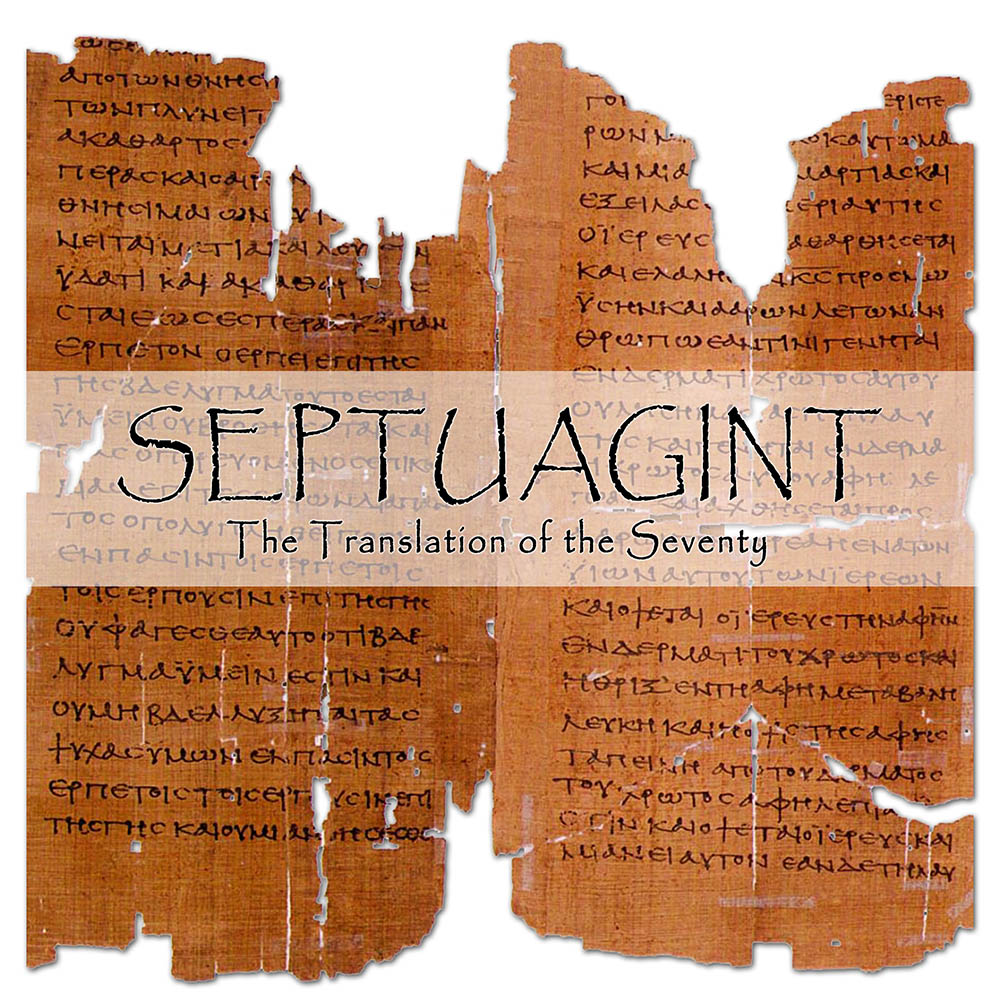
Here is a direct side-by-side comparison of the Masoretic Text with the LXX. I have concluded that the LXX is much to be preferred over the Masoretic Text, a position from which the Eastern Orthodox Church never deviated. Perhaps, if you take the time to read my comparisons and other articles, you will arrive at the same conclusion.
The Septuagint version I am using is the Lexham English Septuagint 2nd Edition, which is available in print or as part of Logos Bible Software. Occasionally I also use the Brenton translation of the LXX for insight into difficult passages.
If you want to know more, click on the following links.
- Why Christians Should Prefer the Septuagint over the Masoretic Text.
- Some Insights Gained through Comparing the Masoretic Text to the Septuagint
- More side by side comparisons of the Masoretic Text (MT) to the Septuagint (LXX).
| Masoretic Text | Septuagint | Significance |
|
15 Truly, You are a God who hides Himself, O God of Israel, Savior! 16 They will be put to shame and even humiliated, all of them; The manufacturers of idols will go away together in humiliation. 17 Israel has been saved by the LORD With an everlasting salvation; You will not be put to shame or humiliated To all eternity. Isaiah 45:15–17 (NASB95) |
15 For you are God, and we did not know it, God of Israel. 16 All who resist him will be dishonored and be shamed and go in shame. Be restored to me, islands. 17 Israel will be saved by the Lord with an eternal salvation; they will not be shamed or dishonored until eternity. Isaiah 45:15–17 (LES2) |
The first difference we see is that instead of the MT’s “You are a God who hides himself,” the LXX gives us, “You are God and we did not know it.” This to me is a reference to Christ. The Jews knew who YHWH is, but they did not recognize that Jesus is also the “I Am.” Instead, when he claimed to be, they decided to kill him for blasphemy. (John 8:58) Next, we are told in the LXX that “all who resist him will be dishonored and shamed.” The big question is to whom is this a reference? The makers of idols, those who refuse to recognize Cyrus, or is it again pointing to Christ? Since John 5:39 says that the Scriptures point to Christ, I go with the last choice, which indeed fits with the chapter and agrees with Deuteronomy 18:15 and Acts 3:22-23. The insertion of “Be restored to me, islands,” must refer to the future preaching of the gospel, through which people from all nations are restored to God through Christ. The last promise of eternal salvation for Israel is a clear reference to the salvation that is available through Christ in the New Covenant. The Old Covenant of Law was not eternal but conditional. (Hebrews 10:1-10) |
|
18 For thus says the LORD, who created the heavens (He is the God who formed the earth and made it, He established it and did not create it a waste place, but formed it to be inhabited), “I am the LORD, and there is none else. 19 “I have not spoken in secret, In some dark land; I did not say to the offspring of Jacob, ‘Seek Me in a waste place’; I, the LORD, speak righteousness, Declaring things that are upright. Isaiah 45:18–19 (NASB95) |
18 This is what the Lord who made the heavens—this one is God who brought the earth to light and made it; he himself marked it as a boundary; he did not make it for nothing but formed it to be inhabited—says: “I am, and there is none further. 19 I have not spoken in secret or in a dark place of the earth. I did not say to the seed of Jacob, ‘Seek pointlessly!’ I am, I am the Lord who speaks righteousness and announces truth.” Isaiah 45:18–19 (LES2) |
The only differences I will point out in this passage is that MT says that God did not say “Seek me in a waste place.” I prefer the LXX’s translation in which God says do not “Seek me pointlessly, vainly, or frivolously.” Lastly, the LXX says that God “speaks righteousness and announces truth.” Certainly, righteousness, grace, and truth comes through our Lord Jesus and the gospel message. |
|
20 “Gather yourselves and come; Draw near together, you fugitives of the nations; They have no knowledge, Who carry about their wooden idol And pray to a god who cannot save. Isaiah 45:20 (NASB95) |
20 Gather together and come here; plan together, you who have been delivered from among the nations. Those who lift up wood, their engraved figure, and pray to gods that do not save, do not know. Isaiah 45:20 (LES2) |
The LXX adds that idols have no knowledge, a recurrent theme. Only God knows the future. |
|
21 “Declare and set forth your case; Indeed, let them consult together. Who has announced this from of old? Who has long since declared it? Is it not I, the LORD? And there is no other God besides Me, A righteous God and a Savior; There is none except Me. Isaiah 45:21 (NASB95) |
21 If they announce, let them approach, that they might know at once who made these things audible from the beginning. Then it will be announced to you, “I am God, and there is no other besides me; there is no righteous or savior besides me. Isaiah 45:21 (LES2) |
There is no important difference here. |
|
22 “Turn to Me and be saved, all the ends of the earth; For I am God, and there is no other. 23 “I have sworn by Myself, The word has gone forth from My mouth in righteousness And will not turn back, That to Me every knee will bow, every tongue will swear allegiance. Isaiah 45:22–23 (NASB95) |
22 Return upon me, and you will be saved, you who come from the end of the earth. I am God, and there is no other. 23 I am swearing an oath according to myself: Unless righteousness shall go forth from my mouth, my words shall not turn back, because every knee shall bend to me, and every tongue shall swear by God, Isaiah 45:22–23 (LES2) |
I see no significant difference here. |
|
24 “They will say of Me, ‘Only in the LORD are righteousness and strength.’ Men will come to Him, And all who were angry at Him will be put to shame. 25 “In the LORD all the offspring of Israel Will be justified and will glory.” Isaiah 45:24–25 (NASB95) |
24 saying, “Righteousness and glory will come with him, and all who separate them will be shamed. 25 All the seed of the sons of Israel will be vindicated by the Lord and will be glorified by God.” Isaiah 45:24–25 (LES2) |
There is a difference between strength and glory; although, both come from God. The MT seems to try to make the vague “all who separate them” into something more understandable – “all who were angry at him.” I prefer the LXX saying that the seed will be glorified by God. This agrees with Romans 8:30, where Paul says that God has glorified his elect, those who were chosen before the foundation of the world in Christ (Ephesians 1:4) and justified through faith in him. |
| In conclusion, I see only minor omissions or obfuscations of references to Christ in the MT is this section of Isaiah. Still, however, death can come by a thousand cuts. |