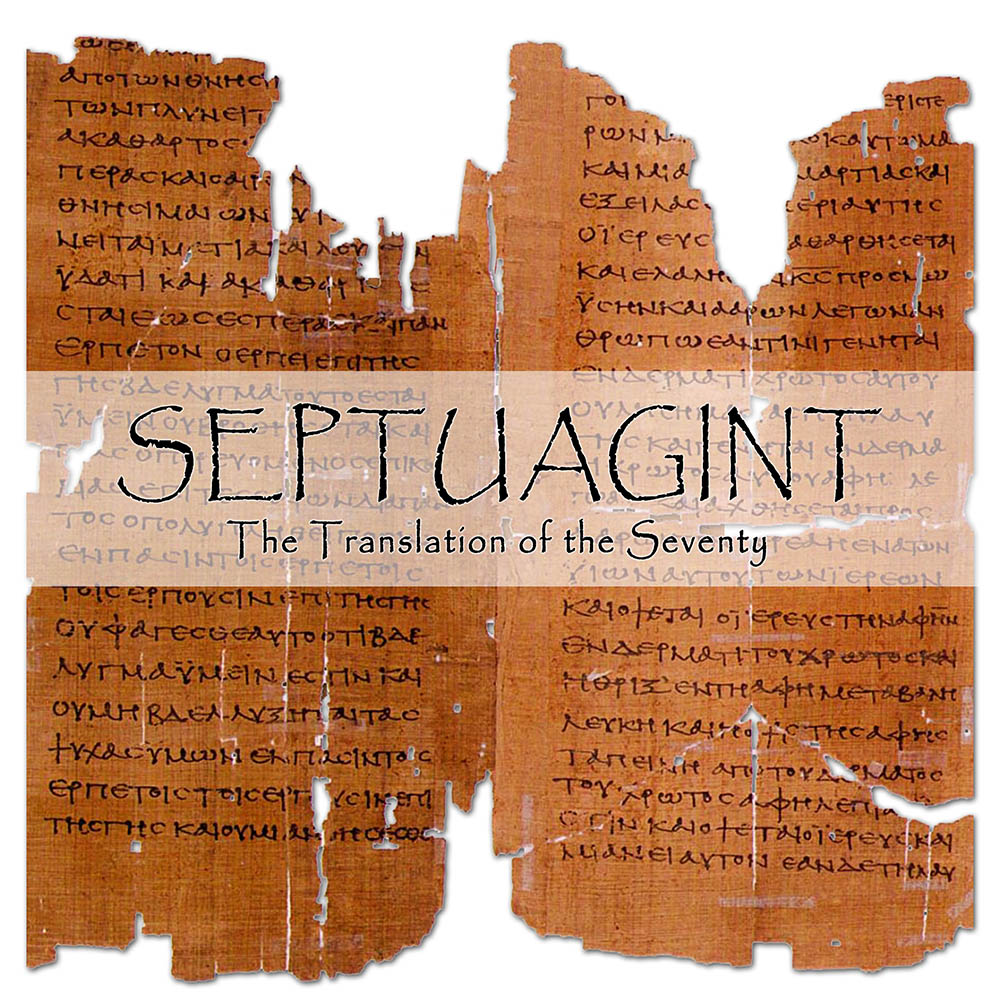
Here is a direct side-by-side comparison of the Masoretic Text with the LXX. I have concluded that the LXX is much to be preferred over the Masoretic Text, a position from which the Eastern Orthodox Church never deviated. Perhaps, if you take the time to read my comparisons and other articles, you will arrive at the same conclusion.
The Septuagint version I am using is the Lexham English Septuagint 2nd Edition, which is available in print or as part of Logos Bible Software. Occasionally I also use the Brenton translation of the LXX for insight into difficult passages.
If you want to know more, click on the following links.
- Why Christians Should Prefer the Septuagint over the Masoretic Text.
- Some Insights Gained through Comparing the Masoretic Text to the Septuagint
- More side by side comparisons of the Masoretic Text (MT) to the Septuagint (LXX).
| Masoretic Text | Septuagint | Significance |
|
31 “Behold, the days are coming, says the LORD, when I will make a new covenant with the house of Israel and with the house of Judah—32 not according to the covenant that I made with their fathers in the day that I took them by the hand to lead them out of the land of Egypt, My covenant which they broke, though I was a husband to them, says the LORD. Jeremiah 31:31–32 (NKJV) |
31 “Look! The days are coming,” declares the Lord, “and I will establish a new covenant with the house of Israel and the house of Judah, 32 not according to the covenant that I established with their fathers on the day I seized their hand to bring them out of the land of Egypt; for they did not remain in my covenant, and I neglected them,” declares the Lord. Jeremiah 38:31–32 (LES2) |
Immediately we see the evidence that the MT rearranged the LXX chapter order. Chapter 31 in the MT is chapter 38 in the LXX. Basically, the two agree until the last part of verse 32. The MT says that Israel “broke” the covenant, but the LXX says that they did not “remain in” it. The MT says, “though I was a husband to them,” but the LXX says, “and I neglected them.” This wording agrees with the New Testament quote in Hebrews. 8 Because finding fault with them, He says: “Behold, the days are coming, says the LORD, when I will make a new covenant with the house of Israel and with the house of Judah—9 not according to the covenant that I made with their fathers in the day when I took them by the hand to lead them out of the land of Egypt; because they did not continue in My covenant, and I disregarded them, says the LORD. Hebrews 8:8–9 (NKJV) The wording of the LXX agrees with the Hebrews quote. This is not the case with some of the words and phrases in the MT. |
|
33 But this is the covenant that I will make with the house of Israel after those days, says the LORD: I will put My law in their minds, and write it on their hearts; and I will be their God, and they shall be My people. 34 No more shall every man teach his neighbor, and every man his brother, saying, ‘Know the LORD,’ for they all shall know Me, from the least of them to the greatest of them, says the LORD. For I will forgive their iniquity, and their sin I will remember no more.” Jeremiah 31:33–34 (NKJV) |
33 “For this is my covenant that I will establish with the house of Israel after those days,” declares the Lord. “In giving, I will give my laws into their mind, and I will write them upon their hearts. And I will become a God for them, and they will become a people for me. 34 And each one will not teach his fellow citizen, or each his brother, saying, ‘Know the Lord!’ because everyone will know me, from the smallest of them to the greatest of them, because I will be gracious to their injustices. And I shall not remember their sins any longer. Jeremiah 38:33–34 (LES2) |
Except for minor variations in wording, this passage is in agreement. The letter to the Hebrews in the New Testament quotes this passage. 10 For this is the covenant that I will make with the house of Israel after those days, says the LORD: I will put My laws in their mind and write them on their hearts; and I will be their God, and they shall be My people. 11 None of them shall teach his neighbor, and none his brother, saying, ‘Know the LORD,’ for all shall know Me, from the least of them to the greatest of them. 12 For I will be merciful to their unrighteousness, and their sins and their lawless deeds I will remember no more.” Hebrews 8:10–12 (NKJV) This passage basically agrees with the LXX and the MT. |
|
35 Thus says the LORD, Who gives the sun for a light by day, The ordinances of the moon and the stars for a light by night, Who disturbs the sea, And its waves roar (The LORD of hosts is His name): 36 “If those ordinances depart From before Me, says the LORD, Then the seed of Israel shall also cease From being a nation before Me forever.” 37 Thus says the LORD: “If heaven above can be measured, And the foundations of the earth searched out beneath, I will also cast off all the seed of Israel For all that they have done, says the LORD. Jeremiah 31:35–37 (NKJV) |
35 Even if the heavens were raised up to the heights,” declares the Lord, “and the ground of the earth lowered downward, even then I would not reject the race of Israel,” declares the Lord, “concerning all the things they have done.” 36 This is what the Lord said, he who gives the sun as light for the day, the moon and stars as light for the night, and the shout in the sea and its waves roared; the Lord Almighty is his name. 37 “If these laws cease from before my face,” declares the Lord, “then the race of Israel will cease to be a people before my face all the days. Jeremiah 38:35–37 (LES2) |
Here the order of the wording has been changed. Assuming, as I do, that the LXX is the more ancient and correct version of the Hebrew scriptures, I allege that the MT has made some changes to suit the purposes of the Jewish rabbis who have always opposed Christ and his disciples. Therefore, I will comment in the order of the LXX. Verse 35 states an impossibility that, were it to become true, even then God’s faithfulness to the “genos” or race of Israel not cease. In the New Covenant, this is the race of people who are born again by the Holy Spirit, whom Peter describes as a holy nation, God’s own special people. (1 Peter 2:9) The MT changes the wording to something its authors thought was better, referring to measuring the heavens and searching out the foundations of the earth. What a pity this is not what Jeremiah said, because it sounds so nice. Verse 36 and 37 in the LXX lists the sun, moon, stars, and ocean as obeying fixed laws, but even if these laws be abrogated, God will maintain the ethnos, which means people or nation of Israel. Once again, we are speaking of the New Covenant, which has no regard for the natural nation of Israel, but only for the supernatural “Israel of God,” the bride of Christ, the one new man in Christ, the church. Flesh cannot inherit the kingdom of God. (1 Corinthians 15:50) |