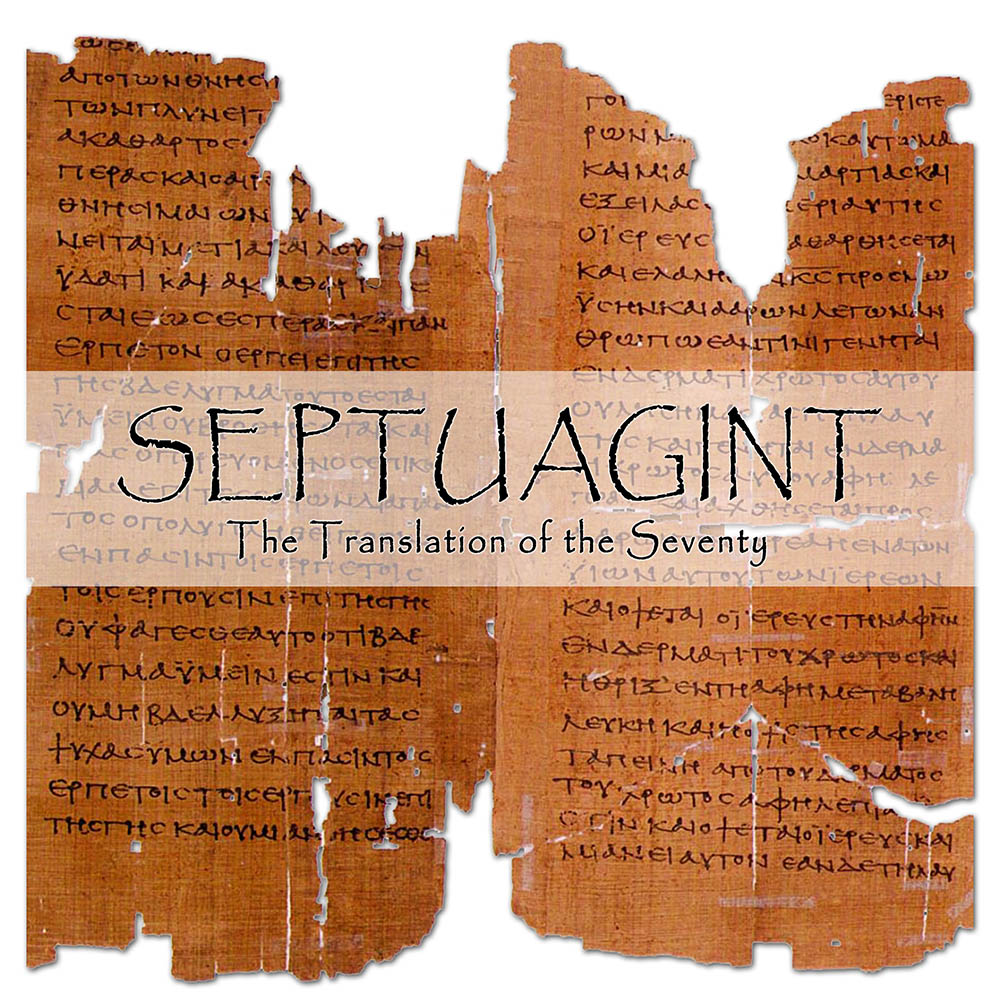
Here is a direct side-by-side comparison of the Masoretic Text with the LXX. I have concluded that the LXX is much to be preferred over the Masoretic Text, a position from which the Eastern Orthodox Church never deviated. Perhaps, if you take the time to read my comparisons and other articles, you will arrive at the same conclusion.
The Septuagint version I am using is the Lexham English Septuagint 2nd Edition, which is available in print or as part of Logos Bible Software. Occasionally I also use the Brenton translation of the LXX for insight into difficult passages.
If you want to know more, click on the following links.
- Why Christians Should Prefer the Septuagint over the Masoretic Text.
- Some Insights Gained through Comparing the Masoretic Text to the Septuagint
- More side by side comparisons of the Masoretic Text (MT) to the Septuagint (LXX).
| Masoretic Text | Septuagint | Significance |
|
6 Wail, for the day of the LORD is at hand! It will come as destruction from the Almighty. 7 Therefore all hands will be limp, Every man’s heart will melt, 8 And they will be afraid. Pangs and sorrows will take hold of them; They will be in pain as a woman in childbirth; They will be amazed at one another; Their faces will be like flames. Isaiah 13:6–8 (NKJV) |
6 Wail, for the day of the Lord is near, and a crushing will come from God. 7 Because of this, every hand will be set free, and every soul of humanity will fear. 8 The elders will be troubled, and pangs will take hold of them like those of a woman giving birth, and they will wail one to another; and they will be amazed, and like a flame they will change their face. Isaiah 13:6–8 (LES2) |
This prophecy is mainly about God’s judgment on Babylon (Isaiah 13:1). The wording is different, but the idea is the same. |
|
9 Behold, the day of the LORD comes, Cruel, with both wrath and fierce anger, To lay the land desolate; And He will destroy its sinners from it. 10 For the stars of heaven and their constellations Will not give their light; The sun will be darkened in its going forth, And the moon will not cause its light to shine. Isaiah 13:9–10 (NKJV) |
9 For look! An incurable day of the Lord, of wrath and of anger, is coming to make the inhabited land desolate and to destroy the sinners from it. 10 For the stars of the heavens and Orion and all the world of the heavens will not give light, and it will be darkened when the sun rises, and the moon will not give its light. Isaiah 13:9–10 (LES2) |
I think the MT omits something important in verse 10 – “the cosmos of the heavens.” There is a whole “world” up there in heaven giving light. |
|
11 “I will punish the world for its evil, And the wicked for their iniquity; I will halt the arrogance of the proud, And will lay low the haughtiness of the terrible. 12 I will make a mortal more rare than fine gold, A man more than the golden wedge of Ophir. 13 Therefore I will shake the heavens, And the earth will move out of her place, In the wrath of the LORD of hosts And in the day of His fierce anger. Isaiah 13:11–13 (NKJV) |
11 And I will command disaster for the whole inhabited land and for the impious people, their sins; and I will destroy lawless people’s insolence, and I will bring low the insolence of arrogant people. 12 And those left behind will be more valued than unsmelted gold, and a person will be more valued than the stone in Ophir. 13 For the heavens will be angry, and the earth will be shaken from its foundations because of Lord Sabaoth’s wrathful anger on the day when his wrath comes. Isaiah 13:11–13 (LES2) |
The MT says God will punish the “world,” but the Hebrew word agrees with the LXX – “inhabited world.” It seems that the prophecy has shifted from pronouncing doom on Babylon to speaking about a worldwide judgment. The MT says that mortals will be rare, but the LXX says “more valued.” Instead of the MT’s “I will shake the heavens,” the LXX says, “the heavens will be angry.” The MT’s “moved out of her place,” is rendered “shaken from its foundations” in the LXX. |
|
14 It shall be as the hunted gazelle, And as a sheep that no man takes up; Every man will turn to his own people, And everyone will flee to his own land. 15 Everyone who is found will be thrust through, And everyone who is captured will fall by the sword. 16 Their children also will be dashed to pieces before their eyes; Their houses will be plundered And their wives ravished. Isaiah 13:14–16 (NKJV) |
14 And those left behind will be like a little gazelle fleeing and like a wandering sheep, and there will be no one who gathers them, so that a person will be turned back to his people, and a person will be chased into his own territory. 15 For whoever is caught will be defeated, and those who are gathered together will fall by the sword. 16 And they will strike their children in front of them, and they will plunder their houses, and they will possess their women. Isaiah 13:14–16 (LES2) |
It seems that here the prophecy is once again about judgment upon Babylon. The MT’s “it” is rendered “those left behind.” The rest is more or less in agreement. |
|
17 “Behold, I will stir up the Medes against them, Who will not regard silver; And as for gold, they will not delight in it. 18 Also their bows will dash the young men to pieces, And they will have no pity on the fruit of the womb; Their eye will not spare children. 19 And Babylon, the glory of kingdoms, The beauty of the Chaldeans’ pride, Will be as when God overthrew Sodom and Gomorrah. Isaiah 13:17–19 (NKJV) |
17 Look, I am rousing against you the Medes, who do not regard silver or have need of gold. 18 They will crush young men’s arrows, and they will surely show no mercy to your children; their eyes will not refrain even at your children. 19 And Babylon, which is called esteemed from the king of the Chaldeans, will be the way God overthrew Sodom and Gomorrah. Isaiah 13:17–19 (LES2) |
Now we are definitely back to judgment upon Babylon. The wording is somewhat different, but the thought is the same. |
|
20 It will never be inhabited, Nor will it be settled from generation to generation; Nor will the Arabian pitch tents there, Nor will the shepherds make their sheepfolds there. 21 But wild beasts of the desert will lie there, And their houses will be full of owls; Ostriches will dwell there, And wild goats will caper there. 22 The hyenas will howl in their citadels, And jackals in their pleasant palaces. Her time is near to come, And her days will not be prolonged.” Isaiah 13:20–22 (NKJV) |
20 It will not be inhabited for eternity, nor will they enter it for many generations, nor will Arabians go through it, nor will shepherds by any means rest in it. 21 And wild animals will rest there, and the houses will be filled with sound; and Sirens will rest there, and divine beings will dance there. 22 And donkey-centaurs will settle there, and hedgehogs will make dens among their houses. It is coming quickly, and it will not delay. Isaiah 13:20–22 (LES2) |
This is about Babylon. The MT often seems to reword what looks like the more literal rendering of the Paleo-Hebrew that is found in the LXX to make it sound or “flow” better, as well as elevate Israel and obscure Christ. A siren can also be translated jackal. However, much that is found here in the LXX speaks of evil spiritual beings inhabiting fallen Babylon. For example, what is translated into English as “divine beings” really means demons. No doubt they were there before its fall, too. The MT renders all these inhabitants as animals. |
Summary: This passage provides another example of how freely the MT rewords what I believe is the more literal rendering of the LXX. I did not point out every example, but you will see it for yourself by comparing words and phrases. Even though I wrote that the general ideas in some passages are the same, I do not take lightly changing words, verb tenses, etc, nor does God. Every word of God is important. Nothing should be altered, ever.