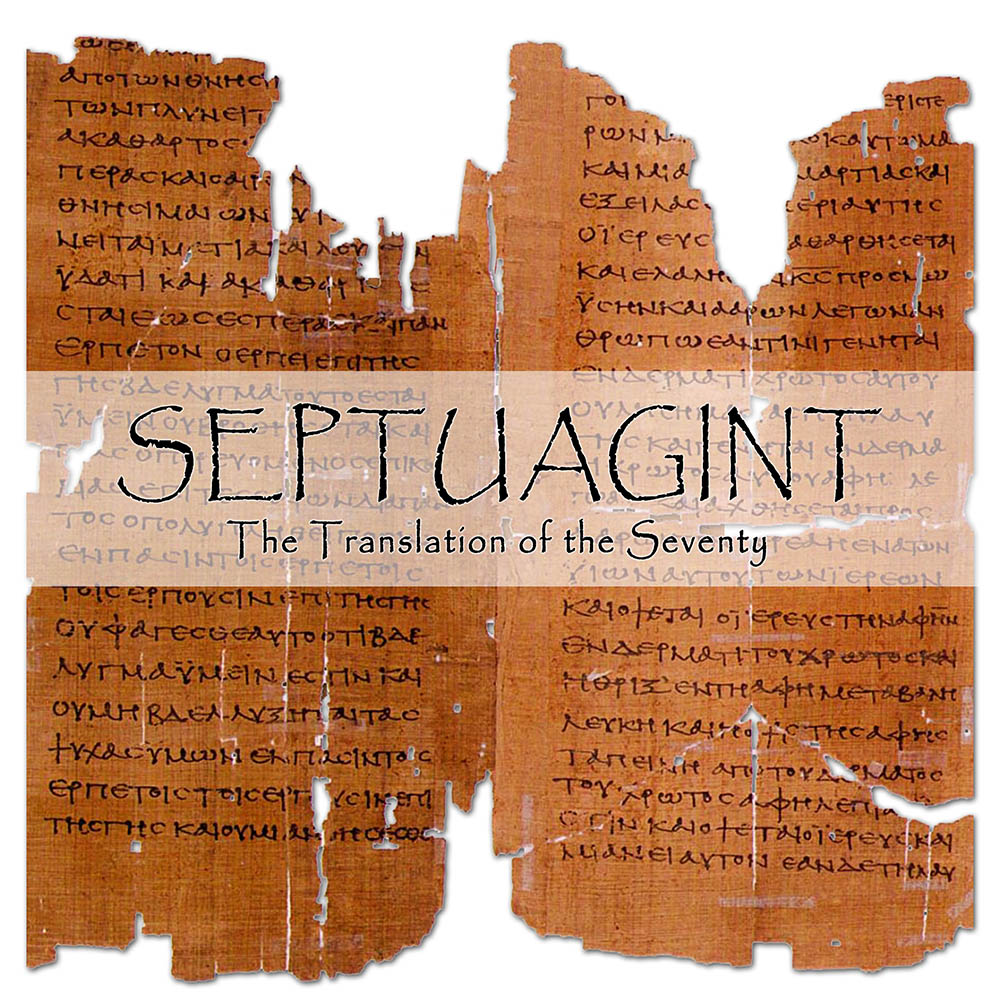
Here is a direct side-by-side comparison of the Masoretic Text with the LXX. I have concluded that the LXX is much to be preferred over the Masoretic Text, a position from which the Eastern Orthodox Church never deviated. Perhaps, if you take the time to read my comparisons and other articles, you will arrive at the same conclusion.
The Septuagint version I am using is the Lexham English Septuagint 2nd Edition, which is available in print or as part of Logos Bible Software. Occasionally I also use the Brenton translation of the LXX for insight into difficult passages.
If you want to know more, click on the following links.
- Why Christians Should Prefer the Septuagint over the Masoretic Text.
- Some Insights Gained through Comparing the Masoretic Text to the Septuagint
- More side by side comparisons of the Masoretic Text (MT) to the Septuagint (LXX).
| Septuagint | MT | Significance |
|
19 Having gone up to the high place [Greek – hysos], you took as prisoners a body of captives. You received [Greek – lambano] gifts in a person, yes indeed, those resisting, to cause them to dwell there. Psalm 67:19 (LES2) |
18 You have ascended on high [Hebrew – marom], You have led captivity captive; You have received [Hebrew – laqach] gifts among men, Even from the rebellious, That the LORD God might dwell there. Psalm 68:18 (NKJV) |
Paul quoted this verse in Ephesians 4:8. 8 Therefore He says: “When He ascended on high [Greek – hypsos], He led captivity captive, And gave [Greek – didomi] gifts to men.” Ephesians 4:8 (NKJV) The way Paul quoted the OT verse shows that the Septuagint was his source. Both the Greek hypsos and the Hebrew marom mean height. However, the Greek verb lambano can mean either give or receive; whereas, the Hebrew verb laqach can only mean receive or capture. When Paul replaced lambano with didomai, which means to give, in his quote, it shows he understood lambano to mean give, an option not available to him if he had been using the MT as his source. |