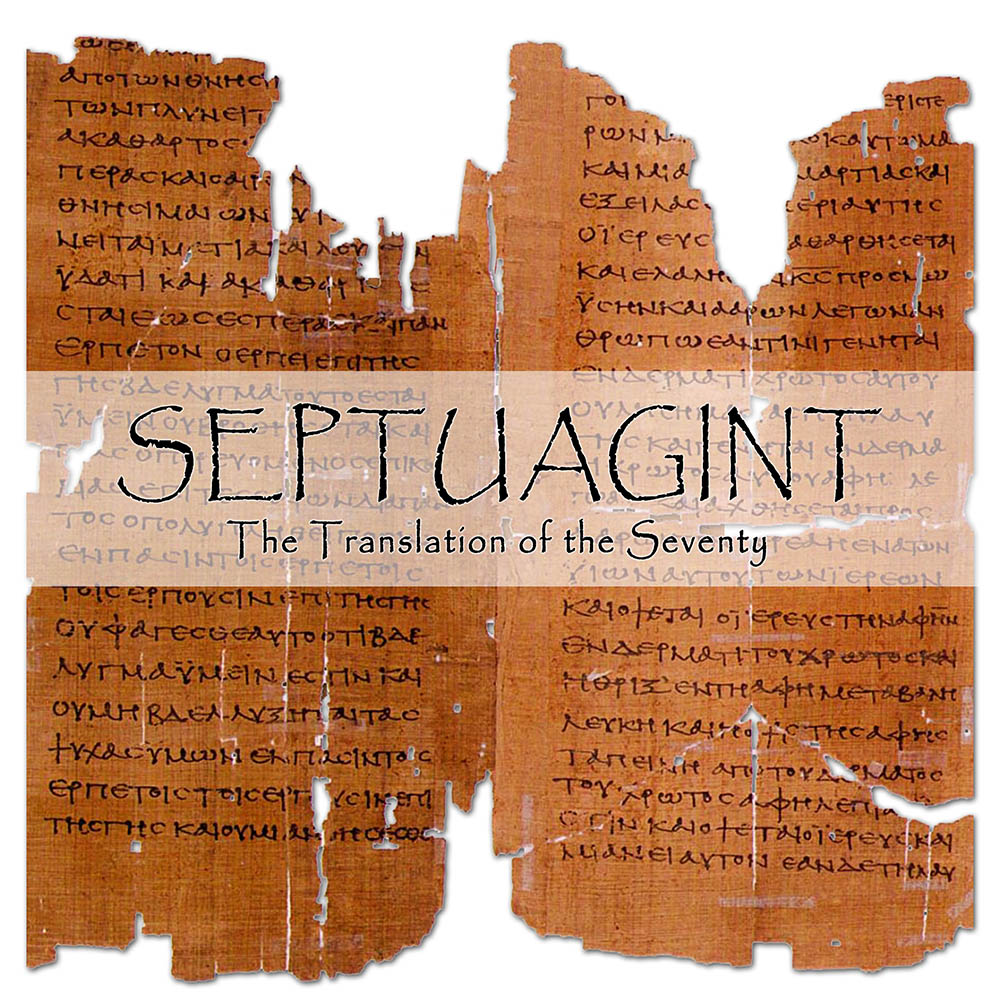
Here is a direct side-by-side comparison of the Masoretic Text with the LXX. I have concluded that the LXX is much to be preferred over the Masoretic Text, a position from which the Eastern Orthodox Church never deviated. Perhaps, if you take the time to read my comparisons and other articles, you will arrive at the same conclusion.
The Septuagint version I am using is the Lexham English Septuagint 2nd Edition, which is available in print or as part of Logos Bible Software. Occasionally I also use the Brenton translation of the LXX for insight into difficult passages.
If you want to know more, click on the following links.
- Why Christians Should Prefer the Septuagint over the Masoretic Text.
- Some Insights Gained through Comparing the Masoretic Text to the Septuagint
- More side by side comparisons of the Masoretic Text (MT) to the Septuagint (LXX).
| Masoretic Text | Septuagint | Significance |
|
12 “Honor your father and your mother, that your days may be long upon the land which the LORD your God is giving you. Exodus 20:12 (NKJV) |
12 “Honor your father and mother, so that it may be well for you and so that you may be long-lived upon the good land that the Lord your God is giving to you. Exodus 20:12 (LES2) |
The LXX adds “so that it may be well for you.” This is what Paul quotes in Ephesians 6:2. Deuteronomy 5:16 in the MT adds a similar phrase, but it does not match Paul’s quote. |
|
13 “You shall not murder. 14 “You shall not commit adultery. 15 “You shall not steal. 16 “You shall not bear false witness against your neighbor. Exodus 20:13–16 (NKJV) |
13 “You shall not commit adultery. 14 “You shall not steal. 15 “You shall not murder. 16 “You shall not testify falsely against your neighbor with a false testimony. Exodus 20:13–16 (LES2) |
The order of the commandments is changed in the LXX. In this case, the New Testament quotes of this passage does not perfectly matches either. Matthew 19:18 goes with the MT, but Mark 10:19 and Luke 18:20 do not follow the order of either the MT or LXX. It must not matter regarding the order. |
|
17 “You shall not covet your neighbor’s house; you shall not covet your neighbor’s wife, nor his male servant, nor his female servant, nor his ox, nor his donkey, nor anything that is your neighbor’s.” Exodus 20:17 (NKJV) |
17 “You shall not desire the wife of your neighbor; you shall not desire the house of your neighbor, or his field or his male servant nor his female servant or his ox or his beast of burden, or any animal of his, or anything that belongs to your neighbor.” Exodus 20:17 (LES2) |
The LXX put the wife at the top of the list, which makes sense, and adds “field” and “any animal.” |