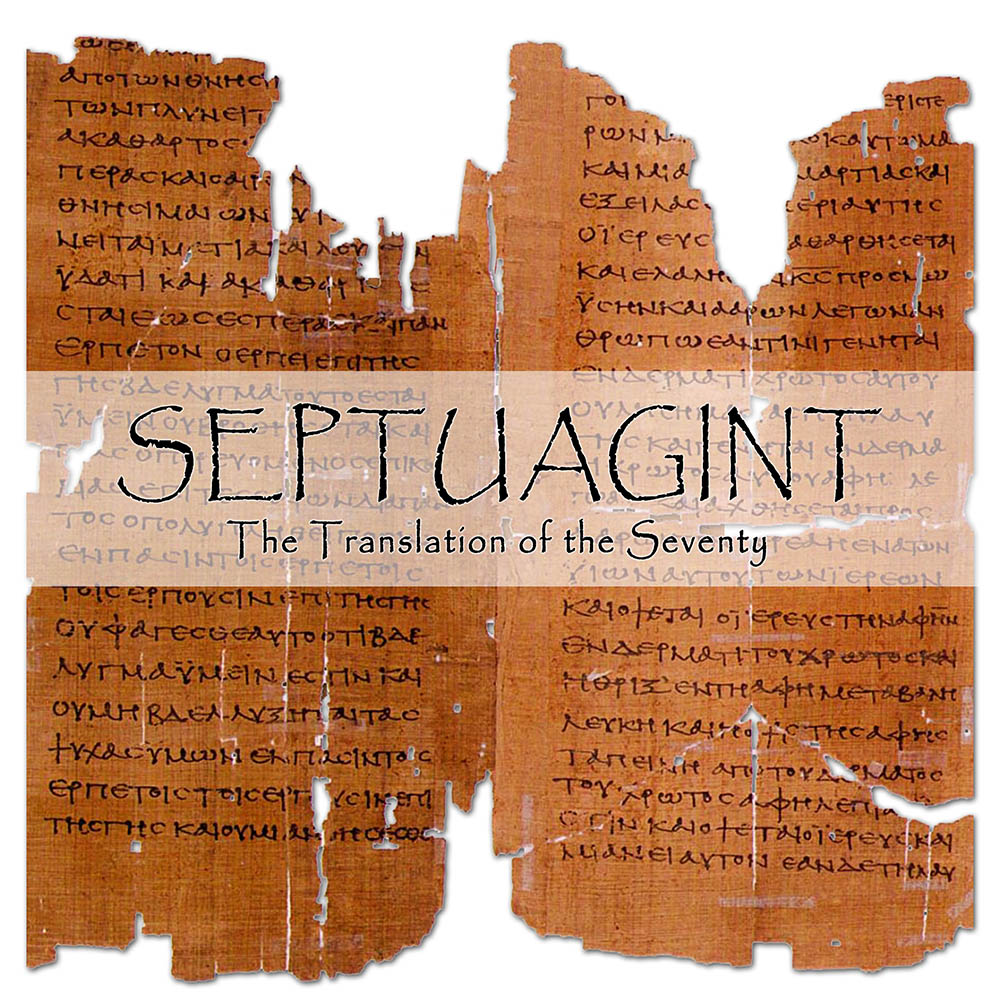
Here is a direct side-by-side comparison of the Masoretic Text with the LXX. I have concluded that the LXX is much to be preferred over the Masoretic Text, a position from which the Eastern Orthodox Church never deviated. Perhaps, if you take the time to read my comparisons and other articles, you will arrive at the same conclusion.
The Septuagint version I am using is the Lexham English Septuagint 2nd Edition, which is available in print or as part of Logos Bible Software. Occasionally I also use the Brenton translation of the LXX for insight into difficult passages.
If you want to know more, click on the following links.
- Why Christians Should Prefer the Septuagint over the Masoretic Text.
- Some Insights Gained through Comparing the Masoretic Text to the Septuagint
- More side by side comparisons of the Masoretic Text (MT) to the Septuagint (LXX).
| Masoretic Text | Septuagint | Significance |
|
15 O LORD, You know; Remember me and visit me, And take vengeance for me on my persecutors. In Your enduring patience, do not take me away. Know that for Your sake I have suffered rebuke. 16 Your words were found, and I ate them, And Your word was to me the joy and rejoicing of my heart; For I am called by Your name, O LORD God of hosts. Jeremiah 15:15–16 (NKJV) |
15 O Lord, remember me and visit me, and hold me guiltless before those who pursue me, not for forbearance. Know how I received reproach concerning you 16 by those who reject your words. Make an end of them, and your word shall be to me as cheer and delight to my heart, because your name has been invoked upon me, O Lord Almighty. Jeremiah 15:15–16 (LES2) |
The MT has Jeremiah asking God to take vengeance on his persecutors, but the LXX asks God to “hold me guiltless,” but without bearing long with his enemies. The MT applies God’s long-suffering to Jeremiah. The MT says that Jeremiah suffered rebuke for God’s sake, but the LXX says that Jeremiah suffered reproach from those who rejected God’s words. The MT then says the famous line, “Your words were found, and i ate them,” which I have sung to God. How sad for me that they appear to be contrived by the translators of the MT. The LXX says, “Make an end of them,” meaning those who reject God’s words. The MT and LXX agree in the next section, except that the MT calls God the Lord of hosts, while the LXX says he is Lord Almighty. |
|
17 I did not sit in the assembly of the mockers, Nor did I rejoice; I sat alone because of Your hand, For You have filled me with indignation. 18 Why is my pain perpetual And my wound incurable, Which refuses to be healed? Will You surely be to me like an unreliable stream, As waters that fail? Jeremiah 15:17–18 (NKJV) |
17 I did not sit in the assembly of those who mock, but I was reverent at the face of your hand. I was seated by myself because I was filled with bitterness. 18 Why do those who grieve me prevail over me? My wound is severe. How will I be healed? When it came, it came to me like false water without faith. Jeremiah 15:17–18 (LES2) |
The MT says, “Nor did I rejoice; I sat alone because of your hand.” The LXX says that Jeremiah was reverent. The “face of God’s hand” is likely a reference to God’s power. God’s hand is sometimes used to refer to the Holy Spirit as well. Then the LXX says the reason Jeremiah sat alone was not because of God’s power, but because of his own bitterness at God’s allowing those who persecuted him to prevail. To the prophet it all seemed to be a severe unhealed wound or like an unreliable water source. |
|
19 Therefore thus says the LORD: “If you return, Then I will bring you back; You shall stand before Me; If you take out the precious from the vile, You shall be as My mouth. Let them return to you, But you must not return to them. 20 And I will make you to this people a fortified bronze wall; And they will fight against you, But they shall not prevail against you; For I am with you to save you And deliver you,” says the LORD. 21 “I will deliver you from the hand of the wicked, And I will redeem you from the grip of the terrible.” Jeremiah 15:19–21 (NKJV) |
19 Because of this, thus says the Lord: “If you return, then I will restore you, and you will stand before my face. And if you bring out what is valued from the worthy, you will serve as my mouth. And they will turn to you, and you will not turn to them. 20 And I will give you to this people as a fortified bronze wall, and they will fight against you, and they shall not prevail against you; for I am with you to save you 21 and to deliver you from the hand of evildoers, and to redeem you from the hand of the plague.” Jeremiah 15:19–21 (LES2) |
This passage is God’s response to a disconsolate Jeremiah, which sounds very much like what Jesus told Peter before his betrayal. 31 And the Lord said, “Simon, Simon! Indeed, Satan has asked for you, that he may sift you as wheat. 32 But I have prayed for you, that your faith should not fail; and when you have returned to Me, strengthen your brethren.” Luke 22:31–32 (NKJV) Apparently Jeremiah was not in a good place and needed to repent and be restored to his prophetic ministry. Bitterness can knock us off track with God. The MT has God instructing Jeremiah to separate the precious from the vile, but the LXX tells him to bring what is precious out of what is merely worthy. This reminds me of the old saying that the enemy of what is best is what is merely good. In order to be God’s spokesperson, we need to give ourselves to God’s best and not be satisfied with anything less. God forbade Jeremiah from surrendering his calling in order to have peace, promising to preserve him from everyone who wished to persecute and destroy him. I believe God wants to encourage us all in this regard. |