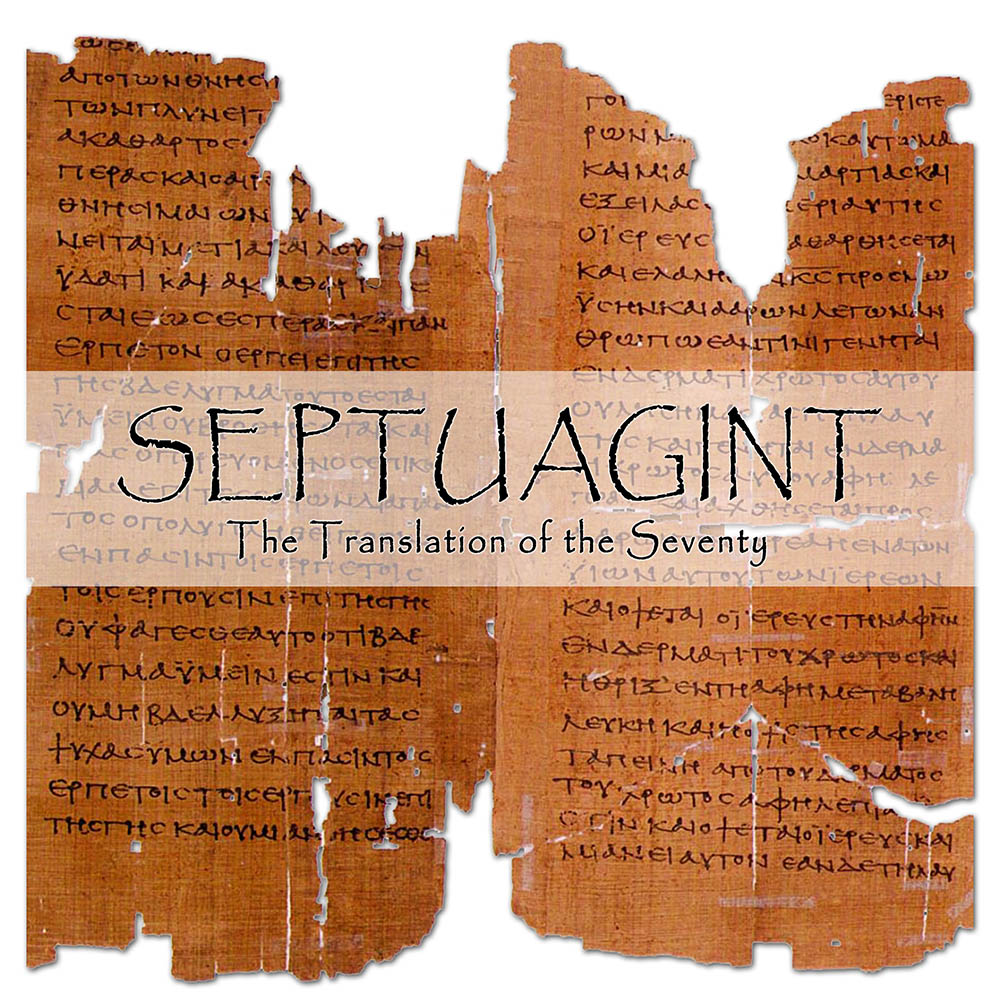
Here is a direct side-by-side comparison of the Masoretic Text with the LXX. I have concluded that the LXX is much to be preferred over the Masoretic Text, a position from which the Eastern Orthodox Church never deviated. Perhaps, if you take the time to read my comparisons and other articles, you will arrive at the same conclusion.
The Septuagint version I am using is the Lexham English Septuagint 2nd Edition, which is available in print or as part of Logos Bible Software. Occasionally I also use the Brenton translation of the LXX for insight into difficult passages.
If you want to know more, click on the following links.
- Why Christians Should Prefer the Septuagint over the Masoretic Text.
- Some Insights Gained through Comparing the Masoretic Text to the Septuagint
- More side by side comparisons of the Masoretic Text (MT) to the Septuagint (LXX).
| Masoretic Text | Septuagint | Significance |
|
1 Thus says the LORD: “Keep justice, and do righteousness, For My salvation is about to come, And My righteousness to be revealed. 2 Blessed is the man who does this, And the son of man who lays hold on it; Who keeps from defiling the Sabbath, And keeps his hand from doing any evil.” Isaiah 56:1–2 (NKJV) |
1 This is what the Lord says: “Keep judgment and do righteousness, for my salvation has come close to appearing; and my mercy to being revealed.” 2 Blessed is the man who does these things and the person who cleaves to them and keeps the Sabbaths undefiled and takes care that his hands do no injustice. Isaiah 56:1–2 (LES2) |
We see immediately that the MT says that God’s righteousness is about to come, but the LXX says his mercy has come close to being revealed. Mercy and truth came by way of Jesus. (John 1:17) Jesus is the revelation of God’s righteousness. His death on the cross and resurrection provides those who believe in him with a right standing (righteousness) with God. (Romans 5:1) This came as a result of God’s extending his mercy to us. |
|
3 Do not let the son of the foreigner Who has joined himself to the LORD Speak, saying, “The LORD has utterly separated me from His people”; Nor let the eunuch say, “Here I am, a dry tree.” 4 For thus says the LORD: “To the eunuchs who keep My Sabbaths, And choose what pleases Me, And hold fast My covenant, 5 Even to them I will give in My house And within My walls a place and a name Better than that of sons and daughters; I will give them an everlasting name That shall not be cut off. Isaiah 56:3–5 (NKJV) |
3 May the stranger who adheres to the Lord not say, “Therefore the Lord will separate me from his people.” And may the eunuch not say, “I am a dry tree.” 4 This is what the Lord says to the eunuchs: “As many as should keep my Sabbaths and choose the things that I want and cleave to my covenant, 5 I will give a renowned place to them in my house and within my fortification, a place better than sons and daughters. I will give them an eternal name, and it will not come to an end. Isaiah 56:3–5 (LES2) |
This passage can only be understood properly by viewing it through the lens of the New Covenant. In Christ God has torn down the wall that formerly separated Jew from Gentile, which is the Law. (Ephesians 2:14-18) Christ has brought the two together in “one new man.” Every born again believer, no matter what gender, nationality, or socio-economic status, has the privileged position of being an eternal child of God. (Galatians 3:28) Jesus is the “Sabbath rest” for God’s New Covenant people (Hebrews 4:8-11) who have been released from the demands of the Law in order to serve God from the heart. (Romans 2:29, 7:4) |
|
6 “Also the sons of the foreigner Who join themselves to the LORD, to serve Him, And to love the name of the LORD, to be His servants— Everyone who keeps from defiling the Sabbath, And holds fast My covenant— 7 Even them I will bring to My holy mountain, And make them joyful in My house of prayer. Their burnt offerings and their sacrifices Will be accepted on My altar; For My house shall be called a house of prayer for all nations.” 8 The Lord GOD, who gathers the outcasts of Israel, says, “Yet I will gather to him Others besides those who are gathered to him.” Isaiah 56:6–8 (NKJV) |
6 And for the strangers who adhere to the Lord, to serve him and to love the name of the Lord, to be male servants and female servants to him, and all who keep my Sabbaths undefiled and cleave to my covenant, 7 I will bring them to my holy mountain and make them be cheerful in my house of prayer. Their whole burnt offerings and sacrifices will be acceptable upon my altar, for my house will be called a house of prayer for all the nations,” 8 said the Lord who gathers the scattered ones of Israel, for I will gather an assembly to him. Isaiah 56:6–8 (LES2) |
There is very little difference in these two passages. |
|
9 All you beasts of the field, come to devour, All you beasts in the forest. 10 His watchmen are blind, They are all ignorant; They are all dumb dogs, They cannot bark; Sleeping, lying down, loving to slumber. 11 Yes, they are greedy dogs Which never have enough. And they are shepherds Who cannot understand; They all look to their own way, Every one for his own gain, From his own territory. 12 “Come,” one says, “I will bring wine, And we will fill ourselves with intoxicating drink; Tomorrow will be as today, And much more abundant.” Isaiah 56:9–12 (NKJV) |
9 All you wild beasts, come and eat, all you beasts of the forest. 10 See that they all have become blind; they have not learned, young dogs, unable to bark, dreaming on their bed, loving to slumber. 11 And the dogs are shameless in soul, not knowing satisfaction, and they are evil, not knowing understanding. They all have followed their ways, each according to his own. Isaiah 56:9–11 (LES2) |
Here the MT identifies the beasts as “blind watchmen.” It identifies the dogs as “shepherds who cannot understand.” I believe the Masoretes added these descriptors to help make sense of the passage. Jesus accused the Jewish leaders o being blind guides of the people who could not see or understand God’s way or help the people in that regard. (Matthew 13:13-15, 15:14, 23:16, 24) We also see that the MT added verse 12, which is not in the LXX and seems to be out of place. |