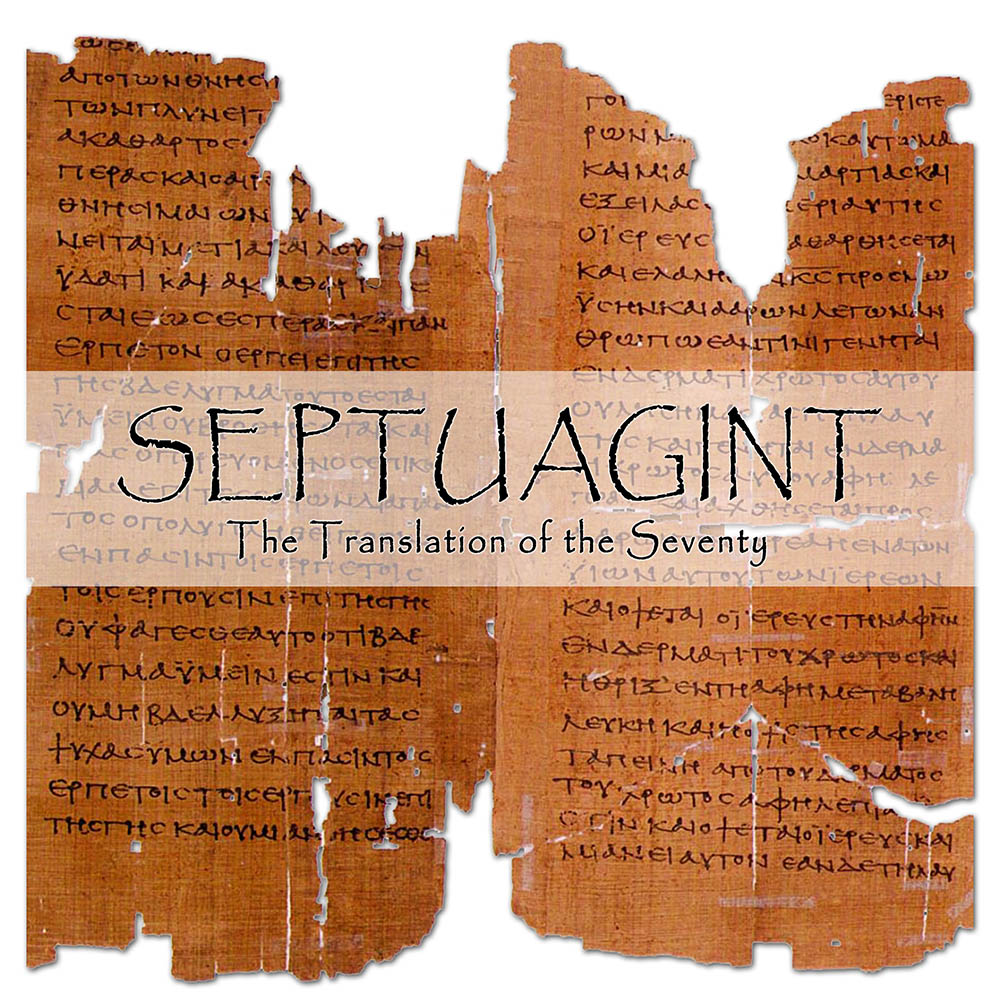
As I read through Isaiah, comparing the generally accepted Masoretic Text (MT) to the ancient Septuagint (LXX), the Greek translation of the paleo-Hebrew scriptures used by the Jews and early church, I find significant differences. Sometimes the MT seems to rewrite almost entire chapters. I chose the section listed in the title to illustrate how, in my opinion, the MT, which was finally completed centuries after Christ’s death and resurrection, deliberately hides or omits clear references to Christ contained in the LXX. Consider for yourself.
| Masoretic Text | Septuagint | Significance |
|
1 “Behold, My Servant, whom I uphold; My chosen one in whom My soul delights. I have put My Spirit upon Him; He will bring forth justice to the nations. Isaiah 42:1 (NASB95) |
1 Jacob is my child, I will help him; Israel is my chosen one, my soul has accepted him. I have given my spirit upon him; he will bring forth judgment upon the nations. Isaiah 42:1 (LES2) |
Once again, the MT identifies the one being spoken of as a servant. The LXX identifies this one as Jacob, who it says is my child, which is the Greek word pais. The normal word for servant is doulos; so, child is no doubt the correct translation. The MT says God will uphold him, which is a perfectly good translation of antilambano. The MT uses the word “delight”; whereas, the LXX uses “accepted.” The main difference in this verse is the substitution of servant for child. We know that Jesus and all those born again by faith in him are God’s children, not mere servants. (John 8:35) |
|
2 “He will not cry out or raise His voice, Nor make His voice heard in the street. 3 “A bruised reed He will not break And a dimly burning wick He will not extinguish; He will faithfully bring forth justice. 4 “He will not be disheartened or crushed Until He has established justice in the earth; And the coastlands will wait expectantly for His law.” Isaiah 42:2–4 (NASB95) |
2 He will not cry out or lift up his voice, nor will his voice be heard outside. 3 He will not crush a bruised reed, and he will not extinguish a smoking flax, but he will bring forth justice to truth. 4 He will blaze forth and will not be shattered until he brings justice upon the earth, and the nations will hope in his name. Isaiah 42:2–4 (LES2) |
This passage contains an obvious hiding of a clear reference to Christ by the MT. The MT translates the last part of verse four as, “And the coastlands will wait expectantly for his law.” Today a push is being made by the Jewish powers that be to enforce what are called Noahide laws upon all Gentiles. This would fit the way the MT translates the verse. The LXX clearly refers to Christ by translating the same verse, “the nations will hope in his name.” I refuse to believe this glaring difference is simply a matter of differing textual traditions. The LXX was accepted by the Jews at the time of Christ and by the early church as being God’s inspired Word. We should, too. Isaiah 42:4 clearly prophesies the New Covenant and the preaching of the gospel throughout the world which has resulted in the nations hoping on Christ’s name. |
| I hope it is becoming obvious to you that the MT consistently changes LXX texts to obscure or omit references to Christ. | ||
Conclusion
If you want to know more about why Christians should prefer the Septuagint to the MT, click on this link.The Eastern Orthodox Church had the wisdom to retain the LXX for its Old Testament scriptures. As for me, I now rely on the Septuagint. It was Paul’s standard for Old Covenant truth and is quoted in the New Testament. That makes it good enough for me.